

Beijing says Philippines 14-day visa-free policy for Chinese is “contradictory”

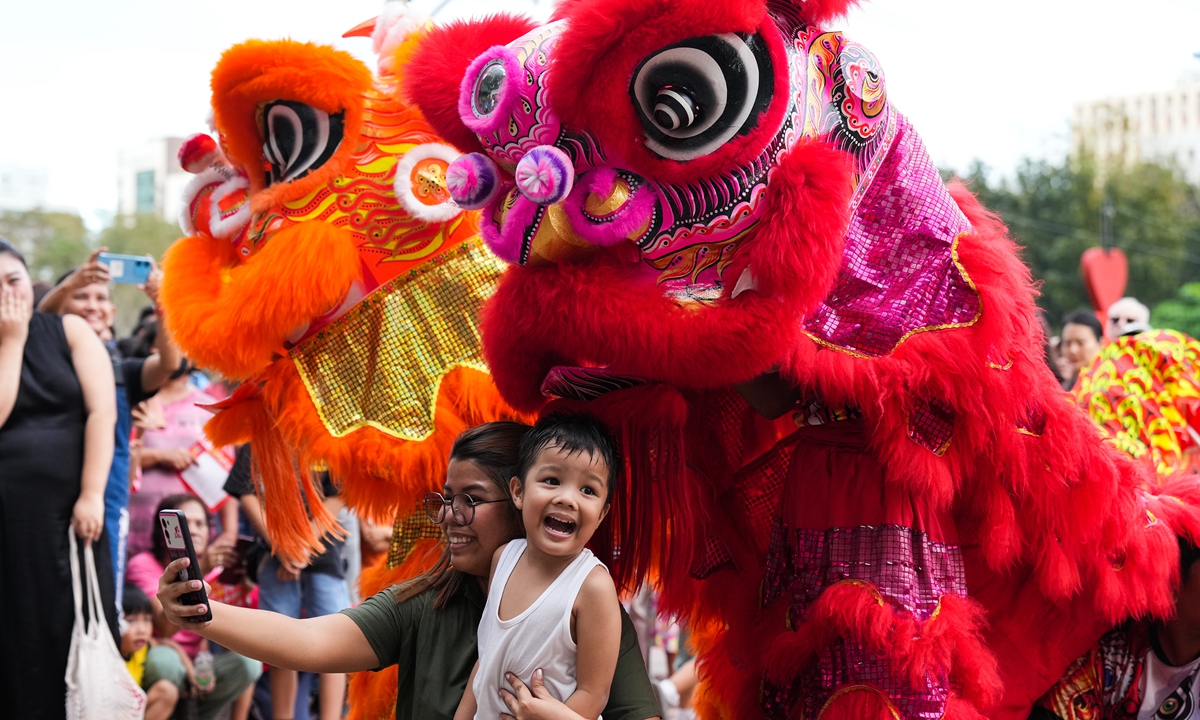
Philippine residents take photos with Chinese lion dancers at the 20th Philippines-China Traditional Culture Festival held on February 18, 2024. Photo: VCG
The Philippines will grant visa-free entry to Chinese nationals for up to 14 days starting January 16 in a bid to increase Chinese trade, investments and tourists, the Philippine Department of Foreign Affairs announced on Thursday.
The policy applies only to tourists entering through the airports in Manila and Cebu, and the fortnight stay cannot be extended. The visa-free entry arrangement will be in effect for one year and will be reviewed accordingly before it expires.
Upon arrival, Chinese nationals need to present a passport valid for at least six months beyond the contemplated stay, confirmed hotel accommodation or booking, and a return or onward ticket to the next country of destination, reads the statement.
As the Chinese Spring Festival holidays approach, an insider believes that the new visa-free policy is anticipated to revive the Chinese overseas travel to the Philippines.
Xu Xiaolei, marketing manager at CYTS Tours Holding Co, told the Global Times on Thursday that this move represents a positive effort by the Philippines to boost its tourism sector and enhance people-to-people exchanges because visa-free policies are widely recognized as an effective means of facilitating a rapid, phased recovery in tourism.
Hopefully the Philippines will make its visa-free policy for Chinese nationals a long-term one and maintain policy stability in the future, Xu added.
Chen Xiangmiao, a research fellow at the National Institute for South China Sea Studies, told the Global Times on Thursday that following the launch of South China’s Hainan Free Trade Port, the Philippines sees strong potential for cooperation with China, with the Marcos administration recognizing the Chinese market as vital due to complementary trade ties between the two countries.
Lai, a person who works in foreign trade in Beijing, told the Global Times she had been preparing visa documents for her trip to the Philippines next month. “The visa-free policy has made things so much more convenient,” she said.
News of Philippines’ visa-free policy for Chinese nationals was the second most discussed topic on Chinese social media platform Sina Weibo, gaining over 820,998 views as of Thursday afternoon.
Many Chinese netizens expressed mixed attitudes toward the new policy. Some netizens thought that the new policy is quite a surprise since the traveling visa from the Philippines used to be one of the most difficult to obtain for Chinese travelers.
Another netizen commented that the Philippines’ limited appeal to Chinese tourists, unlike that of Thailand or Vietnam, has been due to higher entry barriers rather than a lack of attractions, and the new visa-free policy could boost its popularity among Chinese travelers.
On the other hand, many netizens said the current unstable political situation of the country is not suitable for traveling to or living in. Many netizens expressed concerns about the instability of the local government and society.
Data from industry information provider Flight Manager shows China-Philippines routes are still below 40 percent of pre-pandemic levels, financial news site Yicai reported. In December 2025, 766 round trips operated – down 61 percent from 2019 – with China Southern Airlines leading carriers but also 40 percent below 2019 levels, the report said.
Some Chinese netizens also doubted the intention of the new visa-free policy given that the Philippines has been consistently engaging in provocations against China over the South China Sea issue.
Ge Hongliang, a vice dean of the ASEAN College at Guangxi Minzu University, said netizens’ concerns are not without basis. He added that these concerns stem from the Marcos administration’s stance toward China, with the Philippines repeatedly sensationalizing and criticizing China on South China Sea issues, stigmatizing China’s image by exaggerating the “China-related” problems and constantly amplifying these topics to serve domestic political goals.

Chen also said that while maintaining its stance on the South China Sea, the Philippines seeks to tap China’s lucrative outbound tourism market, a contradictory desire to have both.
It can be inferred from the latest US National Security Strategy report that the declining regional attention from the US may also be a partial reason for the Philippines’ recalibration of its China policy, Chen said.
The Philippines’ introduction of a visa-free policy is a positive signal, yet whether this signifies that the country has come to terms with the realities and will adopt a pragmatic approach toward China remains contingent on its future actions, Ge noted.

- Previous Chinese expert questions Japan’s status of a ‘peaceful country’
- Next “Serious Aviation Incident” Involving Russian and Uzbek Flights over Kazakh Airspace: investigation promised
You may also like...





Random news











About us
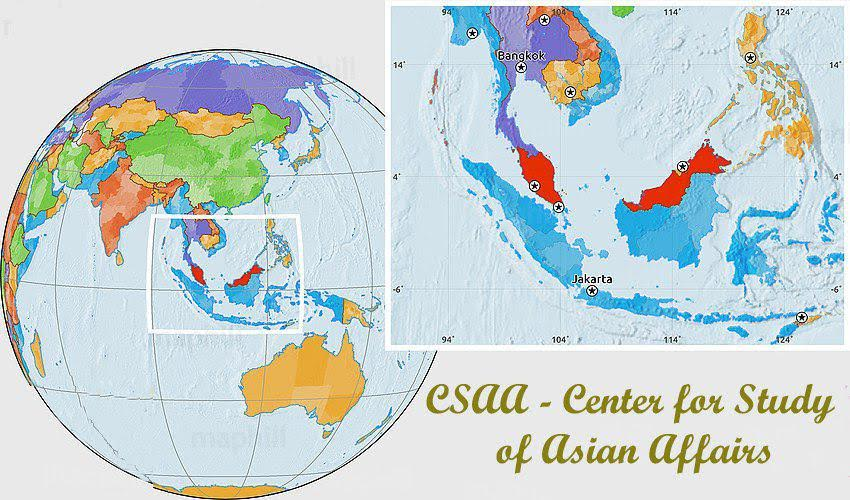
Our Newly established Center for study of Asian Affairs has
branches in Indonesia, Malaysia and Singapore, as well as freelances in some other countries.
For inquires, please contact: newsofasia.info@yahoo.com Mr.Mohd Zarif - Secretary of the Center and administer of the web-site www.newsofasia.net
Polls
 Loading ...