

President Tokayev Keep Experimenting With Political Reforms
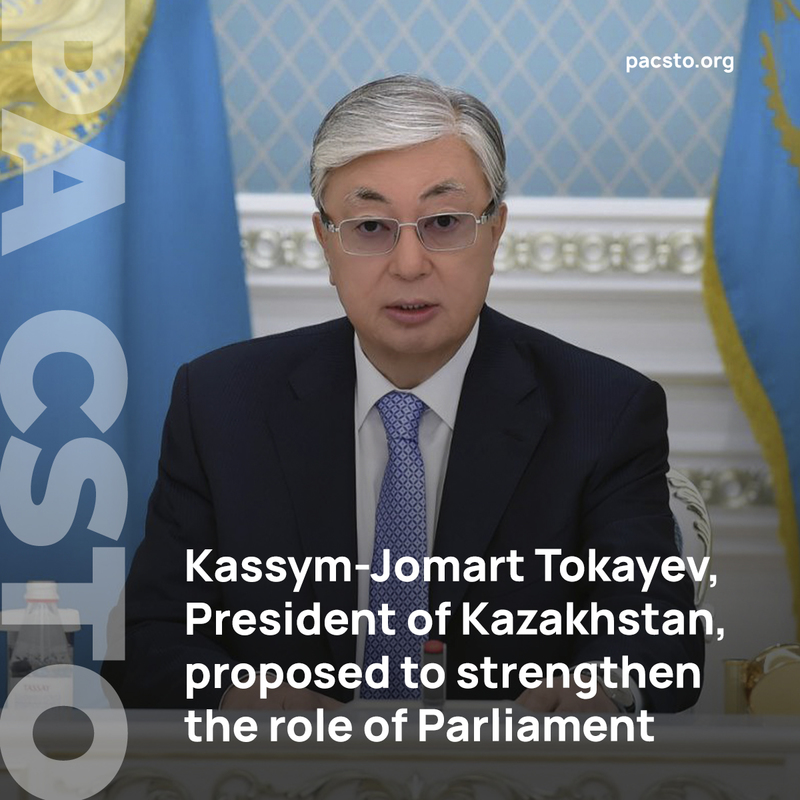
The fifth and final session of the National Kurultai in Kazakhstan, held on January 20, marked the announcement of plans to dismantle and replace two key institutions: the National Kurultai and the Assembly of the People of Kazakhstan, structures that have played central roles in the country’s civic dialogue, particularly over the past three decades. In a sweeping address, President Kassym-Jomart Tokayev declared that these legacy institutions would be replaced by new mechanisms for state-society interaction, crafted with an eye toward modern governance models and constitutional reform. The move reflects Tokayev’s long-running criticism of consultative bodies that, while symbolically inclusive, have often duplicated functions or lacked clear decision-making authority.
Tokayev’s address, which included references to U.S. President Donald Trump, prompted analysts to draw deeper geopolitical and institutional parallels. As Tokayev enters the second phase of his presidency, analysts note a shift in strategy and control. His first term (2019-2022) was marked by attempts to correct the excesses and structural stagnation of his predecessor, Nursultan Nazarbayev. At the time, Tokayev faced entrenched resistance from the political establishment, with some officials reportedly appealing directly to Nazarbayev to circumvent presidential directives.
The January 2022 unrest, an attempted power shift, marked a turning point. Tokayev consolidated power and launched a comprehensive reform agenda across the political and economic spectrum. The analogy with Trump, some analysts argue, lies in this dual-phase leadership: an initial struggle with the establishment, followed by a more assertive, transformation-driven second term. Since then, Tokayev has framed political reform as a safeguard against elite capture and institutional paralysis, arguing that fragmented authority contributed to the crisis.
Yet Tokayev continues to face political resistance, particularly to structural reforms. Political analyst Daniyar Ashimbayev, commenting on Tokayev’s Kurultai speech, described the president’s evolving approach as both methodical and tactical.

“Sometimes, the head of state announces strategic steps he has been considering for over a year, but only unveils them at the last moment, when no one has the opportunity to influence the message,” Ashimbayev observed. He cited Tokayev’s September 2025 proposal for a unicameral parliament as an example of such strategic maneuvering, an initiative that caught even senior officials by surprise.
Ashimbayev argues that Tokayev’s aim was to sideline speculation about succession by announcing long-term institutional reforms. The president further solidified this strategy by reviving the position of vice president, abolished under Nazarbayev, while proposing the dissolution or merging of overlapping structures such as the Senate, the Assembly of the People, and the Kurultai into a proposed National People’s Council.
This consolidation, Ashimbayev notes, serves both symbolic and strategic purposes. “The image of a ‘lame duck’ has vanished, and a self-confident Uncle Scrooge, so to speak, with complex plans, has returned. Everyone expected the discussions to take a year or a year and a half, but the president decided to seize the initiative again and unexpectedly moved the Kurultai to January, where he announced a huge package of new ideas,” he remarked.
The announcement of the vice presidency, one of the most consequential changes, reportedly came without prior consultation. Mazhilis (lower house of parliament) member and parliamentary reform working group participant Nikita Shatalov confirmed that this proposal had not been discussed in advance.
“The powers of the vice president will be outlined by presidential decree and approved by a simple parliamentary majority,” Shatalov explained. Unlike in the U.S., the vice president will not be elected jointly with the president but appointed, granting the role hybrid legitimacy.
Shatalov added that the new parliament formed under the restructured Kurultai model will gain expanded oversight powers, including approval of Supreme Court judges, members of the Chamber of Auditors, and the Central Election Commission. Legislative procedures will also shift to a three-reading format, creating a more complex and deliberative process.
“This is not an artificial unification, but a deepening of the parliamentary structure. More influence means more responsibility,” Shatalov stated.
Political scientist Gaziz Abishev highlighted another critical change: the removal of the “remainder of term” clause for presidential succession. Previously, if a president left office early, their successor would complete the existing term. Under the new proposal, early presidential elections must be held within two months.
Abishev recalled that when Nazarbayev stepped down in March 2019, Tokayev could have served until December 2020. Instead, Tokayev called early elections in June 2019 to secure his own mandate. The new rule would eliminate that discretionary gap.
Despite the top-down nature of the reforms, Shatalov argued that most of the proposals represent an evolutionary continuation of trends established in 2022, particularly the strengthening of the Mazhilis. The reforms aim to distribute power more broadly across government institutions, creating multiple centers of authority capable of navigating growing domestic and international complexity. Supporters say the changes could strengthen accountability and parliamentary oversight, while critics warn that consolidation risks concentrating power unless the new institutions prove genuinely autonomous.
“In turbulent times, it’s crucial to have several hubs of power advancing the modernization agenda and drawing society into the process,” Shatalov concluded.


- Previous Al-Hawl Camp: ISIS led Syrgian government frees tens of thousands of ISIS detainees and their families
- Next Malaysia and Singapore continue to negotiate on how to address maritime boundaries
You may also like...

Random news



About us
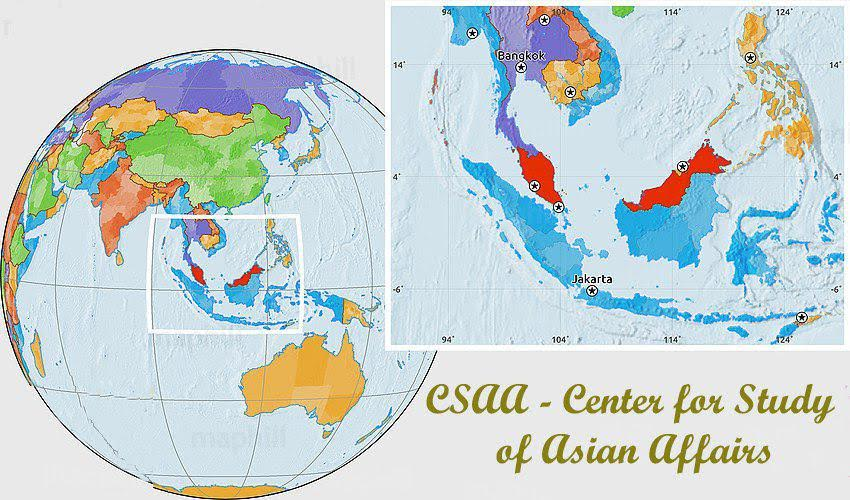
Our Newly established Center for study of Asian Affairs has
branches in Indonesia, Malaysia and Singapore, as well as freelances in some other countries.
For inquires, please contact: newsofasia.info@yahoo.com Mr.Mohd Zarif - Secretary of the Center and administer of the web-site www.newsofasia.net
Polls
 Loading ...