

The end of the UAE’s Gulf era – Riyadh has declared war on Abu Dhabi’s ambitions
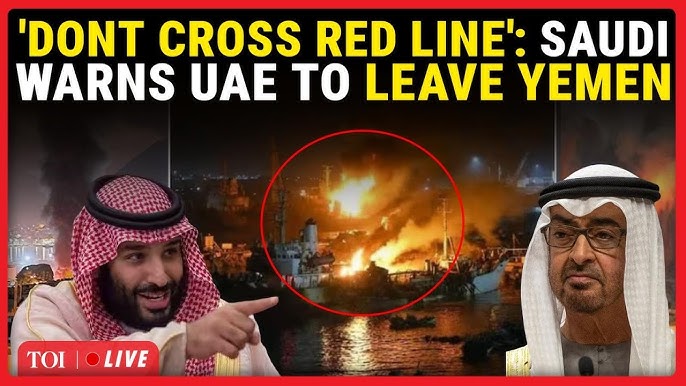
Riyadh has declared war on Abu Dhabi’s ambitions, turning a cold rivalry into an all-out confrontation for Gulf leadership.

By Mawadda Iskandar
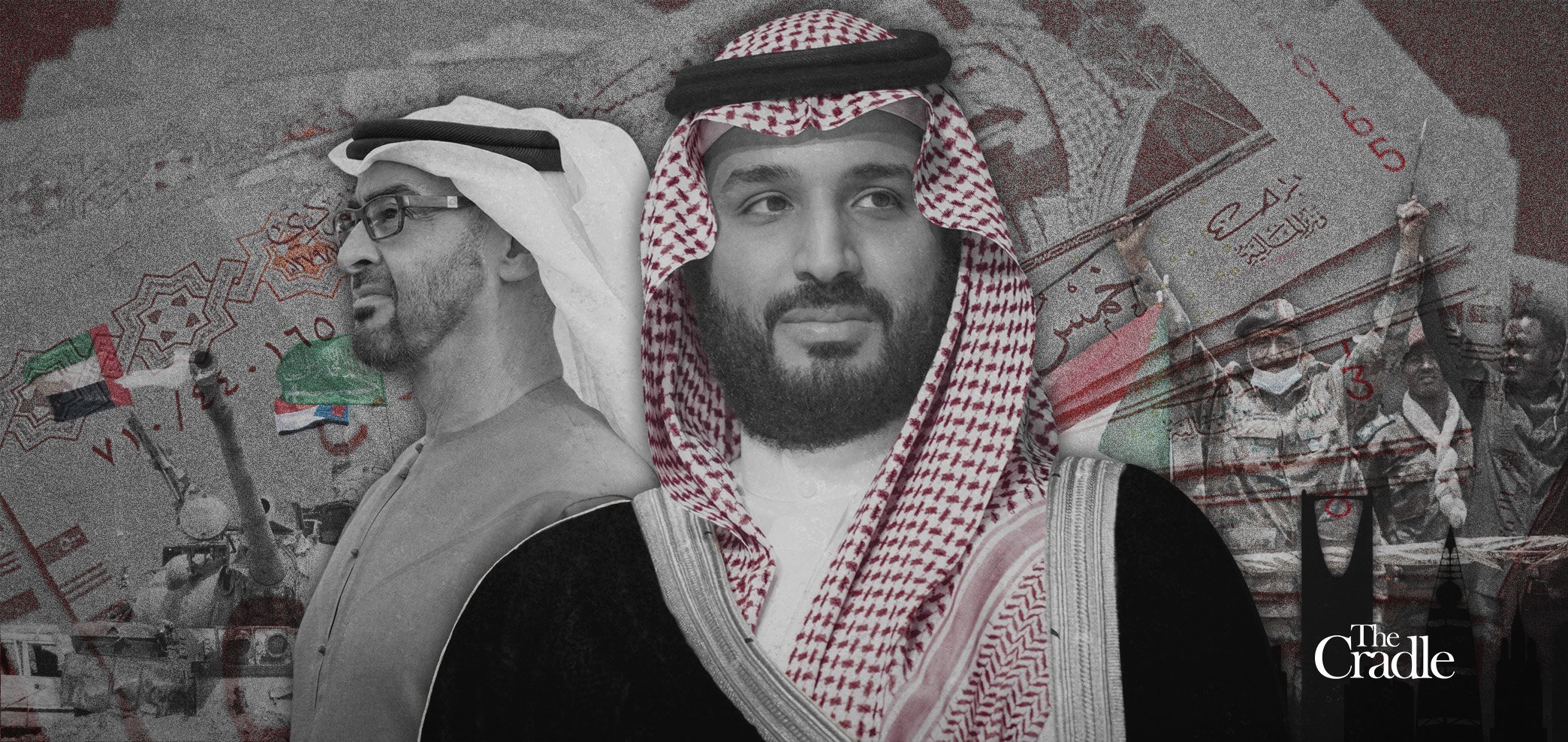 Photo Credit: The Cradle
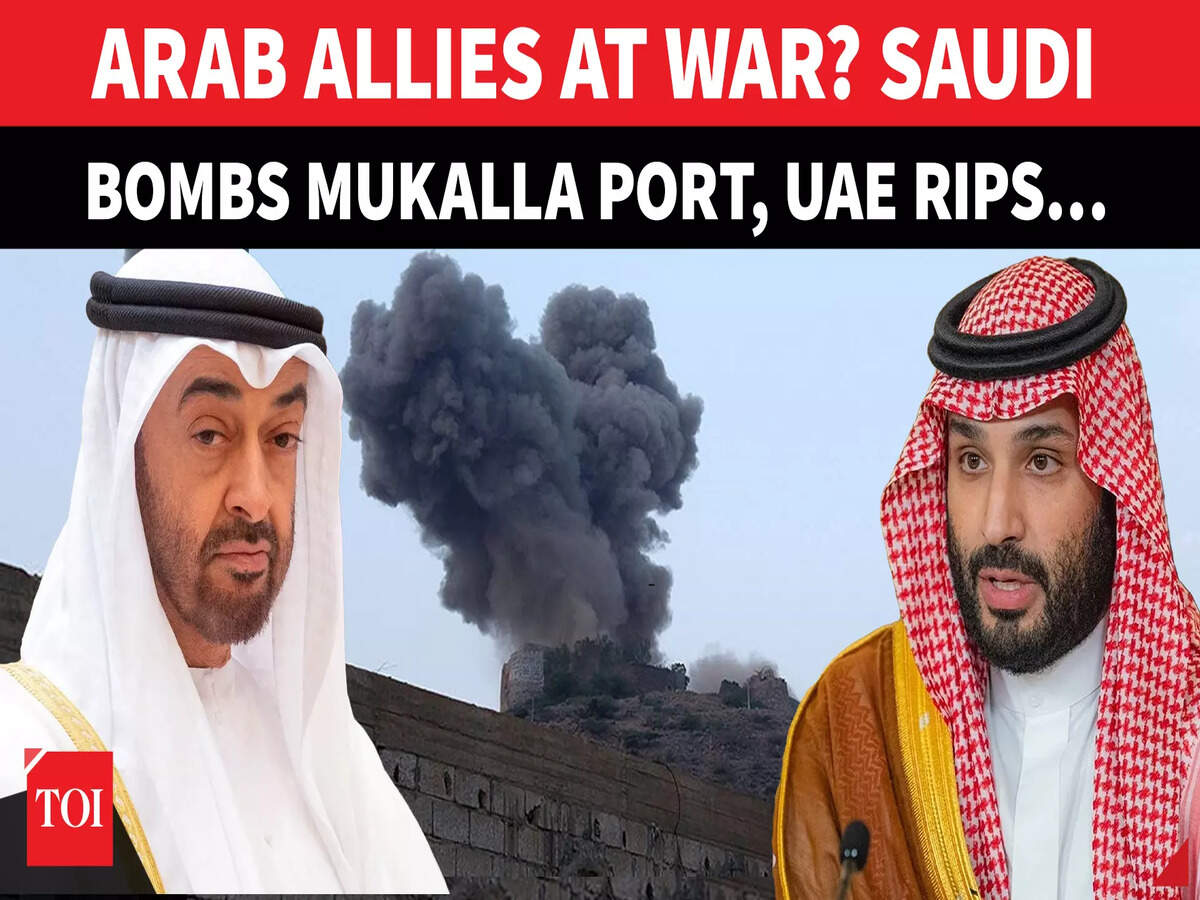
In 2016, Saudi Arabia’s then-deputy crown prince (now ruler of the kingdom), Mohammed bin Salman (MbS), and Abu Dhabi’s Crown Prince, Mohammed bin Zayed (MbZ), shared a desert excursion – an encounter widely seen as the start of a political alignment between the Persian Gulf’s two most ambitious leaders.
In the years that followed, they built a shared vision to suppress uprisings, rewire the region’s alliances, and dominate the post-Arab Spring order. Today, that alliance lies almost in ruins. The two princes are locked in a zero-sum contest for regional primacy, from Yemen to the Horn of Africa.
Riyadh strikes back
There were signs of growing tensions back in December 2022 when MbS, speaking to Saudi journalists, reportedly vowed to retaliate against the UAE for undermining the kingdom: “It will be worse than what I did with Qatar,” he is quoted as saying, referring to the 2017 air, land, and sea embargo on Qatar.
Most recently, on 26 January, Saudi Arabia’s top diplomat, Foreign Minister Faisal bin Farhan, declared that “when it comes to Yemen, there is a difference of view. The UAE has now decided to leave Yemen.” It gave the impression of a prerequisite for repairing relations – a message broadcast like a formal ultimatum.
Riyadh’s media m achine sprang into action. Articles and TV reports accused the UAE of betrayal, destabilization, and acting as Israel’s Trojan horse. Prominent Saudi commentators denounced Abu Dhabi’s regional schemes.
Social media accounts linked to the royal court launched coordinated attacks, and leaks exposed Emirati involvement in sabotage, espionage, and sectarian manipulation across West Asia and Africa.
The gloves were off.
For years, MbS benefited from MbZ’s tutelage. The UAE served as a model for Riyadh’s future. But once the Saudi prince consolidated power, he outgrew the apprentice role. Tensions began with the UAE’s 2019 drawdown in Yemen, grew with divergent approaches to Iran and Turkiye, and spilled into open competition over attracting global capital. The 2021 OPEC+ spat marked a public rupture, but by 2024, the rivalry had militarized.
Saudi attacks on Emirati proxies in Yemen escalated. Riyadh moved to outflank Abu Dhabi’s influence in Somalia, Sudan, and Libya. It began dismantling Emirati political and military gains, seeking to reassert itself as the Gulf’s primary node of power.
The media war
The media war took a darker turn with Saudi campaigns aiming to fracture the UAE from within. Saudi-aligned commentators began amplifying messages on social media that contrasted Abu Dhabi’s policies with Sharjah’s more traditionalist stance.
One prominent Saudi figure publicly praised the leadership of Sharjah’s ruler, Sultan al-Qasimi, for adhering to Arab-Islamic constants and resisting westernization – an implicit rebuke to MbZ’s path.
Tuwaijri’s article, titled ‘The UAE is in our hearts,’ published on the website of Saudi newspaper Al-Jazirah, while professing affection for the Emirati people, launched a scathing attack on Abu Dhabi’s leadership, accusing it of acting as a Trojan Horse for Israeli ambitions:
“It goes without saying that the Kingdom of Saudi Arabia has absolutely no problem with the United Arab Emirates. It’s one and only problem is with Abu Dhabi – specifically with those whose hatred, jealousy, and envy have blinded them, and who have willingly become a dagger in the side of the Arab nation, a foolish mount ridden by Zionism to achieve its ambitions in the region and across the broader Arab world.”
It listed Abu Dhabi’s alleged subversion from Sudan to Tunisia and referred to media reports and leaked documents suggesting that Emirati military bases had offered support to Israeli operations in Gaza.
In response, Emirati commentator Jasim al-Juraid penned a scathing counter-article titled ‘When the Ikhwan [Muslim Brotherhood] cry in the name of patriotism,’ accusing Tuwaijri of reviving the slogans of political Islam and masking ideological nostalgia as national concern.
“This article is not out of jealousy for the Kingdom,” Juraid wrote, “but a political lamentation for the project of political Islam that was trampled by the new Emirati-Saudi modernization train.” He dismissed the base claims as a “pathetic attempt to demonize a declared and clear strategic alliance,” adding that the Emirates was acting “bravely and in broad daylight.”
Adhwan al-Ahmari, editor-in-chief of Independent Arabia, also weighed in on the dispute. “Saudi Arabia served as Abu Dhabi’s political and media engine over the past few years, believing it had aligned with an honest partner,” he wrote.
“But since 2018, it became clear that Abu Dhabi was scheming and conspiring. Riyadh waited, hoping its public commitments matched its hidden policies. But patience ran out. The kingdom pulled its cover – and what lay beneath was weakness, exposed and emaciated.”
For his part, Suleiman al-Aqili, a former editor-in-chief of several Saudi newspapers, said that “the UAE has betrayed the strategic partnership with Saudi Arabia and has become a provocateur of crises within the Saudi strategic field,” while political researcher Munif al-Harbi described Abu Dhabi’s behavior as “an Israeli project wearing a condor.”
Ali al-Shehabi, a member of NEOM’s advisory board, stressed that “Emirati ambition is not the problem in itself, but the method used,” considering that Saudi Arabia is the geographical barrier between instability and the UAE.
Leaks pointed to US and Gulf pressures on MbZ to cede power, with proposals floated to reinstall Mohammed bin Rashid as the UAE’s federal president. Saudi Arabia, for now, appears to be using this card as leverage – a threat, not yet a strategy.
Dr Fouad Ibrahim tells The Cradle that Saudi Arabia understands the risks of exploiting Emirati internal disputes: “It is the most dangerous card because it can internationalize the crisis and expose the entire Gulf system, including Saudi Arabia, to instability.”
“As for the issue of ‘overthrowing bin Zayed,’ it is an analytical exaggeration. MbS is not seeking to overthrow his rule, but rather is working to reduce his regional influence and transform it from a ‘leading partner’ to a ‘secondary actor,’ with the aim of readjusting the balance of power in the Gulf in Riyadh’s favor.”
Scandals unleashed
As in the Qatar blockade, Riyadh has unleashed a torrent of exposés aimed at delegitimizing the UAE. One theme paints Abu Dhabi as Israel’s top Gulf partner: providing bases, sharing intelligence, and enabling surveillance in Yemen, Eritrea, and Somalia. Leaked documents revealed that Emirati authorities had naturalized Shin Bet operatives and sabotaged shared military installations.
Saudi sources have accused the UAE of systematically undermining Yemen’s air capabilities since 2015, claiming that Abu Dhabi concealed a squadron of Russian Sukhoi aircraft at Al-Anad base, blocked their maintenance, and rendered most inoperable. These actions, they argue, reflect a strategy of sabotage and control, coinciding with the emergence of footage from secret Emirati-run prisons.
The intervention did not stop there. Israeli systems in Socotra, operated from Fujairah and the Berbera base in Somalia, were uncovered – submersible sensors to monitor the acoustic signature of passing vessels, and surveillance gear disguised as meteorological equipment atop Jabal Mumi and Ras Qatinan. These were reportedly used to track naval movement by regional states, including Saudi Arabia, Turkiye, Pakistan, and China.
Another theme frames the UAE as anti-Islam: funding mosque closures, backing European far-right lobbies, and hosting Islamophobic activists. Emirati media networks have been outed for producing anti-Muslim content while aligning with Israeli narratives and political interests.
Confrontation without consent
Saudi Arabia’s regional counter-offensive is coordinated and expansive. In Yemen, it has unified allied forces under Saudi command, sidelining UAE-backed factions.
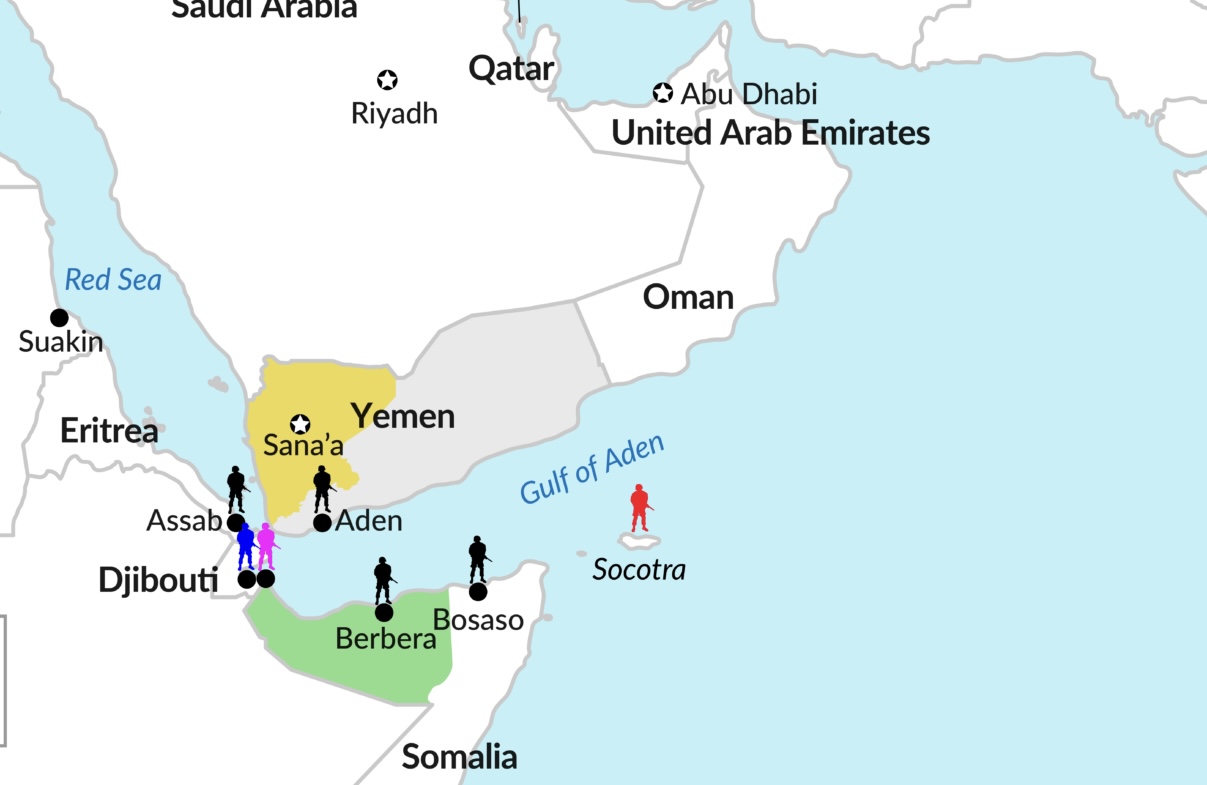
This recalibration was made possible by Riyadh’s decision to escalate. Under the direct oversight of Defense Minister Khalid bin Salman, Saudi Arabia elevated the Yemen file to a military priority. A Supreme Military Committee was established to consolidate decision-making and bring all allied local formations under Saudi command.
Alongside this, Riyadh launched a South–South political dialogue – firmly asserting that the unity of the state would not be compromised. In effect, the move ended any meaningful partnership with Abu Dhabi.
In Africa, it has partnered with Egypt and Somalia to dismantle Emirati defense pacts, block military shipments, and rewire regional alliances.
Even the Gulf Cooperation Council (GCC) has become a battlefield, with Riyadh leveraging its weight to isolate the UAE diplomatically. Plans to hold a southern Yemen dialogue in Riyadh were scrapped under US pressure to preserve the Emirati role – but Saudi Arabia found alternative ways to buy local loyalties and advance its agenda.
Informed Y emeni political sources tell The Cradle that Riyadh has begun practical steps to isolate Abu Dhabi from the Gulf, represented by an open attack by the assistant secretary-general of the GCC on the UAE’s policies in Yemen, Sudan, and Somalia, in parallel with the aborting of MbZ’s official visits to Bahrain and Kuwait.
The sources indicate that the public attack reflects an escalating power struggle within the coalition against Ansarallah, representing a gradual Saudi trend to control regional files and reduce the UAE’s military presence – despite the continuous American coordination to avoid a direct confrontation between the two countries.
Mohammed al-Numani, a professor of political science at Aden University and a member of the Political Bureau of the Southern Revolutionary Movement, argues that Saudi Foreign Ministry statements reflect a gradual escalation of pressure on the UAE. He says this is part of Riyadh’s efforts to end Emirati influence in Yemen’s southern provinces and islands, where Abu Dhabi still maintains a presence through direct military deployments and loyal local forces.

Numani explains that Saudi Arabia is seeking to impose a new political equation in the south to achieve longstanding objectives it previously failed to realize, by managing southern affairs from Riyadh rather than Aden and presenting itself as a peace broker. According to him, the Saudi-backed “southern–southern dialogue” was primarily aimed at eliminating Emirati influence, but Riyadh later retreated and postponed the conference, rejecting Pakistani, American, or Russian mediation that could preserve an Emirati role in the south. This signaled a shift of the Saudi–Emirati conflict into southern Yemen, with potential for arrests, assassinations, and targeted killings.
Poll
Riyadh turns the economic screws
According to Dr Ibrahim, MbS’s break with Abu Dhabi is not an emotional reaction, but a calculated strategy to reposition the kingdom as the Gulf’s sole center of gravity.
Riyadh is pursuing four  parallel tracks: economically, by diverting capital and investment flows from Dubai to the Saudi capital; politically, by redefining the GCC and co-opting Oman and Kuwait to reduce Emirati influence; militarily, by opening direct channels with actors like Iran, Syria, and the Ansarallah-led government in Yemen, bypassing UAE-linked intermediaries; and symbolically, by framing Saudi Arabia as a ‘big state’ leader, in contrast to what it portrays as Abu Dhabi’s ‘small functional state’ model.
If the military and political showdown remains largely covert, the economic war is out in the open. Saudi Arabia has begun a quiet but devastating capital flight from the UAE – with $26.6 billion pulled out, representing a major share of Emirati foreign investment.
Saudi companies have been instructed to relocate, and tourism boycotts are trending on social media. Since Saudi tourists form the backbone of Emirati tourism – registering 1.9 million visitors in 2024 – any decline in this number would deal a direct blow to Dubai and Abu Dhabi.

Trade flows are also slowing. Multinational firms are hedging their bets, fearing Riyadh will squeeze the UAE out of Gulf commerce.
Saudi policy aims to displace Dubai as the Gulf’s financial hub by redirecting investment, trade, and capital into Riyadh – stripping the UAE’s intermediary role in the era of Vision 2030.
The UAE’s limited playbook
Abu Dhabi cannot match Riyadh punch-for-punch. Its strategic depth is narrow, and its economy is exposed. Crucially, its power depends on external protection. So it turns to familiar tools: lobbying, media, and litigation.
Leaks suggest Emirati officials have contracted western law firms to threaten legal action against Saudi Arabia, aiming to deter firms from abandoning the UAE. PR campaigns have been launched abroad to spotlight alleged failures in Vision 2030. And key allies, like US Senator Lindsey Graham, have spoken out against Riyadh’s pressure campaign.
But the battlefield has shifted. Israel, once focused on cultivating Saudi ties, has retreated into the comfort of Emirati normalization. Washington wants to keep both actors in balance, but increasingly sees Saudi Arabia as the indispensable power and the UAE as the disciplined subcontractor.
Numani expects an escalation of Emirati-Israeli actions targeting both Yemen and Saudi Arabia. He notes that Abu Dhabi has reactivated its alliance with Israel as a security guarantee, demonstrated by its presence on Yemeni islands and coordination over strategic maritime routes. He adds that this prompted the Saudi Defense Minister to engage with Jewish centers and associations to curb Emirati influence within the Jewish lobby.
Numani concludes that the conflict is likely to persist, as it centers not on temporary tactical disputes but on control of southern Yemen, vital sea lanes, and regional power balances.
The Gulf’s new power map
Saudi Arabia and the UAE are no longer strategic partners, but adversaries waging parallel wars on every front: military, economic, media, and institutional. Riyadh is driving a wedge into the very foundation of Gulf unity, reshaping alliances and power structures with calculated ambition.
MbS has bet that Riyadh can dominate the region alone – without a junior partner in Abu Dhabi. Whether that gamble pays off depends on how far he is willing to go, and whether MbZ can survive the storm gathering at his gates.

- Previous Israel’s covert war in Balochistan aims pitting Iran and Pakistan at each other
- Next China-Russia visa-free travel boosts cross-border tourism, jobs and medical co-op
You may also like...



About us
Our Newly established Center for study of Asian Affairs has
branches in Indonesia, Malaysia and Singapore, as well as freelances in some other countries.
For inquires, please contact: newsofasia.info@yahoo.com Mr.Mohd Zarif - Secretary of the Center and administer of the web-site www.newsofasia.net
Polls
 Loading ...