

Globalists Left Liberals, LGTQE+ Dems keep pushing President Trump Iran war trap
Analysis by


This is one shock Donald Trump may prefer not to inflict on Americans.
If one day soon, they awake to a new war with Iran, the president will be taking a huge gamble in a nation starting to look exhausted by his extremes.
Polls show voters overwhelmingly worry about the economy and their struggles to afford food and housing.
Yet Trump opened the year concentrating on almost everything else. He’s toppled a Venezuelan dictator, sent federal agents on a deportation surge into Minnesota that killed two citizens — and is back maligning the electoral system.

And he is acquiring a taste for putting down a military hammer — he’s struck sites in Iran, Iraq, Yemen, Syria, Nigeria, Venezuela and alleged drug boats in the Pacific and the Caribbean during his first year back in office.
That’s one reason why his threats to punish Iran for cracking down on protesters and to prevent it ever reconstituting its nuclear program have teeth, as negotiations open Friday in Oman between officials from Washington and Tehran.
But with approval ratings dipping below 40%, in a midterm election year that already looks grim for Republicans, Trump must consider his ragged domestic standing alongside the hideously difficult military questions he’s facing on Iran.

Trump believes his volatility widens his negotiating room. Yet amid a new Iran crisis, it’s getting harder to see how he emerges with the kind of crisp, easy win that he craves.
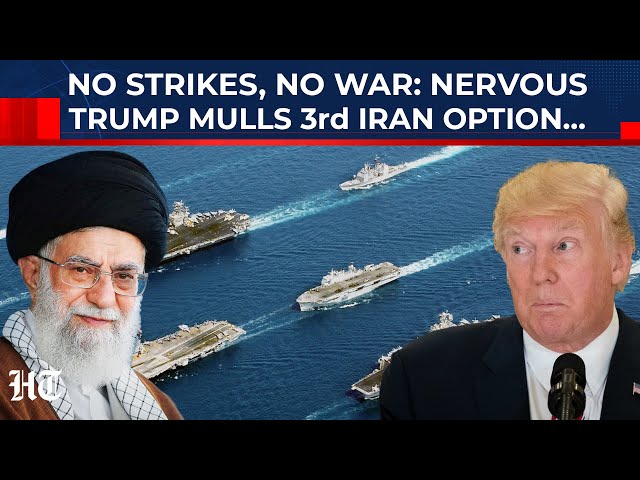
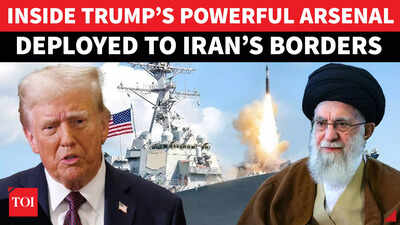
The president is convinced that Iran’s clerical leaders want to do a “deal” to avoid the possibility of war with the United States. He’s amassed a significant naval force in the region and has military options to inflict a grievous blow.
This buildup has added steel to hard-driving diplomacy.
And the Iranians may not be able to rely on a TACO (Trump Always Chickens Out) moment. Trump’s global belligerence has enforced red lines. He took bold action to assassinate Iranian military and intelligence chief Qasem Soleimani in Iraq in his first term. In his second, he sent US stealth bombers on a daring round-the-world trip to pulverize Iran’s nuclear sites.
Trump has also plunged into Iranian domestic politics more than any other 21st-century president, warning the clerical regime of reprisals for continued attacks on their own citizens, following a brutal crackdown last month that apparently killed thousands of people in cold blood.
In short, Trump has committed immense personal and geopolitical prestige to his latest test of wills with leaders in Tehran.
Why Iran is especially vulnerable

It might just make sense for Trump to charge through a rare opening: Iran has never been weaker in its 45-year showdown with the United States:
• The revolutionary regime’s future is clouded by a succession crisis that is eroding its aura of permanence. The aged Ayatollah Ali Khamenei cannot go on forever.
• Its crisis of political legitimacy has never been more extreme. Stark desperation and hopelessness drove protesters to the streets amid food and water shortages and grinding economic conditions.
• And Iran’s regional proxies — including Hamas in Gaza and Hezbollah in Lebanon, which once offered an insurance policy against outside attack — have been devastated by wars with Israel.

This trio of factors create a logical rationale for US military action against Iran. There may be no better time for Washington to topple a regime that has haunted its Middle East policy, threatened its allies, and killed many Americans, both in terror attacks and through militias during the Iraq war.
The opening may not last long. And if Trump and Israeli Prime Minister Benjamin Netanyahu don’t take the shot now, they may regret a lost opportunity in years to come.
If Trump managed a feat beyond Presidents Carter, Reagan, Bush, Clinton, Bush, Obama and Biden by defeating one of America’s most sworn enemies, he’d earn a place in history that couldn’t be denied. Given the current president’s obsession with legacy, this must be a tantalizing prospect.
In an administration where the constraints on presidential action have all been removed, it may come down to Trump’s instincts.
“The most important deliberations are those which are happening inside President Trump’s head,” Karim Sadjadpour, an Iran expert with the Carnegie Institute for International Peace, told CNN’s Becky Anderson on Monday.
“I think if you look at his own precedent on three major occasions, he rolled the dice with Iran in 2018 — he left the nuclear deal. In 2020 he assassinated Iran’s top military commander, Qasem Soleimani. And of course, last June, he bombed their nuclear sites, and he believes that all these decisions were vindicated, and now Iran is weaker than it has been in the past because it doesn’t have any air defenses.”
Sadjadpour went on: “I think that context, coupled with the fact that Iran’s leadership continues to taunt him and added to the fact that there isn’t a grand bargain to be done, there is not a Nixon to China moment where you can get a great deal and normalize relations. And if he’s already said he obliterated Iran’s nuclear program last June, it’s unclear to me how getting another nuclear deal is going to be the outcome that he’s looking for here.”
Risks of military action are higher than in Venezuela
But moving forward with military strikes would come with huge risks both in their execution and in the uncertain political conditions they may ensure.
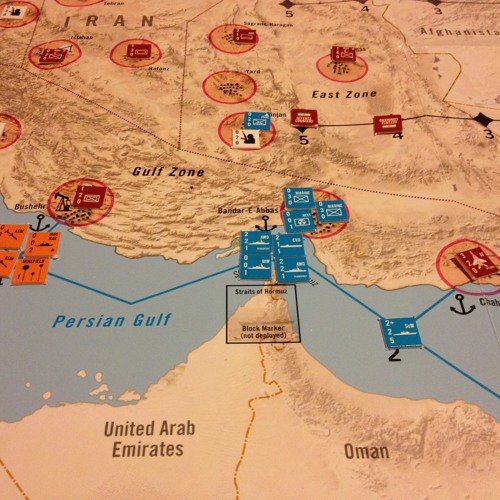
A serious attempt to either decapitate the Iranian regime or to devastate the military capacity of the Islamic Revolutionary Guards Corps and the Basij paramilitary militia would likely require a multi-day air campaign.
Attempting to degrade Iran’s capacity to crush new protests would run the high risk of civilian losses given that much of machinery of repression is sited in civilian areas. Without the unthinkable prospect of a major ground invasion, how effective could such an effort be when the recent crackdown was carried out with brutal close-quarters street violence?
Iran, the seat of the ancient Persian civilization, is more contiguous and less plagued by sectarian divides than Iraq — which splintered after the US invasion in 2003. But no one wants to test the impact of a power vacuum if the government falls, in the absence of any clear path to a return to democracy.
And the short, sharp thunderclap strike of the type Trump prefers and that doesn’t conflict with the no-foreign-quagmires mantra of his MAGA movement may not be sufficient to topple the clerical regime in Tehran.
But a longer military engagement with uncertain consequences would severely test Americans’ trust in their president. A war that went wrong could devastate Republicans in November’s already unpromising midterm elections.
A sense of hubris has gathered around the White House since the toppling of Venezuelan leader Nicolás Maduro last month. But major US combat deaths in an Iranian war could effectively drain all the power and legitimacy from Trump’s second term.
There’ve also been signs in recent weeks that America’s Gulf allies — with whom Trump is close — fear the consequences of a US attack on Iran. Short-term missile strikes by Iran are possible. Tehran could try to cripple regional oil infrastructure. And long-term unrest could jolt a region now transitioning towards lucrative new horizons like AI and tourism.
Some of Iran’s neighbors also fear chaos could ensue if Khamenei is killed because his country has known nothing but iron rule for more than 40 years. Another possibility is that the clerics could be succeeded by an equally brutal but more secular regime — that would seek to reconstitute its regional threat.

Why diplomacy may not work either
This is all an argument for stepping back from the brink.
But after Trump’s weeks of threatening rhetoric, a decision not to strike Iran could drain international credibility the president amassed with the strikes on the nuclear sites last year and with the stunning raid into Venezuela.
And doesn’t he also owe an obligation to Iran’s people as they dream of freedom?
Trump’s predecessors avoiding encouraging a counter-revolution in Iran because they feared providing a pretext for even more fierce repression against demonstrators seen as US proxies. Trump had no such qualms and his vow that the US was “locked and loaded” to punish Tehran for its crackdowns conceivably brought more people onto the streets.

If the president doesn’t follow up, Iran’s leaders may be even less reticent to inflict horrendous violence on their citizens come the next uprising.
Given the complexity of the military equation, it’s obvious why the administration has not closed off a diplomatic exit ramp. But it’s hard to see any deal that the president will offer Iran that it will be prepared to accept — and vice versa.
Secretary of State Marco Rubio laid out US goals ahead of the talks in Oman.
“I’m not sure you can reach a deal with these guys, but we’re going to find out,” Rubio said. He made clear that the administration wants to focus on Iran’s nuclear program, but also the range of Tehran’s ballistic missiles and its “sponsorship” of terrorist organizations and its treatment of its people.
CNN has reported Iran is interested only in discussing its nuclear program — in whatever shape that it may be following last year’s US attacks. That’s hardly surprising, since a deal that curtailed its missile threat would erode its capacity to deter future attacks by the US and Israel. In return for curbs on uranium enrichment, it would seek sanctions relief — leaving the Trump team with the unpalatable choice of entering into the same kind of deal they slammed former President Barack Obama for agreeing which excluded ballistic missiles and effectively allowed Tehran to build its regional power base.
One option for Trump would be to ink a rudimentary deal and hype it as a great victory — the great salesman’s certainly done this before.

This might placate war-weary US voters, but it would send a clear message of a climbdown to US adversaries and tarnish his global strongman aura.
Tehran, meanwhile, could do what it always does — test the limits of the deal and wait out yet another US president.
And the Iranian people Trump vowed to help just a few weeks ago would be be stuck under the iron rule of a ruthless regime with all hope crushed.

- Previous Cannot be more Weird, Obscener and Disgusting: stinky Indian guru, jailed for rape and murder, again out on parole for the 15th time
- Next China tests world-first 20GW microwave weapon, that can distrup Starlink satellites
You may also like...

Random news

About us
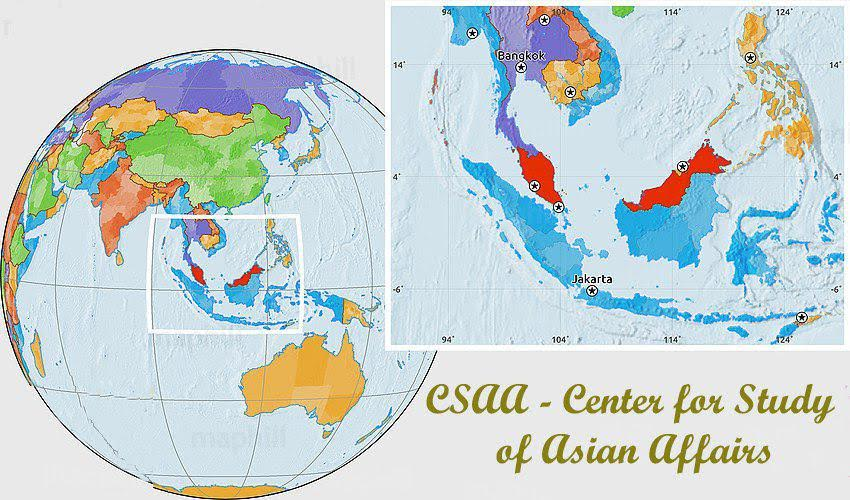
Our Newly established Center for study of Asian Affairs has
branches in Indonesia, Malaysia and Singapore, as well as freelances in some other countries.
For inquires, please contact: newsofasia.info@yahoo.com Mr.Mohd Zarif - Secretary of the Center and administer of the web-site www.newsofasia.net
Polls
 Loading ...