

Japan, through Pacific seabed mud, hopes for rare earth supply self-sufficiency
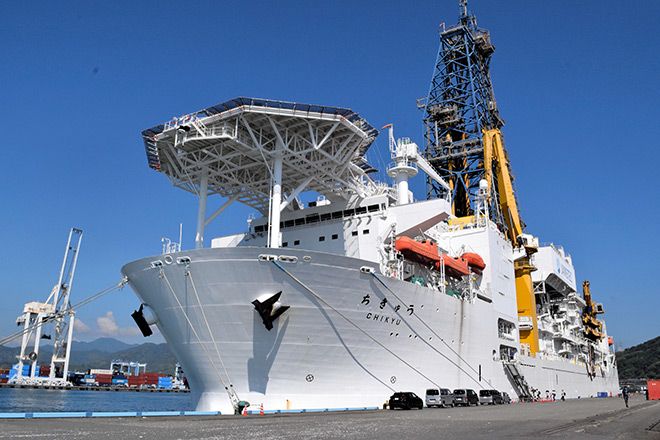 Survey vessel Chikyu is shown in September 2024 in Shizuoka’s Shimizu Ward. (Asahi Shimbun file photo)
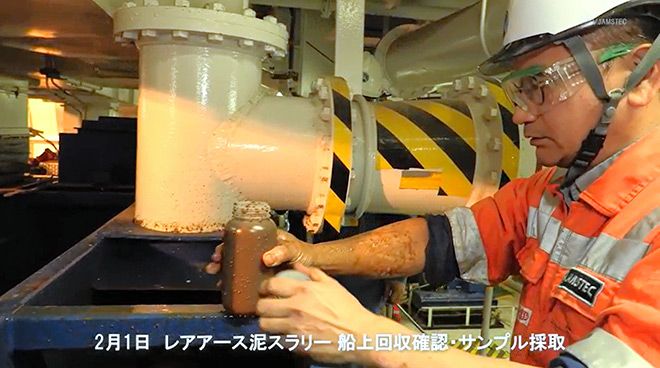
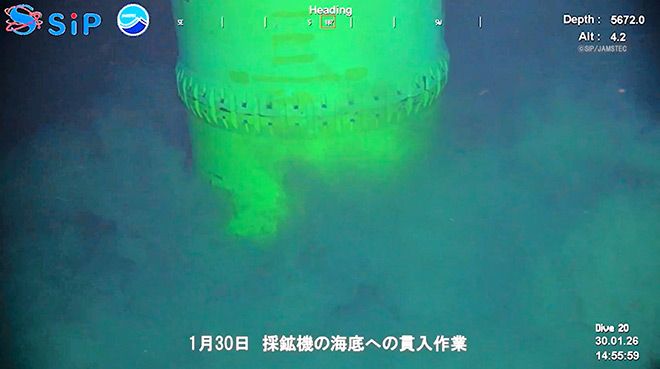
A Japanese research team has lifted mud from the seabed 5,700 meters below the surface that may contain rare earth elements, a feat that could eventually strengthen Japan’s hand in high-tech manufacturing.
The test was carried out around Minami-Torishima, a remote island about 1,800 kilometers south of Tokyo, the research team said Feb. 2.
“This feat is substantially meaningful from the perspectives of both economic security and comprehensive marine development,” Deputy Chief Cabinet Secretary Masanao Ozaki said at a news conference.
Rare earth minerals are indispensable resources for precision machinery, including smartphones and military weapons. They are described as “vitamins for industry,” given their critical role in high-tech products.
Japan’s deep-sea mining project is aimed at establishing a self-reliant procurement system for rare earths without relying on imports.
However, the Japanese project is still in its early phases, and several hurdles must be overcome.
Minami-Torishima island, Japan’s easternmost territory, lies within the 370-kilometer exclusive economic zone (EEZ), where the nation is allowed to develop minerals and other resources.
The initiative, about 150 kilometers southeast of the Pacific islet, represented the world’s first attempt to raise rare earths from such extreme ocean depths.
The Japanese team plans to separate and refine the deep-sea mud on land to determine if it contains the desired metals.
In the next stage, a full-scale mining test is scheduled for February 2027, where up to 350 tons of mud will be pumped up per day.
The initial experimental excavation was conducted primarily by the Japan Agency for Marine-Earth Science and Technology (JAMSTEC) under the Cabinet Office’s Strategic Innovation Promotion Program (SIP).
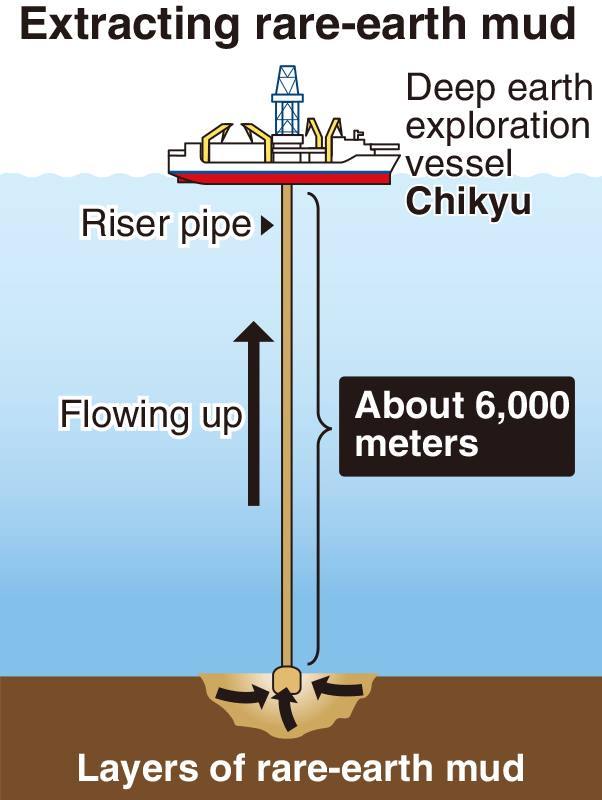
JAMSTEC’s survey vessel Chikyu deployed a specialized pipe to sample mud in the pilot drilling between Jan. 30 and Feb. 2.
Mining equipment with a rotating blade attached to the pipe tip allowed the research team to mix and soften rare earth soil with seawater on the ocean bottom. The mud specimen was then pushed onto the ship by the water flow in the tube, the team said.
CHINA’S IMMENSE PRESENCE
The government-affiliated project has already raised expectations that Japan can become self-sufficient in rare earths, a collective term for 17 specific elements on the periodic table.
Even small amounts of rare earth minerals can improve material performance so dramatically that they are used in wind turbines and permanent magnets for electric vehicle motors.
According to one estimate, the use of rare earths will surge severalfold from now amid the global transition toward decarbonization.
As world reserves are scarce and mining sites are unevenly distributed, China currently dominates the processes to refine and supply rare earth elements.
Data from the United States Geological Survey (USGS) shows that Beijing accounted for up to 70 percent of global rare earth production in 2024. China also holds a nearly 100-percent share of much more valuable heavy rare earths.
In 2010, China virtually stopped exporting rare earths to Japan after a Chinese fishing boat collided with a Japan Coast Guard patrol vessel off the Senkaku Islands. The coast guard detained the captain.
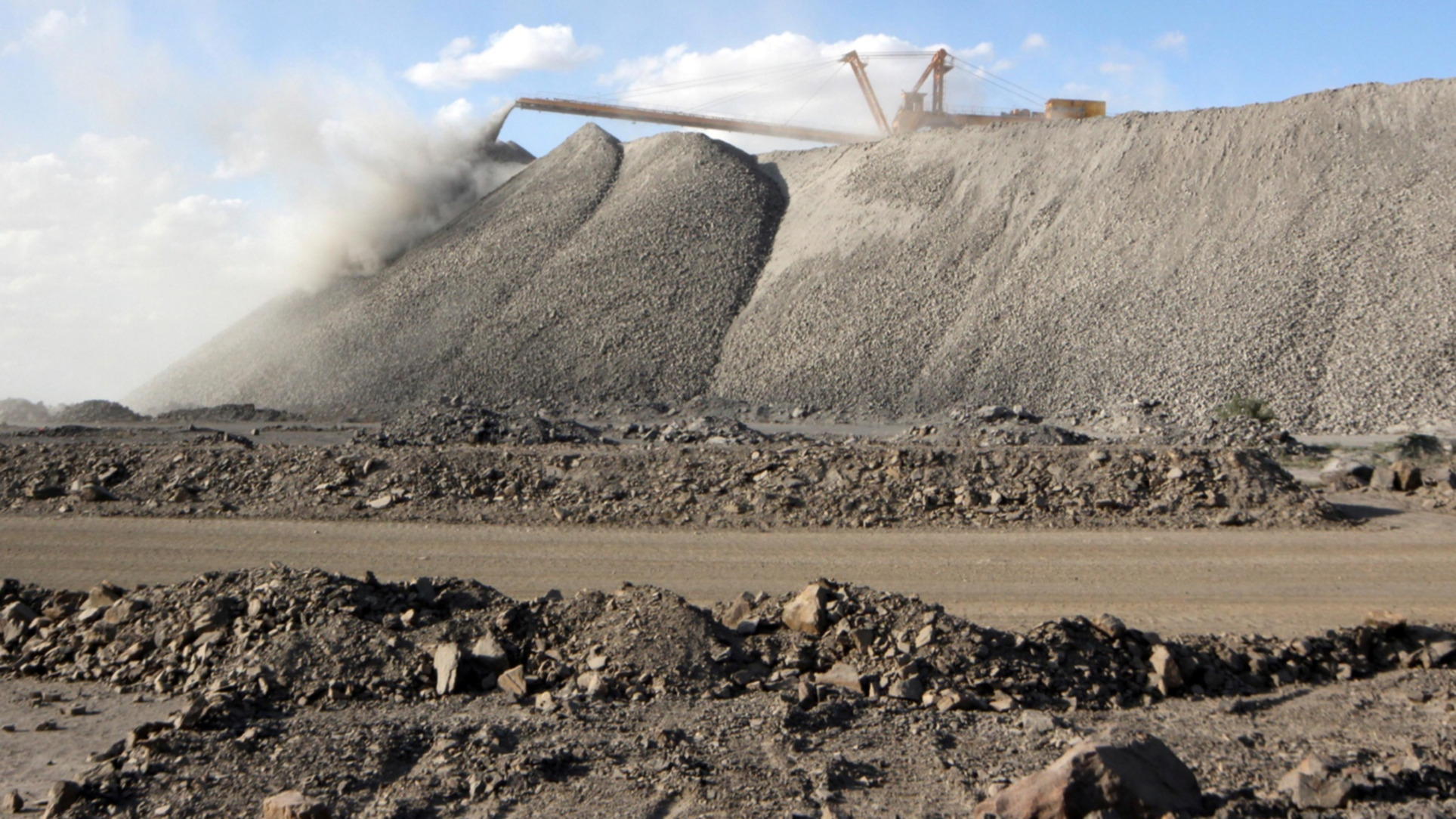
The islands in the East China Sea are administered by Japan but claimed by China.
Japanese companies and businesses were severely affected by the trade ban, which was dubbed the “rare earth shock.”
More recently, Beijing has increasingly used rare earth exports as a diplomatic card and ramped up trade restrictions.
In April 2025, China established a dedicated licensing system for rare earth exports, raising concerns about supply stability around the world.
And in January this year, Beijing unveiled plans to tighten export regulations on dual-use products to Japan that can be used for both military and civilian purposes.
The move came after Japan-China relations deteriorated over Prime Minister Sanae Takaichi’s remark that Japan may take action in the event of a military contingency on Taiwan.
Although the overall picture of the bolstered restrictions has not been revealed, fears are spreading that rare earth distribution could be disrupted.

The mining project around Minami-Torishima island is attracting considerable attention as a way for Japan to free itself from China’s grip on rare earths.
However, the mud retrieval was conducted solely on a trial basis, and it is way too early to tell if the initiative can be put on a commercial track.
Japan would need to develop a stable method to pump rare earth minerals from the seafloor at a depth of more than 5,000 meters, as well as smelting technology to remove impurities and extract rare earths.
The refining procedure will also entail burdensome expenses for preventing environmental pollution.
China’s exceptional smelting technique and its relatively lax environmental regulations give the country a strong competitive edge in the global rare earth market.
Tatsuo Yasunaga, chairman of Mitsui & Co., a Japanese trading house noted for its strength in resource development, mentioned the rocky road ahead for Japan.
“An effective smelting technique has not been developed outside China for decades,” Yasunaga, who is also chair of the Japan Foreign Trade Council, told a news conference in September 2025.
Yasunaga stressed that the success of the deep-sea mining project depends largely on government involvement. He also said companies in “the metal refining industry should simultaneously seek relevant expertise” on their own.
This article was written by Yuki Edamatsu and Shiki Iwasawa.

- Previous Guangzhou’s Historic Water Flower Fair in Yongqingfang
- Next “Zentralasien”5+1 Germany: quasi regional format asked by Berlin amid low international credibility
You may also like...



Random news






About us
Our Newly established Center for study of Asian Affairs has
branches in Indonesia, Malaysia and Singapore, as well as freelances in some other countries.
For inquires, please contact: newsofasia.info@yahoo.com Mr.Mohd Zarif - Secretary of the Center and administer of the web-site www.newsofasia.net
Polls
 Loading ...