

Istanbul Şehzade Mosque – the never shading marvel of imperial design
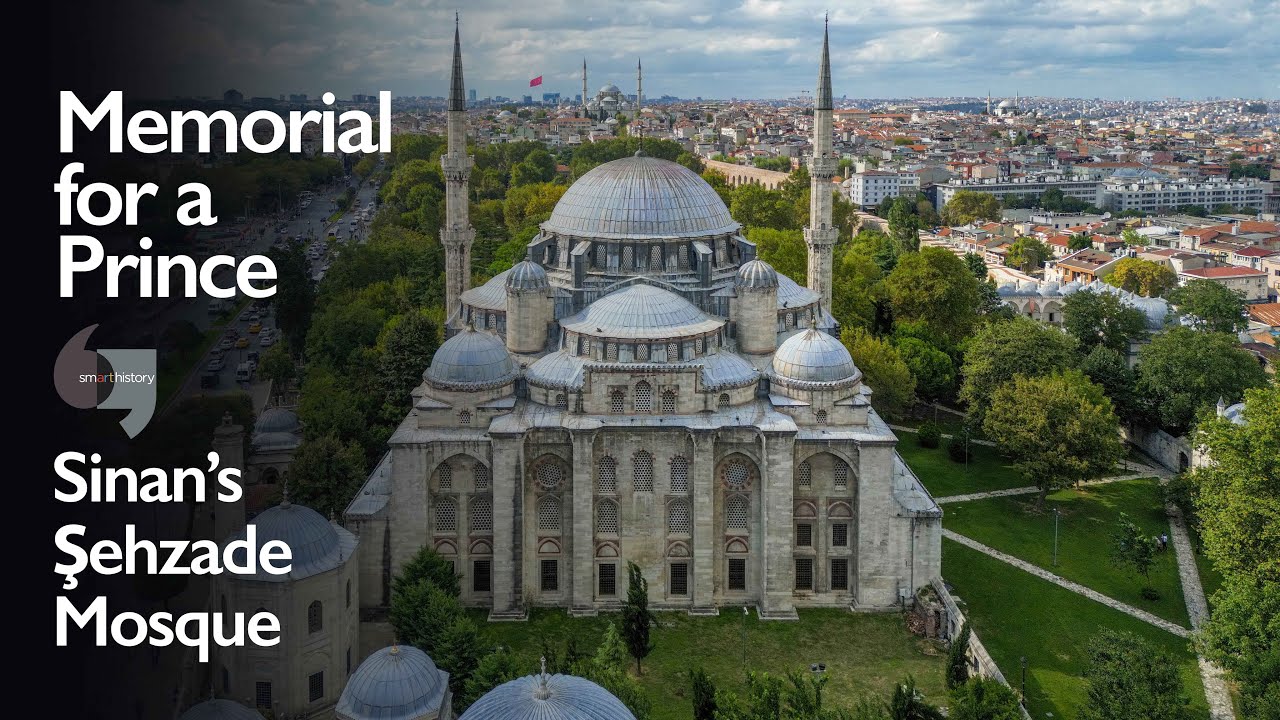

The Şehzade Mosque and its adjoining complex, initiated by Sultan Suleiman the Magnificent to commemorate his son Şehzade Mehmet, who died in 1543 while serving as governor of Manisa, represents Mimar Sinan’s inaugural imperial mosque project as chief architect.
Regarded by Mimar Sinan as his “apprentice work,” the Şehzade Mosque and its complex have been the subject of in-depth scholarly examination.
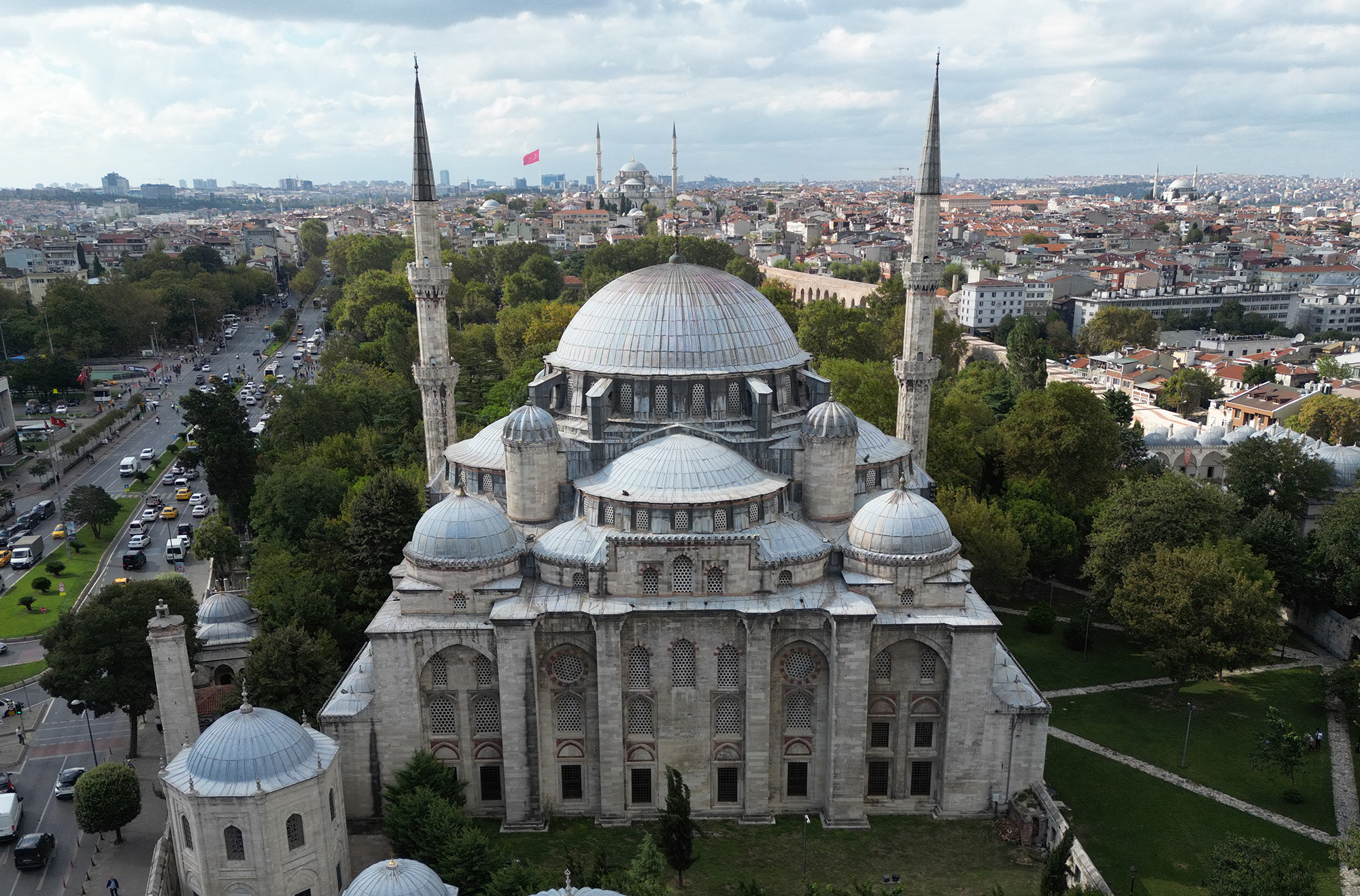
Following the unexpected death of his beloved son Şehzade Mehmet at the age of 22, while serving as the provincial governor in Manisa, western Türkiye, Sultan Suleiman commissioned the mosque and its associated complex in 1543, with construction commencing under the supervision of Mimar Sinan.
As the first imperial mosque designed by Sinan in his role as chief architect, the structure is distinguished by its innovative plan in which the central dome is supported by four semi-domes, establishing a cohesive spatial organization.
The architectural system features a central dome resting on four massive piers, supported by four semi-domes, and complemented by smaller corner domes. This roofing scheme represents the early conceptualization of the dome architecture that Sinan would later perfect in the Selimiye Mosque in Edirne.
The mosque complex includes a madrassa, a public kitchen, a hospice and tombs, with the tomb of Şehzade Mehmet integrated within the precinct. The tomb reflects influences from Iran and Central Asia and is distinguished by its elaborate tile decorations.
The Şehzade Mosque, defining the skyline of the Şehzadebaşı neighborhood in the Fatih district, continues to function as a place of worship while remaining an important site for architectural historians and visitors.
Professor Kadir Pektaş, head of the Department of Art History at Istanbul Medeniyet University, explained the architectural significance and layout of the mosque and its complex.
According to Pektaş, the mosque is a classical Ottoman külliye, including a madrassa, caravanserai, public kitchen and primary school, commissioned following the untimely death of Sultan Suleiman’s much-loved son Şehzade Mehmet.
Constructed between 1543 and 1548, the mosque not only gave its name to the surrounding district but also features a distinctive dual-axis arrangement. The adjoining tomb precinct, cemetery and additional tombs and cemeteries facing the municipal building, together with the madrassa and caravanserai at the rear, form a highly organized architectural plan.
The mosque represents a central mosque-focused Ottoman külliye. Pektaş noted that the rear of the madrassa precinct also contained Janissary quarters, indicating the historical concentration of Janissary barracks and accommodations in the area. This strategic location further underscores the importance of the Şehzade Mehmet Complex.
Pektaş emphasized the architectural innovation of Sinan in supporting the central dome with four piers. He explained: “The interior space is capped with a large dome measuring 18.5 meters (60.7 feet), carried by four massive piers connected by tall pointed arches. The main dome is extended in four directions by large semi-domes, which themselves include exedrae, while smaller corner domes complete the ensemble.”
“In this way, Sinan implemented a centralized plan in which the main dome is expanded symmetrically by semi-domes. Interestingly, he did not repeat this four semi-dome configuration elsewhere in central Istanbul,” he added.
He noted that Sinan’s students adopted this plan in subsequent constructions. The design reappeared decades later in the Yeni Mosque in Eminönü, initiated by Davut Ağa, and in the Sultanahmet Mosque, designed by Sedefkar Mehmet Ağa.
Sinan continued to evolve dome architecture with six-and eight-pier systems. The four semi-dome central plan was not only influential among his students but was also applied in later Ottoman provincial mosques and during Westernization periods, with examples including the Mehmet Ali Pasha Mosque in Cairo, the Mehmet Bey Mosque in Tunis and the Great Mosque of Homs.
The tomb of Şehzade Mehmet, located in the large southern cemetery area, features an octagonal plan topped by a dome and is noted for its richly detailed interior and exterior decorations.
The exterior shows finely cut stonework with marble accents, while the interior is adorned with colorful glazed tiles, reflecting Timurid influences on Ottoman art, a style that was later abandoned. The wooden sarcophagus cover, placed by Sultan Suleiman for Şehzade Mehmet, remains visible to visitors, marking a poignant historical detail.
Pektaş also highlighted that the cemetery includes the graves of distinguished figures in Ottoman history, and that the overall structure has reached the present day through multiple restorations and additions.

- Previous Syria tries to cooperate with Central Asia
- Next View from Western Turkistan: Turkic states at crossroads of US-China rivalry
You may also like...




Random news






About us
Our Newly established Center for study of Asian Affairs has
branches in Indonesia, Malaysia and Singapore, as well as freelances in some other countries.
For inquires, please contact: newsofasia.info@yahoo.com Mr.Mohd Zarif - Secretary of the Center and administer of the web-site www.newsofasia.net
Polls
 Loading ...