

India says its INS Aridhaman – a Nuclear submarine a deterrence on a permanent patrol
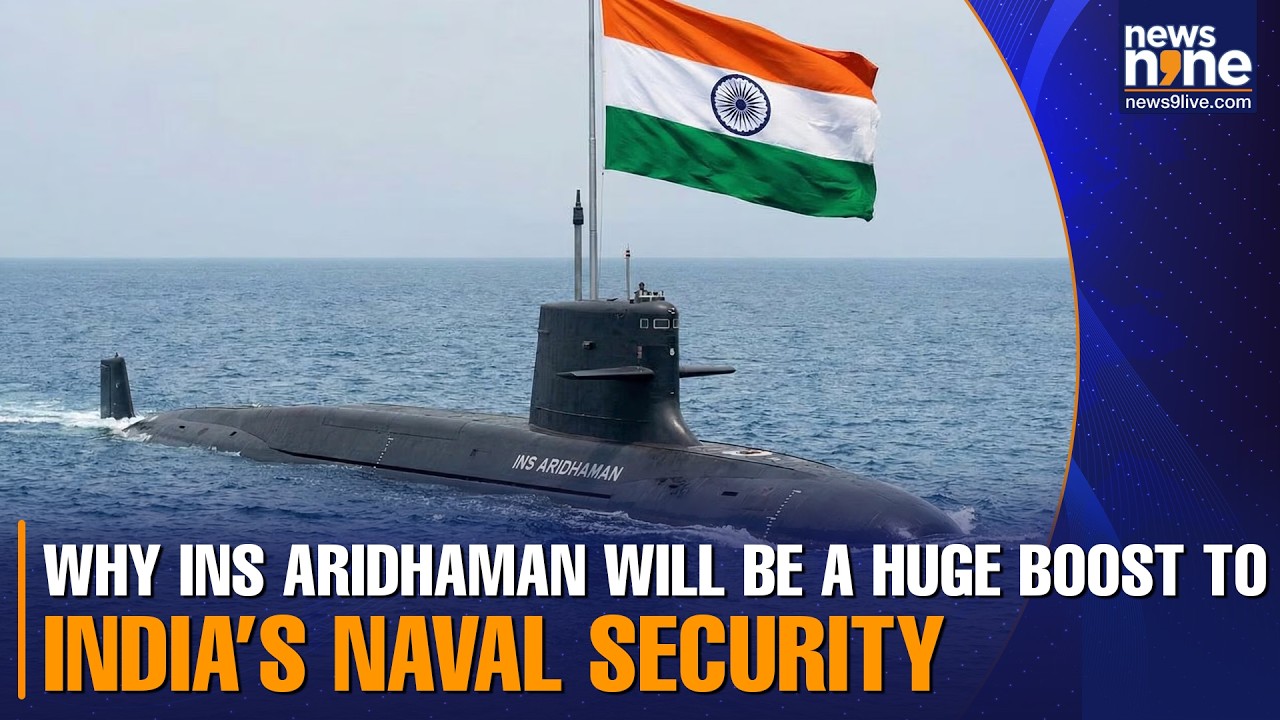
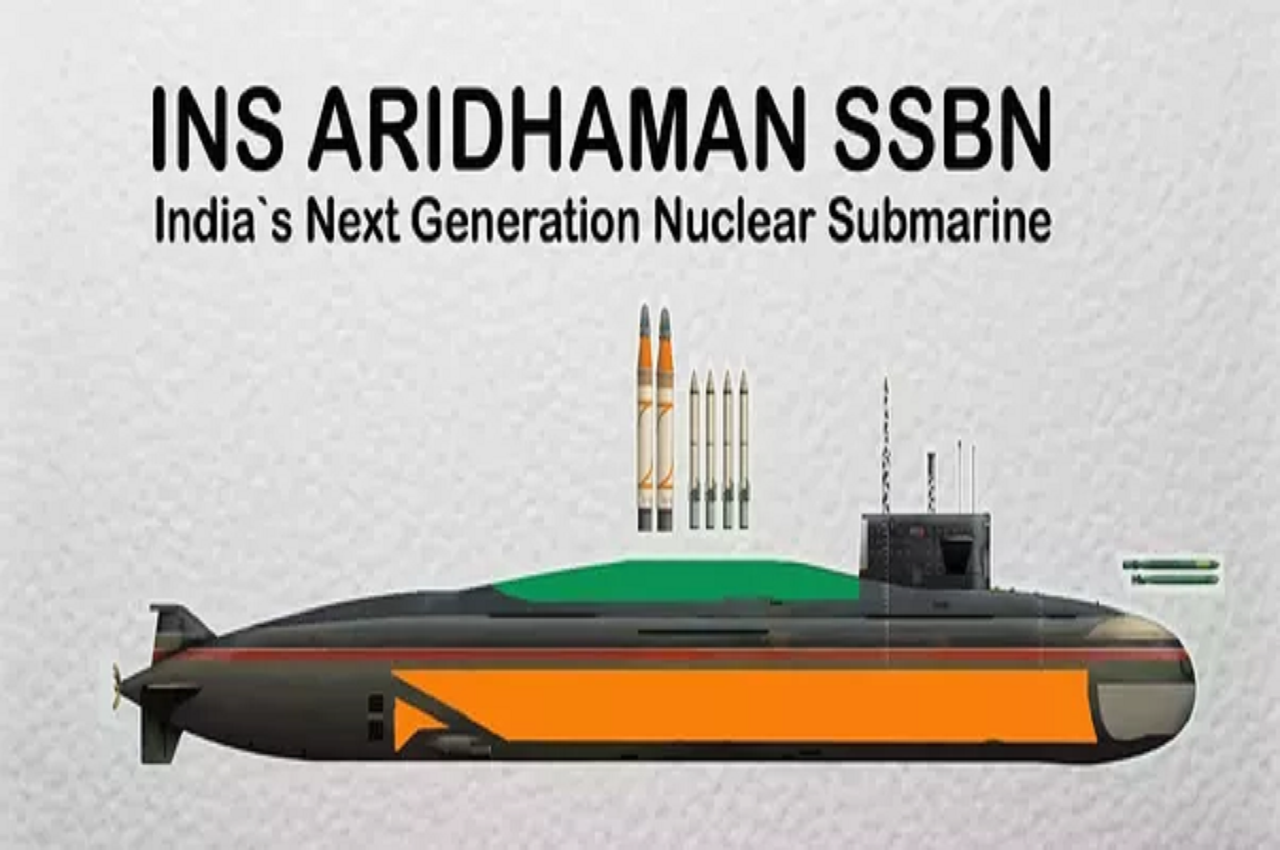
For a country committed to no-first use, INS Aridhaman is another step towards the most survivable form of deterrence: one that can endure a first strike and still fire back.
“Shabd nahi shakti hai, ‘Aridhaman’!”
– Defence Minister Rajnath Singh on X, April 3, 2026. In English: Aridhaman is not just a word, it is power.
In early April, while the Gulf flirted with catastrophe — “a whole civilisation will die tonight,” US President Donald Trump warned just hours before reaching a ceasefire with Iran — India quietly marked two major milestones in its nuclear journey. One was civilian: the Prototype Fast Breeder Reactor at Kalpakkam attaining first criticality, a landmark in the country’s long quest for energy self-sufficiency. The other was military: the commissioning of INS Aridhaman, India’s third indigenously built nuclear-powered ballistic missile submarine.

The commissioning of INS Aridhaman brings India closer to the league of countries such as the US, UK and France. For decades now, these countries have had at least one nuclear-powered ballistic missile submarine out at sea at all times.
In naval terms, this posture is known as Continuous At Sea Deterrence, or CASD. The logic behind it is simple: a weapon that cannot be found easily cannot be destroyed easily, and a weapon that cannot be destroyed remains available for retaliation.
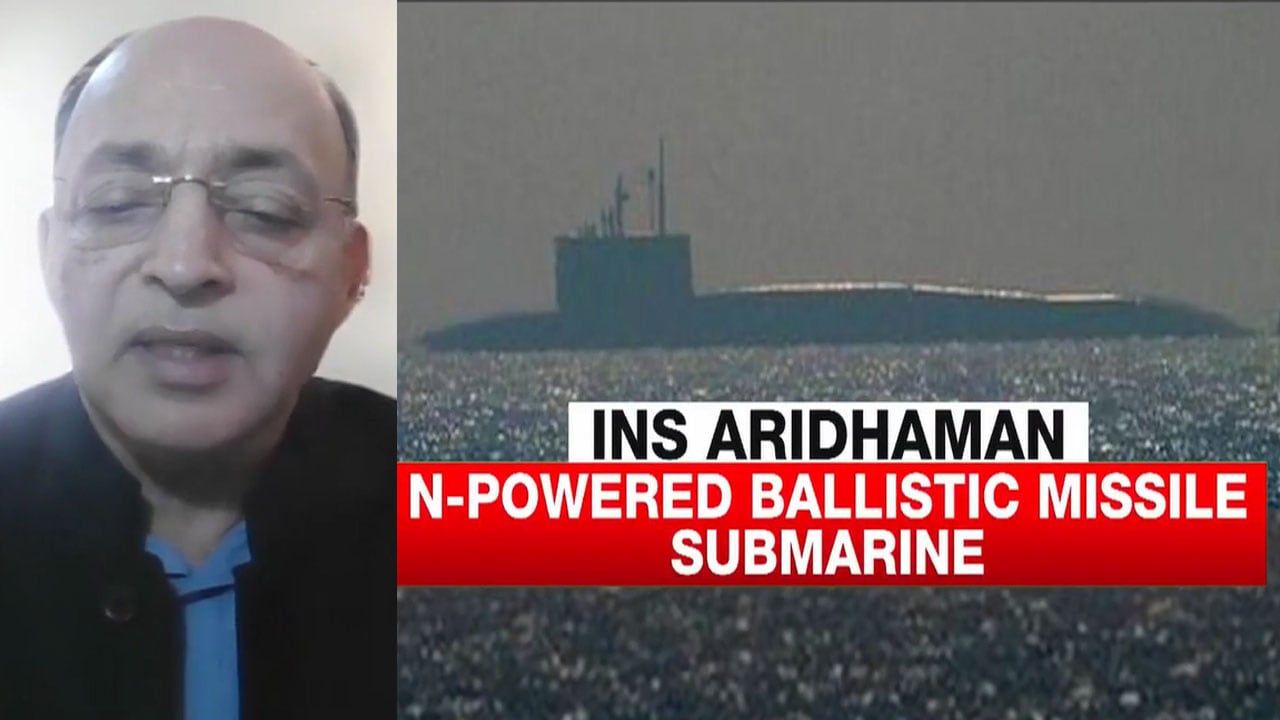
For India, whose nuclear weapons doctrine rests on no-first use, this matters more than it does for many others. India says it will use nuclear weapons only in retaliation against weapons of mass destruction. This means that India must be able to take the first blow and still possess the capability to hit back.
This is where ballistic missile submarines come in.
SSBNs: WHY THE QUIET ONES MATTER
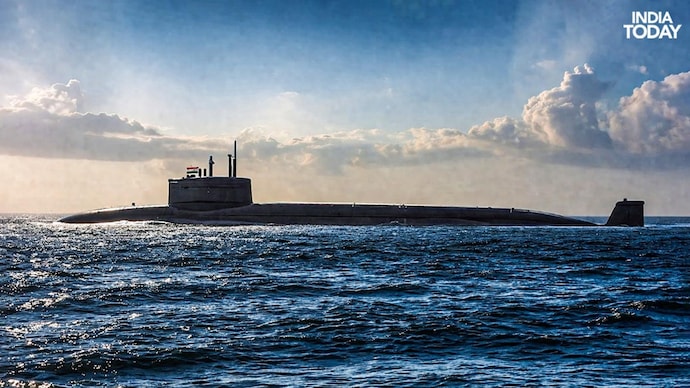
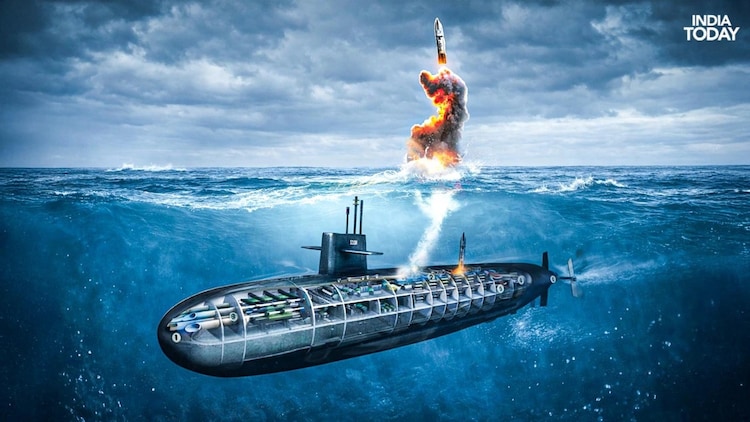
Short for ship submersible ballistic nuclear, SSBN is a submarine powered by a mini reactor and capable of carrying nuclear-tipped missiles. An SSBN is not meant to race about looking for enemy vessels or join conventional naval fights. Its real job is to disappear underwater and stay there.
That ability to stay hidden is what separates it from the conventional submarines that make up most of the Indian Navy’s current underwater fleet. Those boats are powered by diesel-electric systems. Put simply, they run on batteries underwater, but those batteries have to be recharged every so often by diesel engines. And diesel engines need air.
Which means a conventional submarine, no matter how stealthy, cannot remain submerged indefinitely. Periodically, it must come close to the surface, or surface fully, to draw in oxygen and run its engines. A submarine that comes up for air is a submarine that can, in theory, be found.
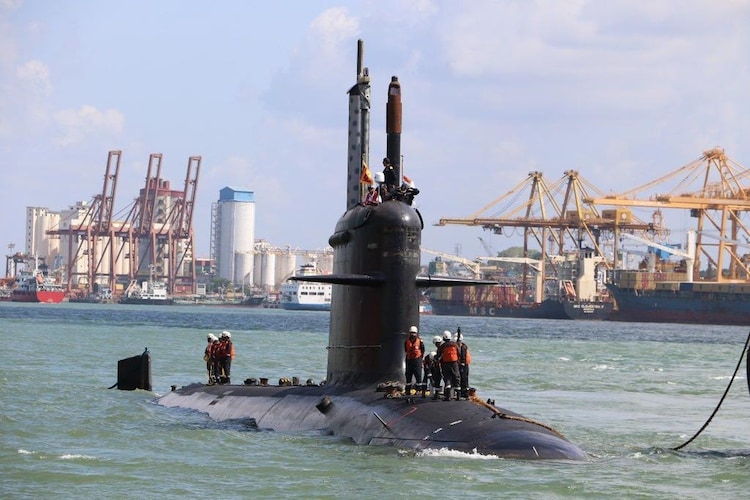
A nuclear submarine does not suffer from that problem in the same way. Its on-board mini-reactor is essentially a very sophisticated steam engine. A controlled nuclear reaction produces heat, that heat turns water into steam, and the steam drives turbines that propel the submarine and power its systems.
This allows SSBNs to stay underwater for very long periods; their endurance is limited less by fuel than by crew fatigue and food supplies. A typical SSBN patrol would see the submarine reach deep underwater, go quiet, and lurk there.
Compare that with the other nuclear weapons delivery systems. Bomber aircraft can be shot down or destroyed on the ground. Road-mobile missiles are harder to target, but they still can be spotted by satellites and other sensors. Underground missile silos, while hardened and difficult to ‘see’, are stationary, which is another way of saying they come with a postal address.
A ballistic missile submarine offers something rarer: concealment with mobility. Not exact invisibility. But close enough to make detection fiendishly difficult.
INDIA’S SSBN QUEST
India’s SSBN story is old, secretive and painfully slow — as such programmes usually are.
The idea that India should build and operate SSBNs can be traced back to the late 1960s. China had just tested its nuclear bomb and the concept of a nuclear triad (the ability to fire nuclear weapons from land, air, and sea) had begun to take shape in Indian strategic thinking.
However, it is difficult to draw a true timeline of India’s SSBN project because of the sheer secrecy surrounding it. This was a time of what critics have called nuclear apartheid — a few nuclear-weapon states (primarily the West) maintaining arsenals of their own while restricting others from acquiring the same capability through punishing treaties and sanctions.
And so, India kept the deceptively and innocuously named Advanced Technology Vessel project under wraps as it tried to master what only a handful of countries had managed: fitting a compact nuclear reactor into a submarine hull, making it safe enough to operate, rugged enough for sea service, and quiet enough not to advertise its own existence.
The programme was meant to deliver one land-based reactor and three submarines: S1, S2, S3 and S4, respectively. S1 was the shore-based prototype reactor used for testing and training; S2, S3, and S4 were the boats that would become INS Arihant, INS Arighaat, and INS Aridhaman.
The ATV project received rare public limelight in 2009 when Arihant, the first submarine of the class, was launched. INS Arihant (S2) was eventually commissioned in 2016 after extensive sea trials, with its sister sub Arighaat (S3) following in 2024. The S4, Aridhaman, has now followed them.
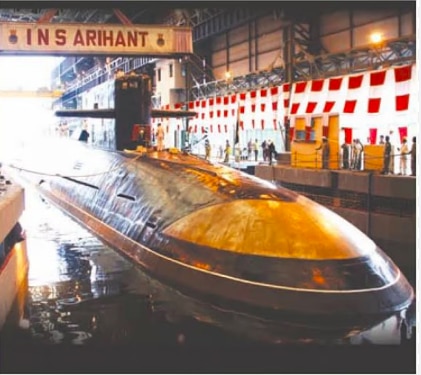
Aridhaman is slightly larger than the first two boats, displacing around 7,000 tonnes against the roughly 6,000 tonnes of Arihant and Arighaat. More importantly, it can carry twice as many of the larger ballistic missiles as its predecessors, making it the most powerful combatant India has yet built.
But the ATV story does not end with Aridhaman. There is also the intriguingly code-named S4*, a fourth submarine added later after planners decided the existing production line should not fall idle before work on the next-generation S5 class gathered pace.
The asterisk in the name is a clue to its origin: it was not part of the original numbering sequence, and by the time it was cleared, the S5 designation had already been reserved for an entirely new class of larger ballistic missile submarines. So the extra boat became, simply, S4*.
THE MAGIC NUMBER
Now, it is one thing to own a ballistic missile submarine. It is quite another to sustain Continuous At Sea Deterrence. CASD is not a boat. It is a cycle.
Nuclear submarines do not live permanently in some blue void. They spend a good deal of their lives being repaired, overhauled, tested, re-certified, replenished, and turned around. That is the hidden arithmetic behind the phrase “continuous at sea”. One boat may be out on patrol. Another may be preparing to replace it or returning from a patrol just completed. A third may be in maintenance.
Which is why Aridhaman matters so much. Arihant alone gave India a sea-based deterrent. Arihant and Arighaat gave it depth. Aridhaman gives it the beginnings of rhythm — the possibility, at least in theory, of keeping one submarine out while the others rotate through the unavoidable grind of preparation and upkeep.
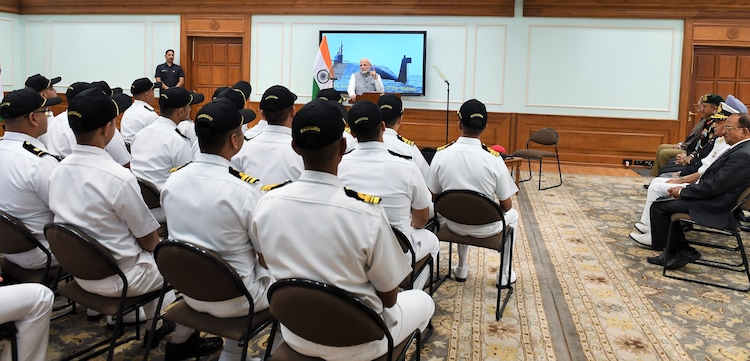
But three boats may still be only the threshold, not the ideal. Many analysts argue that a truly robust CASD posture requires at least four submarines, if not more. Accidents happen. Refits take longer than planned. Systems fail. One disrupted boat can throw an entire patrol roster out of step.
India got a glimpse of that in 2018, when reports suggested a mishap left INS Arihant out of action for months. The government refused to comment, citing national security. But the strategic implication was obvious: when your fleet is small, even a minor accident can become a major deterrence problem.
It is a vulnerability India will begin to cushion with the arrival of S4*. Fortuitous, given that the last of the Arihant-class boats was a late addition to the programme, almost an after-thought.
WHAT COMES NEXT
Even with Aridhaman, India’s current crop of Arihant-class SSBNs are still, in global terms, modest boats. Useful, significant, strategically valuable, but modest. In the defence community, the Arihant-class submarines are often termed “baby boomers”, a reference to their relatively smaller size compared to the ballistic missile submarines operated by the major nuclear powers.
This brings us to the S5 programme referred to earlier. As secretive as the ATV project before it, the S5 programme is expected to build a new generation of SSBNs with bigger hulls, more tubes, and more comfortable missile geometry.
This programme, currently under development, is accompanied by other complementary and equally classified projects. One is to develop longer-range missiles that would allow Indian submarines to target the entirety of both Pakistan and China from the relative safety of the Bay of Bengal (a part of that effort is already operational, as detailed in an earlier IndiaToday.in article).
The other is INS Varsha, a dedicated submarine base coming up along India’s eastern coast. Not much is known about the project except that it is expected to use natural terrain to hide and protect India’s nuclear submarines when they are at their most vulnerable: in port, being repaired, replenished or readied for patrol.
For a country that promises nuclear retaliation only after absorbing a first strike, that vulnerability matters immensely. The real value of India’s SSBNs lies not in their missiles or hulls, but in their ability to survive long enough to fire them. And survival begins at home port, before the boat has even slipped beneath the surface.

- Previous Trump’s Total 2027 National Security Spending Will Exceed $2.5 Trillion
- Next Heúrēka-Eureka: Sumo’s ban on women not always a tradition
You may also like...






Random news












About us

Our Newly established Center for study of Asian Affairs has
branches in Indonesia, Malaysia and Singapore, as well as freelances in some other countries.
For inquires, please contact: newsofasia.info@yahoo.com Mr.Mohd Zarif - Secretary of the Center and administer of the web-site www.newsofasia.net
Polls
 Loading ...