

ASEAN eyes expansion as Pinglu Canal

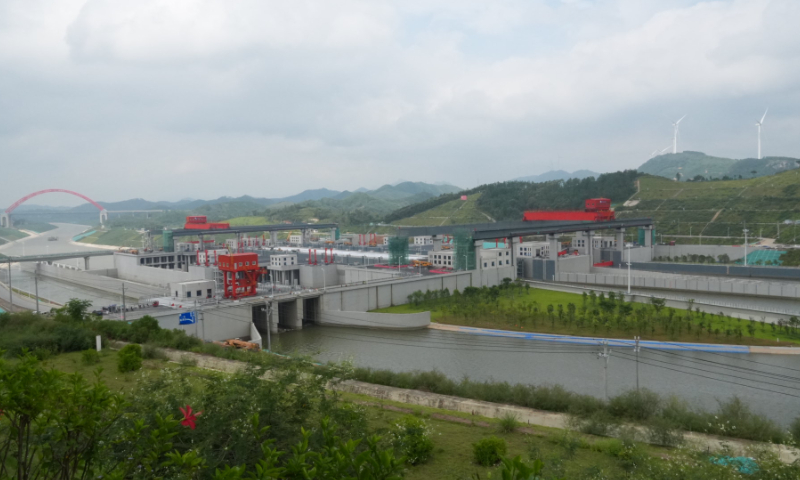
A view of the Madao ship lock of the Pinglu Canal in South China’s Guangxi Zhuang Autonomous Region on August 19, 2026 Photo: Chu Daye/GT
As final preparations continue for China’s major river-to-sea Pinglu Canal before its official opening in September, representatives from companies said that the canal will be a game changer for regional economic development and has already become a calling card in business expansion.
Preparations for the official opening of the 134.2-kilometer Pinglu Canal, a key project of the New International Land-Sea Trade Corridor, have entered a final phase, with vessels conducting trial runs and the Nanning Maritime Safety Administration issuing the first batch of route endorsement certificates to nine seagoing crew members.
According to a statement sent to the Global Times by the Nanning Maritime Safety Administration on Tuesday, the issuance of certificates will provide maritime talent support for the full opening of the Pinglu Canal and the safe operation of river-sea intermodal transport.
Even before the official opening, representatives from manufacturing plants along its route said that the canal’s economic benefits were already being felt.
“We are very glad that the canal is finally approaching its opening day,” Qin Yubin, a vice president of Guangxi Rizon Sino Sci-tech Co, a manufacturer of paper products such as facial tissue, told the Global Times on Wednesday.
Qin’s company acquired a shipbuilding company in Hengzhou, South China’s Guangxi Zhuang Autonomous Region, located along the canal, in 2014 and converted it into a paper products factory with annual output of 450 million yuan ($66.73 million).
“Currently, we have to ship pulp – the raw material for papermaking – from Qinzhou Port, Guangxi at the end of the canal by container truck. Overland freight for each 40-foot container costs about 2,600 yuan,” Qin said.
“We have done the calculation: if we can transport cargo by water directly from our factory gate, the cost will drop to 1,200 yuan per container. At our current import and export scale, the saving in logistics alone will be 500,000 yuan a year,” Qin said. “I cannot speak for other businesses, but for the papermaking business, when the volume is large and demand for timeliness is moderate, canal transportation would be a huge boon to our business!”
“Ever since the canal project became a reality, the Pinglu Canal has been the first thing we mentioned in every business meeting with our ASEAN clients,” Qin said. “The canal has become our calling card, and we are telling our business partners that we plan to share the dividends brought by the canal with them to grow together.”
Qin said that according to his company’s estimates, reduced logistics costs will translate into expanded market reach in ASEAN, with export volume expected to more than double to about 7,000 tons a year.
As Global Times reporters traveled along the Pinglu Canal, industries along its banks were expanding, with some manufacturers adding to their floor space and others buying new parcels of land to build chemical plants, paper factories or shipyards.
Such a trend has also improved local employment prospects and many people can now work near their hometowns.
Huang Heyun, 23, is a laboratory technician who just started her career at Guangxi Zilion New Materials Co. She told the Global Times on Wednesday that as a local Guangxi person, she is very pleased with the opening of the canal. “I believe there will be more plants opening as the canal opens to traffic, there will be more factories, more jobs!”
Li Yuncong, a manager with the recycler of used battery material, said that Zilion employs about 200 people at its plant in Hengzhou, and the opening of the canal is set to facilitate trade between Guangxi and the Southeast Asian market, benefiting his company’s business.
Lei Xiaohua, deputy director of the Institute of Southeast Asian Studies at the Guangxi Academy of Social Sciences, told the Global Times on Wednesday that the Pinglu Canal will turbocharge trade and industrial chain integration between China and ASEAN and greatly drive local and regional development.
ASEAN is China’s largest trading partner. In the first seven months of this year, bilateral trade reached 5.14 trillion yuan, up 20 percent year-on-year, customs data showed. Trade with ASEAN accounted for 17.1 percent of China’s total foreign trade.
Construction of the Pinglu Canal began in August 2022, and the canal is set to open in September, according to the Xinhua News Agency.

- Previous Starling to Fall: After beating Mack’s Tesla in EV market, China races against “Space X”‘s “Starlink”
- Next China agrees to speed up fuel supplies to Kyrgyzstan
You may also like...






Random news











About us
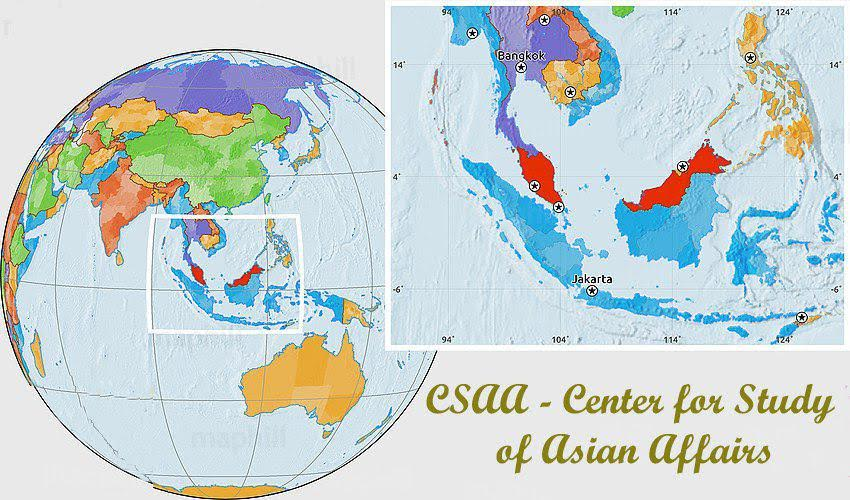
Our Newly established Center for study of Asian Affairs has
branches in Indonesia, Malaysia and Singapore, as well as freelances in some other countries.
For inquires, please contact: newsofasia.info@yahoo.com Mr.Mohd Zarif - Secretary of the Center and administer of the web-site www.newsofasia.net
Polls
 Loading ...