

Xi is in Bishkek for SCO summit
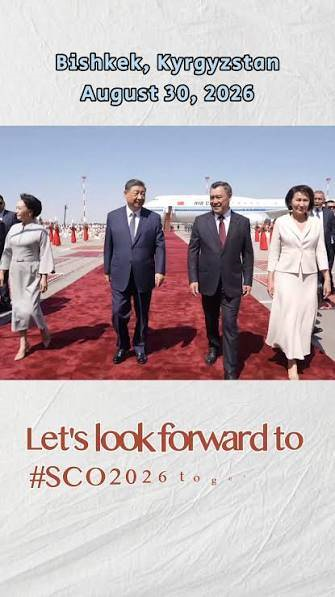
Shanghai Cooperation Organisation’s 25th anniversary summit expected to offer clues to China’s ambitions for a more multipolar Asia, analysts say


As Washington’s strategic focus shifts and energy and grain supply disruptions continue to unsettle the Middle East, Beijing’s expanding presence across Central Asia is expected to be in focus as Kyrgyzstan hosts the Shanghai Cooperation Organisation (SCO) summit this week.
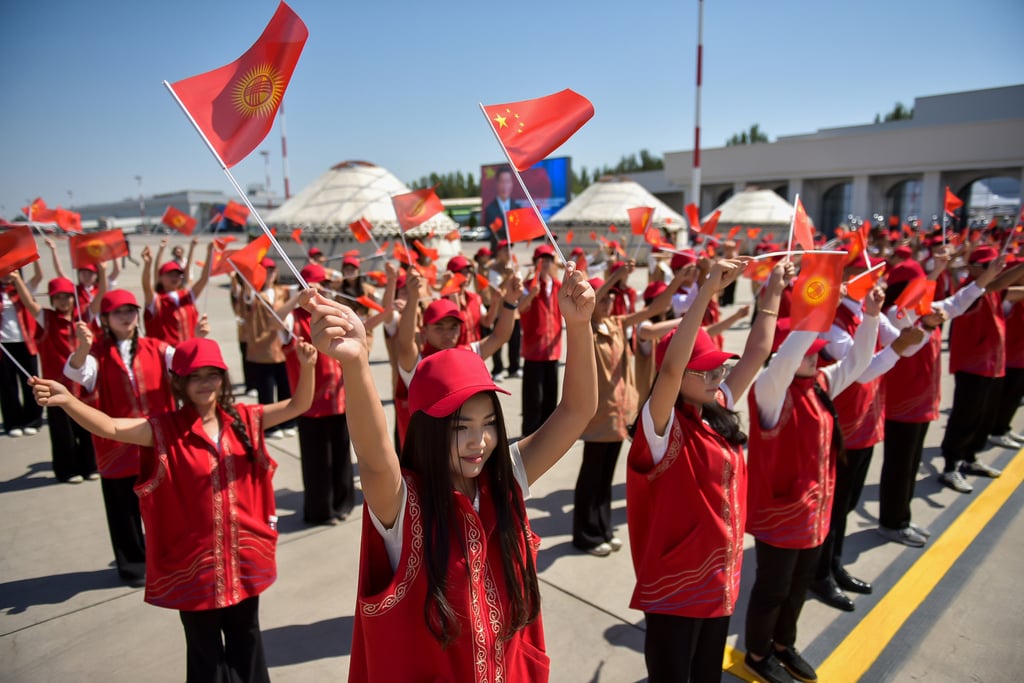
China-Central Asia goods trade hit a record US$106 billion last year, according to Chinese government data, making Beijing the largest trading partner of the five countries combined for the first time.
Li Lifan, an expert on Russia and Central Asia at the Shanghai Academy of Social Sciences, said the SCO and Central Asia held special significance for Beijing.
“As global competition intensifies between the US-led West and the emerging Global South amid a fractured international order, Beijing has placed greater weight on the SCO and Central Asia as a whole,” Li said, adding that “by deepening engagement and aligning more closely with Central Asian partners, China seeks to build common ground and present a more united front”.
“Through the SCO, China can project power and influence aspects of the global order,” he said, noting that the group’s expansion showcased China’s diplomatic appeal and influence.
In China’s diplomatic hierarchy, the United Nations ranks as the highest-level platform, while the SCO follows as the most important regional body.
Founded in 2001 by China and Russia, the now 10-member Eurasian security and economic forum brings together four Central Asian states – Kazakhstan, Kyrgyzstan, Tajikistan and Uzbekistan – and also newer entrants Belarus, India, Pakistan and Iran. Turkmenistan is the only non-SCO member in Central Asia but often attends summits as a guest nation.
Zhu Yongbiao, director of the Centre for Afghanistan Studies at Lanzhou University, said security remained Beijing’s top priority in Central Asia, not only along its western border but across the wider region, including the protection of key connectivity projects.
“I believe China’s primary interest in Central Asia is security, that is, ensuring a peaceful and stable neighbourhood,” he said.
Regional security is expected to feature prominently on the Bishkek agenda, according to Li, with Afghanistan, intelligence sharing and counterterrorism cooperation among the main concerns.
While the China-Central Asia trade figure reflects the rapid expansion of commercial ties, Zhu cautioned against overstating the region’s economic weight.
He said Central Asia’s limited population and economic scale, as well as “overstated claims” about its mineral and energy resources, meant the region accounted for a relatively small component of China’s overall foreign trade.
Zhu emphasised that the region’s true strategic value stemmed from its geography – sitting next to China’s western border in Xinjiang, and serving as a critical bridge between China, Russia, the Middle East, South Asia and Europe.
Li cautioned that security would remain a major challenge for the railway, as the route passes through difficult terrain and long tunnels vulnerable to terror attacks.
“Protecting this ‘steel lifeline’ is critical, as it is seen as China’s gateway to Central Asia and the Persian Gulf,” he said.
Zhu said these projects were driven by demand from Central Asian and other states, rather than by Chinese strategy alone.
“Central Asian states, South Asia and Iran all seek stronger links, making connectivity inevitable,” he said. “China’s involvement adds momentum, enhances cooperation, improves quality, and accelerates the development of related routes.”
Energy and food security are also emerging as important non-traditional security concerns for the SCO, Li added, citing fuel disruptions linked to Russia’s war in Ukraine and the impact of climate change on harvests.
Iran’s protracted conflict with the United States will also be closely watched, given the strategic importance of the Strait of Hormuz for both energy and grain shipments.
Meanwhile, China’s expanding economic and technological role has raised questions about its ties with Russia, which remains the region’s principal security partner.
“Central Asian economies increasingly lean on China for trade, investment, infrastructure and technology, while Russia retains military bases, security arrangements and deep political and cultural ties,” Li said.
“As a local saying goes: ‘We wear Moscow’s armour, but our heart beats in Urumqi [capital of Xinjiang].’”
Yun Sun, director of the China programme and co-director of the East Asia programme at the Stimson Centre, noted that the SCO had also served as a mechanism for managing China-Russia relations, and that its limited practical achievements reflected the geopolitical and economic differences among its members.
“Some people call it a ‘nothing burger’. But conflict prevention and management of potential animosity are also of significant value,” she said.
China’s messaging through the SCO might also evolve now that strategic pressure from Washington had eased, Sun added, saying: “This year is the first time for a decade that China does not face a dire threat on the US front.”
She noted that while Beijing previously leveraged the SCO partly to help counter US pressure, its fundamental goal – demanding global governance reform and a “more just and reasonable international order” – remained unchanged.
Li, however, cautioned that the SCO’s role in the US-China rivalry should not be overstated.
“Central Asian states tend to pursue their own interests and resist taking sides. China has framed cooperation as open and inclusive, generally refraining from pressuring Central Asian governments to ‘choose sides’,” Li said. “Their approach is best described as hedging.”
Central Asian leaders deliberately exploited great-power rivalry to preserve strategic autonomy, resisting pressure to align fully with Russia or any other power, he added.
Meanwhile, the US has been stepping up engagement with Central Asia, with Secretary of State Marco Rubio expected to visit all five former Soviet states soon after the SCO summit.
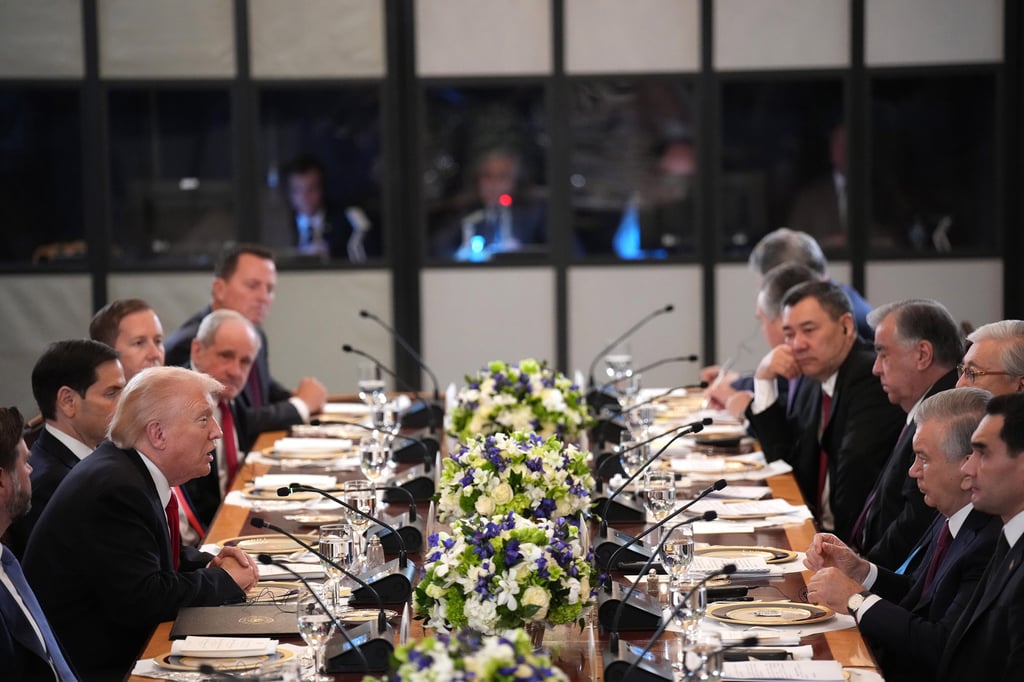
In recent weeks, the US has pressed dozens of countries including Kazakhstan to “choose sides” in artificial intelligence (AI) cooperation. There is even talk of inviting Trump to the region, underscoring Washington’s growing interest.
Uzbekistan has approached the US about joining Pax Silica, its flagship initiative on AI supply chains, a month after it signed up for China’s own global grouping, the World Artificial Intelligence Cooperation Organisation (Waico). Kazakhstan – the first Central Asian nation to sign up to Pax Silica – joined Waico in July.
Artyom Lukin, a professor at Russia’s Far Eastern Federal University, had a more sceptical take on the SCO’s practical impact.
“I think the SCO can’t be regarded as an efficient organisation delivering tangible results,” he said. “It’s definitely a talking shop in the first place and in the second place as well. I think almost everyone understands this reality.”
However, that does not make the organisation irrelevant.
As Lukin put it: “The SCO does have a certain value as a forum for multilateral dialogue of Eurasian powers as well as a venue for diplomatic signalling.”


- Previous Japan to spend a record $56B for defense budget in 2027
- Next India concerned over new security bloc: Will Pak-Saudi-Turkey keep Bangladesh at the door?
You may also like...


Random news
About us
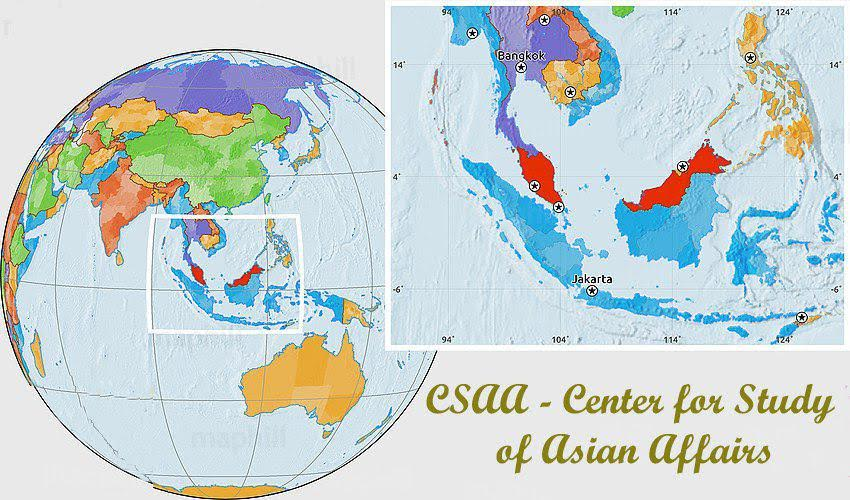
Our Newly established Center for study of Asian Affairs has
branches in Indonesia, Malaysia and Singapore, as well as freelances in some other countries.
For inquires, please contact: newsofasia.info@yahoo.com Mr.Mohd Zarif - Secretary of the Center and administer of the web-site www.newsofasia.net
Polls
 Loading ...