

Beautiful Japan: Isle in Nagasaki – a marvelous landscape with rich religious history
 The Former Nokubi Church remains in existence on July 7 at a site in Ojika, Nagasaki Prefecture, that was once lined by stone-built terraced fields and residences during bygone days. (Masaru Komiyaji)
OJIKA, Nagasaki Prefecture—Though getting there is not easy, visitors to a World Heritage island won’t mind the long trek to enjoy the spectacular scenery and the abundant historical background on offer.
Sightseers wanting to reach Nozakijima island need to first travel west by boat from Hakata Ward in Fukuoka Prefecture or Sasebo in Nagasaki Prefecture.
They should then transfer to a municipal morning ferry on Ojikajima islet in the northern part of the Goto island chain.
This multi-stage journey from Fukuoka will require eight hours but eventually take tourists to Nozakijima in Ojika town.
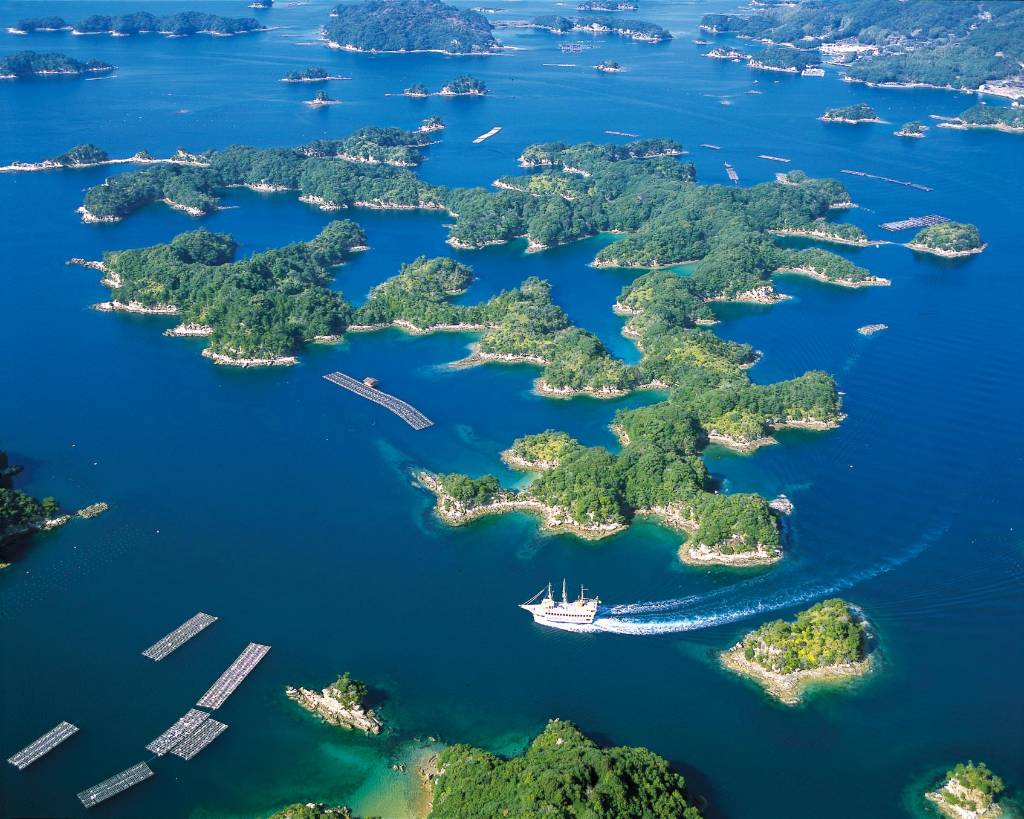
Consisting of 17 isles of various sizes located 60 kilometers west of Sasebo Port, Ojika town boasts inhabited communities on six islands, inclusive of Ojikajima, and a total population of 2,000.
The town’s major industry is fishing of primarily grunt and cutlassfish. Most of the town area lies within the Saikai National Park.
Nozakijima, among all similar islets across Ojika town, is effectively uninhabited at present. However, it is still full of rich history.
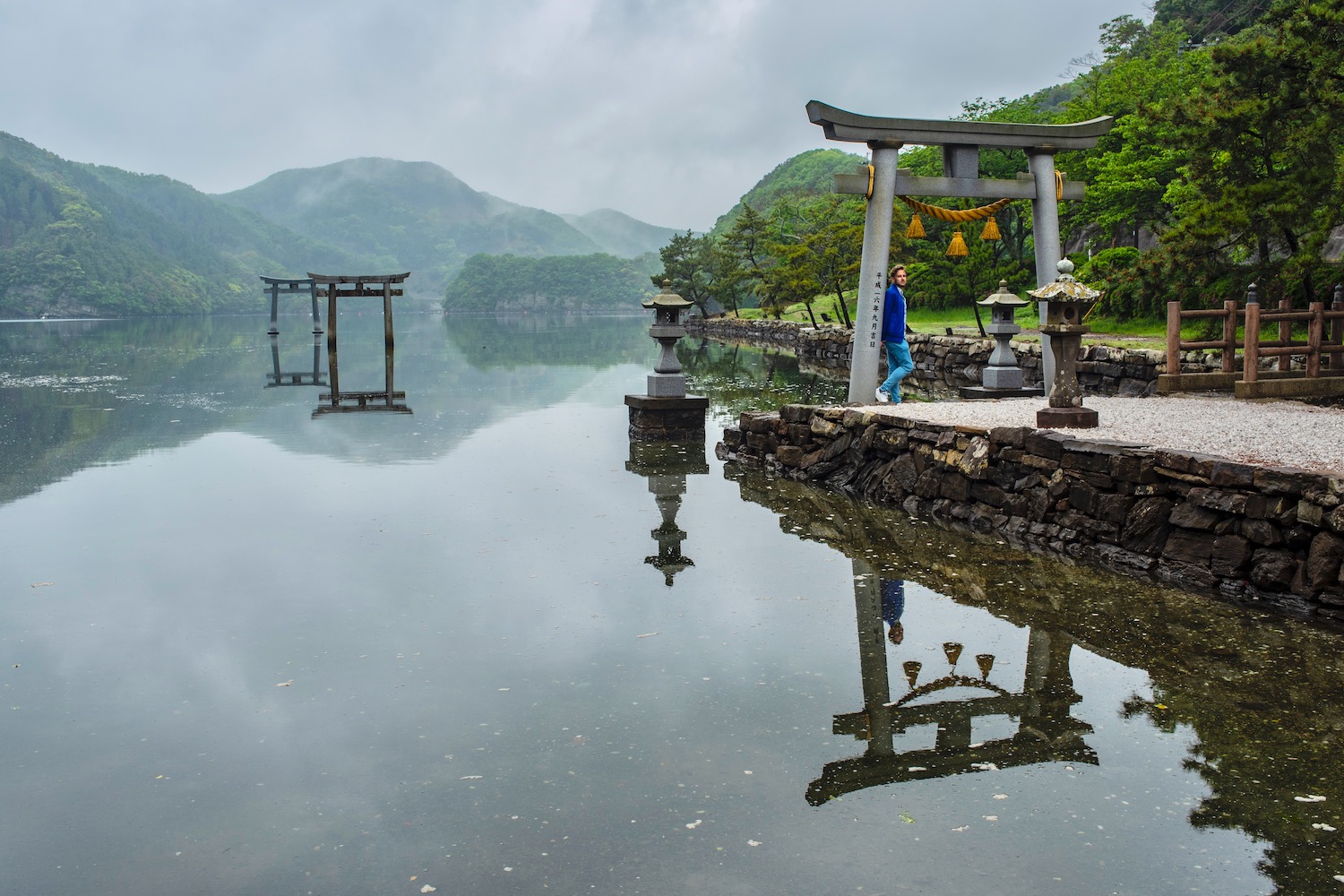
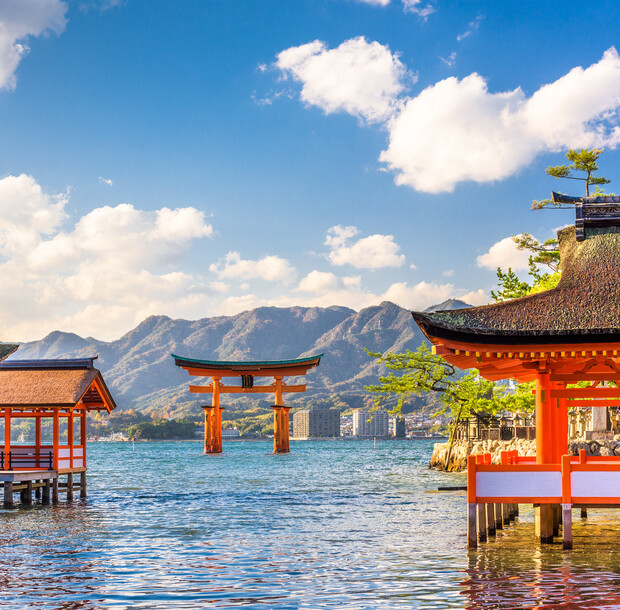
A shrine on Nozakijima was set up during the Asuka Period (592-710). It is believed to honor the guardian deity of the ocean route used by Japanese envoys to Tang China.
Passing through the former site of a port community of the shrine’s parishioners, tourists have to climb over a hill before coming across extensive terraced stone walls on a steep slope with winds blowing up from below.
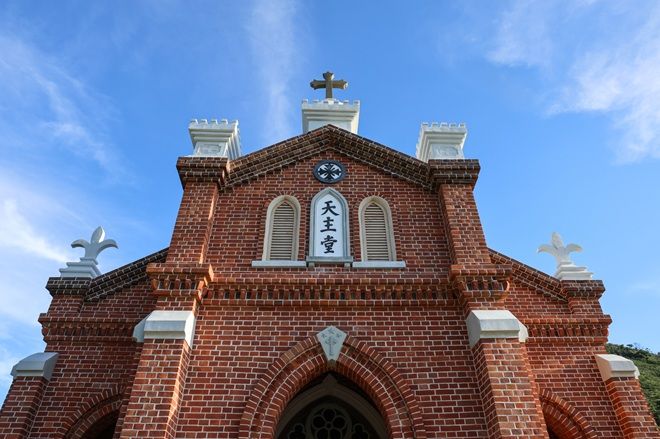
Standing alone in this final destination is a brick building utilized as a church in the past. Visitors may feel as if they have stepped into a different world.
The area around the church is home to the remains of the previous Nokubi settlement, where the so-called hidden Christians moved from Nagasaki in the mid-19th century to practice their faith in secrecy despite anti-Christian measures of the time.
The Japanese Christians outwardly acted like the shrine’s parishioners. They cultivated the wilderness and grew potatoes and barley to live self-sufficiently.
A turning point came with the “discovery of Christians” in 1865, after Japan finally opened up to foreign trade following its long-established policy of isolation under the Tokugawa Shogunate.
Some hidden Christians from Nagasaki revealed their faith at the Oura Cathedral in what is now the city of Nagasaki.

With the ban on Christianity in effect around that time, the Christian worshippers were exposed to severe persecution. Residents of Nokubi were similarly detained and subjected to brutal torture.
After the prohibition of Christianity was lifted, people in Nokubi were allowed to openly practice their faith and thus put a church in place.
The present Former Nokubi Church is housed in the third building erected in 1908. It was designed by the famed church architect Yosuke Tetsukawa (1879-1976).
Takayuki Suenaga, 48, a member of the NPO Ojika Island Tourism Association, described how islanders lived in bygone days when the settlement consisted of 17 households.
“The residents are said to have saved money by sharing meals and steadily accumulated funds primarily through silver-stripe round herring fishing,” Suenaga said. “The church represented both their symbol of faith and their sense of atonement for having wavered under persecution.”
The dignified religious center must have stood at the center of the islanders’ pride.
Shortly following the end of World War II, nearly 700 people resided in Nozakijima. But a lot of residents left there to work in coal mines or pursue education elsewhere in a succession of cases during the period of Japan’s high economic growth in the 1960s.
All residents of Nokubi abandoned their hometown after the last Mass was held there in 1971.
In 2018, the whole Nozakijima was inscribed on the UNESCO World Heritage list as one of the “Hidden Christian Sites in the Nagasaki Region.”
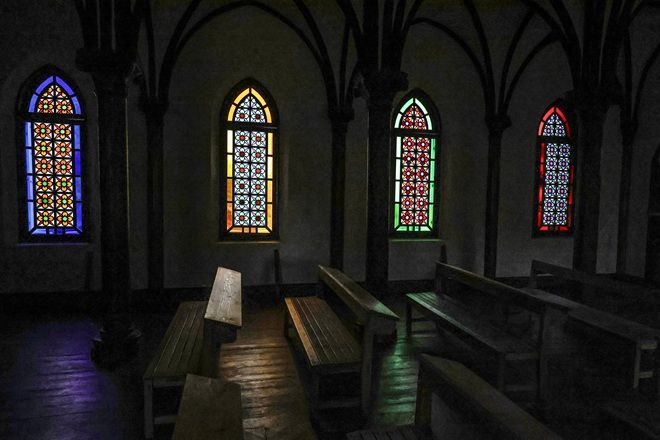
The former church particularly saw damaged bricks replaced and mortar joints renewed during the restoration work between 2023 and 2025.
Refurbished stained glass windows now cast colorful patterns of light across the church floor, allowing visitors to immerse themselves in the silence of the historic building and to lose track of time. Stepping outside, they can quickly feel the lonely howl of the breeze.
It often becomes time for the return ferry before sightseers realize it. Tourists are therefore recommended to closely check weather forecasts, appropriate clothing and ferry schedules, among other relevant pieces of information, in advance.
Taking photos should be an essential part of the tour of Nozakijima, given that the Former Nokubi Church, as the icon of the island, stands out vividly against the backdrop of the traces of terraced fields.
Ideal is capturing the church at the moment it is illuminated by the light of dusk in this magnificent setting that reminds viewers of the lost lives of people who once inhabited the Nokubi settlement.
Those planning for an overnight stay can specifically wait for the church to be impressively lit by the setting sun against the darkening mountainside in the evening.
(This article was written by Jiro Tsutsui and Masaru Komiyaji.)

- Previous Beautiful Japan: Hokkaido’s ‘sea of clouds’ at ski resort
- Next India wants Permanent Seat at UN Security Council, nut says, that UN has no authority over Indus Waters Treaty, approved by Organization
You may also like...





Random news






About us
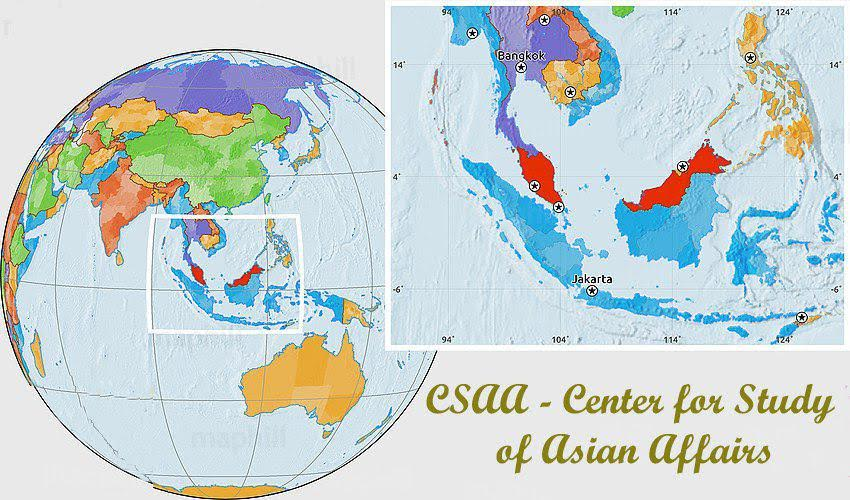
Our Newly established Center for study of Asian Affairs has
branches in Indonesia, Malaysia and Singapore, as well as freelances in some other countries.
For inquires, please contact: newsofasia.info@yahoo.com Mr.Mohd Zarif - Secretary of the Center and administer of the web-site www.newsofasia.net
Polls
 Loading ...