

Malaysia braces for news US tariffs of 18-25pct
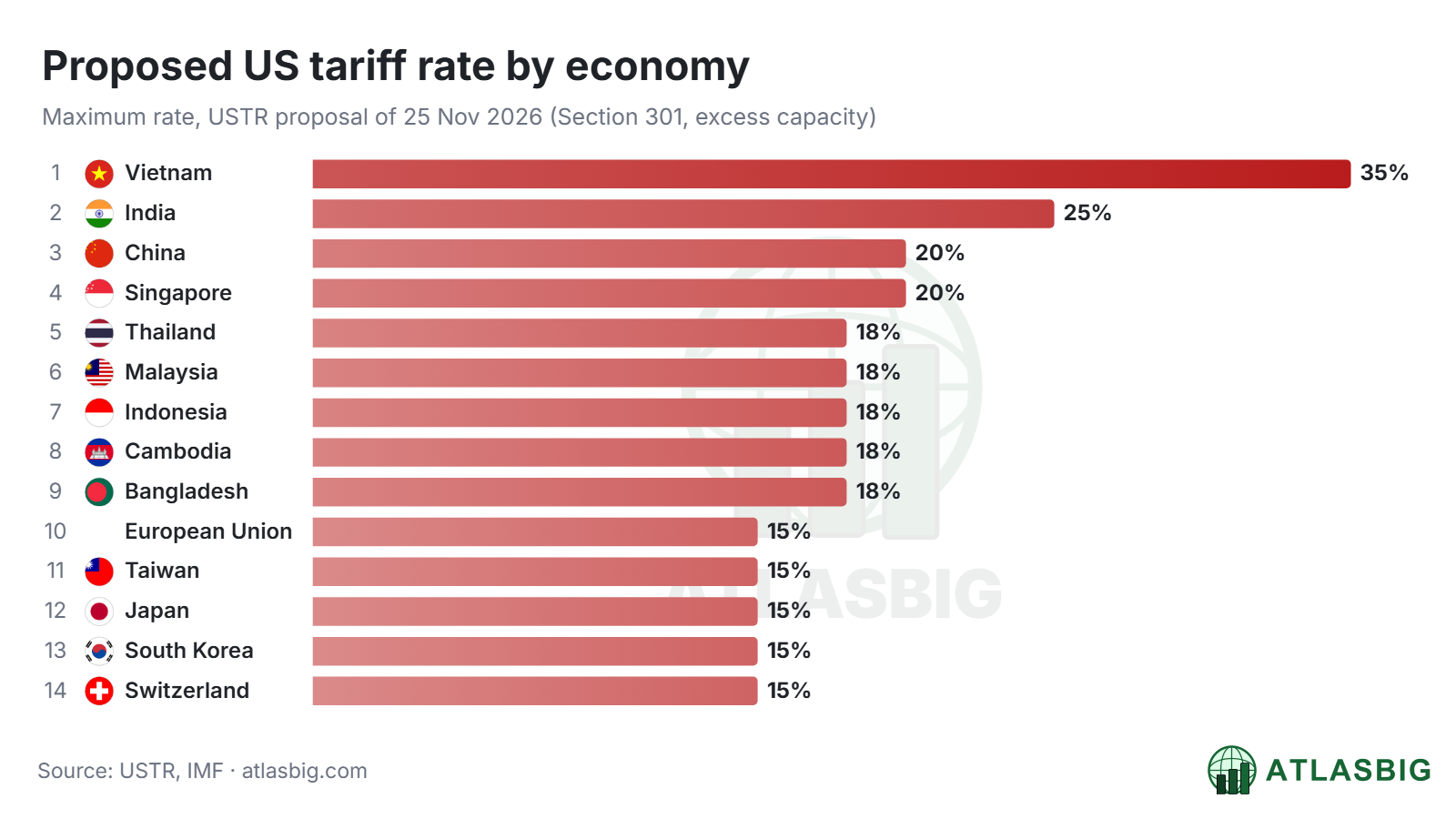


KUALA LUMPUR: Malaysia will continue negotiations with the United States until the first quarter of 2027, when a final decision on tariffs relating to excess capacity under Section 301 is expected.
Investment, Trade and Industry Minister Datuk Seri Johari Abdul Ghani said the US had indicated a tariff range of between 18 per cent and 25 per cent for Malaysia.
He maintained that Malaysia’s overall tariff rate should not exceed the 19 per cent previously agreed upon under the Agreement on Reciprocal Trade (ART).
“From now on, we need to continue engaging with them and putting forward our arguments until the first quarter of next year, when they will make their final decision.
“Whatever it is, our overall tariff as a country must not exceed 19 per cent,” he told reporters after an event commemorating BYD’s local assembly initiative in Malaysia today.
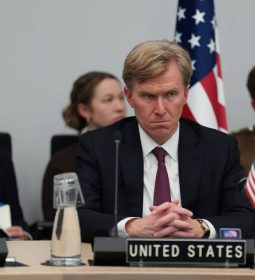
Johari was responding to the tariffs proposed by the US yesterday, which cited concerns that Malaysia’s industrial and manufacturing policies had contributed to excess production capacity and undermined US businesses.
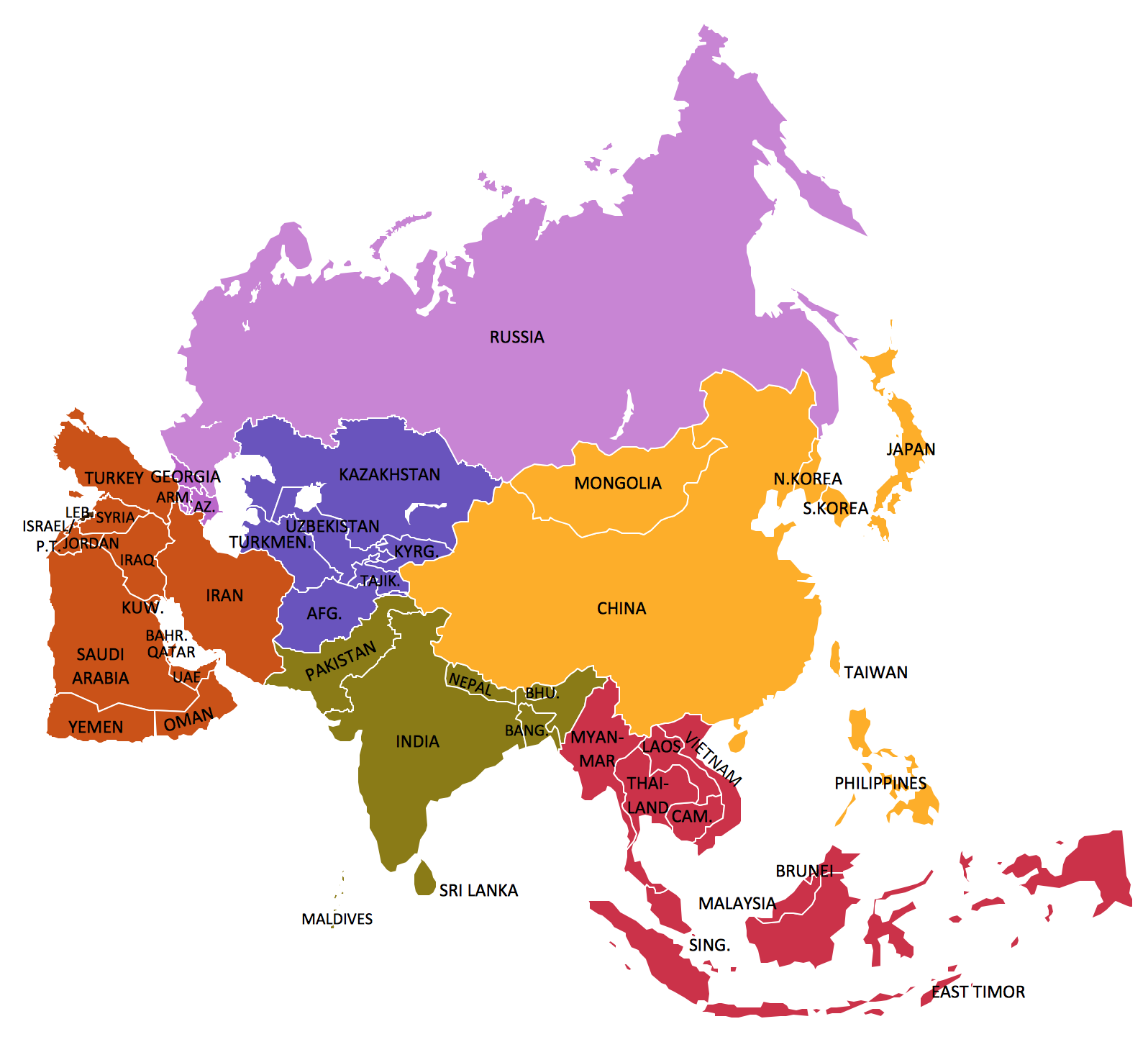
Malaysia is among 14 economies facing proposed tariffs under Section 301 of the US Trade Act, with rates ranging from 15 per cent to 35 per cent.
“We have until the first quarter of next year. Our team will continue engaging with the US, and at the ministerial level, I will continue to talk to them.
“I want to convince them. In fact, I am now thinking of how to show them that we do not have excess capacity.
“Even though we are one of the biggest exporters of electrical and electronics products, which account for almost 45 per cent of our exports, there is nothing to show that we have excess capacity,” he said.
Johari said the US assessment of excess capacity was not limited to domestic production but also extended to products sourced from third countries with excess capacity.
“For example, I do not want to mention any particular country. Say country A exports its products to Malaysia, and we use them to manufacture our own products.
“But if those products come from excess capacity, then we are also deemed to be collaborating with the third country. Now, they have given some indication for Malaysia,” he said.
Johari said the iron and steel sector could be among those scrutinised by the US over concerns about excess production capacity.
“They do not want certain players to use Malaysia as a platform to export their products. This is something we have to be very careful about,” he added.
The semiconductor sector remains excluded for now.
Meanwhile, Johari said Malaysia remained subject to a 10 per cent tariff relating to forced labour until the US finalised its decision on excess capacity.
He said Malaysia should benefit from being among the earliest countries to sign the ART with the US.
“We were promised 19 per cent. Whatever additional tariffs they want to impose, including the 10 per cent on forced labour, the overall tariff must not exceed 19 per cent.
“Even though you give me a range of 18 per cent to 25 per cent, we were the first to sign. We must benefit from being the first to sign. If there is no benefit, why did we sign in the first place?” he said.

Rates and US Imports for All 14 Economies
| # | Economy | Proposed rate | With a deal | US imports 2025 | Share of US imports |
|---|---|---|---|---|---|
| 1 |  Vietnam |
35% | 20% | $194 billion | 5.7% |
| 2 |  India |
25% | 17% | $104 billion | 3.0% |
| 3 |  China |
20% | – | $308 billion | 9.0% |
| 4 |  Singapore |
20% | 10% | $38.1 billion | 1.1% |
| 5 |  Thailand |
18% | – | $91.3 billion | 2.7% |
| 6 |  Malaysia |
18% | – | $59.7 billion | 1.8% |
| 7 |  Indonesia |
18% | – | $34.7 billion | 1.0% |
| 8 |  Cambodia |
18% | – | $15.3 billion | 0.5% |
| 9 |  Bangladesh |
18% | – | $9.47 billion | 0.3% |
| 10 | European Union | 15% | – | $633 billion | 18.5% |
| 11 |  Taiwan |
15% | – | $201 billion | 5.9% |
| 12 |  Japan |
15% | – | $146 billion | 4.3% |
| 13 |  South Korea |
15% | – | $125 billion | 3.7% |
| 14 |  Switzerland |
15% | – | $106 billion | 3.1% |
Proposed maximum rates (“up to”). With a deal: the lower rate USTR would consider if the economy signs a reciprocal trade agreement. US imports: goods, 2025, as reported by the United States (IMF).

- Previous President Trump starts 2nd set of imposing “overcapacity” tariffs aimed at securing US-friendly trade deals
- Next First Pakistani astronaut in China’s space station
You may also like...



Random news
About us
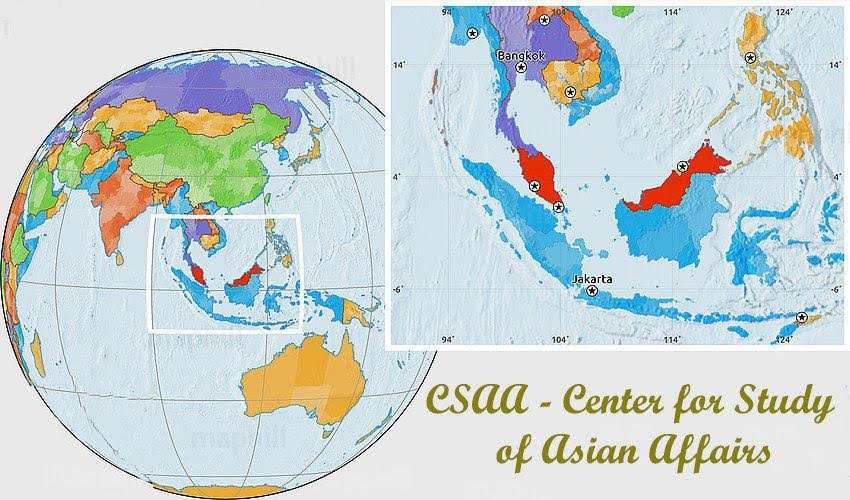
Our Newly established Center for study of Asian Affairs has
branches in Indonesia, Malaysia and Singapore, as well as freelances in some other countries.
For inquires, please contact: newsofasia.info@yahoo.com Mr.Mohd Zarif - Secretary of the Center and administer of the web-site www.newsofasia.net
Polls
 Loading ...