

After Hormuz and Bab al Mandeb, now comes Panama Canal: Beijing threatens ‘serious consequences’ after Panama lawmakers support Taiwan
North Eastern Asia
22 views 0
Parliamentary exchange group set up despite pressure from China’s embassy and public disavowal by Panamanian President Jose Raul Mulino

By Igor Patrikin
China has warned Panama of “serious consequences” after most of the country’s lawmakers set up a parliamentary exchange group with Taiwan, defying pressure from Beijing’s embassy and a public disavowal by their own president.
The warning came from foreign ministry spokesman Guo Jiakun, who said on Monday that the group seriously violated the one-China principle upheld by Panama and urged what he called “those few politicians” to “see the real picture”.
Beijing had noted the Panamanian government’s statement on the matter, he said, and hoped Panama would honour its commitment “with real actions to uphold the political foundation of China-Panama relations”.
Guo devoted the closing part of his answer to Washington, urging the United States to abide by the one-China principle and the three joint communiques that underpin its recognition of Beijing, and to “stop disrupting and sabotaging China-Panama relations”.
Panamanian deputies installed the body on September 8 at a closed-door ceremony in the National Assembly, nine years after Panama broke off relations with Taipei to recognise Beijing.
Medin Jimenez, the Panamanian deputy heading the group, said 45 of the chamber’s 71 members signed the founding document and that others backed it but were unable to sign while it circulated in the plenary.
New group breaks no rules, Panama lawmakers claim
Panama recognised Taipei for decades before the 2017 switch, and commercial and academic ties survived the rupture, which lawmakers have used to argue that the group breaks no rules.
Jimenez presented it as a commercial project, pointing to the free-trade agreement in force since January 2004, which outlived the diplomatic break, and to more than US$158 million in seafood and other Panamanian exports to Taiwan in the last financial year.
Lawmakers involved were careful with the name, calling it a “multiparty exchange group” rather than a friendship group, a distinction that separates a gesture Panama can defend as legislative business from one Beijing treats as informal recognition.
Joan Guevara, who chairs the assembly’s foreign relations committee and hosted the session, said the term was ruled out because “Panama has no diplomatic relations with Taiwan and the conduct of such relations belongs to the executive branch”.
Taiwan’s foreign ministry described the body as a Taiwan-friendly parliamentary group and said assembly president Shirley Castanedas and two vice-presidents had joined, though the assembly has not confirmed the membership list.
Taiwanese Foreign Minister Lin Chia-lung recorded a congratulatory video for the ceremony, in which he said he looked forward to “deepening parliamentary diplomacy and expanding cooperation”.
The launch followed nearly a year of parliamentary traffic to Taipei that Panama’s government had already disowned twice, with three delegations of deputies visiting the island since November.
The lawmakers met Vice-President Hsiao Bi-khim, Lin and Legislative Yuan president Han Kuo-yu, and a mission in January discussed semiconductors and possible trade representation mechanisms.
President Jose Raul Mulino distanced his government from the group within hours without taking any measures against it.

Panamanian President Jose Raul Mulino has distanced his government from the new parliamentary exchange group with Taiwan. Photo: EPA
“I reiterate: the approaches, trips and exchanges of assembly members with Taiwan do not mean that the executive endorses them,” he wrote on X.
The Chinese embassy in Panama City expressed “strong dissatisfaction and firm rejection” hours after the ceremony and demanded the deputies rectify their position, prompting several of them to accuse Beijing of interfering in the legislature.
“The legislature has every faculty, power and responsibility to relate to the parliaments it wishes,” independent deputy Luis Duke said, adding that the group was not interfering in bilateral diplomacy because that was a matter for the executive.
Panamanian diplomatic sources told the news site Infobae that Chinese officials had called, written and sought urgent meetings to stop the launch and had threatened some lawmakers. The embassy has not commented on those accounts.
China keeps the pressure on Panama
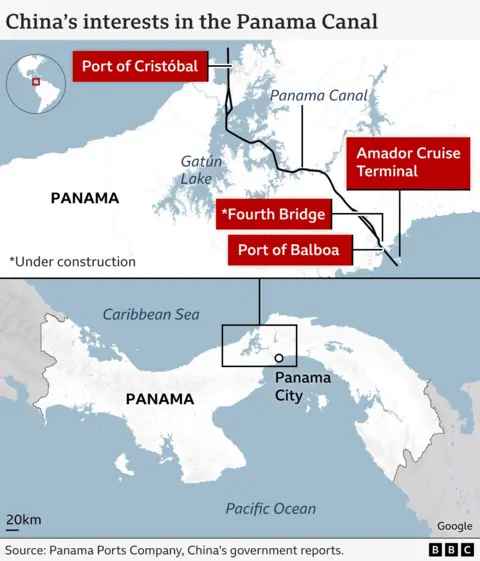
Beijing’s warning landed weeks after the two countries pulled back from a confrontation over the canal through which about five per cent of world seaborne trade passes.
Panama’s Supreme Court ruled in January that the concession held since 1997 by Panama Ports Company, a CK Hutchison subsidiary, over the Balboa and Cristobal terminals at either end of the waterway was unconstitutional.
The state took over both ports in February and handed them to units of Maersk and Mediterranean Shipping Company, prompting CK Hutchison to begin arbitration seeking more than US$2 billion and Beijing to warn that Panama would pay a heavy price.
Detentions of Panamanian-flagged vessels in Chinese ports rose from March to about 470 in the first half of the year, against 256 in all of last year, according to figures compiled by Panama’s maritime chamber.
The data comes from the Tokyo Memorandum, the Asia-Pacific regime under which port authorities inspect foreign ships, and Mulino said more than 200 vessels left the Panamanian registry, the largest in the world, describing the inspections as carrying a political message.
Detentions returned to normal levels in June, and negotiators met in Beijing in July and agreed to renew a maritime transport agreement that expires this
Source :

- Previous PM Anwar’s Kishore Kumar surprise during Brics summit turns Delhi hotel pianist into viral star
- Next UAE is downshifting? Algeria came to treat the UAE as a national security threat
You may also like...





Random news



About us
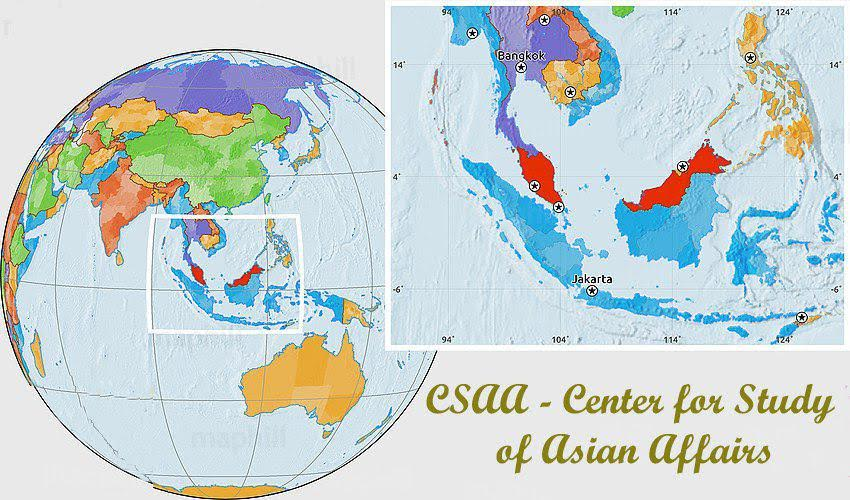
Our Newly established Center for study of Asian Affairs has
branches in Indonesia, Malaysia and Singapore, as well as freelances in some other countries.
For inquires, please contact: newsofasia.info@yahoo.com Mr.Mohd Zarif - Secretary of the Center and administer of the web-site www.newsofasia.net
Polls
 Loading ...