

Against West: Will Kazakhstan’s share (10%, 16,88% and 20%) in Kashagan, Karachaganak and Tengiz to increase through ongoing litigation?

@iStock
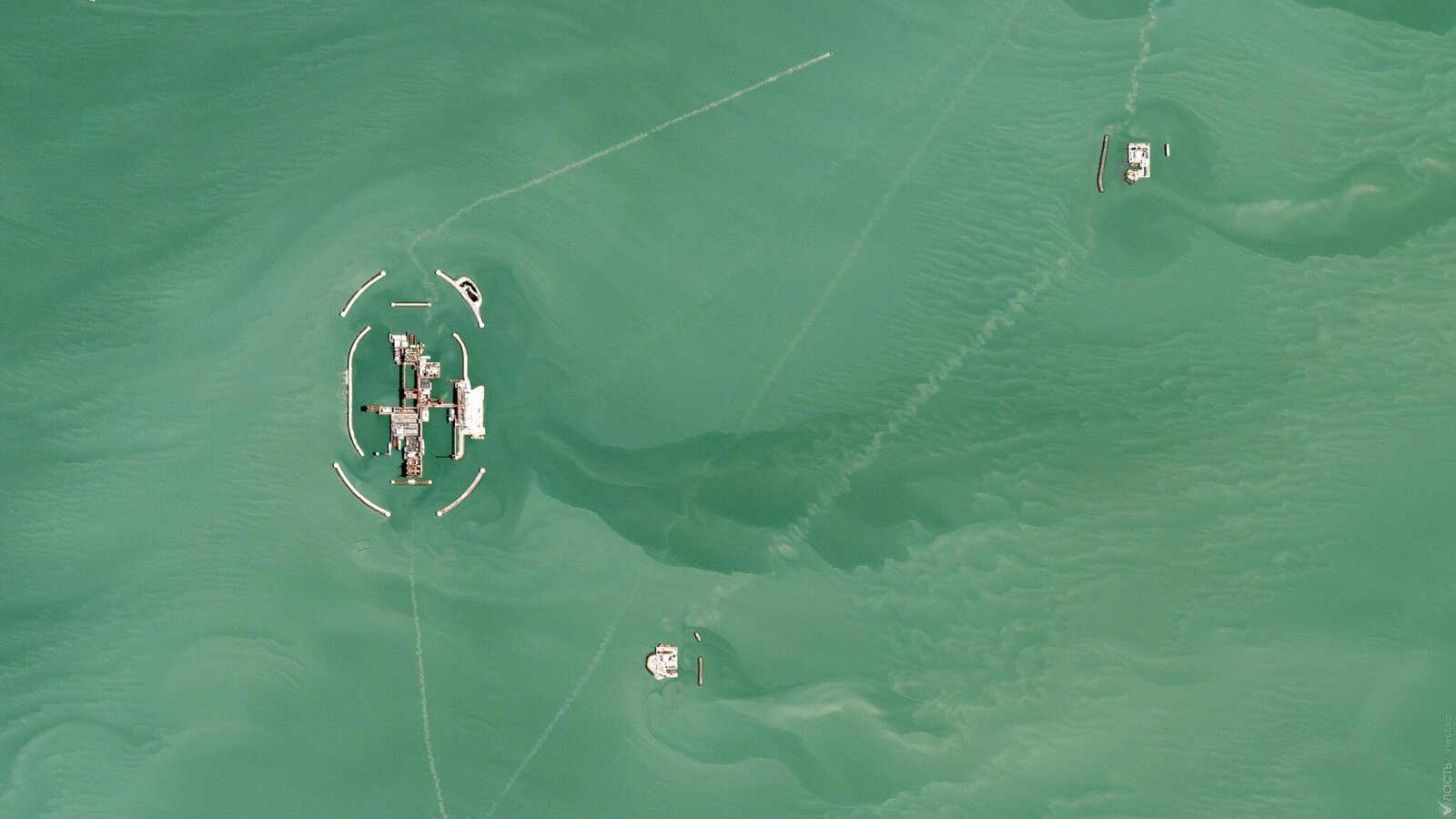
The beginning of 2026 has been marked by a new round of confrontation between Kazakhstan and the international consortia developing the country’s largest oil and gas fields, North Caspian Operating Company N.V. (Kashagan) and Karachaganak Petroleum Operating B.V. (Karachaganak). Below is an overview of the current situation and the possible scenarios.
Arbitration proceedings initiated in early 2023 have expanded from $16.5 billion to more than $170 billion. Over three years, Kazakhstan has secured preliminary victories on several claims, enough, in my view, to suggest that the era of foreign oil consortia dominating Kazakhstan’s strategic projects may be coming to an end.
Ecology and NCOC Violations
This week, Bloomberg reported in its article “Oil Majors Seek Arbitration Over $5 Billion Kazakh Sulfur Fine” that the NCOC consortium is filing in international arbitration to challenge a Kazakh court decision to collect 2.3 trillion tenge (KZT). The Bloomberg headline, however, presents the issue inaccurately.
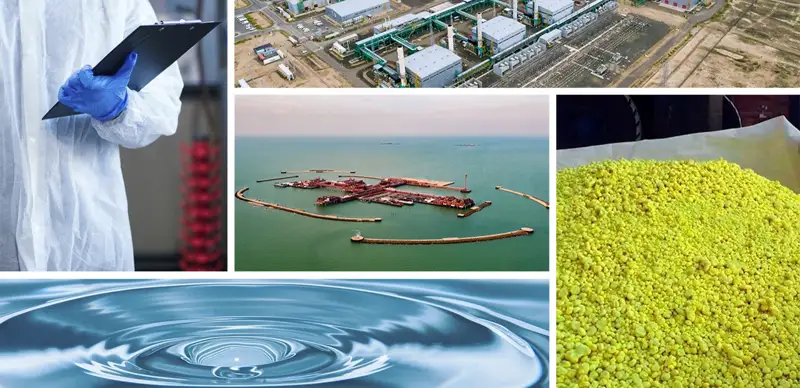
Environmental violations, including the excessive storage of approximately 1 million tons of sulfur, were identified during an inspection in March 2023, when the exchange rate stood at 451.71 KZT per $1. The rate later rose to 520-540 and currently stands at around 500 KZT per $1. According to investment forecasts, it may reach 600 KZT per $1 by the end of 2026.
As a result, the dollar equivalent of the fine has decreased significantly. At the March 2023 rate, 2.3 trillion KZT amounted to approximately $5.1 billion. At 500 KZT per $1, it equals about $4.6 billion. At 600 KZT per $1, it would fall to roughly $3.8 billion, a difference of about $1.3 billion.
After my earlier publications arguing that foreign consortia should be fined in foreign-currency equivalent at the exchange rate prevailing at the time of filing, the proposal was also raised in Parliament. Such an approach would be logical: the consortia export their oil and receive revenue in foreign currency, yet fines are imposed in tenge.
After several rounds of appeals, the consortium lost what became the largest environmental dispute in Kazakhstan’s history, initially involving more than 20 systematic violations of environmental legislation. Correspondence between consortium members published in Western media indicated they were aware of the violations but considered remediation and compliance financially costly. NCOC’s annual revenue is approximately $10 billion.
Media reports also stated that the consortium offered around $110 million, roughly 50 times less than the fine, for regional social programs in exchange for waiving environmental claims. Neither NCOC nor the Kazakh government confirmed such negotiations.
In 2010-2011, similar environmental and tax claims against the Karachaganak consortium resulted in Kazakhstan receiving a 10% stake in the project.
The current ownership structure of NCOC is:
- ENI (Italy) – 16.81%
- ExxonMobil (U.S.) – 16.81%
- CNPC (China) – 8.33%
- INPEX (Japan) – 7.56%
- TotalEnergies (France) – 16.81%
- Shell (UK) – 16.81%
- KazMunayGas (Kazakhstan) – 16.88%
Total investment in Phase One of Kashagan is estimated at $60 billion. By analogy with Karachaganak, the environmental fine could hypothetically lead to an increase in Kazakhstan’s share by 5-7 percentage points, to 20-23%.
Under normal circumstances, a company that loses an appeal must pay the fine within a specified period. Failure to do so may result in account freezes and restrictions on senior management until the fine and penalties are paid in full. It remains to be seen what enforcement mechanisms will be applied in this case, given that environmental violations are not formally subject to international arbitration under the production sharing agreement.
Kazakh media have not raised the issue of responsibility among senior managers at KazMunayGas, even though KMG is an equal shareholder in NCOC.
If the consortium were required to pay a sum equivalent to roughly half of its annual revenue at once, the consequences could be serious, including production disruption, unpaid wages, and delayed payments to suppliers and contractors.
Whether oil companies would risk comparable environmental violations in their home jurisdictions is a rhetorical question. The shareholders may have expected to resolve these environmental issues through negotiation, but the policy vector has clearly shifted toward defending national interests.
Arbitration on Karachaganak
At the end of January 2026, Bloomberg reported that the London Court of International Arbitration ruled in favor of PSA LLP (which manages the country’s shares in NCOC and KPO) in a dispute concerning $2-4 billion in allegedly unjustified and uncoordinated expenses by the Karachaganak consortium. The consortium retains the right to appeal.
Initially, PSA LLP filed a claim for $3.5 billion under the Production Sharing Agreement, which specifies international arbitration, rather than Kazakh courts, as the venue for disputes, and later increased the claim to $6.5 billion.
The Kazakh side argued that audits had revealed inflated expenses that reduced the state’s share of revenue, as consortium costs under the PSA are reimbursed from the sale of Kazakh oil.
The shareholder structure of KPO is:
- ENI (Italy) – 29.25%
- Shell (UK) – 29.25%
- Chevron (U.S.) – 18%
- LUKOIL (Russia) – 13.5%
- KazMunayGas (Kazakhstan) – 10%
Sanctions affecting Russian energy companies, including LUKOIL, may also influence the future balance of power in Kazakhstan’s extraction and pipeline projects, though that requires separate analysis.
The arbitration ruling strengthens Kazakhstan’s position in other disputes with NCOC, including claims exceeding $16.5 billion in allegedly unjustified expenses, roughly a quarter of total investment, and $160.5 billion in claimed lost profits linked to delays in the second and third phases of Kashagan’s development.
NCOC currently produces 400,000-450,000 barrels per day of oil and gas condensate. Phase Two envisaged output of around 800,000 barrels per day, while Phase Three targeted more than 1-1.2 million barrels per day.
NCOC and KPO vs. Tengiz
Against the backdrop of multi-billion-dollar disputes involving NCOC and KPO, the Tengiz project appears comparatively stable, despite $48.5 billion spent on the Future Expansion Project, which is expected to add about 250,000 barrels per day.
Tengiz shareholders are:
- Chevron (U.S.) – 50%
- ExxonMobil (U.S.) – 25%
- LUKOIL (Russia) – 5%
- KazMunayGas (Kazakhstan) – 20%
A key difference lies in the contractual framework. Tengiz operates under a stabilized contract with consistent management, whereas Kashagan and Karachaganak operate under production sharing agreements with rotating operators and more fragmented governance. This dispersion of authority complicates long-term planning, investment decisions, and the construction of gas-processing facilities needed to sustain or increase production.
It is also possible that dissatisfaction among certain shareholders regarding project management could affect future alignments.
Changes Are Inevitable
The ongoing court proceedings, both domestic and international, are likely to result in changes to shareholder structures and possibly management models. At the same time, KazMunayGas currently lacks the operational capacity to independently manage projects of this scale, meaning that one of the shareholders, existing or new, would likely assume a leading management role.
Both KPO and NCOC are seeking to extend their production sharing agreements, which expire in 2038 and 2041, respectively. This underscores the continued strategic importance of oil and gas for the global economy before and after 2050.
Kazakhstan’s recent arbitration successes strengthen its legal position ahead of potential ownership changes in other sectors, including mining and metallurgy.
Three additional factors may shape future developments:
- A proposed constitutional referendum would enshrine the priority of national legislation over certain international decisions, potentially affecting the enforceability of external rulings.
- Further legal scrutiny could extend to officials who approved cost increases under disputed arrangements.
- Over the next five years, Kazakh projects are expected to remain among the most profitable globally for Western shareholders, with projected cumulative net cash flow exceeding $101 billion across Tengiz, Kashagan, and Karachaganak.


- Previous Impacts of War in Iran: Malaysia Airports warns of possible delays and cancellations to Middle East flights
- Next Did Netanyahu inform PM Modi before attacking Iran? Owaisi attacks Centre
You may also like...


Random news

About us
Our Newly established Center for study of Asian Affairs has
branches in Indonesia, Malaysia and Singapore, as well as freelances in some other countries.
For inquires, please contact: newsofasia.info@yahoo.com Mr.Mohd Zarif - Secretary of the Center and administer of the web-site www.newsofasia.net
Polls
 Loading ...