

Beijing says: NATO’s Rutte has “Deeply ingrained mind-set of dependence on the US by figures like Rutte a barrier to Europe’s strategic autonomy”


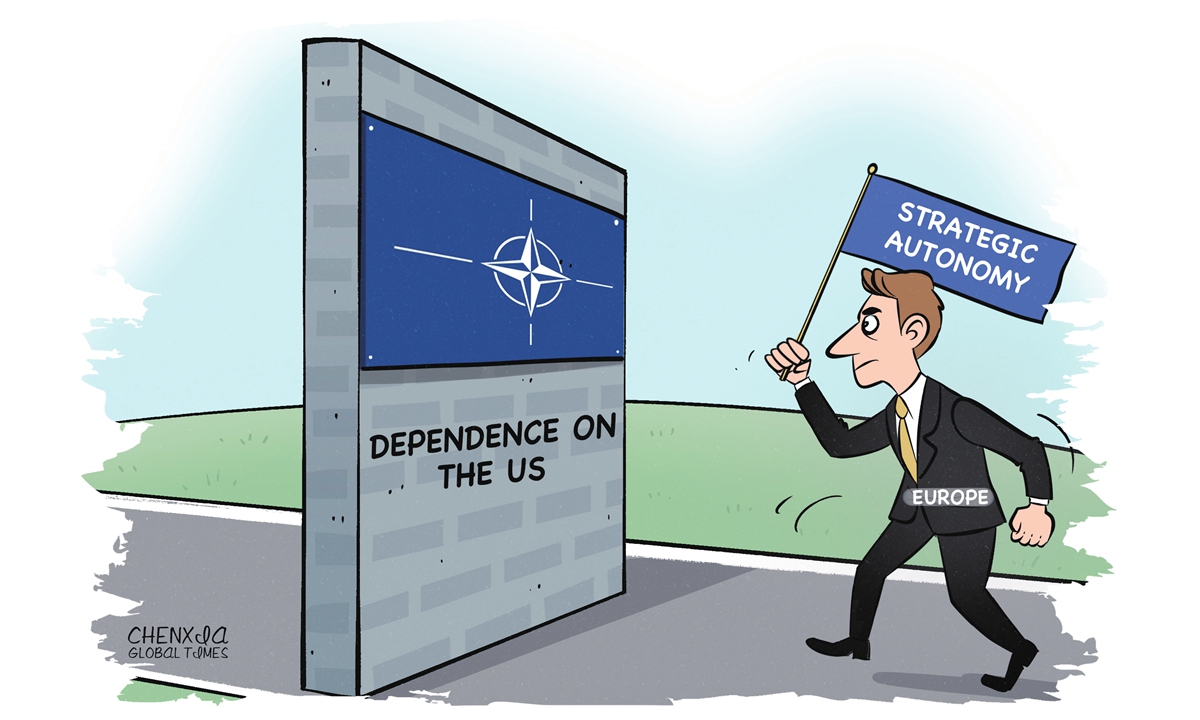
Illustration: Chen Xia/GT
Remarks by NATO Secretary General Mark Rutte have once again poured cold water on Europe’s debate over “strategic autonomy.” During an address to the European Parliament in Brussels on Monday, Rutte bluntly stated that Europe is “dreaming” if it thinks it can defend itself without the US. When asked in an interview with Dutch media on Sunday whether Europe could ever be without the US, he responded unequivocally: “As far as I’m concerned, never.”
Rutte’s remarks come at a time when calls for greater autonomy and a more assertive stance within Europe have been growing louder, particularly amid rising tensions over issues such as Greenland and strained relations with Washington. On one hand, European countries are increasingly aware of the pressures reshaping transatlantic ties; on the other, NATO’s top official continues to emphasize Europe’s supposed inability to function without the US. This illustrates that Europe’s aspiration for “strategic autonomy” faces significant resistance, particularly from figures like Rutte, highlighting deep internal divisions across the continent.
“As NATO secretary general, Rutte has a vested interest in maintaining the transatlantic alliance,” Zhao Junjie, a senior research fellow at the Institute of European Studies at the Chinese Academy of Social Sciences, told the Global Times. Rutte’s primary task is to sustain NATO, with the US nuclear umbrella serving as the core pillar of the alliance. “To keep NATO alive, Rutte has demonstrated an almost unquestioning deference to the US, pursuing even appeasement,” Zhao noted.
The question, however, is whether an alliance that can only justify its existence by constantly emphasizing external dependence and sacrificing the autonomy of its members still deserves to exist at all.
In fact, NATO has become a Cold War relic that has outlived its original purpose. To preserve this outdated structure, Rutte’s “position-driven” remarks – including his previously controversial comments referring to US President Donald Trump as “daddy” – ironically echo criticism from California Governor Gavin Newsom. Newsom has openly accused some European leaders of “not being tougher” on US President Donald Trump, suggesting they should “have some spine.” In this context, Rutte might consider taking Newsom’s “advice”: If maintaining the transatlantic relationship requires such a subservient posture, he might as well put on knee pads.
Statements from political elites like Rutte explain why Europe acknowledges the need to pursue autonomy yet consistently fails to do so. The issue is not merely a lack of capability; it stems from a deeply ingrained mindset of dependence on the US. This dependence extends beyond military matters, influencing Europe’s diplomatic judgments, risk assessments and even its political imagination. While bold slogans may resonate, when action is needed, internal divisions and concerns about Washington often resurface, causing Europe’s pursuit of strategic autonomy to stall again and again.
At a crossroads where historical fractures in transatlantic relations are becoming increasingly difficult to mend, Europe is experiencing a moment of awakening. Zhao Junjie believes that, although figures like Rutte may resist this trend, strategic autonomy is becoming an unavoidable trajectory for Europe. Some European policymakers’ reassessment of relations with the US has entered a new phase marked by a clearer distancing from Washington. Just days earlier, Dutch Prime Minister Dick Schoof publicly asserted that Europe must be able to act more independently, both militarily and economically, and show a backbone and stand up to the US.
Whether to continue clinging to the US or to bite the bullet and pursue an independent path in defense has become a stark choice confronting Europe. Europe’s strategic autonomy is not entirely unattainable, but it requires a high degree of internal consensus and collective action. In the long run, Europe must first liberate itself, at the level of ideas, from psychological and institutional dependence on the US, and then move to reshape its security architecture in practical terms. Otherwise, “strategic autonomy” will remain little more than a slogan, and NATO will continue to stand as a structural obstacle that Europe finds difficult to overcome.

- Previous Myanmar Military Wins Elections: stays the course until 2031
- Next $74,8 bn. in 2025: Xinjiang’s 2026 foreign trade goals
You may also like...

Random news







About us
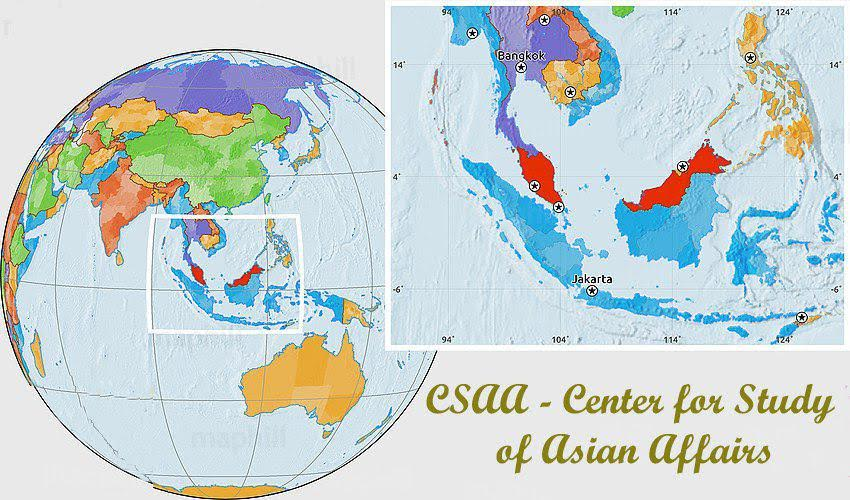
Our Newly established Center for study of Asian Affairs has
branches in Indonesia, Malaysia and Singapore, as well as freelances in some other countries.
For inquires, please contact: newsofasia.info@yahoo.com Mr.Mohd Zarif - Secretary of the Center and administer of the web-site www.newsofasia.net
Polls
 Loading ...