

Bengali Cuisine – Khichuri, gota sheddho, and hilsa – Saraswati Pujo
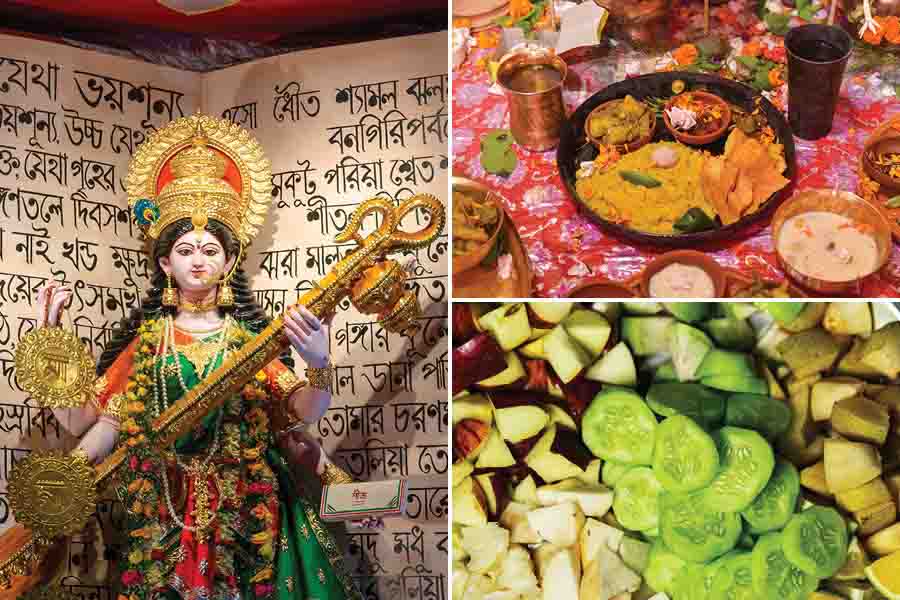
Saraswati Pujo captures the essence of a tradition that balances spiritual devotion with deep-rooted culinary heritage.
 5 min read
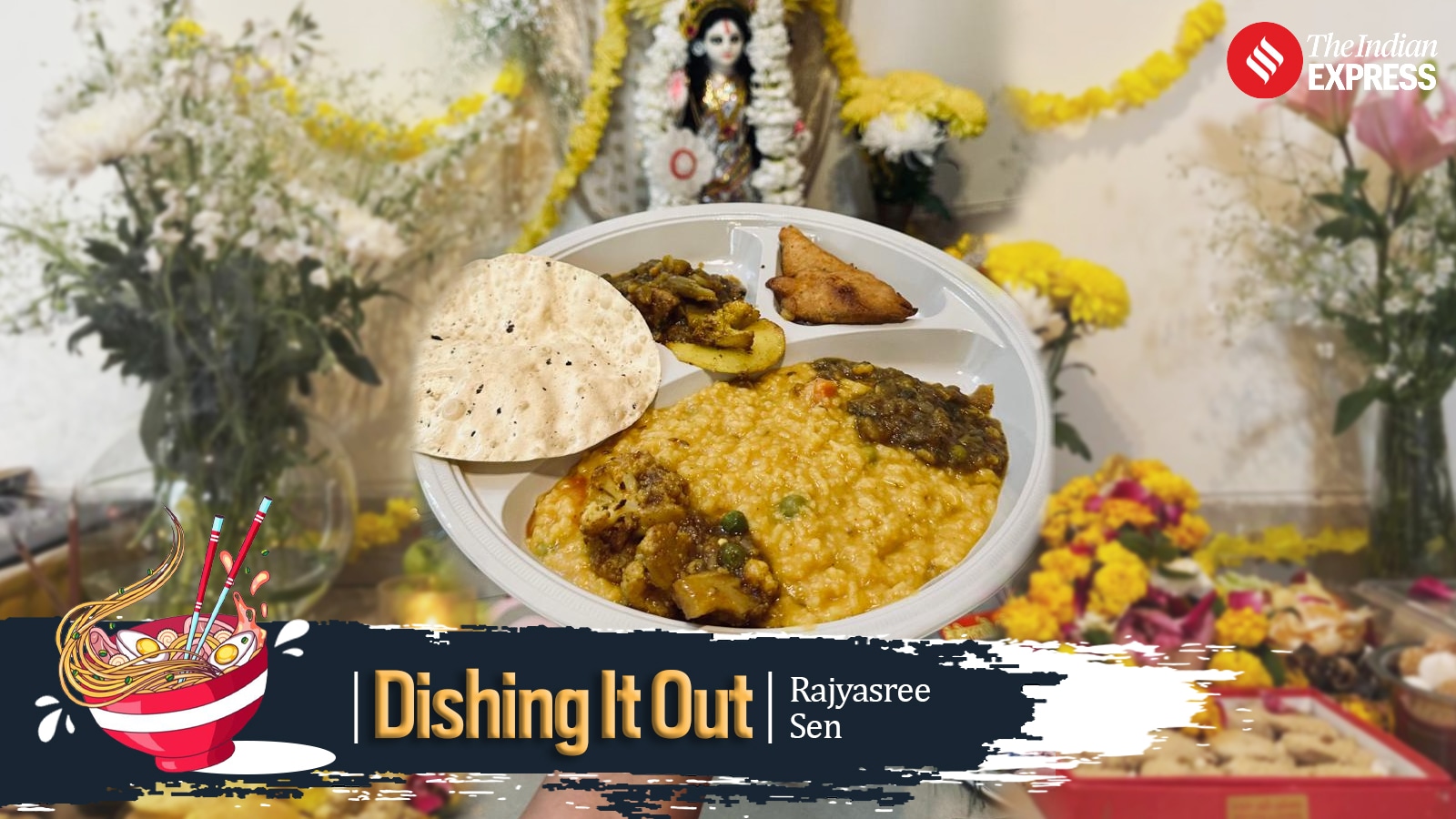 No celebration is complete without bhog’er khichuri, which is the highlight of Saraswati Pujo. (Photo: Abhishek Mitra)
For more than three decades, my mother ran a primary school out of our sprawling home, preparing over 150 mostly Bengali children for English-medium schools in Calcutta. As winter began to ebb, my mother, the only religious person in our family, would organise a beautiful Saraswati Pujo for the Goddess of Learning, attended by any students’ parents who wished to be present.
It was an open house, with a priest conducting the pujo in front of the idol of Saraswati with a veena in one hand, a book in the other, and her white swan as her steed. The goddess is always draped in a white sari, while her devotees always wear yellow or basanti clothes. The idol would be surrounded by large platters of cut fruits, apples, sweet potato, sugar cane, bananas, date and narkel kul, which were handed out as prasad.
Children would bring their books and place them beside the idol for the day, as you aren’t supposed to study on Saraswati Pujo. What followed, something I failed to appreciate at the time, given my aversion to all things religious and vegetarian, was a spectacular vegetarian feast, attended by friends and family who chose to join the pujo. It is this feast that makes Saraswati Pujo best known.
A feast for the devotees
No celebration is complete without bhog’er khichuri, which is the highlight of Saraswati Pujo. Khichuri is a rice-and-dal preparation flavoured with turmeric, other spices, and ghee, quite similar in texture to a risotto. The bhog’er khichuri is rich, slightly spicy, and has vegetables.
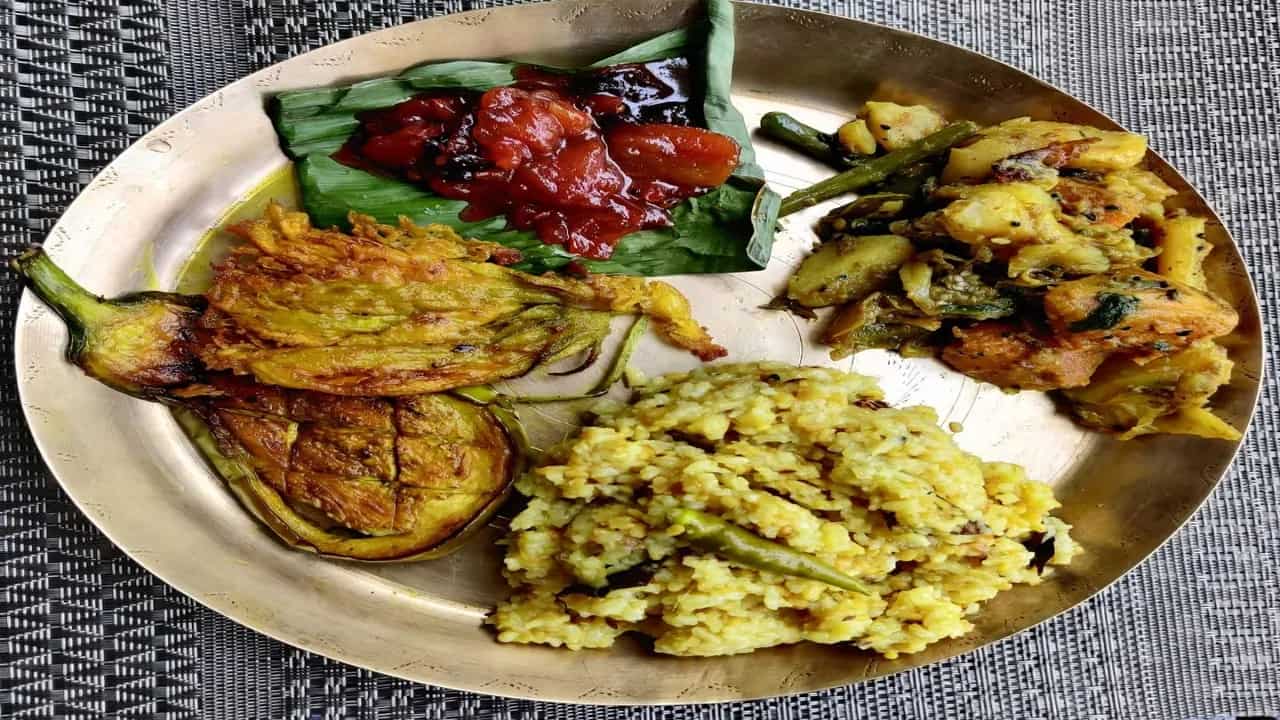
Khichuri is always accompanied by paanch bhaja (five types of fried vegetables), which can include beguni or brinjal fry, fried sliced rounds of potato, fried potol or parwal and so on. Khichuri is also accompanied by labra, my favourite mixed vegetable preparation from Bengal, and is lightly flavoured with panch phoron, or Bengali five-spice. All this is accompanied by hot ghee, which you drizzle on the khichuri. And finished off with Topa kuler chutney, papad and payesh.
I have realised that topa kuler chutney is a totally alien concept in North India, but standard fare and a big delicacy in Bengal. Topa kul is the ripe jujube, cooked with jaggery, sometimes with tomato, five-spice, and chilli powder, to form a chunky chutney. Bengali homes make jars of this over the summer, and the pickle or chutney is eaten throughout the year.
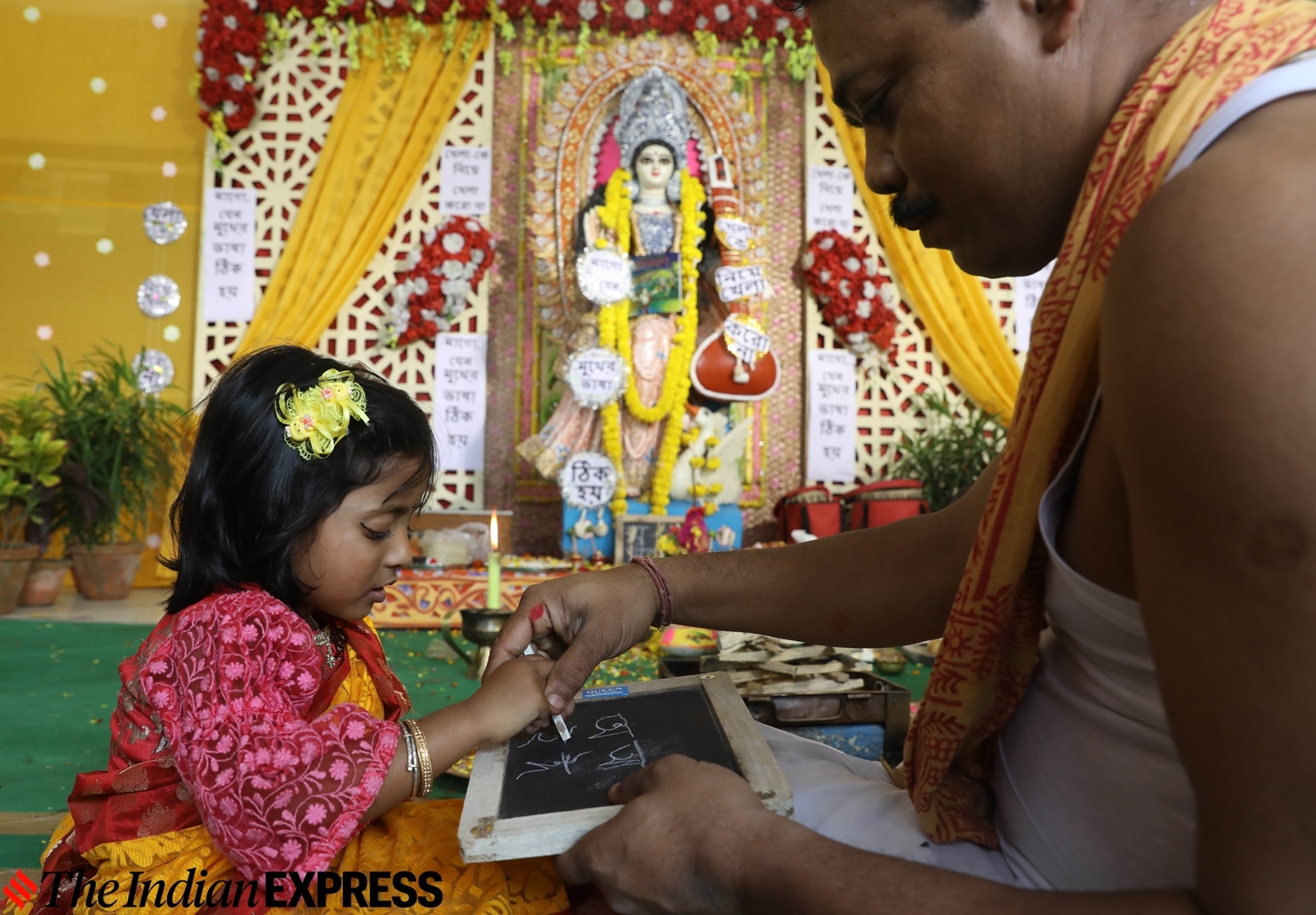 A child getting her first lesson of alphabet before Goddes Saraswati, the Goddess of learning, at a Saraswati puja pandal in Bidhan Chandra Sishu Udyan in Kolkata (Express photo by Partha Paul)
Of ilish maacher jhol and gota sheddho
Of course, it’s not all vegetarian in Bengali homes, especially if you’re from East Bengal and therefore a Baangal.
Baangal families often mark this day by preparing ilish or hilsa for the first time after Dashami. Jora ilish or a pair of hilsas are brought home, some families even perform a symbolic marriage of the fish to nora or the grinding stone. The fish is cut to avoid scattering the fish scales, which are then wrapped in a banana leaf and buried in the soil. A ilish maacher jhol is usually prepared with turmeric, brinjal, and nigella seeds.
For West Bengal or Ghoti families, though, no fish or meat is added to the feasting for a change, though this applies only to lunch.
Gota sheddho, a stew made from winter vegetables, is cooked whole and without any spices. Sheetal Shasthi, the day following Saraswati Pujo, is observed as a day when no cooking is done. On Saraswati Pujo itself, vegetables such as brinjal, peas, sweet potato, baby spinach, hyacinth beans, potatoes, and black urad or green moong dal are slow-cooked with just salt over a low flame.
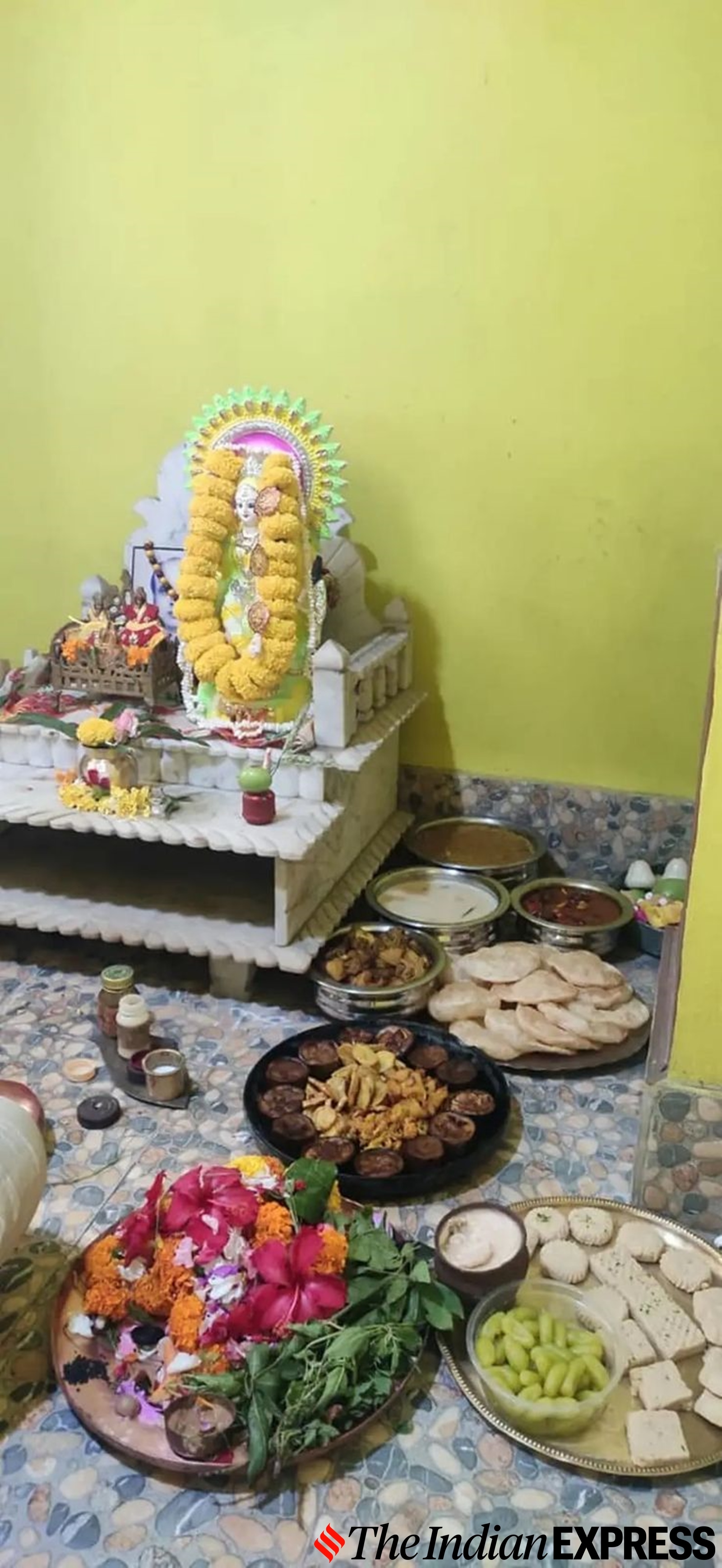 On this day, the priest conducts the pujo in front of the idol of Saraswati with a veena in one hand, a book in the other, and her white swan as her steed. (Photo: Ishika Roy)This melange of winter vegetables is kept whole and not cut, which is why it is called gota (whole) sheddho (boil or stew). No spices, even turmeric, are added. This stew is kept overnight and served the next day with paanta bhaat (rice soaked overnight – a true abomination, according to me) and a generous drizzle of mustard oil. Those who make gota sheddho also distribute it among neighbours and friends.
Saraswati Pujo brings together three aspects of Bengal and Bengali culture, which every Bengali will tell you about. The first is the focus on education, the second is the worship of goddesses, and the third is the celebration of vegetarian and non-vegetarian food to mark religious occasions. Here’s hoping that this education percolates down to the rest of India, along with our cuisine.
Next week, I’ll write about the varieties of achaar — sweet, sour, tangy, and fiery pickles made from fruits and vegetables, packed with spice, that make a winter meal truly complete.

- Previous Apology from US – May be in next century: ‘Insulting and appalling’ – Keir Starmer seeks Donald Trump’s apology over NATO troops comment
- Next Global Firepower strongest army- UZB – 53rd, KZ-58th, TM – 78th, TJ-100th, KG-109th.
You may also like...







Random news











About us

Our Newly established Center for study of Asian Affairs has
branches in Indonesia, Malaysia and Singapore, as well as freelances in some other countries.
For inquires, please contact: newsofasia.info@yahoo.com Mr.Mohd Zarif - Secretary of the Center and administer of the web-site www.newsofasia.net
Polls
 Loading ...