

Can Comedians Run a State? No, They Can’t! Ukraine’s Hardest Winter
With the Donbas in Peril, Europe Must Pressure Russia Now


Russia had planned to seize the Ukrainian town of Pokrovsk, a logistical hub in the Donetsk region, by November 2024. Its forces are a year behind schedule. Ukrainian defenders, although vastly outnumbered, have fought tenaciously to hold on to the Donbas defense line, killing over 20,000 Russian troops a month in the process. Now, Russia appears to be on the cusp of consolidating control over the ruins of the town as it pushes more and more troops into Pokrovsk’s shattered buildings, and Russian drones cut off Ukrainian defenders from resupply.
Pokrovsk is not an isolated battle. Russian forces are slowly turning Ukrainian positions to the north and south into “pockets” and are on the outskirts of Kostyantynivka. Just as concerning, Russian forces are using new long-range wire-guided drones and glide bombs to depopulate towns as they come into range, hunting civilians in Kramatorsk, just as they have depopulated the town of Kherson in southern Ukraine. Recent advances northward along the Dnipro River risk exposing the economic center of Zaporizhzhia to these terror tactics. If the Donbas falls, Russia’s aggression will turn to Ukraine’s second-largest city: Kharkiv.
The tragic irony about the last nine months of war is that while international discussion has been dominated by the prospects for negotiations and cease-fires, Russia has ramped up the intensity of fighting. At the front, as well as in its long-range strikes on Ukraine’s cities, the Kremlin aims to break the back of Ukrainian resistance. Ukraine has been open to negotiations, but the failure of its partners to apply pressure on Russia has instead allowed Russian President Vladimir Putin to stall for time to change the facts on the ground.
As Russia’s full-scale invasion of Ukraine approaches its fourth year, both sides show signs of fatigue, but neither is ready for peace. Despite months of diplomatic outreach from the United States, Putin has offered no concessions on his maximalist demands, according to which Russia would only pause the fighting at the expense of Ukraine’s sovereignty. And since Ukraine is the defender, Russia’s determination to continue attacking gives Kyiv no choice but to keep fighting.
Indeed, the behavior of the international community has spurred Russia to continue its aggression. The decline in American military-technical assistance has given the Kremlin hope that it can outlast Ukraine’s reserves of ammunition. Meanwhile, Europe’s focus on what it will do after a cease-fire—with a “coalition of the willing” pledging troops to enter the country—has made prolonging the war the best means for Russia to forestall Ukraine’s integration into Europe’s security architecture. Other kinds of pressure will need to be applied to the Kremlin to make it reassess its prospects.
PUTIN’S PROSPECTS
Russia now sees its strategic objective of subjugating Ukraine unfolding in three phases, only the first of which involves actual fighting. First, Moscow seeks to occupy or destroy sufficient Ukrainian territory to ensure that what remains is economically viable only with Russia’s acquiescence. Russian planners assess that this could be accomplished if Russia holds the four oblasts it has already annexed and adds Kharkiv, Mykolaiv, and Odesa, which would effectively cut Ukraine off from the Black Sea. Under these conditions, the Kremlin would seek a cease-fire in the belief that it could pursue a second phase in which it uses economic leverage and political warfare, underpinned by the threat of reinvasion, to exert control over Kyiv. In the third phase, Russia would absorb Ukraine into its orbit in a manner akin to Belarus.
At present, however, Russia is still far short of achieving the first of these phases. The Russian military hopes that if it can exhaust the Armed Forces of Ukraine, its territorial gains on the battlefield will accelerate. Russia has been on the offensive for two years, and the pressure on Ukraine will mount as the density of Ukrainian defenders thins. The number of infantry in Ukrainian units is declining month on month, even if the total number of Ukrainian troops is stable.
But Russia will soon face its own challenges generating more forces. Since mid-2023, Russia has sustained the war by using volunteers who have enlisted in exchange for massive bonuses and the promise of large payouts to their families if they die. Russia recruited some 420,000 personnel in 2024 and over 300,000 in 2025—numbers that have enabled its relentless, if costly, infantry assaults. But the pool of men for whom these inducements are attractive has been declining. Recruitment figures have fallen in the autumn of 2025, and Moscow has had to turn in some areas to more coercive means of enlistment. To sustain its current tempo of offensive operations, the Kremlin will need to either develop a way of fighting that better preserves the lives of its soldiers or find a new model of recruitment.

At the same time, the capacity of the Russian state to continue pursuing offensive operations is determined by its available working capital. As long as Russia can sell oil, gas, and other raw materials, it has the means to generate ready money to fund armaments and recruitment. But the decline in oil prices in 2025 has depleted Russian reserves. Meanwhile, Ukraine’s stepped-up campaign of long-range strikes on oil refineries has begun to have a significant effect on domestic oil refining and the availability of fuel. The question is the extent to which the combination of sanctions and strikes will create a cashflow problem for the Kremlin in 2026.
Thus far, Russian air defenses have been able to defeat up to 95 percent of Ukrainian drones, and given the small payload of the Ukrainian munitions, only around half the drones that reach a target have actually done meaningful damage. There is good reason to believe, however, that Ukraine can improve the efficacy of its strikes in 2026. For one thing, Russia has been expending more air defense interceptors than it produces. Ukraine has also been building up a stockpile of domestically designed cruise missiles. Not only do these have sufficient kinetic energy to damage many more classes of target than Ukraine’s drones, but by holding more kinds of target at risk, they will further disperse Russian air defenses, creating more gaps. If Ukraine moves to attack Russia’s oil export infrastructure, Russia will feel the effect.
STOPPING THE SHADOW FLEET
For Ukraine’s international partners, the question is whether they are prepared to match Ukraine’s campaign against Russia’s oil infrastructure with comparable real rather than performative pressure on Russia’s economy. Above all, this means targeting Russia’s shadow fleet: the hundreds of decrepit tankers, operating under flags of convenience, often without insurance or trained crew, to move its oil to India and China. This will require denying the 80 percent of Russian seaborne oil exports that pass through the Strait of Denmark and threatening secondary sanctions against the ports where shadow fleet vessels unload.

So far, European and U.S. measures in this direction have been timid. Ships have been sanctioned, but enforcement action has been anemic. This is unfortunate. Effectively curbing the shadow fleet is the quickest way of bringing real pressure to bear against the Kremlin, and it would not greatly disrupt the international market or cause a price shock, given the increasing production by OPEC member states, which will have no objection to supplanting Russia’s market share.
Some European governments—including Denmark—have cited the 1857 Treaty of Copenhagen, an international agreement that established tariff-free transit of commercial shipping through Danish waters, as a legal barrier to action. But this is an excuse rather than a real obstacle. The countries that have a Baltic coastline today, excluding Russia, could agree to a new treaty requiring ships to meet certain standards of insurance and certification to be allowed to navigate the Baltic—for example, on grounds of ecological protection. Since the aging vessels of the shadow fleet do not meet these requirements, such a treaty would deny them entry into the straits. This would not impinge on the principle of tariff-free transit for commercial shipping through Danish waters.
Moreover, losing access to the Denmark Strait is a problem that the Russians could not quickly resolve. Although Russia can export oil from its eastern coast and through the Black Sea, the latter can be targeted by Ukrainian uncrewed surface vessels, while the former lacks the infrastructure in Russia to move the oil to the ports. Land routes for shipment to China are similarly constrained by a lack of infrastructure. Whether the states surrounding the Baltic Sea are prepared to engage in such measures is a gauge of their seriousness about applying pressure on Russia.
At present, the Kremlin believes it can afford to keep fighting. Only by putting Russia on a clear track toward economic crisis in the medium term—a situation in which the economic and political risks of protracted conflict outweigh the anticipated gains—will Ukraine’s international partners convince Putin that he must settle for a cease-fire. Such a strategy can succeed, but only if Ukraine can hold out through 2026.
MORE WEAPONS, BETTER TRAINING
As Ukraine contemplates its fourth winter of war, its ability to resist further Russian encroachment will depend on three fundamental factors: materiel, men, and will. The task of supplying the Armed Forces of Ukraine with the munitions necessary to keep fighting is now firmly being shouldered by Europe. It is a mission that European governments have committed to, and European leaders’ pledges about investment in defense production have finally begun to shift from rhetoric to reality. Shell production is beginning to expand, as are subsystems for cruise missiles, drones, and other weapons, although the production of air defenses remains deficient.
The United States has all but ceased supplying Ukraine with equipment. The key question is whether the Trump administration will reliably allow purchases of U.S.-made weaponry in those areas in which Ukraine’s international partners lack capabilities of their own—notably Patriot interceptors, guided multiple-launch rocket systems, laser-guided 155-millimeter shells, and other specialized military items such as spare parts for F-16s. Ukraine’s materiel position is precarious but, with appropriate investment, manageable.

There has been widespread confusion about Ukraine’s manpower situation. On the one hand, Ukraine has enough people to keep fighting. Nationally, there is no manpower problem. But the number of combat-ready infantry in the Armed Forces of Ukraine has been declining for almost two years. At some point, it will hit a level that will render it impossible to hold the front, barring a shift in Kyiv’s approach to force generation.
The challenge is less about pulling people off the street and more about improving the quality and capacity of training and integration of Ukrainian infantry into combat brigades. There are more people serving in the Ukrainian military today than at any point during the war, but the military is unable to train its personnel to perform frontline combat functions. To solve this growing problem, Ukraine’s new Army Corps will need to establish brigade rotations and allow better units to help train the less capable ones.

This is an area in which Ukraine’s international partners can make a significant contribution. Many of these partners have been heavily involved in training Ukrainian troops outside the country over the last three and a half years, but this has yielded poor results both because it does not allow units to cohere with their tactical commands and because Ukraine lacks the equipment to move training fleets outside of the country. Moreover, peacetime regulations in Europe prevent much of the equipment from being used properly.
SECURITY SOONER
There is a better model for European training assistance—one that might also prepare the ground for an eventual cease-fire. European postwar security pledges have become a major hurdle to convincing Russia to stop fighting, even if the war is trending toward an unfavorable outcome for the Kremlin. Russia does not want Ukraine to integrate with Europe and its security arrangements: after all, Russia’s invasion has its origins in 2013, when Moscow pressured then Ukrainian President Viktor Yanukovych to withhold his signature from an association agreement with the EU. If a cease-fire would precipitate these becoming realities, as European leaders in the coalition of the willing suggest, then Russia has a strong incentive to avoid a cease-fire altogether, even if combat operations are pursued at a lower intensity.
The best means to overcome this obstacle is to separate the deployment of European forces in Ukraine from the cease-fire question entirely. Instead, European forces could begin the process immediately, in various ways. For one, Poland and Romania could request Ukrainian permission to engage air threats over Ukrainian airspace that are approaching NATO’s border, just as Israel intercepted many of Iran’s Shahed-136 drones in Jordanian airspace. Without creating an obligation for Poland, Romania, and others to engage targets over Ukraine, such permission would set the stage for deconflicting European aircraft with Ukrainian air defenses. In this way, the European coalition could project airpower into Ukraine at short notice.

Crucially, European states could also deliver in-country military training. By allowing Ukrainian forces to train on their equipment, in a setting in which European trainers would be supported by the Ukrainian commanders who will ultimately employ these soldiers, such a step would directly address Ukraine’s force generation challenges. It is true that the presence of European trainers in Ukraine would provide an inviting target for Russia. But Russia has had limited success targeting Ukrainian trainers, so this is clearly a manageable risk, and it could play a key role in building the units Ukraine needs to sustain its defensive line.
Beyond reinforcing the message to the Kremlin that prolonging the war will only further harm Russia’s interests, such moves by European powers would also go a long way to making their postwar security guarantees tangible. This would boost Ukraine’s will to resist today and give it confidence to reach a settlement when the conditions are right. Ukraine’s home front needs causes for optimism as it heads into what is likely to be the harshest part of the war to date.
COLD FRONT
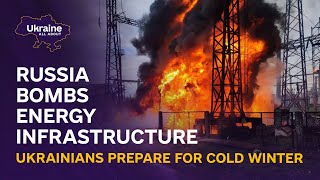
This winter could be pivotal. Russia is producing more missiles than ever before, while Ukraine’s damaged energy grid is already unable to power the entire country. Even central Kyiv is without power for hours every day. Heating currently works, but temperatures are falling, and Ukraine must prepare for significant disruption to utilities through the cold months. If Russia is able to accelerate its gains—perhaps through the combination of the hollowing of Ukraine’s defensive lines and the depopulation of major centers near the front—it could set a course to coerce Ukraine into submission in 2026.
But that is hardly a foregone conclusion. If Ukraine can combine with Western powers to apply real pressure on Russia’s economy and energy infrastructure, a cease-fire could be achievable by the end of next year. Stalled by a bolstered Ukrainian training system and facing collapsing export revenues as Ukraine continues to damage its oil refineries and shipping infrastructure, Russia may finally see that it is approaching the end of the runway without sufficient lift.
Washington must recognize that a cease-fire will not come to pass with symbolic gestures and concessions to Moscow. Changing the Kremlin’s understanding of its prospects will require sustained pressure and discipline. Personal understandings among leaders cannot achieve this. For Europe, as well, rhetorical bellicosity must now be matched with precise policy. Ukraine still has the capacity to buy the time for pressure on Russia to succeed. But it cannot resist indefinitely.

- Previous After meeting president Trump, president Tokaev immediately goes to Moscow to meet president Putin
- Next When Taiwan war is coming!? China develops amphibious HQ-13 air defense system for potential Taiwan invasion.
You may also like...




Random news






About us
Our Newly established Center for study of Asian Affairs has
branches in Indonesia, Malaysia and Singapore, as well as freelances in some other countries.
For inquires, please contact: newsofasia.info@yahoo.com Mr.Mohd Zarif - Secretary of the Center and administer of the web-site www.newsofasia.net
Polls
 Loading ...