

China snubs Sakura diplomacy wilt of 2026: Tokyo complains

By NEN SATOMI/ Correspondent
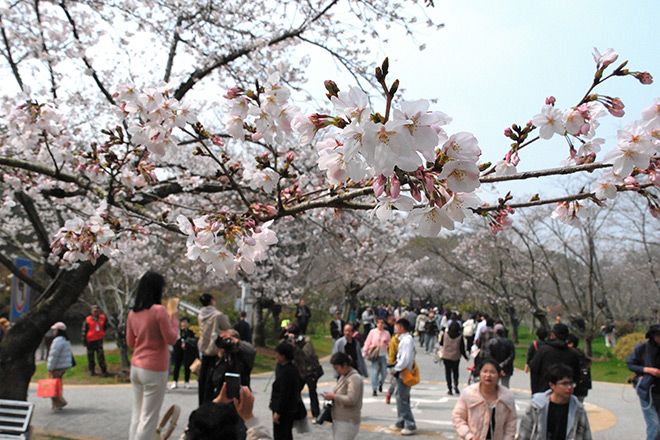 Visitors enjoy the cherry blossoms at the shore of Lake Taihu on March 25 in Wuxi, China. (Nen Satomi)
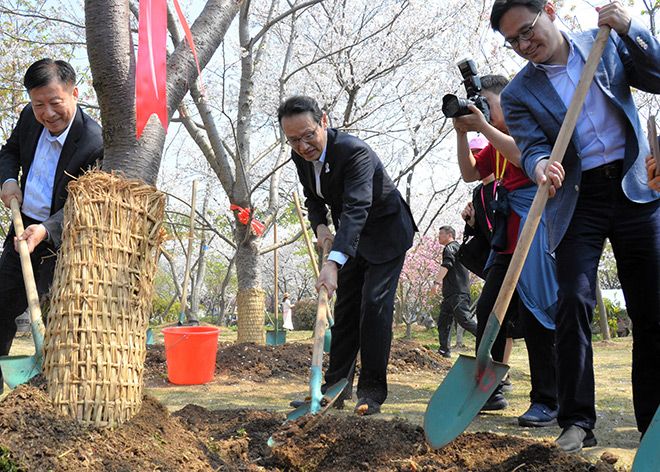
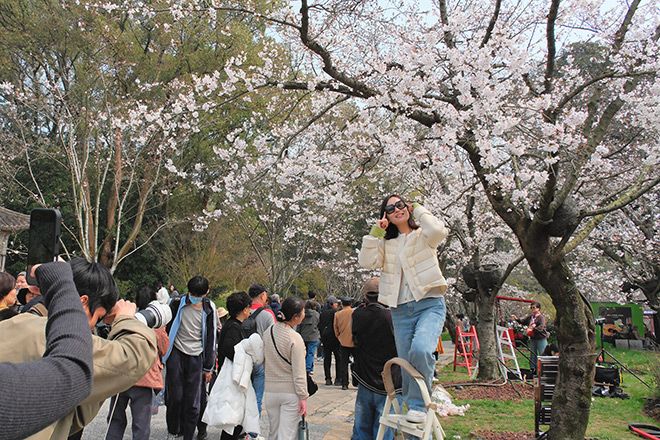
WUXI, China—Japanese representatives were conspicuously absent from an annual cherry blossom ceremony here symbolizing decades of grassroots friendship between Japan and China.
The withholding of invitations to Japanese guests came amid souring bilateral relations between the two neighbors.
Yutaka Shibata, 74, and his family have helped nurture the forest of 30,000 cherry trees along famed Lake Taihu in Wuxi, Jiangsu province, in China, for much of its existence.
Shibata, president of the “Japan-China joint construction sakura friendship forest preservation association,” lamented the current situation.
“To think that our long-standing relationship could change over a single comment,” Shibata said.
He was referring to Prime Minister Sanae Takaichi’s remark in the Diet last November about Japan taking action if a military contingency emerged in Taiwan. Japan-China relations rapidly deteriorated after that.
Shibata is the second president of the Japan-China preservation association, the civic group behind the blossom ceremony. He inherited the role from his father-in-law.
CHANGES TO THE CEREMONY
At the ceremony on March 25, about 40 dignitaries from such countries as South Korea, Sweden and Serbia were in attendance. But there were no Japanese diplomats nor association members.
The event was also moved from its traditional spot at the lakeside park to a site nearly 8 kilometers away, near the Wuxi City Hall.
In a speech, Wuxi’s vice mayor praised the tree-planting as a 39-year tradition that has “engraved the inheritance of friendship into the city’s daily life” but made no mention of Japan.
When asked for a reason, a city official would only say, “We are scaling back the event this year,” adding evasively, “I don’t really know why.”
BREAK WITH TRADITION
The exclusion of Japanese marks a sharp break from recent tradition.
Since 2014, Wuxi has held the large-scale ceremony under the title “International Cherry Blossom Viewing Week,” an event Japan’s consul-general in Shanghai regularly attended.
In spring 2025, when ties between the two nations appeared to be warming, Kenji Kanasugi became the first sitting Japanese ambassador to China to attend the ceremony.

The lakeside cherry blossom grove began in 1988 when a former Japanese soldier from Mie Prefecture planted the first saplings.
The project has since been maintained by Shibata’s association and the city of Wuxi.
GRASSROOTS PERSPECTIVE
Last December, a Wuxi official informed Shibata’s wife, Kiyoko, 75, through a phone call that the ceremony was being downsized and they would not be invited.
She said she sensed an apologetic tone from the official.
“The city of Wuxi must also follow the central government’s policy,” she said. “I believe this shows that no matter how much trust exists at the grassroots level, there are no exceptions in China.”
Their association had weathered diplomatic storms before, maintaining contact through the fallout from Japan’s 2012 nationalization of the Senkaku Islands in the East China Sea and the COVID-19 pandemic.
Next year marks the project’s 40th anniversary.
“The Japan-China relationship is in a very difficult environment,” Yutaka said. “But I want to cherish our relationship of trust with a long-term view, not a short-term one.”

- Previous Mideast crisis bumps chemical prices along supply chain
- Next North Korean and Belarussian leaders meet in Poyang-Yang, slam pressure of the West’
You may also like...






Random news







About us
Our Newly established Center for study of Asian Affairs has
branches in Indonesia, Malaysia and Singapore, as well as freelances in some other countries.
For inquires, please contact: newsofasia.info@yahoo.com Mr.Mohd Zarif - Secretary of the Center and administer of the web-site www.newsofasia.net
Polls
 Loading ...