

Deputy Prime Minister Edil Baisalov pushes Kyrgyzstan away from Russia and Global Chaos
Edil Baisalov
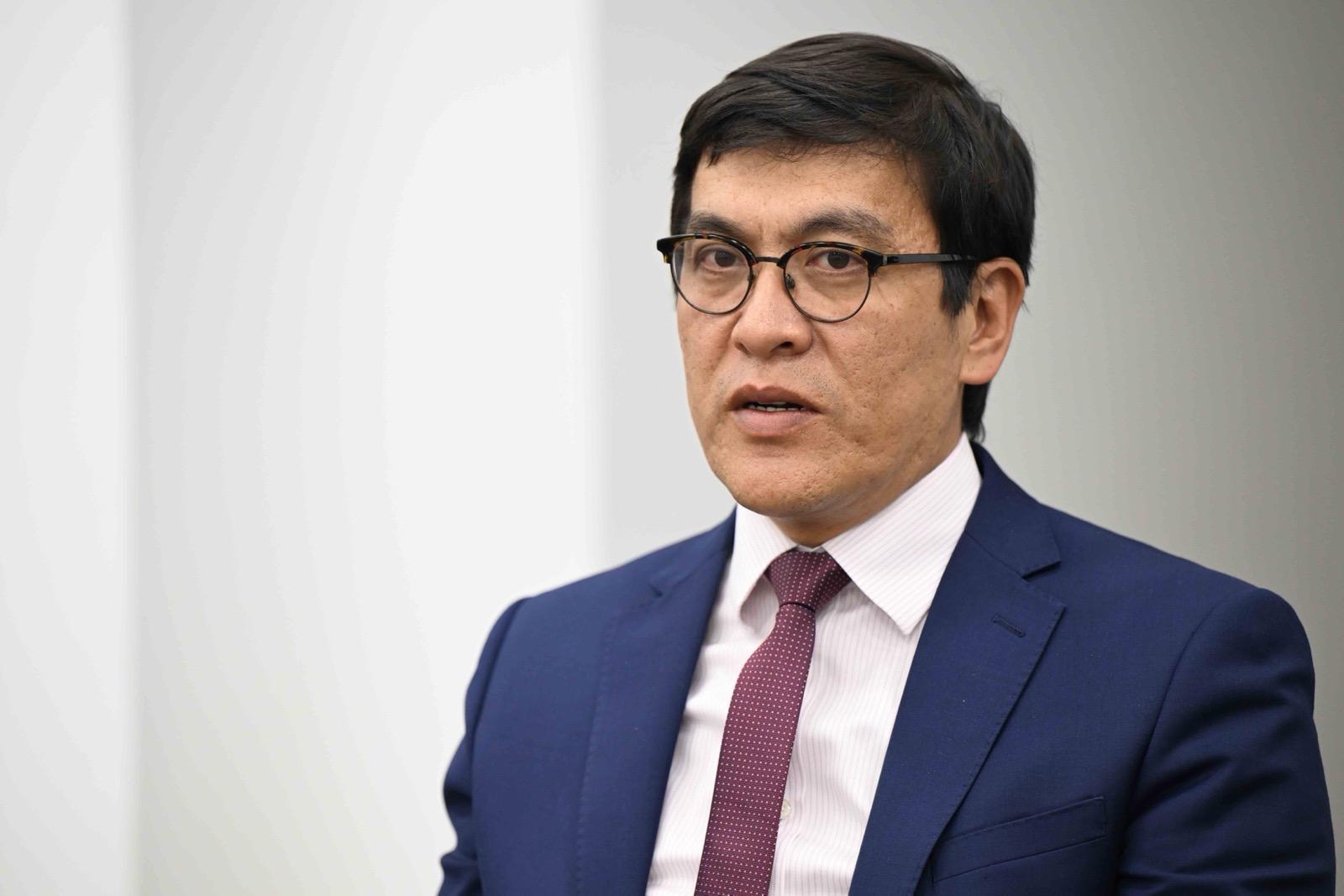
Edil Baisalov is a politician who began his career as a civil-rights activist, became a prominent member of Kyrgyzstan’s non-governmental organization (NGO) sector, and is now serving as the country’s Deputy Prime Minister. In an exclusive interview with The Times of Central Asia, he explained not only how his views have changed over the years, but also how Kyrgyzstan is seeking to find its place in what he described as a rapidly changing global landscape.
In Baisalov’s assessment, the global system is facing a crisis of democracy. “The world order, as we know it, is collapsing – or at least is under attack from both within and without,” Baisalov told TCA. “The era of global hypocrisy is over, and the people of Kyrgyzstan have woken up.
“What various international institutions have taught us over the years – their lectures on how to develop an economy, how to pursue nation-building, and so forth – has been proven wrong. Throughout the 1990s, Kyrgyzstan was one of the most diligent students of the liberal policies promoted by the “Chicago Boys.” We followed their instructions to the letter. Kyrgyzstan was the first post-Soviet country to join the World Trade Organization in 1998, and we were the first to receive normalized trade relations with the U.S. with the permanent repeal of the Jackson-Vanik amendment. All of our previous governments followed IMF conditionality dictates to the letter, especially in deregulation, mass privatization, and all the austerity programs and budget sequestrations. We were promised prosperity; that the free markets and the invisible hand would take care of everything. But it did not work.
“I remember it well: at the time, U.S. President Bill Clinton laughed at China, saying that Beijing needed to adopt certain policies, to liberalize, or that science could not prosper in a closed society. He claimed the Chinese model was doomed to fail, arguing that scientific and technological breakthroughs could only occur in a Western-style society with minimal state intervention. Yet today, we witness the triumphant rise of the People’s Republic of China. This is not only an emergence but also a return to the rightful place of a great civilization that has, for millennia, contributed enormously to humankind.”
TCA: Does this mean you now see China, rather than the West, as a model for Kyrgyzstan to follow?
Baisalov: It’s not about the Chinese model or any particular foreign template. What we understood is that as a nation, we are in competition with other nations. Just like corporations compete with each other, nations must look out for themselves. If our state does not actively develop industries and sciences, there is no formula for success. All those ideologies promoting the “invisible hand” – the idea that everything will naturally flourish on its own – are simply false.
TCA: When did Kyrgyzstan stop taking orders from outside forces and begin making independent national decisions?
Baisalov: We used to be naive about wanting to be liked by others. But not anymore. In the last five years of our development, most of what we did went against the prescriptions of outside forces. We realized that it wasn’t just about following advice – it was about maturing as a nation and taking responsibility for ourselves. Now, we are pursuing a pragmatic course of development and making decisions based on our own best interests.
TCA: It seems this change came about when you became Deputy Prime Minister.
Baisalov: I didn’t want to join President Sadyr Japarov’s team initially. They tried to recruit me, but I resisted. However, I am proud that I eventually accepted his proposal. I’m very proud of our achievements. This country is three times richer than it was five years ago. I could leave tomorrow and spend the rest of my life proudly, knowing what I have significantly contributed to the development of Kyrgyzstan. But for the time being, I’m serving my nation. I believe there is no higher calling than that.
TCA: How do you see President Japarov’s future in light of his recent decision to dismiss Kamchybek Tashiyev as head of the State Committee for National Security and Deputy Prime Minister?
Baisalov: I strongly believe that President Sadyr Japarov will be reelected, and I’m looking forward to the presidential election next January. There may be some interesting developments and strong contention, but I don’t believe General Tashiyev will run for president, even though many people are urging him to do so. General Tashiyev is a great patriot, and he will not risk the stability of this country. I believe he will endorse President Japarov, as he has publicly pledged on numerous occasions.
TCA: You argue for a stronger presidential system now, while in the past you supported a rather liberal model. How did your attitude change?
Baisalov: I used to be a very individualistic libertarian, but I changed. The whole world has changed, not just me.
TCA: Are you more conservative now?
Baisalov: I’m probably more conservative than I used to be, but I’m still much more liberal than most people in my country. If I were from Moldova, Georgia, or Serbia, I wouldn’t be in politics. I would have gone into business or emigrated. Because sooner or later, all these countries will join the European Union. There’s no choice; it’s just a matter of time – of course, if the EU doesn’t collapse before then. But right now, the EU is like a huge magnet, a very attractive model that draws you in. Here in Kyrgyzstan, we don’t have a choice between the EU and the Eurasian Economic Union. We are here, and we are doing what we must do. That’s why I’m in this fight – because I want to steer this country toward the best possible outcome.
TCA: Why did you recently say that Kyrgyzstan was forced into the Eurasian Union?
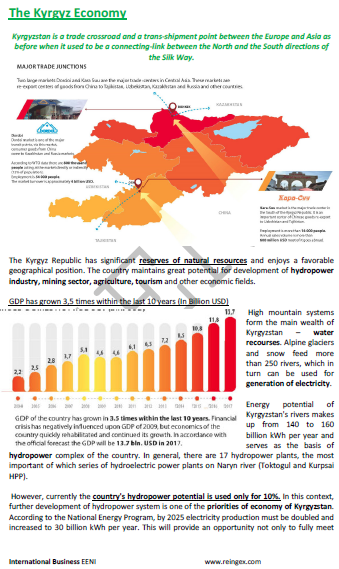
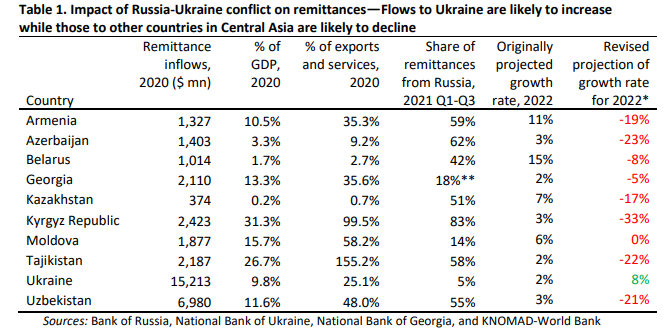
Baisalov: I criticized the then national leadership for selling Kyrgyzstan’s accession to the Eurasian Economic Union as if we would automatically reap all the benefits. At the time, we really didn’t gain much. Other EAEU member states have significant exports, but for us, besides a few mineral resources, mainly gold, the main “export” is our labor to Russia and Kazakhstan. One supposed benefit is the free movement of labor. Theoretically, under Union law, Kyrgyz citizens have the fundamental right to work in Russia on equal terms with Russian citizens. But in reality, it’s not working. Most recent legislation in Russia actually places our labor migrants in the same category as migrants from neighboring Uzbekistan and Tajikistan, who are not even members of the EAEU.
TCA: Does that mean you plan to leave the EAEU?
Baisalov: We don’t have such plans. What we actually want is to attract foreign investors – for example, to build a manufacturing base here in Kyrgyzstan, as that would give them access to the Eurasian market. We want to take full advantage of our membership in the EAEU.
TCA: While you aim to improve the status of Kyrgyzstan’s labor migrants in Russia, at the same time, you have a growing number of foreign workers in Kyrgyzstan.
Baisalov: We had a big argument inside the Cabinet and the Presidential Administration. Of course, we want to provide jobs in our growing economy for our own people. In the social sector of the Cabinet, some of us, including myself, wanted to protect the market and put up barriers to foreign workers. But we were overruled by the pro-business part of the Cabinet. They argued that our construction boom needs foreign laborers, and our expanding manufacturing base – especially in the garment industries – faces challenges because the salary expectations of our own nationals are already too high, making us less competitive. So yes, we already have at least 25,000, if not more, foreign workers. This is a very unique experience for us.
TCA: Your critics would say that if you cannot provide jobs to your own people, why bring in foreign workers?
Baisalov: The world is not black and white. There are no easy solutions. My instinct was to protect our own labor market and only allow highly qualified foreign workers. But the pro-business part of the Cabinet won the argument. Even for the construction of the Presidential Administration, we initially relied on our own workforce, but in the end, we had to bring in foreign workers. We have moved from one way of thinking to another. That is why we now follow a very pragmatic path of development that prioritizes our national well-being and prosperity. In a way, this coincides with what has happened in the United States.
TCA: In what way?
Baisalov: I remember very well in the 1990s, NAFTA – the North American Free Trade Agreement – was presented as a globalist project that would improve the lives of every American family while helping develop Canada and Mexico. But the reality is different. I’ve seen small towns in America devastated, and I completely understand why the vast majority of American voters, who have been negatively affected by this globalist system, are choosing to vote for Trump and support the America First approach.
TCA: Speaking of “America First” and protecting national interests, you recently said that Kyrgyzstan is part of the Russian world. How does that view fit into your vision of national priorities?
Baisalov: My statement was misinterpreted, and some people, both in Kyrgyzstan and abroad, even accused me of being “sold out” to the Russians. There were many negative comments. But what I said is simply a fact. The average Kyrgyz villager, when using social media, watching Hollywood movies, or researching something online, overwhelmingly consumes this content in Russian. It’s a fact. I even consider it a failure of our national elites and cultural institutions that our children grew up watching Hollywood movies and cartoons in Russian.
TCA: Do you plan to change that?
Baisalov: There are countries that have built their national identity on not being Russia, or being “anti-Russia.” Former Ukrainian President Leonid Kuchma even wrote a book, Ukraine is not Russia. There are also quite a few activists in Kyrgyzstan who are promoting an anti-colonial narrative. I am not among them. I do believe that we need to build a strong Kyrgyz identity, but it should not be based on anti-Russian sentiment. I believe we must preserve the Russian language. We are bilingual, and we are proud of it. For example, our children, by default, are much smarter than many monolingual people. Studies even say it can give you around 20 extra IQ points.
TCA: Do you personally feel yourself as part of the Russian world?
Baisalov: I don’t live in the Russian world. I read The New York Times, Svenska Dagbladet, The Economist, or Hürriyet. I’m glad that I can also watch Hollywood movies in English. I’m cosmopolitan, and I strongly believe that our people should also learn to speak English – but not at the cost of abandoning the Russian language.


- Previous The biography of Imran Khan, cricket’s Greek God
- Next Trump: Starmer made ‘a big mistake’ with Chagos Islands deal
You may also like...


Random news


About us
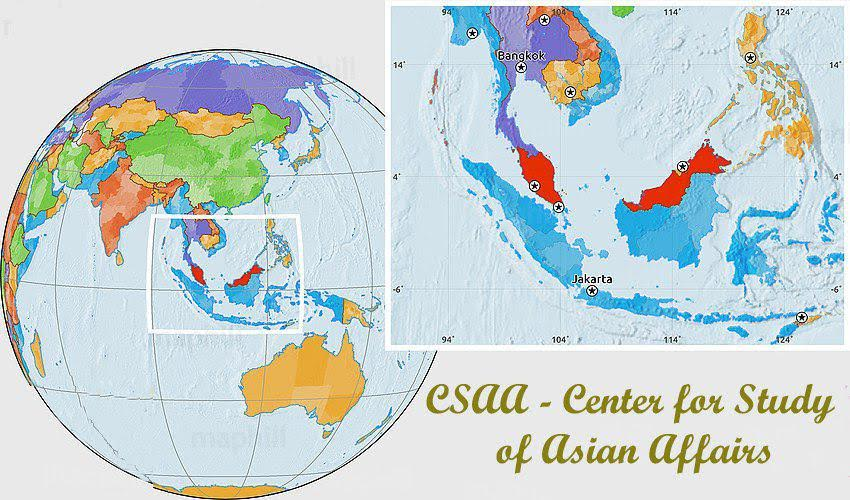
Our Newly established Center for study of Asian Affairs has
branches in Indonesia, Malaysia and Singapore, as well as freelances in some other countries.
For inquires, please contact: newsofasia.info@yahoo.com Mr.Mohd Zarif - Secretary of the Center and administer of the web-site www.newsofasia.net
Polls
 Loading ...