

Fight for petrodollar: The Venezuela siege, 2 trln. investments from Gulf and 100s bn $ weapons sales
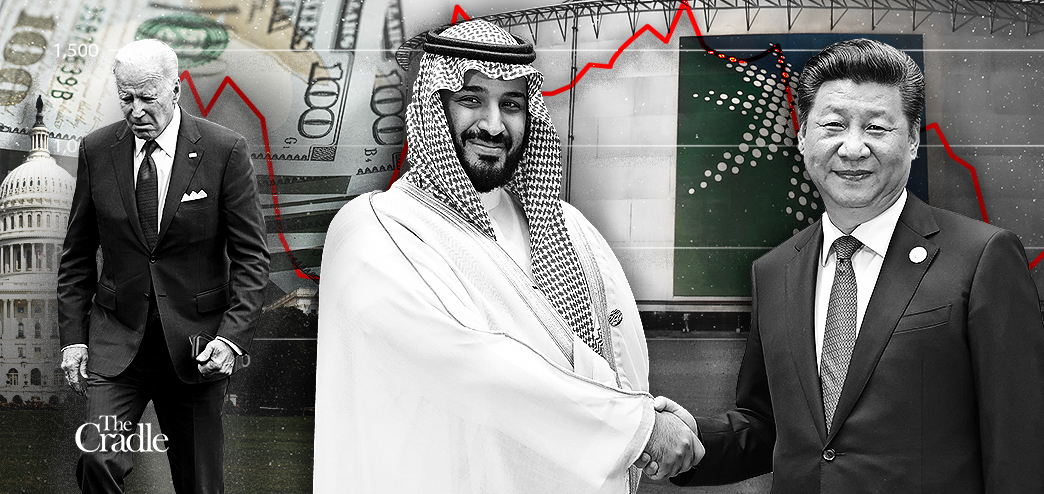

Trump’s blockade is not a drug war. It is a naval siege to choke Venezuelan oil flows and push hemispheric decoupling from China
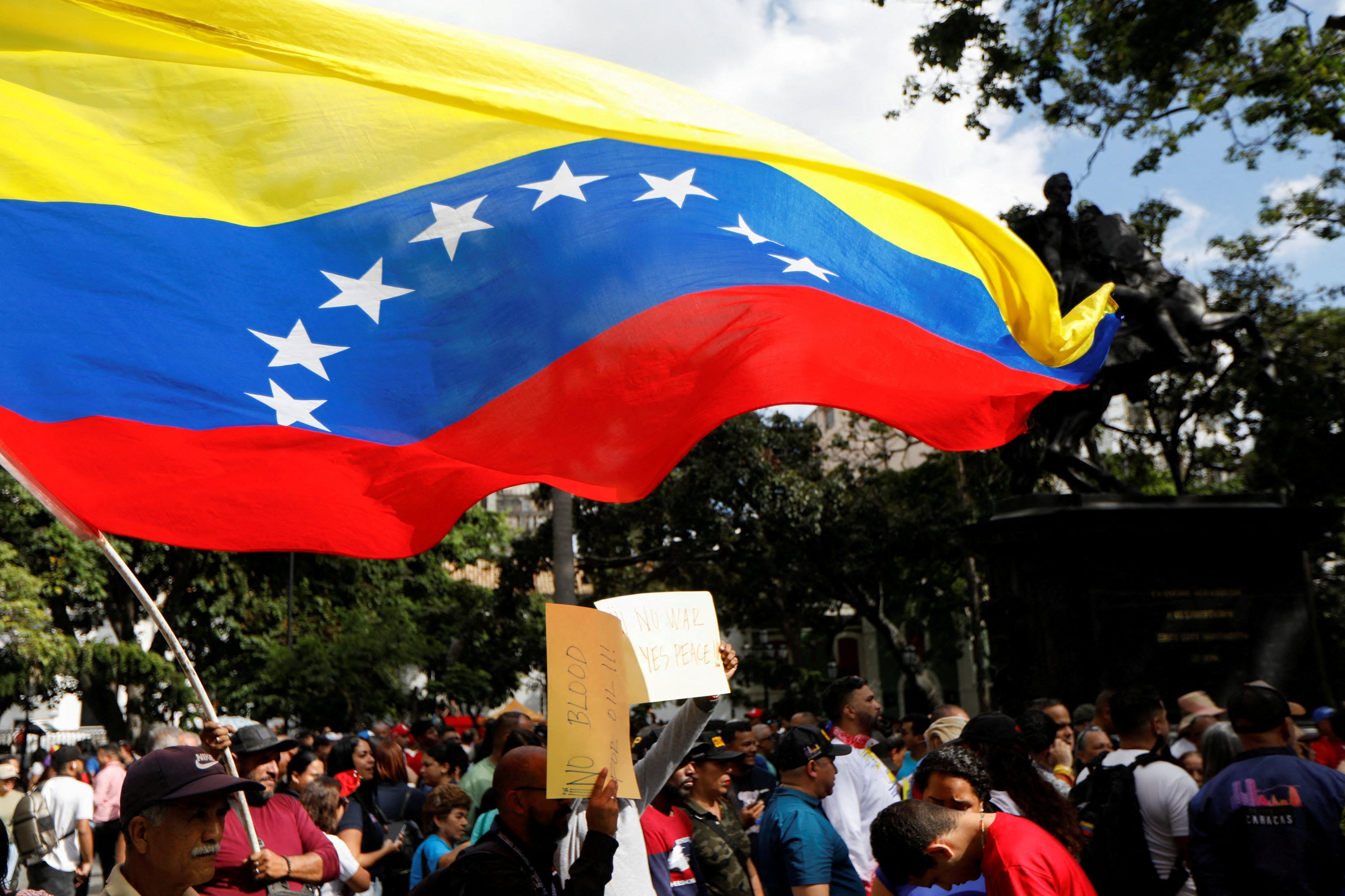
As U.S. naval forces enforce a blockade off Venezuela, U.S. President Donald Trump calls it law enforcement. But the math of the “war on drugs” has never added up in the Caribbean. The United Nations Office on Drugs and Crime’s (UNODC) World Drug Report 2025 shows that the main cocaine flows to North America originate in the Andean producing states and move through multiple corridors. As Venezuela’s ambassador to Türkiye, Freddy Eduardo Molina Gutierrez, said in an interview, “Venezuela simply does not play an important role in the equation of global drug trafficking.”
The deployment of the USS Gerald R. Ford Carrier Strike Group off the coast of La Guaira as part of “Operation Southern Spear” is a vastly disproportionate response to the stated trafficking threat. We are witnessing the violent operationalization of the “Trump Corollary” to the Monroe Doctrine. This is a strategy where the “drug war” is merely a convenient smokescreen for a geoeconomic siege designed to evict China from the Western Hemisphere and tighten U.S. leverage over the world’s largest oil reserves for American re-industrialization.
‘Keeping the oil’
The true objective of this blockade became harder to deny on Dec. 20, 2025, when U.S. forces seized the Centuries, a tanker that was not on any official sanctions list. By shifting from targeting “illegal” ships to any vessel “suspected” of carrying Venezuelan crude, Washington is treating the maritime rule of law as optional. As of Dec. 22, the U.S. Coast Guard has been in pursuit of a third vessel, the Bella 1. This follows the seizure of the M/T Skipper on Dec. 10, after which Trump publicly stated the U.S. would “keep” the oil, while labeling Venezuelan President Nicolas Maduro’s government a “narco-terrorist” entity rather than a sovereign state. By doing so, Washington has tried to create a legal loophole to bypass international maritime law and legalize piracy under the guise of counter-narcotics. This framing points to the real target: Venezuela’s oil-for-finance architecture with China.
Venezuela possesses the world’s largest proven oil reserves, and for the last two decades, it has utilized them to build a financial fortress in partnership with Beijing. Starting in 2007, under the “Loans-for-Oil” model, China injected over $60 billion into Venezuela to fund everything from the Tinaco-Anaco railway to the Simon Bolivar satellite system. Venezuela paid this debt not in dollars, but in physical barrels of crude. By effectively seizing control of the state-run Petroleos de Venezuela’s exports through a naval chokehold, the U.S. is attempting to dismantle this deal and the non-dollar ecosystem built around it. In this new energy war, Washington may be trying to use seized Venezuelan oil to pressure global prices and squeeze petro-rivals like Russia and Iran, while securing cheap energy for the domestic industry. That is why, to Washington, the petrodollar has repeatedly been defended like a border since the start of this century.
Graveyard of financial defiance
The current siege of Caracas is the latest chapter in a bipartisan script Washington has refined for decades. The U.S. has long kept a “graveyard” for leaders who try to step outside the petrodollar system. When Saddam Hussein moved Iraqi oil sales toward the euro, the response was a war that ended with Baghdad’s fall and oil sales snapping back to the dollar. Syria flirted with a similar shift; years later, its oil-rich east eventually became occupied territory. Libya followed the same logic. As Moammar Gadhafi pushed for a gold-backed African dinar that could bypass Western banks, “humanitarian” intervention converged with the demolition of a state that had threatened to rewrite the rules of settlement.
By 2022, the method had evolved from invasions to financial warfare. When Russia attempted to mandate “rubles for gas,” Washington responded by freezing roughly $300 billion in reserves and severing access to the SWIFT system. Venezuela is where these tools now fuse: Trump’s first-term “maximum pressure” is being pushed to its final, kinetic conclusion, with naval power doing what sanctions and diplomacy could not. Regardless of party, the message remains brutally consistent: trade oil in anything but the dollar, and you are no longer treated as a sovereign state. Trump is taking it one step further than his predecessors: it’s not only what currency you trade in, but who you trade with.
Digital and economic iron curtain
This blockade serves as the debut of the “Trump Corollary,” set out in the administration’s 2025 National Security Strategy (NSS). While the original Monroe Doctrine of 1823 warned European powers to stay out, the 2025 corollary frames the Western Hemisphere as “closed” to Chinese ownership of strategic assets. Trump’s Dec. 15 executive order designating fentanyl as a “weapon of mass destruction” has provided the final legal pretext to treat the region as a battlefield. It is a line in the sand that ends the era of neutrality for Latin America.
The U.S. has acknowledged through this deployment that China is no longer just a trade partner but a peer competitor in its “backyard.” The blockade forces every capital from Mexico City to Santiago to make a binary choice: decouple from Chinese technology and finance, or face the “Venezuela treatment.” The U.S. is effectively asserting that any nation accepting Chinese 5G networks, lithium mining contracts, or yuan-based trade is a threat to American hemispheric security. This is the first direct enforcement of the “Western Hemisphere is closed” policy in the 21st century, signaling that the U.S. is willing to use raw naval power to veto the accelerating economic shift toward the East. Its purpose is to sort the region into compliance.
A continent divided
At the Mercosur summit in late December, the regional divide was laid bare. On one side stands Argentina and its president, Javier Milei, who has fully aligned with the Trump Corollary, welcoming the military pressure as a necessary tool to “free” the region. For Milei, compliance bought economic survival, but at the cost of total strategic dependency.
On the other side, the region’s heavyweights – Brazil and Mexico – stand in open opposition. President Lula da Silva of Brazil warned that an armed intervention would be a “humanitarian catastrophe” and a “dangerous precedent for the world.” Similarly, Mexico’s Claudia Sheinbaum has offered to mediate, seeking to prevent a return to the era of “gunboat diplomacy.” This tension has transformed the South American continent into a theater of the New Cold War, where the “Argentina model” of vassalage competes with the “Brazil-Mexico” vision of sovereign neutrality. By forcing this choice, the U.S. has signaled that in its quest to contain China, the stability of its neighbors is an acceptable casualty.
While the world watches the carriers, Trinidad and Tobago added the most dangerous “fuel to the fire.” Under Prime Minister Kamla Persad-Bissessar, Port of Spain executed a 180-degree pivot from decades of neutrality, granting the U.S. military access to its airports for resupply and personnel rotations. The fallout has been immediate for regional energy security. After U.S. military radars were installed on Trinidadian soil, Maduro terminated the Dragon Gas Field deal, a decade-long project meant to secure Trinidad’s industrial future. By choosing to become what Venezuela calls a “U.S. aircraft carrier,” Trinidad has traded energy sovereignty for the Trump Corollary, effectively lighting a match in the Caribbean’s most volatile corner.
This is the corollary’s real mechanism in miniature: It doesn’t only punish a target like Venezuela; it forces neighboring states to pick a side, then turns those choices into ruptures like broken energy projects, broken neutrality, broken regional trust. Once Trinidad becomes a forward platform, the “blockade” becomes a template: integration replaced by alignment, diplomacy replaced by logistics, and sovereignty reduced to permission.
The “Trump Corollary” is doing more than tightening a blockade: It is pushing the Americas toward a zero-sum geoeconomic order in which U.S. “security” is pursued through the instability of its neighbors. As the blockade tightens, the world should recognize what is being tested here. This is a coercive attempt to reorder the region’s resources and financial alignment. The U.S. is acting like an uncompromising landlord, tightening its grip in a struggle not to fall.

- Previous Pakistan keeps waning against Dhurandhar film: bringing movie crew to court deemed not legally possible
- Next How Malaysia and Indonesia navigate Christmas celebration
You may also like...


Random news





About us
Our Newly established Center for study of Asian Affairs has
branches in Indonesia, Malaysia and Singapore, as well as freelances in some other countries.
For inquires, please contact: newsofasia.info@yahoo.com Mr.Mohd Zarif - Secretary of the Center and administer of the web-site www.newsofasia.net
Polls
 Loading ...