

Japanese FBI and CIA in a pipeline: Takaichi’s next intel reform push
By HARUKA SUZUKI/ Staff Writer
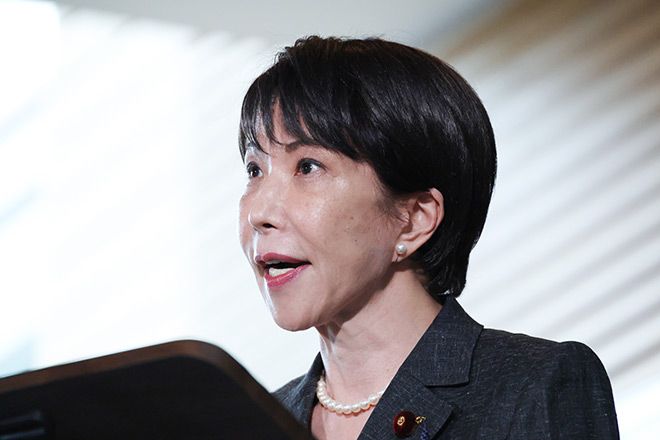 Prime Minister Sanae Takaichi speaks to reporters after a law to establish a National Intelligence Council and a National Intelligence Bureau was enacted on May 27. (Takeshi Iwashita)
The Takaichi administration is closer to its mission of enacting anti-espionage legislation and creating a foreign intelligence agency after the Diet approved the first law bolstering the government’s intelligence capabilities.
The Diet passed a law to establish a National Intelligence Council, chaired by the prime minister, and a National Intelligence Bureau, which will serve as its secretariat, on May 27.
Prime Minister Sanae Takaichi told reporters that the law’s enactment marked “the first step in reforms to strengthen our country’s intelligence capabilities.”
She has positioned the enhancement of intelligence functions as one of her administration’s “key policy shifts.”
Moving forward, the focus will be on formulating anti-espionage legislation to prevent foreign agents from stealing information or influencing national policies, as well as on establishing a foreign intelligence agency tasked with information gathering overseas.
The two initiatives are described as signature policies championed by Takaichi.
The coalition agreement between the Liberal Democratic Party and Nippon Ishin (Japan Innovation Party) calls for anti-espionage legislation to be “drafted without delay” and for the foreign intelligence agency “created by the end of fiscal 2027.”
The government plans to set up a panel of experts as early as this summer to begin full-fledged discussions.
For the anti-espionage legal framework, the government is looking toward introducing a foreign agents registration law similar to regulations in place in the United States, Britain, Australia and elsewhere.
In Diet deliberations on May 26, Takaichi described it as “a system mandating registration of individuals and organizations that lobby the government to influence policies or conduct propaganda activities under the direction of foreign governments or other entities.”
“We need to consider such a system to prevent undue interference by foreign actors,” she said.
According to a senior government official, a foreign agents registration law would help deter foreign countries from engaging in intelligence activities in Japan.
Conducting intelligence activities without registration would constitute an illegal act, which could serve as grounds for investigating the background and details of such activities, the official said.
Experts caution that careful consideration will be required when designing such a system.
Yoshiki Kobayashi, a professor at the Institute of Information Security and an expert on intelligence policy, raised points of contention.
They include whether the scope of registration would extend to researchers and journalists; whether targeted activities would encompass academic research and cultural exchanges; and striking an appropriate balance with privacy protections.
Chief Cabinet Secretary Minoru Kihara has told the Diet: “When considering policies that could constrain the rights and interests of the people, it is also necessary to examine how democratic oversight should be ensured.”
As for the proposed foreign intelligence agency, modeled in part after institutions such as the U.S. Central Intelligence Agency, many issues remain, including the objectives and methods of operation.
Given the potential risks associated with relations with foreign governments, a government official said, “We should consider the policy with careful attention to the costs and benefits.”

- Previous China controls a rare-earth metal, impacts Iran war – U.S. on a global hunt for more
- Next Sino-Japanese tensions overboils into Trump-Xi summit agenda: Trump defended Takaichi against Xi’s criticism
You may also like...






Random news












About us
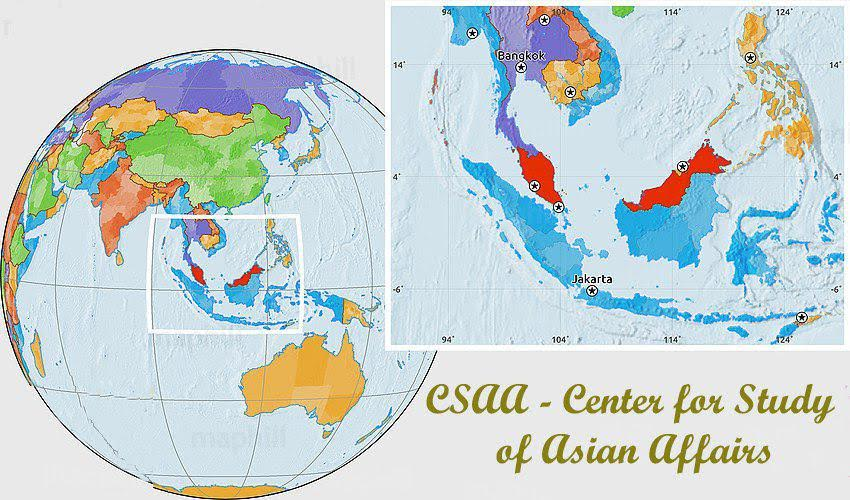
Our Newly established Center for study of Asian Affairs has
branches in Indonesia, Malaysia and Singapore, as well as freelances in some other countries.
For inquires, please contact: newsofasia.info@yahoo.com Mr.Mohd Zarif - Secretary of the Center and administer of the web-site www.newsofasia.net
Polls
 Loading ...