

Kazakhstan and Israel Agree to Deepen Cooperation
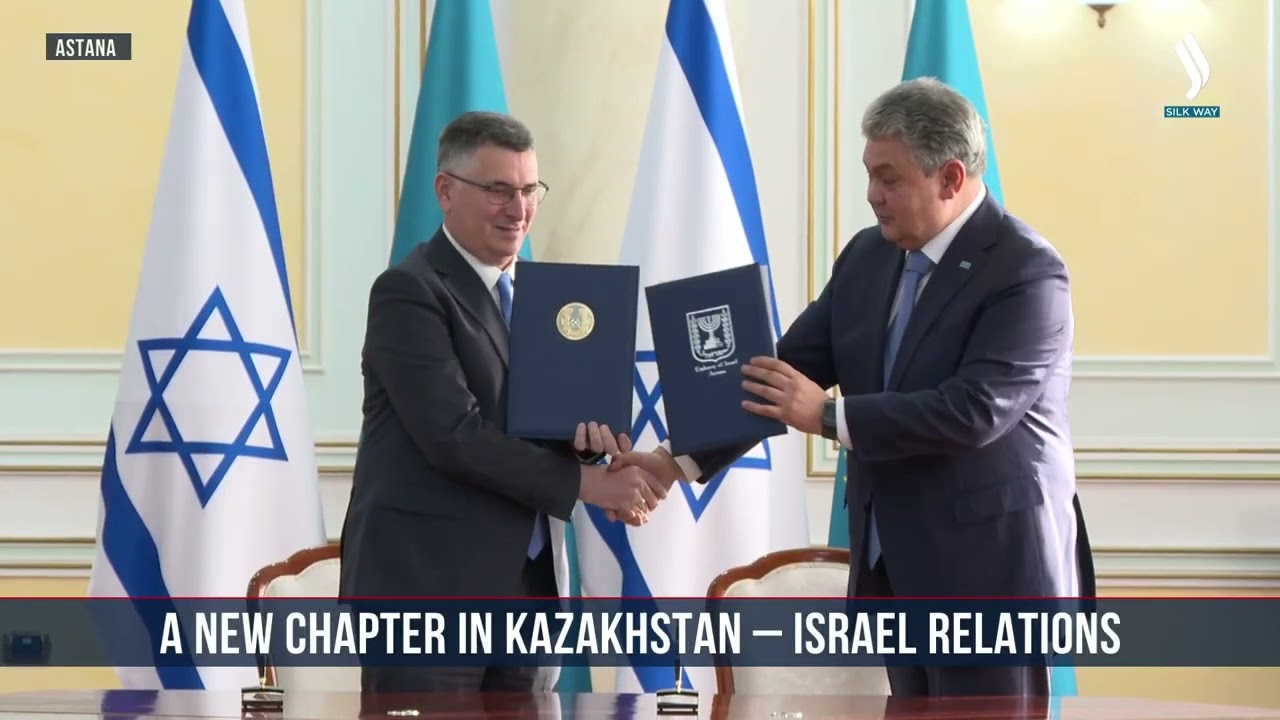
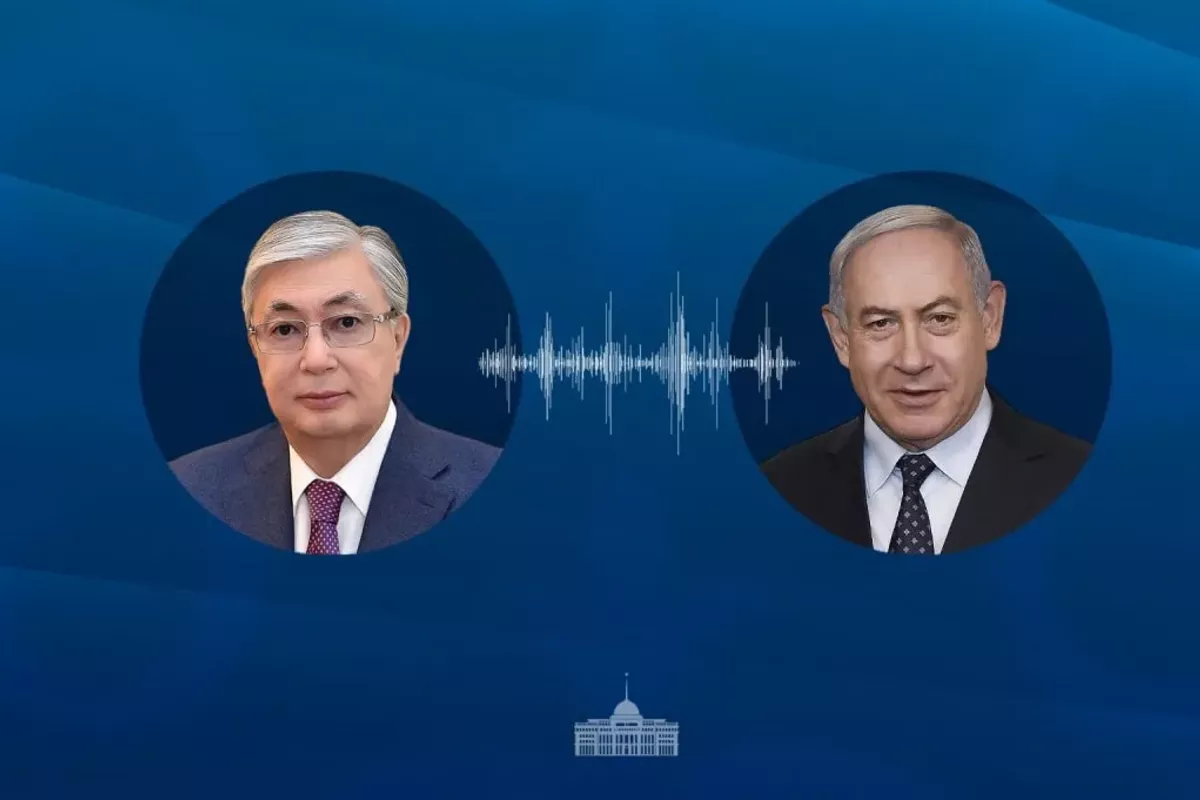
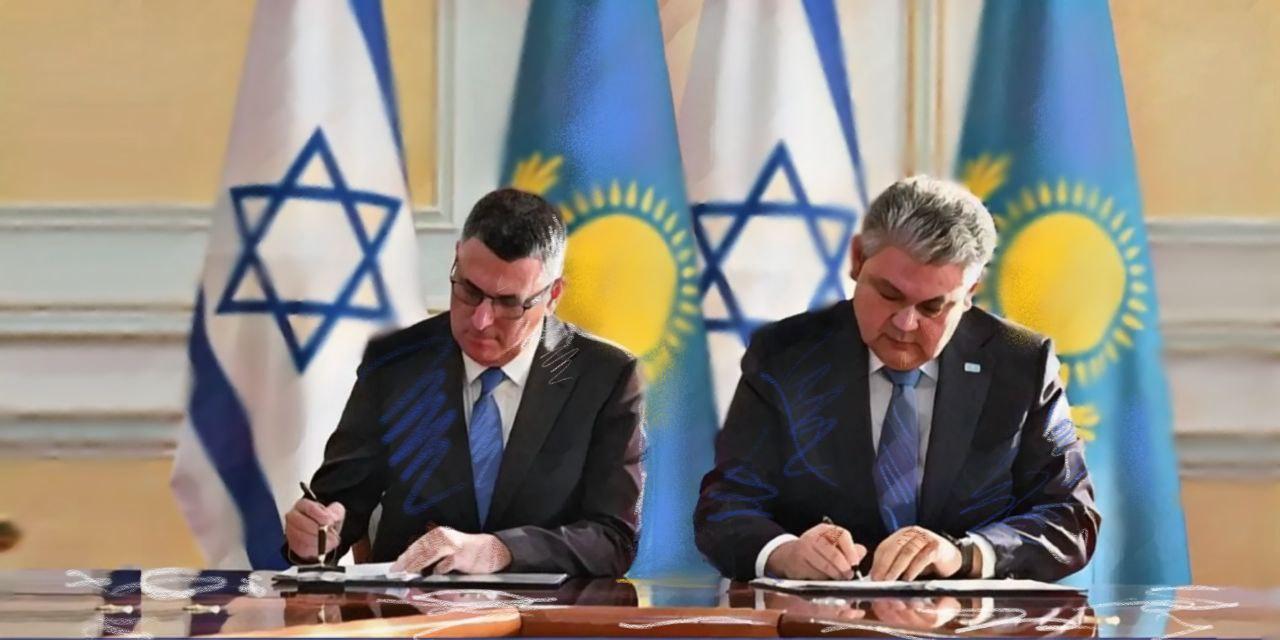
Image: TCA, Aleksandr Potolitsyn
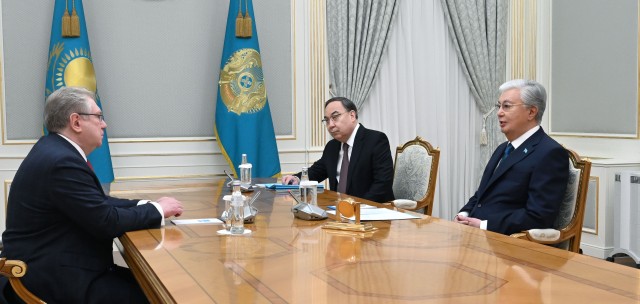
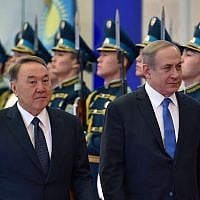
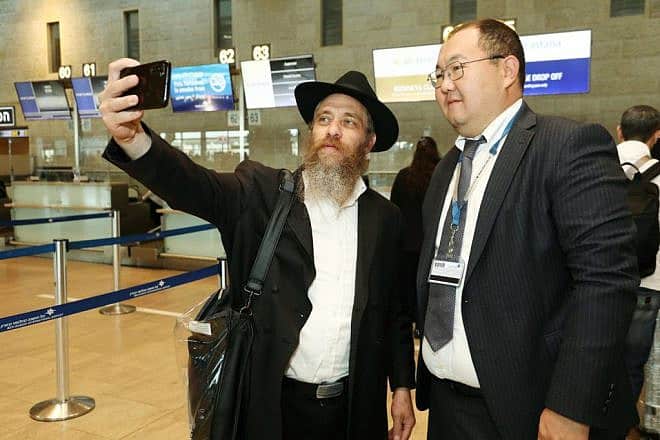
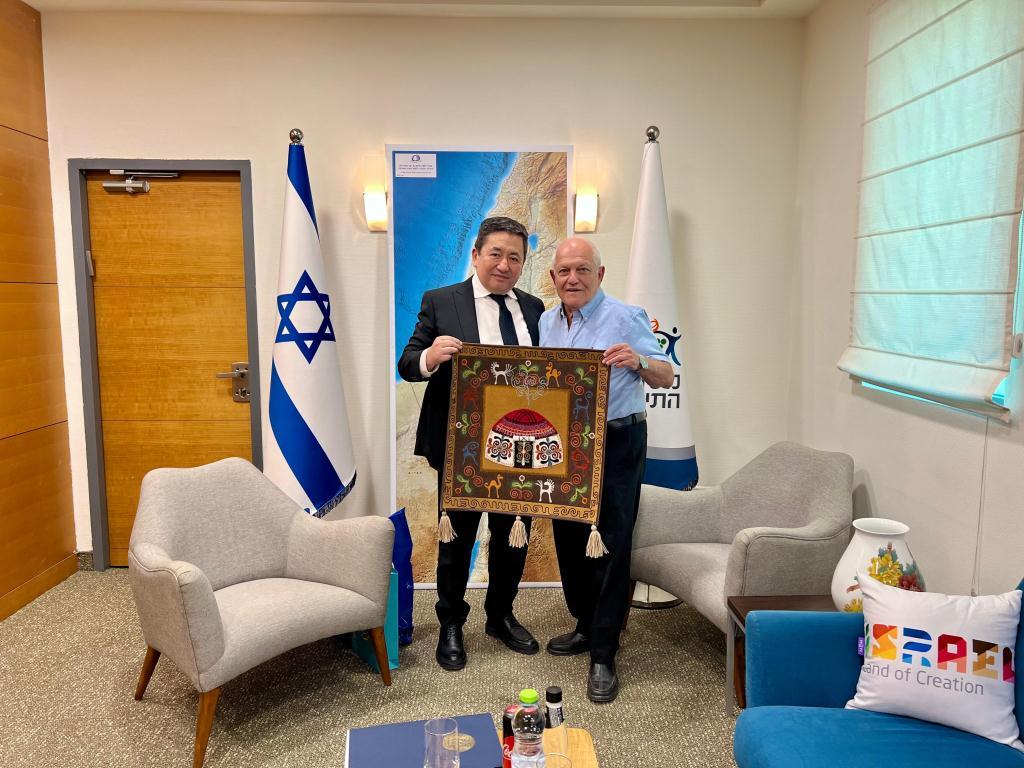
Israeli Foreign Minister Gideon Sa’ar’s official visit to Astana on January 27, 2026, was the first by an Israeli foreign minister to Kazakhstan in 16 years, and it yielded a package of institutional and economic steps. President Kassym-Jomart Tokayev received Sa’ar and Foreign Minister Yermek Kosherbayev, holding talks that both sides framed as elevating cooperation to a new level. The two foreign ministries signed documents on diplomatic training and public diplomacy, and agreed to pursue visa-free travel for holders of ordinary passports. A Kazakhstan–Israel business forum convened in parallel, with January–November 2025 trade of about US$162.4 million cited as the baseline for expansion.
The visit’s value lay in its forward-looking measures to deepen cooperation. The sides agreed to convene the Kazakhstan–Israel Joint Economic Commission at a ministerial level. This move creates a regular venue where sector priorities can be translated into specific workstreams. The Kazakhstan–Israel business forum was framed as the practical feeder for that process, as both sides publicly identified a project map running from high-tech agriculture and water-resource management through digital technologies (including artificial intelligence) to infrastructure and logistics, energy efficiency and renewables, and healthcare and pharmaceuticals. In parallel, the two foreign ministries’ political consultations, in their twelfth round, covered wider international and regional agendas, including Middle East confidence-building and peaceful-settlement initiatives.
Regularizing Cooperation Channels
The documents signed in Astana were narrow-gauge instruments designed to regularize contacts. The memorandum on diplomatic training provides for structured interaction in the preparation of diplomatic personnel. What this means in practice is that exchanges between the two foreign-policy services will be routinized through their training institutions rather than on an ad hoc basis. The memorandum on public diplomacy set a framework for coordinated outreach, providing an agreed approach to presenting their cooperation. Taken together, these instruments are the administrative layer that will operationalize joint political intent.
The visa initiative was narrowly framed as a statement of intent to conclude a visa-exemption agreement for holders of ordinary passports, not as an agreement already in force. In practice, such a regime would lead to higher tourism flows and denser business travel. The latter development would widen the base of commercial contacts, which could in turn be carried into ministerial-level economic follow-up. The visa track is thus an enabling measure for the economic agenda.
At the leadership level, Sa’ar publicly invited President Tokayev to visit Israel. This move signals an intent to sustain momentum beyond merely ministerial channels. The visit coincided with International Holocaust Remembrance Day in Kazakhstan, and Sa’ar participated in a state ceremony in Astana connected to the commemoration. The ceremony included senior officials and diplomatic representatives, with official messaging from Tokayev to Israel’s president on the occasion. The civic and humanitarian nature of this event complemented a visit that otherwise concentrated on governance mechanisms, economic priorities, and institutionalizing diplomatic follow-through.
First Steps Toward Joint Projects
Beyond merely listing priority sectors, the business forum also surfaced first-step commercial and quasi-commercial documents providing a basis for follow-through. Kazakhstan’s investment agency reported three signed items: a memorandum with Mekorot Development & Enterprises Ltd. on the modernization of housing-and-communal services and water infrastructure, an investment agreement for a bitumen plant in the Atyrau Region, and a renewable-energy cooperation memorandum in the East Kazakhstan Region. The identification of these projects means that parts of the agreed agenda are already engaging cooperation that is not dependent on state-to-state agreements, and which have identifiable counterparties and near-term transaction forms. They are also probes to establish the institutional fit of the modalities of implementation.

Astana framed the economic and technological agenda as a direct complement to Kazakhstan’s domestic modernization priorities. As previously reported by TCA, Tokayev and Sa’ar highlighted artificial intelligence, agrotechnology, water-resource management, and digital governance as concrete cooperation targets. Israeli firms were also invited to participate in national digital-transformation work, including e-government, data-driven public services, and digital infrastructure. This suggests that Kazakhstan will not treat Israel as a generic trade partner, but rather as a technology and public-administration partner, with project selection to be guided by Kazakhstan’s own reform and productivity agenda.
The visit has now created enough declared mechanisms for follow-through to be visible in the short term. The first indicator is whether the Kazakhstan–Israel Joint Economic Commission is convened at a ministerial level and assigned a defined initial agenda. The second is whether the statement of intent on visa exemption for ordinary passports advances into a signed agreement with an announced entry into force. The third is whether the three project items reported from the business forum move from memoranda and investment declarations into contracting, financing, and implementation, notably on water and utilities modernization, the Atyrau bitumen plant, and renewables in East Kazakhstan.
The Middle East Dimension
The Middle East dimension also came into play, as Astana has lately aligned itself more explicitly with U.S.-centered regional initiatives that include Israel. Thus, Kazakhstan’s accession to the Abraham Accords is a largely symbolic act that nevertheless improves Astana’s positioning in Washington. In the Astana meetings, Sa’ar welcomed Kazakhstan’s engagement with the Abraham Accords framework and characterized it as constructive. Separately, Tokayev has agreed to join Trump’s proposed “Board of Peace” mechanism for post-war Gaza governance and reconstruction on a standard three-year term, with no required financial contribution.
On a broader level, the Astana package shows the two sides exploring contacts in a mutually beneficial way without forcing premature strategic overcommitment. For Kazakhstan, the cooperation maintains an emphasis on applied modernization and implementation. Project selection is constrained by domestic reform priorities and by the need for workable modalities. For Israel, the visit strengthened bilateral instruments, also confirming Kazakhstan’s entry into a U.S.-centered regional vocabulary through the Abraham Accords framework and related Gaza discussions.
As Tokayev put it earlier this month when explaining Kazakhstan’s decision to become a party to the Abraham Accords, such agreements are “a diplomatic innovation stemming from President Trump’s deep understanding of the historical context and current political realities.” This context facilitates a practical upgrade of the Kazakhstan–Israel relationship through governance mechanisms, mobility enablers, and identified projects. The Middle East overlay increases diplomatic visibility without defining the partnership as a formal bloc alignment.


- Previous Why India’s EU signs FTA Brahmastra deal: Paks and Bangladeshis are rattled
- Next Beijing critisizes imperialistic logiv if USFrom Western Hemisphere to Persian Gulf, how the US seeks to impose hegemonic control over ‘key regions’
You may also like...


Random news


About us
Our Newly established Center for study of Asian Affairs has
branches in Indonesia, Malaysia and Singapore, as well as freelances in some other countries.
For inquires, please contact: newsofasia.info@yahoo.com Mr.Mohd Zarif - Secretary of the Center and administer of the web-site www.newsofasia.net
Polls
 Loading ...