

President Trump: “BIGGEST OIL DEAL IN WORLD HISTORY” – US to increase its oil reserves by 65 bn barres with Venezuela deal
Trump Promises His Venezuela Oil Deal Will Lower Gas Prices. But When?
President Donald Trump announced Friday that the United States has entered a “historic” deal with Venezuela, saying that it gives the U.S. majority control over more than 65 billion barrels of oil reserves. Calling it the “BIGGEST OIL DEAL IN WORLD HISTORY” in a post on Truth Social, he said that the agreement would “substantially lower Gas Prices for all Americans.”
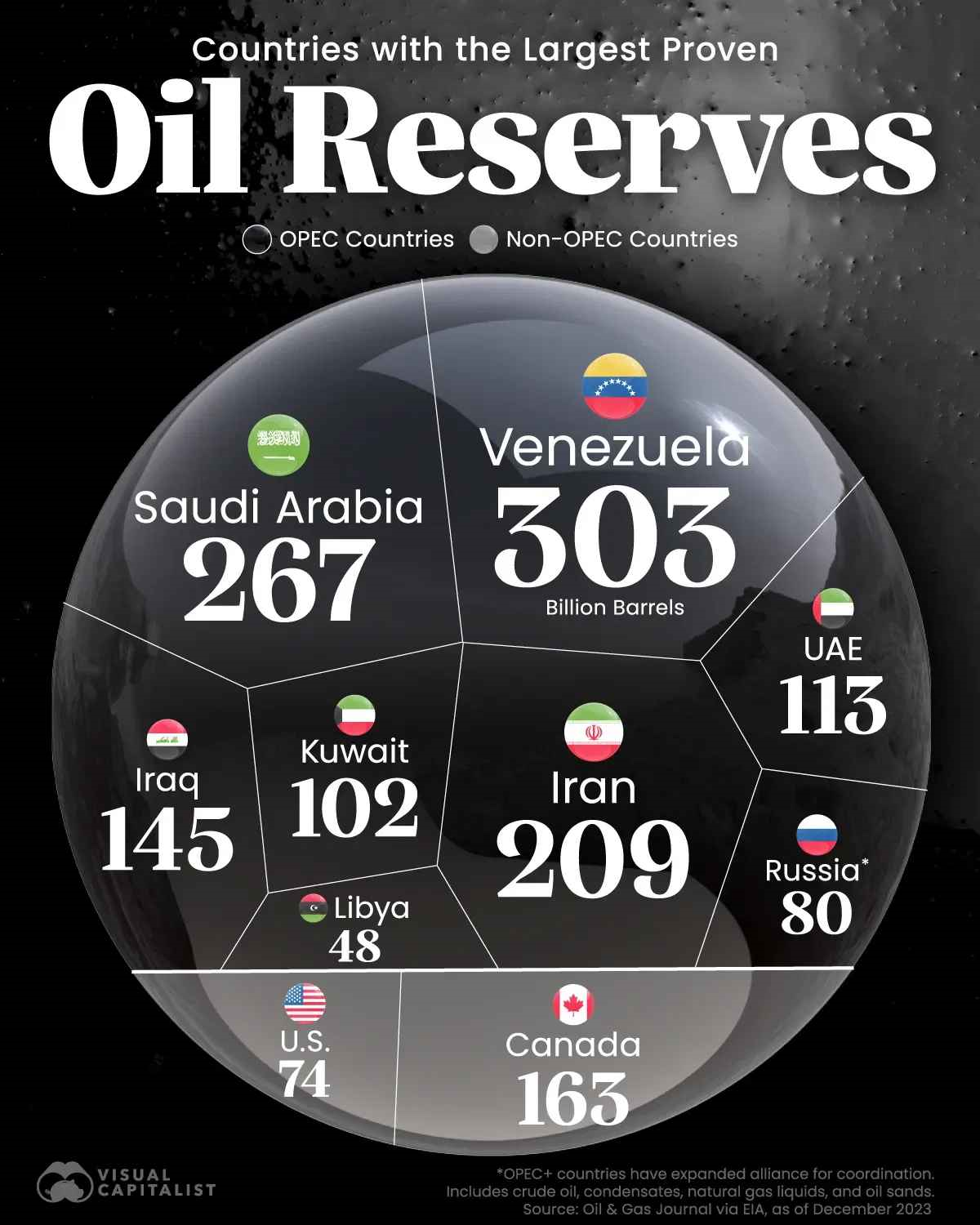
The Trump Administration has long expressed an interest in Venezuela, which boasts the world’s largest proven crude-oil reserves as of 2023—approximately 303 billion barrels, according to the U.S. Energy Information Administration (EIA).
Secretary of State Marco Rubio called the deal a “huge win” for America in a social media post on Friday, saying that it means “lowering gas prices here at home.”
Any eventual decline in gas prices could provide relief at a time when Americans are already contending with persistent inflation, which was the focus of remarks made by Federal Reserve Chair Kevin Warsh at the Jackson Hole Economic Policy Symposium in Wyoming on Friday.
What we know about Trump’s Venezuela oil deal
Much of what is known about the deal comes from a statement released on Telegram by acting Venezuelan President Delcy Rodríguez late Friday.
“It provides for the development of 17 strategic fields, with a proven potential of 65 billion barrels of oil, more than $100 billion in investment and more than $209 billion in tax revenue for the state,” the statement said. “These investments will contribute not only to the recovery and modernization of our industry, but also to our country’s economic growth, the energy security of our hemisphere and greater stability in international markets.”
Despite its vast oil reserves, the country only produced about 1.1 million barrels per day in July, according to a secondary-source estimate from the Organization of the Petroleum Exporting Countries.
“The U.S. deal with Venezuela is very important strategically,” says Claudio Galimberti, the chief economist at Rystad Energy. “The new wave of investments that is about to come to Venezuela as a result of this deal will be crucial to turn around the country’s aging oil infrastructure. Venezuela will be able to increase its production at a faster rate and unlock barrels that would otherwise have stayed underground.”
The agreement envisions private operators playing a central role in that effort. Rodríguez’s post explained that the agreement allows Venezuela to increase its oil production “through the participation of private operators,” without further elaboration.
The deal would give the U.S. 55% of the new company’s effective output, “split between equity ownership and guaranteed at-cost off-take,” the official says.
Although they declined to comment on the expected timeline for these steps, the official adds: “As the company scales production, the resulting stable supply of at-cost oil in our Hemisphere will go toward filling the U.S. strategic petroleum reserve and fulfilling the supply needs of our Great U.S. Military.”
Other key factors also remain unknown—including how the deal will be financed and whether it includes any target dates for achieving various outcomes.
One of the main reasons that Americans are unlikely to see immediate relief from high gas prices is that the deal is linked to 17 oil fields in Venezuela, not access to 65 billion barrels of already-produced crude oil.
While those fields contain proven reserves, Venezuela does not have the infrastructure in place currently to produce the oil at a rate that would significantly and rapidly affect the wallets of everyday Americans.
Such concerns arose after former Venezuelan President Nicolás Maduro was ousted by the United States in January, when oil executives and analysts assessed the viability of developing the country’s reserves.
Speaking at the White House on Jan. 9, ExxonMobil Chairman and CEO Darren Woods called it “uninvestable,” given his assessment of the “legal and commercial constructs—frameworks—in place today in Venezuela.”
“There’s an opportunity in Venezuela with all the resources there,” he said. “We don’t have that challenge of finding; we have the challenge of developing those resources.”
In her statement, Rodríguez said the initiative is expected to “facilitate a significant flow of investment aimed at the recovery and reconstruction of strategic infrastructure for the development of our hydrocarbons industry.”
But it remains unclear where that investment will come from, including whether the private operator will provide the financing and how the project will proceed “at no cost to the American Taxpayer,” as Trump said.
De Haan also questioned whether the agreement’s unusual structure could discourage investment. “How can the U.S. lay claim to a sovereign country’s natural resources?” he says, adding that even with approval from Venezuela’s acting president, a 100-year contract could face legal challenges or prove difficult to enforce.
“That may slow down oil companies from wanting to invest in Venezuela,” he explains.
And financing is only one hurdle; the physical work required also shapes the timeline.
“Drilling and pumping that oil will take a very long time. Changes to fuel prices won’t happen overnight or even in months,” De Haan says, adding that global refining capacity is currently constrained, further limiting the speed at which additional crude supply could affect the market.
Galimberti says that consumers should expect a long road between the initial investment and the ultimate production and distribution of oil.
“You will need to factor in several quarters and, in quite a few cases, years,” he says. “Therefore, it is a deal whose benefits will be seen mostly in the medium-long term.”
“To lower gasoline and diesel prices in the short term, the most effective way by far is by increasing the flows from the Middle East,” Galimberti says. He points to recent successes in bypassing the Strait of Hormuz, including pipelines and ports being developed across the Gulf.
Advertisement
Even without potential legal hurdles from within Venezuela, executing on the promise of the reserves could take years, which means that Americans may be in for a wait before they see the impact at gas stations across the U.S.
Trump says US reaches deal with Venezuela to control 65 billion barrels of country’s oil reserves


President Donald Trump said Friday night the United States has reached an oil agreement with Venezuela, a move he said will “more than double” American oil reserves, increase oil supply and lower gas prices.
“At my direction, Secretary of State Marco Rubio, and Secretary of War Pete Hegseth, working closely with Highly Respected Interim President of Venezuela, Delcy Rodriguez, and, through a partnership with private business, have secured majority U.S. control of more than 65 BILLION BARRELS of proven Oil Reserves in Venezuela, at no cost to the American Taxpayer,” Trump wrote on social media.
Trump’s emphasis on lowering American gas prices, almost two months before the US midterm elections, comes as the national average gas price sits at more than $4 a gallon.
The Iran war has disrupted a fifth of the world’s oil supply for six months, but it reached an inflection point in recent weeks: Billions of oil and fuel barrels in commercial stockpiles have vanished. US emergency reserves haven’t been this small since the early 1980s, with bond market investors and voters running out of patience with high prices.
“This Historic Transaction MORE THAN DOUBLES American Oil Reserves, greatly increases our Oil Supply, and will substantially lower Gas Prices for all Americans, long into the future, while helping to continue to set Venezuela on a course toward Tremendous Success and Great Prosperity,” Trump wrote in his post.
Rodríguez also touted the agreement between the two countries.
“Our goal is to move toward consolidating our position as an energy-producing power, putting our immense reserves at the service of national development, job creation, increased income for our workers, and the well-being of our people,” she said in a statement Friday night.
A White House official told CNN the negotiated deal will grant the United States “55% effective output of a new private joint venture that will be the second-largest private oil company by reserves in the world.”
With US support, the official said, Rodríguez granted a private company 100-year concessions for the oil fields. The official added the private company is a joint project of the US government and a private operator in Venezuela.

“The United States Government has secured more than half the value of this new oil giant, split between equity ownership and guaranteed at-cost off-take. As the company scales production, the resulting stable supply of at-cost oil in our Hemisphere will go toward filling the U.S. strategic petroleum reserve and fulfilling the supply needs of our Great U.S. Military,” the official said.
Rubio called the deal a “huge win for both the American and Venezuelan people.”
“For the Venezuelan people, this deal will bring nearly $100 billion in private investment, support thousands of high-paying jobs, and drive the reconstruction of Venezuela’s economy,” Rubio said shortly after Trump’s announcement.
At the start of the year, the United States captured Venezuela’s Nicolás Maduro in a large-scale military operation, bringing the leader and his wife to New York to face criminal charges. After the military operation, Trump said American companies would work to rebuild Venezuela’s oil industry.
In January, Venezuelan lawmakers approved a law change, backed by Rodríguez, to make it easier for foreign companies to take part in the country’s oil industry.
Venezuela has more proven oil reserves than any nation on the planet.

- Previous Troubled Balochistan is played new great game for critical minerals
- Next North Korea Officially: We Will Exercise Our Right to Self-defence for Neutralizing Military Threat from Hostile Forces
You may also like...


Random news



About us
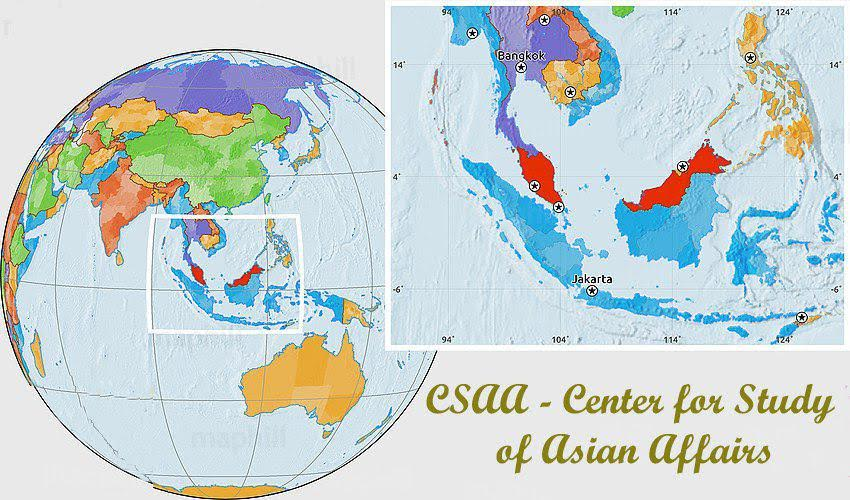
Our Newly established Center for study of Asian Affairs has
branches in Indonesia, Malaysia and Singapore, as well as freelances in some other countries.
For inquires, please contact: newsofasia.info@yahoo.com Mr.Mohd Zarif - Secretary of the Center and administer of the web-site www.newsofasia.net
Polls
 Loading ...