

Southeast Asia’s Military Modernization to Accelerate in 2026
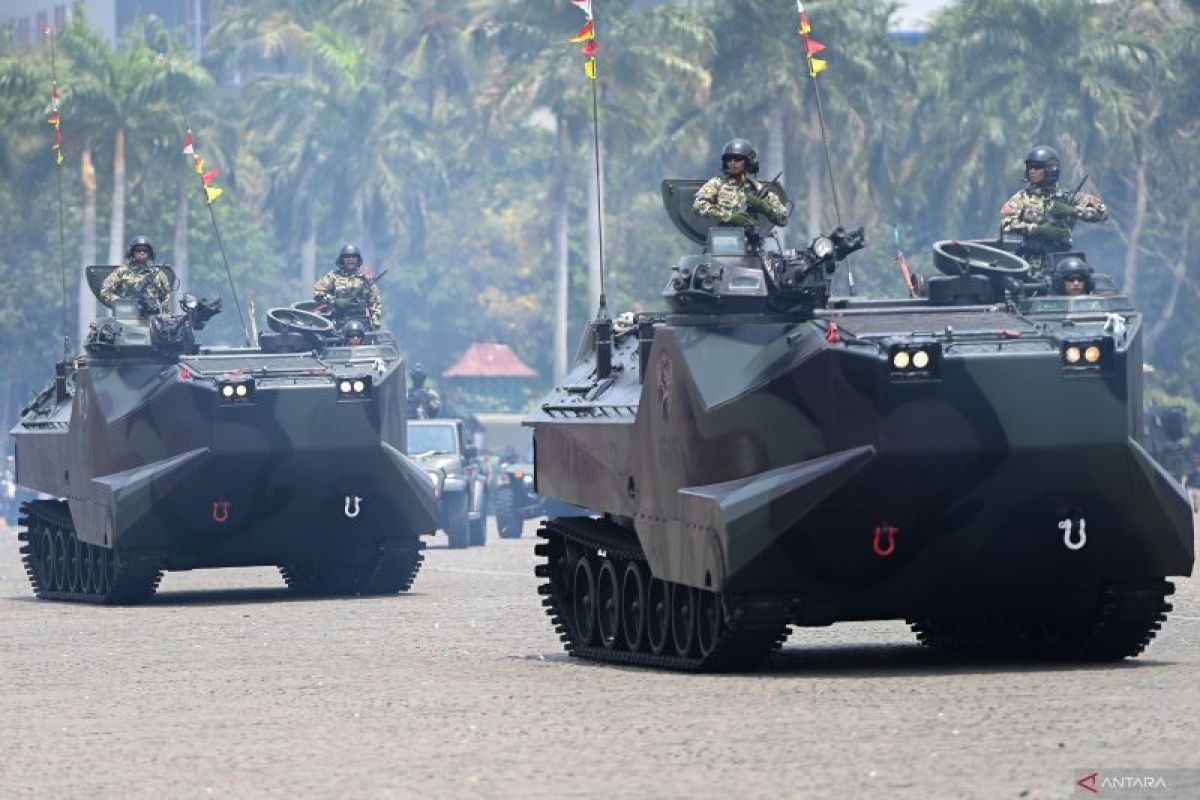
At a time of growing geopolitical uncertainty, the scale and pace of major military procurements in the region is increasing.
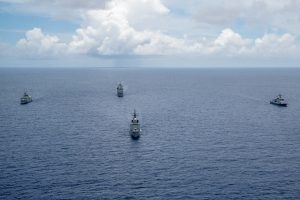
Unsurprisingly, the Philippines has been one of the biggest movers. Manila has a defense treaty with the United States, which in the past may have led to reduced urgency to modernize. But with the Philippines at the forefront of territorial disputes with Beijing, military modernization recently kicked into high gear. In addition to taking delivery of BrahMos supersonic cruise missiles from India, Manila has made significant progress upgrading its navy, with several major surface combatants delivered by or ordered from South Korea in recent years.
Between 2020 and 2021, the Philippine Navy commissioned a pair of Jose Rizal-class frigates built by South Korea’s Hyundai Heavy Industries. Last year, the Navy took delivery of a pair of larger and more advanced Miguel Malvar-class frigates, also from Hyundai Heavy Industries, followed immediately by an additional order for two more. Hyundai Heavy Industries is also currently constructing six offshore patrol vessels for the Philippines, the first of which is scheduled for delivery in 2026.
Altogether, South Korea has been contracted to deliver 12 ships at a cost of more than $1.5 billion, which will significantly upgrade the Philippines’ naval capabilities. A separate deal with France’s OCEA, worth around $450 million, is in place to deliver 40 patrol boats for the Philippine Coast Guard. The Philippines is also in the market for a pair of submarines and a big purchase of fighter jets to upgrade its air force is likely to come soon. Contracts have yet to be awarded, but it’s safe to assume South Korean and European arms manufacturers are firmly in the running.

Given the Philippines’ special relationship with the United States and ongoing tensions with China, it is not surprising that they would turn to American allies like France and South Korea for military hardware. Other countries may feel they have more freedom to shop around and leverage geopolitical competition to try and secure the best deal. Indonesia has been particularly prolific in this regard.
Indonesia recently launched a pair of Merah Putih frigates, which are based on the Arrowhead 140 design and built by state-owned shipyard PT PAL under license from the U.K.’s Babcock. PT PAL is also preparing to build two Scorpene submarines with Naval Group, marking a significant expansion of defense cooperation with France. The first of 42 Rafale fighter jets ordered from France’s Dassault as part of an $8 billion deal will start arriving in Indonesia this year.
Indonesia also recently purchased two warships from Italy’s Fincantieri with a price tag of over $1 billion, and the Ministry of Defense has been rather publicly signalling openness to buying Chinese and Turkish fighter jets, drones and other combat systems. A long-gestating, and somewhat contentious, arrangement with South Korea to co-develop the KF-21 fighter jet is reaching some type of conclusion that will probably see Indonesia operate a version of the South Korean fighter in the years ahead.
In Malaysia, the long-stalled effort to build five (reduced from six) Littoral Combat Ships is finally producing results, after years of delays that led to the delisting of a state-owned shipyard. In 2023, Malaysia also ordered 18 FA-50 fighter jets from Korea Aerospace Industries for just under $1 billion. The first batch of fighters is set to be delivered this year. Thailand, which has been engaged in a series of armed conflicts with neighboring Cambodia, recently inked a deal to purchase four Gripen fighter jets from Saab.
This is just a brief snapshot of some of the more significant developments in the region. But taken together, it shows that the scale and pace of major military procurements are clearly increasing. South Korea has been a primary beneficiary of these developments, and European arms manufacturers are seeing their order books swell as well. Newer players such as Turkey, India and China are also competing aggressively for a foothold in the Southeast Asian arms market.
Despite global economic headwinds, it is clear Southeast Asian governments are placing a premium on upgrading their navies, air forces and coastal defense, and are willing to back it up with real budgetary resources. Indonesia just unveiled a massive increase in defense spending for 2026, while the Philippines approved a multi-year $35 billion modernization program. Given that global risk and uncertainty are likely to continue rising in the years ahead, there is little reason to suppose this is a short-term trend.

- Previous As Tamil film star Vijay’s, due to elections, has his film *Jana Nayagan* delayed
- Next Uzbekistan Launches Special Border Unit with Bayraktar Drones
You may also like...




Random news







About us
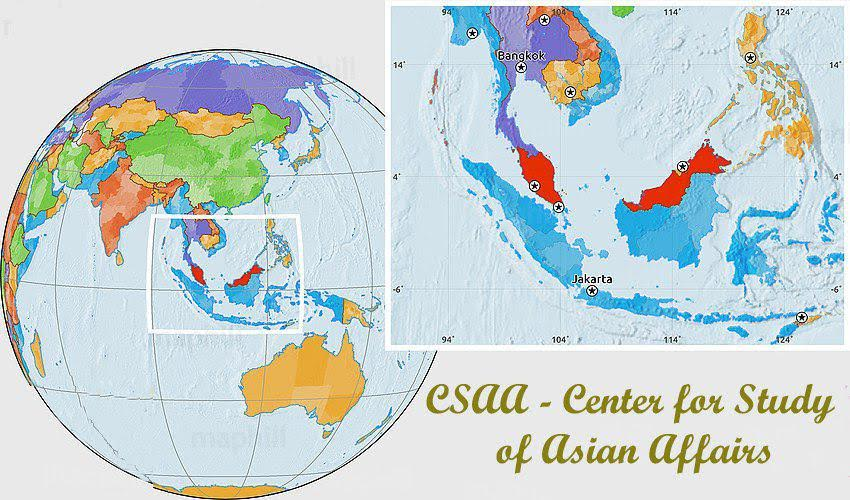
Our Newly established Center for study of Asian Affairs has
branches in Indonesia, Malaysia and Singapore, as well as freelances in some other countries.
For inquires, please contact: newsofasia.info@yahoo.com Mr.Mohd Zarif - Secretary of the Center and administer of the web-site www.newsofasia.net
Polls
 Loading ...