

The $20 billion, 4.8-gigawatt nuclear power pant + many others: Türkiye plans sweeping energy expansion in 2026

Türkiye will accelerate a broad transformation of its energy sector in 2026, stepping up domestic oil and gas production, expanding overseas exploration, commissioning its first nuclear reactor and scaling up renewable power, Energy and Natural Resources Minister Alparslan Bayraktar said on Friday.
“We are entering a period in which new agreements and major developments will take place across every area of energy in 2026,” Bayraktar told an interview with public broadcaster TRT Haber. “From renewables to oil and gas exploration, from international cooperation to mining, we will be achieving many new initiatives.”
He said the pace of activity had already picked up in early 2026 with two major deals: a long-term natural gas supply agreement with Azerbaijan beginning in 2029, and a joint exploration partnership between ExxonMobil and state-run Turkish Petroleum Corporation (TPAO) covering projects in the Black Sea, the Mediterranean and and other potential areas.
Black Sea gas output to double
Bayraktar said 2026 will mark a turning point for domestic natural gas, with production from the Sakarya field in the Black Sea set to double as the project moves into its second phase.
The Sakarya field is estimated to hold 710 billion cubic meters (bcm) of gas, discovered gradually between 2020 and 2022. Once fully developed, it is expected to meet roughly 30% of Türkiye’s annual gas demand.
Türkiye completed the first phase in 2025, reaching 10 million cubic meters per day, enough to meet the needs of about 4 million households. “In 2026, daily production will rise to 20 million cubic metres, supplying roughly 8 million homes,” Bayraktar said.
The next milestone is 2028, when output is targeted to reach four times today’s level, potentially covering the needs of 16 million-17 million households.
Bayraktar stressed that the deepwater field, located around 170 kilometers (105 miles) offshore at depths exceeding 2,000 meters (6,560 feet), is one of the most technically complex projects Türkiye has ever undertaken.

“Every cubic meter we produce reduces our external dependence and strengthens our hand in international gas negotiations,” he said.
6 new offshore wells planned
Until now, Türkiye’s offshore drilling has focused mainly on the western Black Sea. In 2026, the country will expand exploration into central and eastern sections of the basin, launching a program of six new offshore wells.
Planned locations include areas off Rize, as well as Ordu, Samsun and Kastamonu, Bayraktar said, adding that each well represents a potential new discovery.
In parallel, Türkiye will continue developing the Göktepe field, where it last year announced a gas discovery valued at roughly $37 billion at current prices. The field is expected to be integrated into phase three of the Sakarya development, with production targeted from 2028.
Diyarbakır could be ‘game-changing’
Onshore, Bayraktar highlighted the southeastern province of Diyarbakır as a possible new center of unconventional oil and gas production.
Türkiye plans to move beyond traditional vertical drilling by introducing horizontal drilling and hydraulic fracturing, testing 24 wells over the next three to four years across a 600-square-kilometer pilot area.
“If we succeed, this could be transformative,” Bayraktar said. “The potential here could exceed what we have seen in Gabar.”
The Gabar field in southeastern Türkiye currently produces around 80,000 barrels per day, and officials see room to further expand output through new discoveries.
Türkiye’s combined domestic and overseas oil production stands at around 180,000 barrels per day, but Bayraktar said Ankara’s longer-term goal is to turn TPAO into a company capable of producing 1 million barrels per day of oil and gas equivalent.
Overseas drilling
A central pillar of the 2026 strategy will be Türkiye’s shift toward international exploration.
After completing seismic surveys in Somalia in 2025, Türkiye plans to begin its first offshore drilling campaign there in 2026, using the ultra-deepwater vessel Çağrı Bey, according to Bayraktar.
Drilling is expected to start in April or May. Türkiye also plans to drill in three offshore blocks in Pakistan.
“This is the year we begin writing a new international growth story in oil and gas,” Bayraktar said.
LNG strategy to deepen
With Türkiye’s gas demand rising in power generation, industry and households, Ankara is doubling down on supply diversification.
Bayraktar said recently signed long-term LNG agreements, particularly with U.S. suppliers, extending into the 2030s and 2040s, will remain a cornerstone of the strategy.
“We will continue to secure LNG when we find it at the right price,” he said, adding that Türkiye is reviewing its contract with Algeria and seeking to increase flows of Turkmen gas as part of its diversification drive.
The government’s short-term priority, he said, is to eliminate foreign dependence in household gas consumption, while longer-term efforts focus on reducing reliance across industry and power generation.
Akkuyu nuclear plant
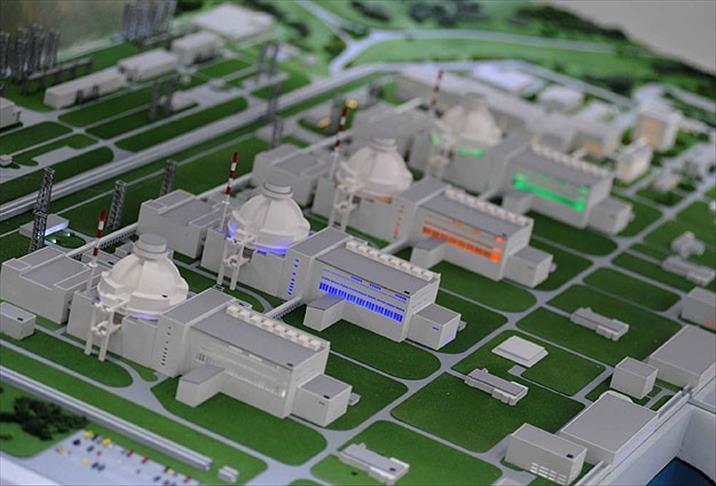
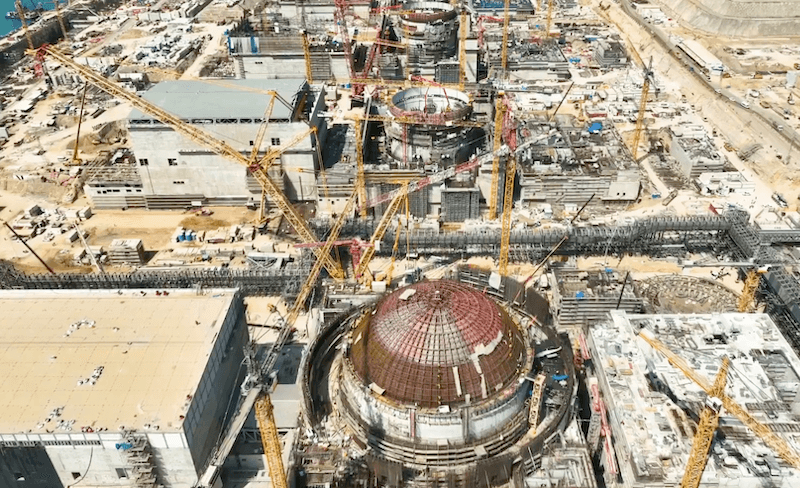
In nuclear energy, Bayraktar said Türkiye aims to bring the initial reactor of the country’s first nuclear power plant, Akkuyu, online in 2026, marking the country’s entry into commercial nuclear power.
The $20 billion, 4.8-gigawatt, four-reactor plant is being built by Russian conglomerate Rosatom in the Mediterranean province of Mersin. Once fully operational, it is expected to generate around 10% of Türkiye’s electricity.

Construction of the first unit is now around 95% complete, he said, with intensive work underway to prepare for commissioning.
The project has also become a major segment of Türkiye’s industrial policy, with about 60% of equipment and services sourced locally, creating a new ecosystem of suppliers and skilled labor.
Ankara is also in talks with South Korea, China, Russia and the United States on nuclear projects in the Sinop province and Thrace region.
Bayraktar said the government is preparing sites for the two plants, with final investment decisions expected within the next six to 12 months.
Major solar power plant deal
Bayraktar also said Türkiye is close to finalizing a major international solar power agreement that could be signed during a potential Gulf visit by President Recep Tayyip Erdoğan in February.
The first phase involves a 2,000-megawatt project, split between two provinces, which the minister said could deliver the lowest electricity prices in the country’s history.

- Previous India has recipe to mimic Ozempic effect
- Next Canadian PM in China agrees to ‘landmark’ deal to cut EV, farm product tariffs
You may also like...
Random news


About us
Our Newly established Center for study of Asian Affairs has
branches in Indonesia, Malaysia and Singapore, as well as freelances in some other countries.
For inquires, please contact: newsofasia.info@yahoo.com Mr.Mohd Zarif - Secretary of the Center and administer of the web-site www.newsofasia.net
Polls
 Loading ...