

The Never-Ending War in Afghanistan
BOSTON — Remember Afghanistan? The longest war in American history? Ever?
When it comes to wars, we Americans have a selective memory. The Afghan war, dating from October 2001, has earned the distinction of having been forgotten while still underway.
President Trump’s Inaugural Address included no mention of Afghanistan. Nor did his remarks last month at a joint session of Congress. For the new commander in chief, the war there qualifies at best as an afterthought — assuming, that is, he has thought about it all.
A similar attitude prevails on Capitol Hill. Congressional oversight has become pro forma. Last week Gen. Joseph Votel, the head of Central Command, told Congress that the Pentagon would probably need more troops in Afghanistan, a statement that seemed to catch politicians and reporters by surprise — but that was old news to anyone who’s been paying attention to the conflict.
And that’s the problem. It doesn’t seem that anyone is. At the Senate hearings on the nomination of James Mattis as defense secretary, Afghanistan barely came up.

To be fair, Mr. Mattis did acknowledge that “our country is still at war in Afghanistan,” albeit without assessing the war’s prospects. In response to a comment by Senator John McCain, the Armed Services Committee chairman, that “we are in serious trouble in Afghanistan,” Mr. Mattis merely allowed that the Taliban had “eroded some of our successes.”
That was it. No further follow up. Other members of the committee, Republican and Democratic, focused on more pressing concerns like seeking to induce Mr. Mattis to endorse military programs and installations in their home state.
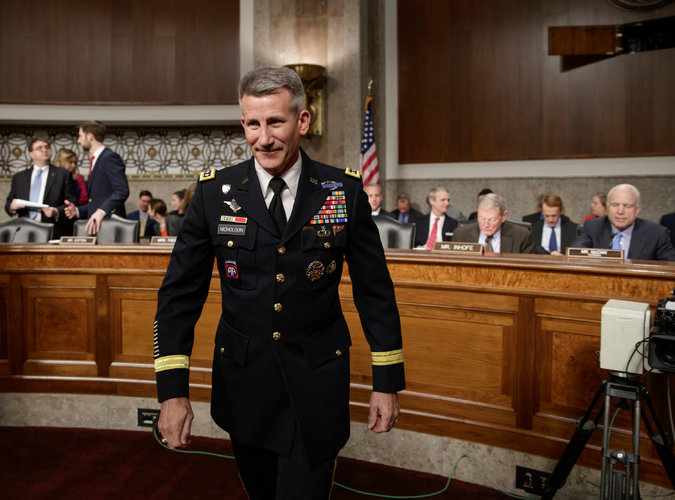
The military brass deserves some of the blame. Soon after Mr. Mattis’s hearing, Gen. John Nicholson, the latest in a long line of American commanders to have presided over the Afghan mission, arrived in Washington to report on its progress. While conceding that the conflict is stalemated, General Nicholson doggedly insisted that it is a “stalemate where the equilibrium favors the government.” Carefully avoiding terms like “victory” or “win,” he described his strategy as “hold-fight-disrupt.” He ventured no guess on when the war might end.
All of this flies in the face of what the conflict in Afghanistan has become, a reality made clear in a recent report from the Defense Department’s special inspector general for Afghanistan reconstruction.
Large-scale corruption persists, with Afghanistan third from the bottom in international rankings, ahead of only Somalia and North Korea. Adjusted for inflation, American spending to reconstruct Afghanistan now exceeds the total expended to rebuild all of Western Europe under the Marshall Plan; yet to have any hope of surviving, the Afghan government will for the foreseeable future remain almost completely dependent on outside support.
And things are getting worse. Although the United States has invested $70 billion in rebuilding Afghan security forces, only 63 percent of the country’s districts are under government control, with significant territory lost to the Taliban over the past year. Though the United States has spent $8.5 billion to battle narcotics in Afghanistan, opium production there has reached an all-time high.
For this, over the past 15 years, nearly 2,400 American soldiers have died, and 20,000 more have been wounded.
What are we to make of the chasm between effort expended and results achieved? Why on those increasingly infrequent occasions when Afghanistan attracts notice do half-truths and pettifoggery prevail, rather than hard-nosed assessments? Why has Washington ceased to care about the Afghan war?
The answer, it seems to me, is this: As with budget deficits or cost overruns on weapons purchases, members of the national security apparatus — elected and appointed officials, senior military officers and other policy insiders — accept war as a normal condition.
Once, the avoidance of war figured as a national priority. On those occasions when war proved unavoidable, the idea was to end the conflict as expeditiously as possible on favorable terms.
These precepts no longer apply. With war transformed into a perpetual endeavor, expectations have changed. In Washington, war has become tolerable, an enterprise to be managed rather than terminated as quickly as possible. Like other large-scale government projects, war now serves as a medium through which favors are bestowed, largess distributed and ambitions satisfied.
That our impulsive commander in chief may one day initiate some new war in a fit of pique is a worrisome prospect. That neither President Trump nor anyone else in Washington seems troubled that wars once begun drag on in perpetuity is beyond worrisome.

- Previous Japan plans to send largest warship to South China Sea, sources say
- Next Malaysia Arrests 7, Including Immigration Officer, Alleging Islamic State Ties
You may also like...




Random news




About us
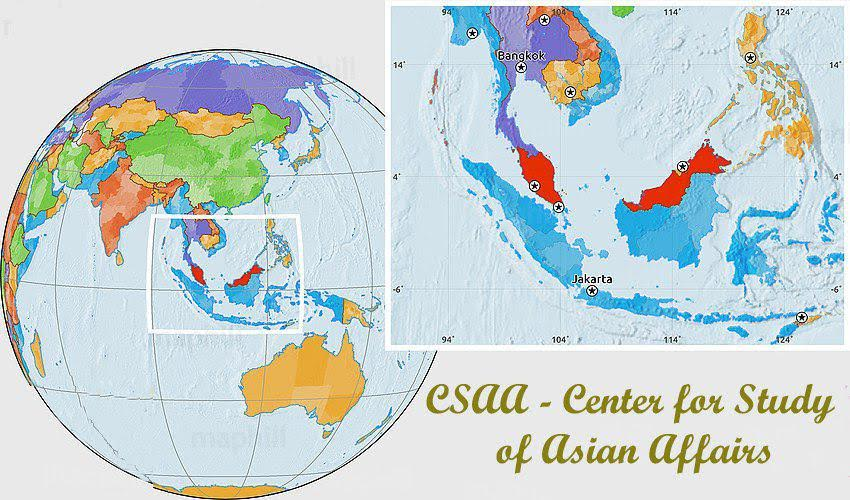
Our Newly established Center for study of Asian Affairs has
branches in Indonesia, Malaysia and Singapore, as well as freelances in some other countries.
For inquires, please contact: newsofasia.info@yahoo.com Mr.Mohd Zarif - Secretary of the Center and administer of the web-site www.newsofasia.net
Polls
 Loading ...