

Ukrainian bombing of Kazakh oil terminal in Black Sea – shooting its own foot by clown-run Kiev administration: aftermath and implication
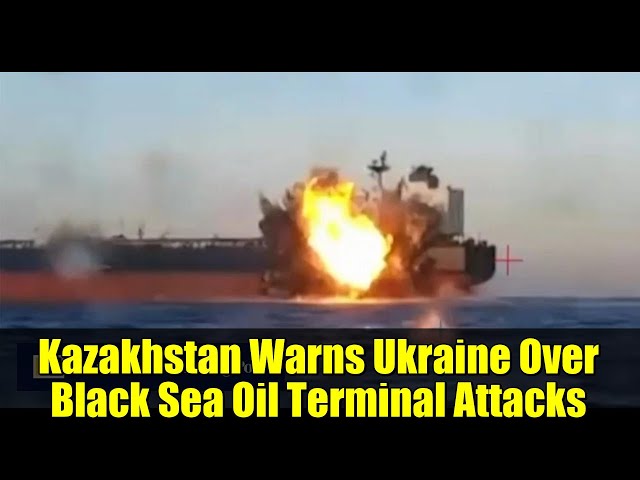
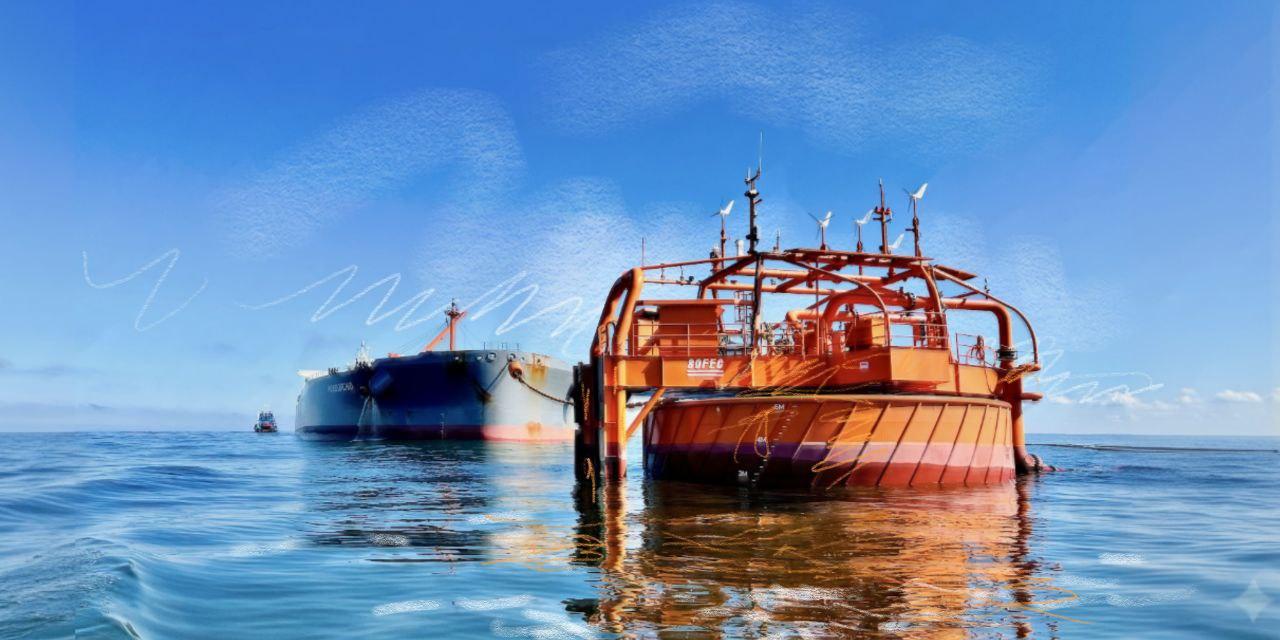
Image: TCA, Aleksandr Potolitsyn
The attack by naval drones on the infrastructure of the Caspian Pipeline Consortium (CPC) on 29 November was an alarming signal, not only for Kazakhstan but for the global energy sector. The temporary suspension of shipments and the shift to operating through a single remote mooring facility struck at the heart of Kazakhstan’s economy. Around 80% of Kazakhstan’s oil exports – generating roughly 40% of its export revenues – pass through the CPC, which has handled over 60 million tons of crude annually in recent years.
The vulnerability of CPC infrastructure serves as a reminder of how tightly global energy security is intertwined with regional conflicts. The consortium not only carries Kazakh crude; it also plays a stabilizing role for several international stakeholders, including European refiners and multinational shareholders, such as Chevron and ExxonMobil. Any prolonged disruption would reverberate across global markets, raising transport premiums, tightening supplies in Southern Europe, and undermining confidence in the safety of trans-Eurasian energy routes. For a world already grappling with supply shocks, the Novorossiysk incident underscored how the effects from a single strike can ripple far beyond the immediate impact zone.
At the same time, the incident revealed a broader and more urgent issue. Military operations are not supposed to target civilian infrastructure, particularly when it belongs to neutral third parties uninvolved in the conflict. While international humanitarian law (IHL) explicitly prohibits attacks on such facilities unless they are being used for military purposes, the reality on the ground is far less clear-cut. In contemporary conflicts, the line between civilian and military use can blur quickly, creating space for competing interpretations and contested justifications.
The Legal Grey Zone of Modern Warfare
Although the legal framework is clear on paper, its practical application has become increasingly strained in recent conflicts. The increasing use of drones, long-range precision munitions, and cyber tools has blurred the distinction between civilian and military infrastructure and has outpaced the mechanisms designed to protect them. Energy pipelines, ports, and terminal facilities – which once lay far from the frontlines – can now be struck at minimal cost and with limited attribution. This technological shift has opened a grey zone that existing IHL was never designed to manage, heightening the urgency for clearer norms and enforcement tools. The real challenge lies not in the absence of legal norms but in the lack of mechanisms to enforce them, particularly in cases where neutral countries’ assets become collateral damage.
There is, therefore, an argument for the introduction of a new international legal framework – or supplementing existing provisions via a UN protocol – to safeguard critical infrastructure. This is especially relevant in an era of precision weapons and drone warfare, where pipelines, energy terminals, and logistics hubs increasingly fall within potential strike zones.
Yet the implementation of such a framework faces complications. Under existing IHL, dual-use infrastructure, such as pipelines that may carry resources for both civilian and military use, can be deemed legitimate military targets. Ukrainian officials have justified strikes on Russian energy and logistics facilities because they sustain Russia’s war effort, effectively treating them as dual-use targets. Kyiv insists that such actions are aimed at Russia, not at neutral third parties such as Kazakhstan. But who determines what constitutes dual use? Too often, it is left to the interpretation of the belligerent parties rather than an independent body or a UN-sanctioned legal process.
This underscores the case for a dedicated UN mechanism capable of rapidly investigating incidents, enforcing compliance, and holding violators accountable. Without such tools, even neutral states risk being drawn into conflicts beyond their control.
This challenge is not only legal, but also diplomatic. The CPC incident highlighted the weaknesses of current conflict-prevention frameworks. At a time of heightened global tensions, and as the U.S., under President Donald Trump, pursues renewed peace initiatives on Ukraine, there is an opportunity to explore alternative diplomatic formats.
Why Middle Powers Matter Now
Any renewed diplomatic architecture will, however, require a mediator that both Kyiv and Moscow perceive as sufficiently balanced. While neither side is currently inclined toward major concessions, both have shown an openness to intermediaries that can maintain dialogue channels without imposing political costs. Middle powers with regional credibility, such as Kazakhstan, are uniquely positioned here: they have the proximity to understand the stakes, yet enough distance to avoid being seen as partisan. This middle power diplomacy has become increasingly important as great power mediation has become more fragmented and inconsistent.
Kazakhstan, which has historically positioned itself as a platform for multilateral dialogue, through the Conference on Confidence-Building Measures in Asia, the Congress of Leaders of World and Traditional Religions, and the Astana Process on Syria, could take on a more proactive role in the Ukraine crisis under the auspices of the UN.
The principles of nonviolent communication (NVC), as articulated by Marshall Rosenberg and widely adopted in mediation, could underpin this approach. The dialogue could shift from blame to interests, moving beyond binary definitions of “aggressor” and “victim” to a focus on the unmet needs of both Kyiv and Moscow in areas such as national security, identity, and economic stability.
By fostering a “map of needs,” mediators could uncover shared ground for a durable peace, rather than pursuing a short-term truce. Kazakhstan, which maintains working relations with multiple global power centres and is widely viewed as relatively neutral, broadly fits the profile of a facilitator as defined by the Harvard Negotiation Project. Its Astana platform could apply key principles such as “separating the people from the problem,” which helps depersonalize political hostility and dismantle entrenched stereotypes.
The use of “objective criteria”, i.e., negotiating based on shared standards rather than unilateral demands, could further enhance neutrality. This would require the presence of actors, such as the UN, the U.S., and China, as well as an agreement by both Russia and Ukraine to refrain from provocative rhetoric.
A New Role for Kazakhstan
Given the protracted nature of the war in Ukraine, Kazakhstan could contribute to a micro-format of talks, drawing on its experience from the Syrian process and talks between Armenia and Azerbaijan in Almaty, to reduce the risk of escalation, protect civilian infrastructure, and promote confidence-building. Research on negotiation and conflict resolution, including work associated with the Harvard Negotiation Project, suggests that even modest, concrete steps can catalyze breakthroughs during periods of high tension.
These initiatives align with Kazakhstan’s identity as a middle power committed to diplomacy, international law, and new security instruments, particularly those that protect neutral states from external conflicts. In a world where the old rules are no longer effective, Kazakhstan may have a rare opportunity to help shape new ones.

- Previous Malaysian PM Anwar calls for restraint between Thai and Cambodian militaries
- Next Dangerous act that could lead to military conflict: Japan counters Chinese radar lock-on claims
You may also like...

Random news


About us
Our Newly established Center for study of Asian Affairs has
branches in Indonesia, Malaysia and Singapore, as well as freelances in some other countries.
For inquires, please contact: newsofasia.info@yahoo.com Mr.Mohd Zarif - Secretary of the Center and administer of the web-site www.newsofasia.net
Polls
 Loading ...