

Ukrainian bombing of the Caspian Pipeline Consortium undermines Kazakhstan’s Strategic Plans
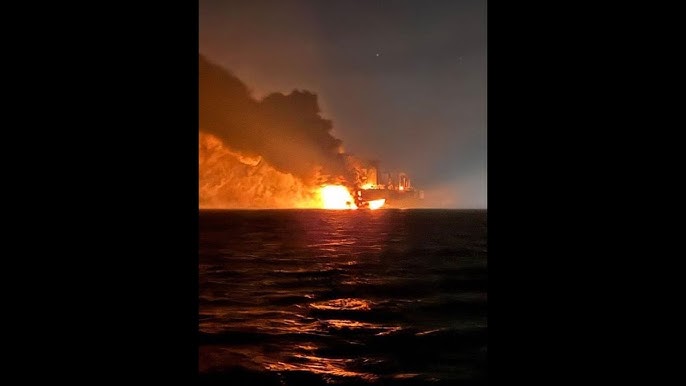
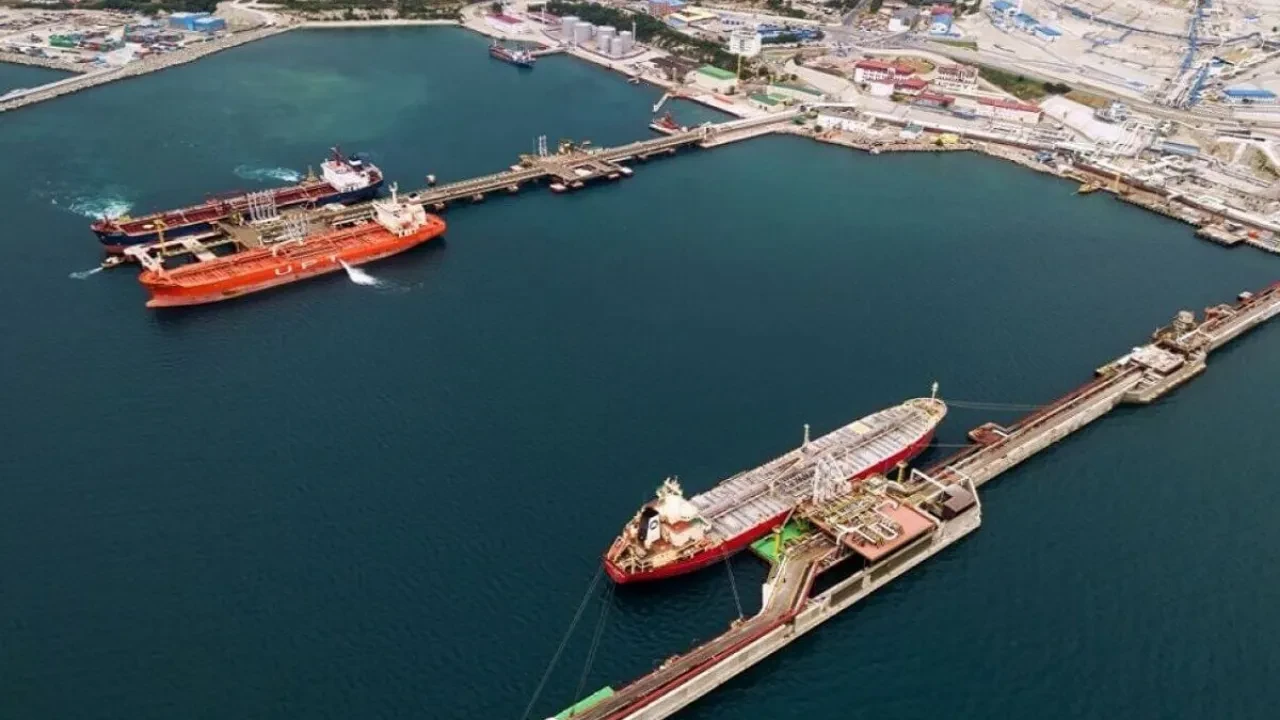
Attacks on the infrastructure of the Caspian Pipeline Consortium (CPC), reduced export flows, and volatility in commodity markets are generating serious pressures for Kazakhstan. In the coming years, both the country’s financial system and its domestic political balance may face significant tests.
A number of experts warn that disruptions in oil logistics via the CPC, which remains the main artery for Kazakh crude exports, could depress budget revenues, strain national companies, and worsen the sovereign outlook. Kazakhstan pumps roughly 80% of its oil exports through the CPC system, and oil revenues account for more than half of the country’s total export earnings. Because CPC Blend is Kazakhstan’s primary export-grade crude, even short interruptions can reverberate through the state budget, the National Fund, and the balance sheets of national companies. This could trigger a domino effect, destabilizing broad swathes of the economy and undermining public finances. Already, the recent rounds of disruption around Black Sea oil shipping are eroding a substantial source of tax revenue for the state.
Continued Risk of Strikes
Political scientist Dosym Satpaev argues that Kazakhstan may be underestimating the intensity and persistence of the conflict surrounding Ukraine. He contends that both sides in that conflict have used strikes on energy infrastructure as key tools, a tactic that will likely continue.
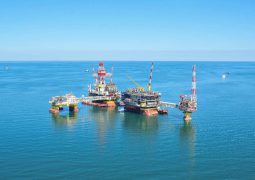
The recent strike targeted the CPC’s single-point moorings (SPMs) at Novorossiysk, a coastal terminal on the Russian Black Sea. These offshore loading points sit in relatively shallow waters and are physically exposed, making them susceptible to the naval drones Ukraine has increasingly deployed against Russian maritime infrastructure. Although the attack officially targeted Russian facilities, the collateral implications for Kazakh oil exports were immediate.
According to Satpaev, that means further risks for the CPC. The fact that Kazakhstan remains heavily dependent on this single pipeline reflects a broader failure to diversify exports and reduce reliance on raw material transit.
The vulnerability is magnified by the CPC’s ownership structure: although Kazakhstan relies on it for most of its exports, the pipeline network and the Novorossiysk terminal lie on Russian territory and operate under Russian regulatory oversight. Russia holds a majority stake in the consortium, while U.S. firms such as Chevron and Exxon also have significant shares, creating a complex web of interests that limits Astana’s room for manoeuvre.
Kazakhstan has already experienced how this dependence can be leveraged. In 2022, Russian regulators repeatedly halted CPC operations over alleged “environmental violations,” moves widely interpreted as political pressure at a moment of diplomatic friction. That precedent underscores how strategic vulnerability to CPC disruptions predates the current wave of attacks.
Satpaev is skeptical that alternative export routes, such as via pipelines through the Caspian Sea to Baku-Tbilisi-Ceyhan or transit to China, can substitute for the CPC in the near term. Given the global trend toward reduced oil demand, he believes this leaves Kazakhstan exposed to long-term structural risks.
At the same time, Satpaev views as unlikely the possibility that Ukraine would attempt to directly stop the CPC’s operations, given the broader consequences such action would have for European energy consumers and international oil firms that rely on the pipeline.
Strategic Divergence and Diplomatic Vulnerabilities
Another political analyst, Daniyar Ashimbayev, warns that the attacks raise questions not only about economic security, but also about the broader coherence of Kazakhstan’s foreign policy posture. According to him, Kazakhstan’s long-standing model built on stability, moderation, and multi-vectorism now faces stress. While some voices inside and outside the country have called for diversification of export routes, others argue that the geography and technical challenges make alternatives impractical.
Ashimbayev further contends that the mounting risk to CPC operations and thus to exports exposes Kazakhstan to external pressure. He suggests some actors may deliberately target Kazakhstan’s neutrality or use infrastructure risks to influence its geopolitical behaviour. Ashimbayev adds that Astana does indeed have contingency scenarios to safeguard its interests, but the crisis could force a deeper strategic review than originally planned.
Economic Pain and Financial Fallout
The stakes extend beyond Kazakhstan. CPC Blend is a key feedstock for European refiners, and interruptions to Novorossiysk loadings have already widened differentials in Mediterranean crude markets. As one of the few large non-OPEC suppliers still accessible to Europe, Kazakhstan’s stability has become increasingly important for global price dynamics — magnifying the international consequences of any prolonged disruption.

Oil-and-gas analyst Olzhas Baidildinov warns that the damage to CPC could soon hit Kazakhstan’s national energy company (KazMunayGas), and through it, the broader economy. He estimates that, within 36 months, redirecting oil via alternative routes could prove technically difficult and more expensive. That, he says, could significantly reduce revenue as well as cash flow for the company.
If disruptions persist into spring 2026, Baidildinov suggests, KazMunayGas might face the difficult choice of cutting or even suspending dividend payments, with knock-on consequences for investor confidence and the broader financial sector. In an interview with RTVI, Baidildinov projected that Kazakhstan’s losses from the attack on CPC infrastructure could reach approximately 20% of its oil exports, and that the financial damage could amount to at least $1.5 billion – an amount comparable to the annual budgets of Astana or Almaty.
Baidildinov warns that a weakening fiscal position could trigger a downgrade of Kazakhstan’s sovereign rating by major international agencies, making foreign borrowing more expensive and weighing on the domestic economy. In parallel, logistic bottlenecks and rising demand for rail freight could push up prices for rail transport and consumer goods, compounding inflationary pressures.
What This Means for Kazakhstan’s Strategic Priorities
The recent attacks on CPC underline a painful reality: for now, Kazakhstan remains deeply dependent on a single export corridor. As the geopolitical conflict escalates, this dependency has become a strategic vulnerability.
China, too, is watching closely. Although Kazakhstan already ships some crude eastward via the Atasu–Alashankou pipeline, current capacity is far too limited to replace CPC volumes. Beijing has long pushed for expanded eastbound flows to enhance its own energy security, but infrastructure constraints mean Kazakhstan cannot pivot quickly. This leaves Astana caught between its two largest neighbours at a moment of mounting geopolitical strain.
Moving forward, the government in Astana may be forced to accelerate plans to diversify export routes, including pipelines across the Caspian Sea, expansion of rail corridors, and other logistical solutions. At the same time, maintaining neutrality in foreign policy and avoiding entanglement may become more expensive, as economic stability increasingly hinges on global energy market dynamics and international security developments.
The internal political dimension is equally significant. Tokayev’s reform agenda, from public-sector wage policies to regional development spending, depends heavily on reliable oil income. A prolonged disruption could slow social programs, reduce fiscal buffers, and heighten public sensitivity to inflation — challenging the government’s long-standing narrative of stability and competent economic stewardship.
In this context, the CPC attacks may mark not just a disruption in oil supply but a turning point in how Kazakhstan defines its long-term economic and geopolitical strategy.


- Previous Caracas in my mind: Trump to meet US security team on Venezuela as tensions flare
- Next Malaysia holds firm on Palestine as others normalize ties with Israel
You may also like...



Random news



About us
Our Newly established Center for study of Asian Affairs has
branches in Indonesia, Malaysia and Singapore, as well as freelances in some other countries.
For inquires, please contact: newsofasia.info@yahoo.com Mr.Mohd Zarif - Secretary of the Center and administer of the web-site www.newsofasia.net
Polls
 Loading ...