

Uzbekistan signs MoUs with U.S. on Critical Minerals
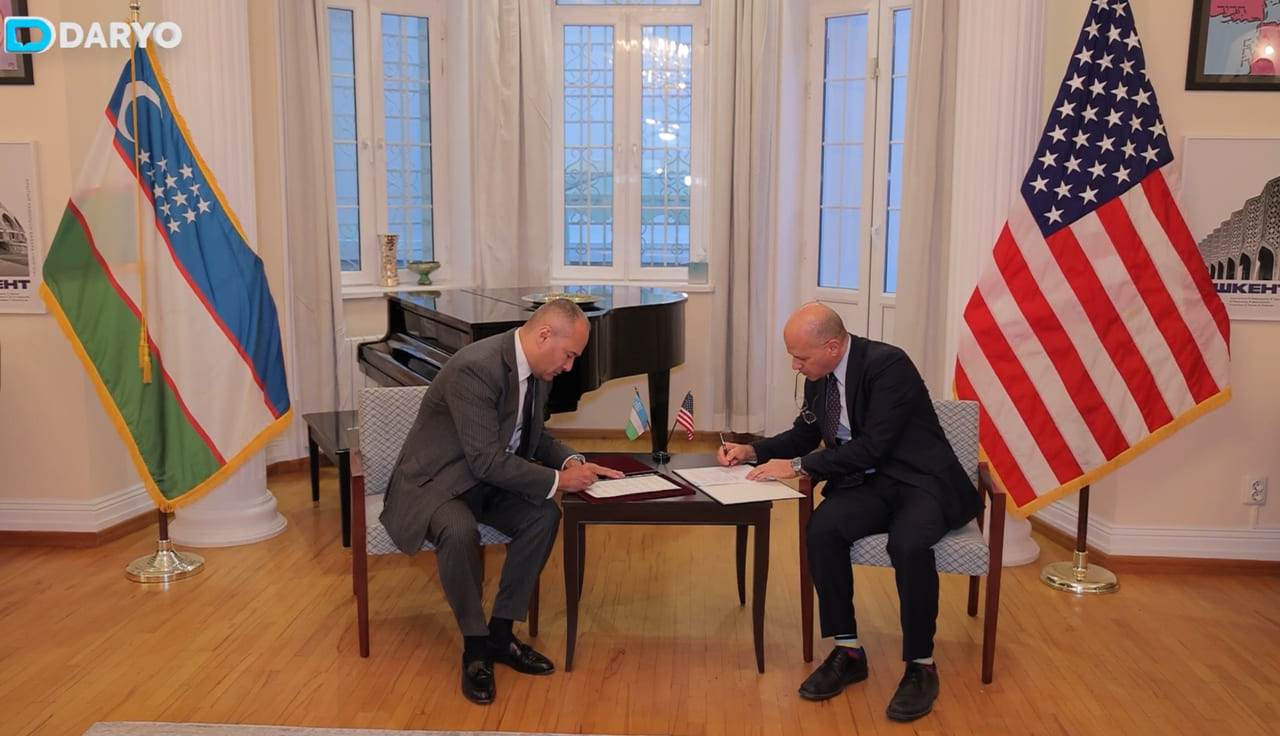
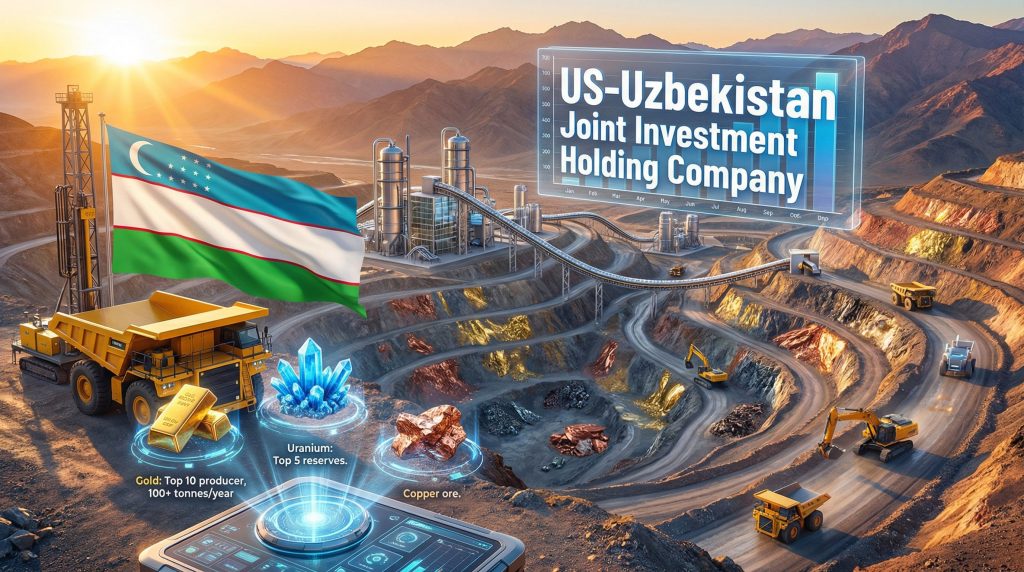
On February 4, 2026, in Washington, D.C., Uzbekistan’s Foreign Minister Bakhtiyor Saidov and U.S. Deputy Secretary of State Christopher Landau signed an intergovernmental Memorandum of Understanding (MoU) on securing supply chains for critical minerals and rare earth elements, spanning both mining and processing. A further agreement signed on February 19 brought implementation and financing to the foreground. The U.S. International Development Finance Corporation (DFC) signed “heads of terms” (i.e., commercial principles and essential terms of a proposed future agreement) for a Joint Investment Framework and outlined a proposed joint holding company. An agreement to establish an “investment platform” was exchanged in the presence of Uzbekistan’s President Shavkat Mirziyoyev.
These agreements are not a single mining deal. They combine a political instrument with a financing-and-structuring track that is intended to yield a small set of projects that can be financed and built, and they treat processing capacity and supporting infrastructure not as optional add-ons but as core deliverables. They also provide a path for early projects to full review and financing while connecting them to longer-term offtake structures that match Washington’s newer supply-shock tools, including “Project Vault.”
What the MoU Changes
The MoU’s immediate purpose is to align government priorities for critical minerals across the value chain while setting expectations that will later shape which financing and partners are feasible. The press agency of Uzbekistan’s foreign ministry emphasized “responsible partnership” and “long-term development” as part of the public framing, placing governance and reputational risk on the same plane as the geological givens. The MoU also leaves several items deliberately unresolved in public form. These include project annexes, deposit designations, and operational timelines. That document design-choice pushes the next phase of bilateral cooperation into working-level scoping and sequencing, where only a small number of candidate projects can be advanced into full review.
At the ministerial-level meeting, Washington clarified why it was framed as supply-chain security rather than commodity trade. Secretary of State Marco Rubio noted that critical minerals are inputs for infrastructure, industry, and defense, while Vice President J.D. Vance stressed the expansion of production across partner networks. As previously reported by The Times of Central Asia, this framing is part of a broader repositioning of U.S. engagement in Central Asia, where diplomatic formats are increasingly paired with mechanisms intended to generate trackable transactions and private-sector follow-through.

For Uzbekistan, what is attractive about this cooperation is the potential to convert resource endowment into a lever for industrial development, rather than treating extraction as the endpoint. President Shavkat Mirziyoyev has publicly valued the country’s underground wealth at roughly $3 trillion. He has linked rising global demand for technological minerals to the case for higher value-added activity around strategic reserves, including lithium and tungsten. The same logic supports a commercially open posture. For Tashkent’s other investors, buyers, and processing partners, Uzbekistan’s diversification toward U.S.-linked capital signals non-exclusivity.
Turning the MoU Into Projects
The next phase is practical. A candidate project will advance only if investors and public lenders can transparently evaluate its licensing and fiscal terms, audit its environmental and social baseline, and have confidence in enforceable contracts that provide a dispute-resolution pathway that counterparties treat as real. For processing facilities to be constructed and operated on time, reliable power, water supply, transport links, and disciplined procurement are decisive. Such an emphasis reflects Washington’s shift “from diplomacy to deals”.
Implementation is a division of labor. The DFC can facilitate private capital’s participation by structuring transactions and absorbing specific risks. The Export-Import Bank of the United States (EXIM) can complement those efforts through procurement-linked and exporter-linked support where the deal design fits its mandate. The bilateral investment platform is the channel that will turn candidate projects into transactions with defined terms. The proposed joint holding company is a possible co-ownership vehicle; however, capitalization, governance, and project-selection rules are not yet public.
The first tranche needs a simple selection logic. Projects with credible resource definition and studies that can be updated will be closest to feasibility. Next comes the identification of a plausible path from mined output to refined products that meet buyer specifications under auditable operating standards. Infrastructure constraints, especially power, water, and logistics, come next. Finally, projects still require long-term purchase contracts with terms that can be enforced, so locking in buyers is the last step.
A small number of clusters illustrates those criteria. They are only examples, not a project list. The Koytash–Ugat tungsten belt, including deposits such as Yakhton, Sautbay, and Ingichka, is a plausible early category and aligns with U.S. Geological Survey modeling of Uzbekistan’s tungsten export potential. Lithium is a second-wave target, conditional on delineation and a workable processing route. Rare-earth and rare-metal recovery as by-products from existing uranium and copper-molybdenum flows offers yet another pathway. In these cases, earlier volumes can be unlocked through improved separation, cleaner processing, and standards upgrades, without waiting for greenfield mine timelines.
Diversification Without Dependency
Uzbekistan is not negotiating in a vacuum. Multiple capital pools across Central Asia now compete, with different priorities in shaping where extraction ends and where processing begins. In Washington in mid-February, a new set of signed documents confirmed definitive agreements for a major tungsten development plan in Kazakhstan. This project is tied to deep processing and led by Cove Kaz Capital Group with Tau-Ken Samruk. Europe is also building its own channel through critical raw materials cooperation and financing commitments. China remains the dominant processing power and an aggressive bidder when strategic deposits come to market. Japan and South Korea are also pursuing targeted supply security through corporate offtake and project-level partnerships, as illustrated by a Mitsubishi-linked offtake arrangement tied to Kazakhstan’s rare-metals output.
In that wider context, the U.S.–Uzbekistan track is an attempt to place Uzbekistan on a non-Chinese path not just for mining but also for the midstream stages that determine where value is captured and who bears reputational risk. It is in Tashkent’s interest to use competitive pressure from other investors to raise standards and accelerate domestic capability. However, if deals become proxies for external rivalry rather than instruments of Uzbekistan’s own industrial policy, then its autonomy can be eroded. The strategic question for the Central Asian states is whether they can maintain balanced diversification while turning the new attention into durable processing capacity and the transparent, credible rules that Western capital requires for committing.


- Previous Now not 10%: Trump to raise tariffs to 15 percent after Supreme Court ruling
- Next Another Decade of Turmoil: Yunus’s actions totally illegal: Bangladesh President, now free, exposes dark plots
You may also like...





Random news


About us
Our Newly established Center for study of Asian Affairs has
branches in Indonesia, Malaysia and Singapore, as well as freelances in some other countries.
For inquires, please contact: newsofasia.info@yahoo.com Mr.Mohd Zarif - Secretary of the Center and administer of the web-site www.newsofasia.net
Polls
 Loading ...