

War Against Iran Drives Food Price Pressures Across Central Asia
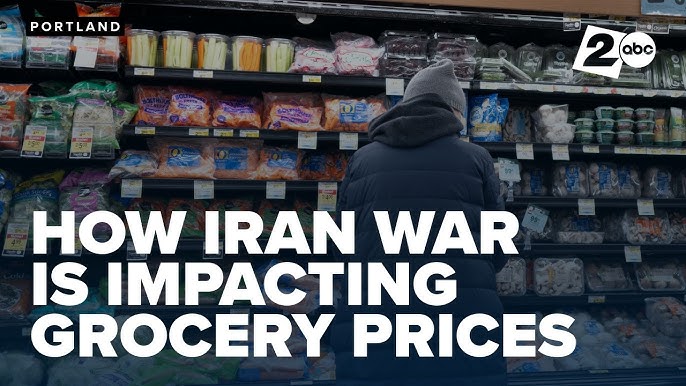
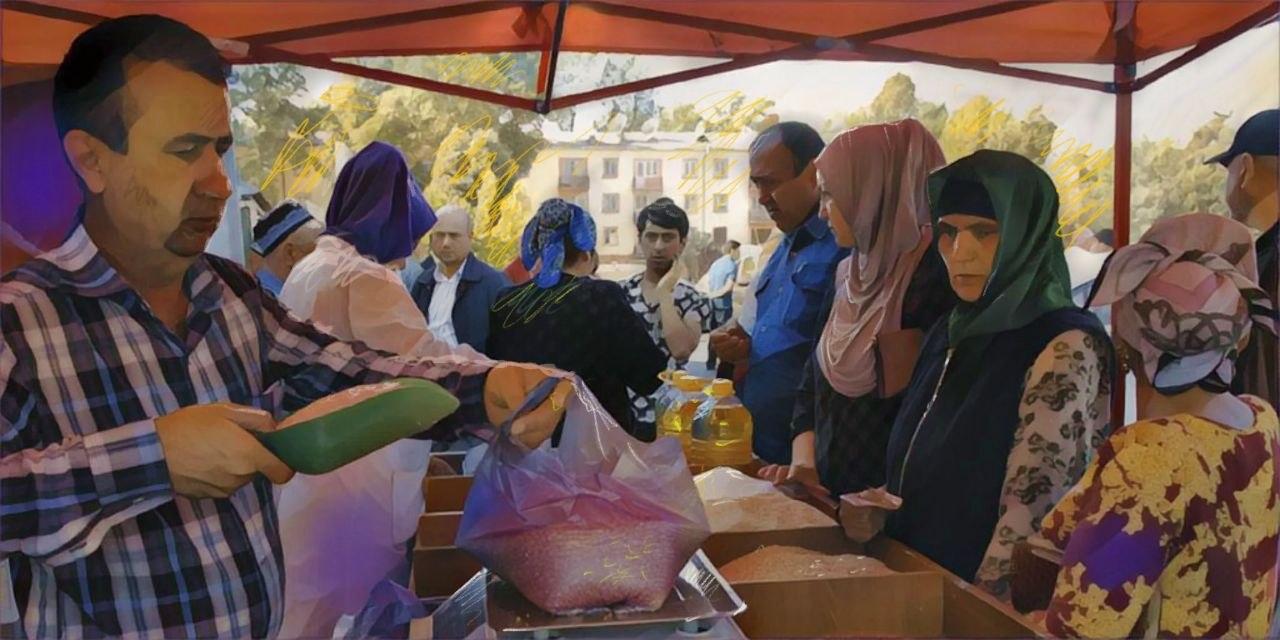
Image: TCA, Aleksandr Potolitsyn
The war around Iran is beginning to push up food price risks in Central Asia as disruptions to shipping through the Strait of Hormuz raise fertilizer and fuel costs, while Tehran’s halt to some food exports adds pressure in regional markets. The impact is not manifesting as shortages, but as rising costs across the systems that produce, move, and sell food.
The United Nations has warned that the crisis is disrupting one of the world’s most important trade corridors for energy and agricultural supplies. A large share of global fertilizer trade passes through the Strait of Hormuz, and reduced shipping traffic is tightening supply and pushing up prices. Higher fuel costs are adding a second layer of pressure on farmers and transport networks.
Fertilizer and fuel are among agriculture’s highest costs. Even modest increases can compress margins quickly, forcing farmers to cut usage or pass costs on, with pressure moving through to retail prices.
Central Asia is particularly exposed to this shift in costs. The region relies on imported fuel and fertilizers, and depends on long, multi-stage transport routes. When costs increase at any point in that chain, they accumulate before goods reach markets.
The second layer of pressure comes from Iran itself. On March 3, Tehran imposed a ban on exports of food products as part of wartime economic measures. Reporting in Tajikistan indicates that the move could affect the availability and pricing of goods such as dairy, sugar, fruit, and spices, particularly in wholesale and lower-cost retail markets.
Iran is not a dominant supplier, but plays a role in specific markets. Tajikistan is the clearest example. Tajikistan has also expanded its economic relationship with Iran in recent years, supported by cooperation in industry and transport. Iranian goods are widely present in retail supply chains, and trade between the two countries has grown steadily in recent years.
That growth is part of a broader trend. Iran’s economic ties with Central Asia have expanded under new trade arrangements and bilateral initiatives. Kazakhstan and Iran have discussed increasing trade turnover to $3 billion, reflecting the rising use of Caspian routes and port infrastructure, which are now under threat.
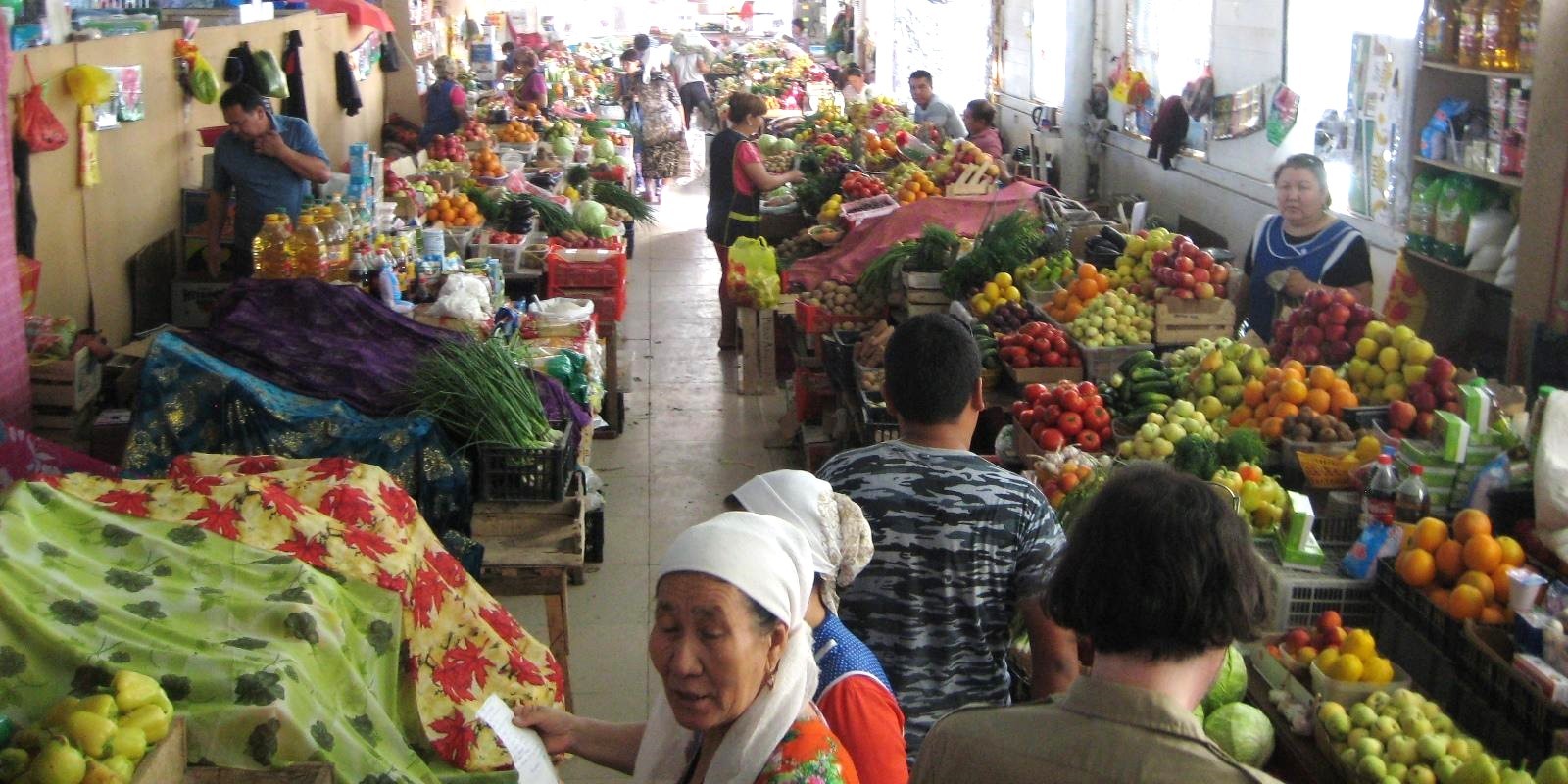
Aralsk Bazaar. Rising transport and fertilizer costs are beginning to push up food prices across the region. Image: Michael J. Bland
Transport adds a third layer of pressure. As risks rise across the Middle East, airlines and freight operators are avoiding large swathes of Iranian airspace and surrounding routes, forcing rerouting and raising costs across supply chains. European aviation safety authorities have issued conflict-zone bulletins warning of heightened risks in the region, and carriers have adjusted accordingly.
Rerouting increases fuel use, extends journey times, and raises insurance costs. Those increases affect cargo as well as passengers, and over time, higher logistics costs feed into the price of imported goods, including food.
On land, the same pattern is visible. As southern routes become less predictable, more freight is shifting toward the Trans-Caspian International Transport Route – the Middle Corridor – which runs through Central Asia, across the Caspian Sea, and through the South Caucasus toward Europe. As more freight is diverted from both Russian and southern routes, the corridor is being pushed to absorb multiple shocks at once, raising the risk of further cost increases as volumes rise.
Kazakhstan reports that volumes along the corridor have risen sharply in recent years, with faster delivery times and growing container traffic. But capacity remains uneven. An assessment by the Organisation for Economic Co-operation and Development identified congestion, port bottlenecks, and delays at key points along the route, including Aktau and Kuryk. An infrastructure notice from the European Bank for Reconstruction and Development, meanwhile, points to the need for expanded handling capacity to manage rising demand at Caspian ports.
These constraints compound across Central Asia’s supply chains, where each transfer between rail, port, and road adds cost and delay. However, the effect is not uniform across the region. As a major grain producer with more developed infrastructure, Kazakhstan harvested more than 27 million tons of grain in 2025, reinforcing its role as a key supplier to regional markets. This provides a buffer against external shocks, but does not insulate it from rising production and transport costs.
Kyrgyzstan and Tajikistan face a wholly different reality. Both depend more heavily on imports and have less fiscal space to manage rising prices. For households already spending a large share of income on food, even gradual price increases can have immediate effects.
In Tajikistan, President Emomali Rahmon acknowledged rising prices directly in his latest public remarks. “According to expert analysis, as a result of recent events in the world, as well as climate change and its adverse effects, food prices will rise at an unprecedented rate this year,” Rahmon said, an unusual admission in a system where such issues are rarely addressed so openly.
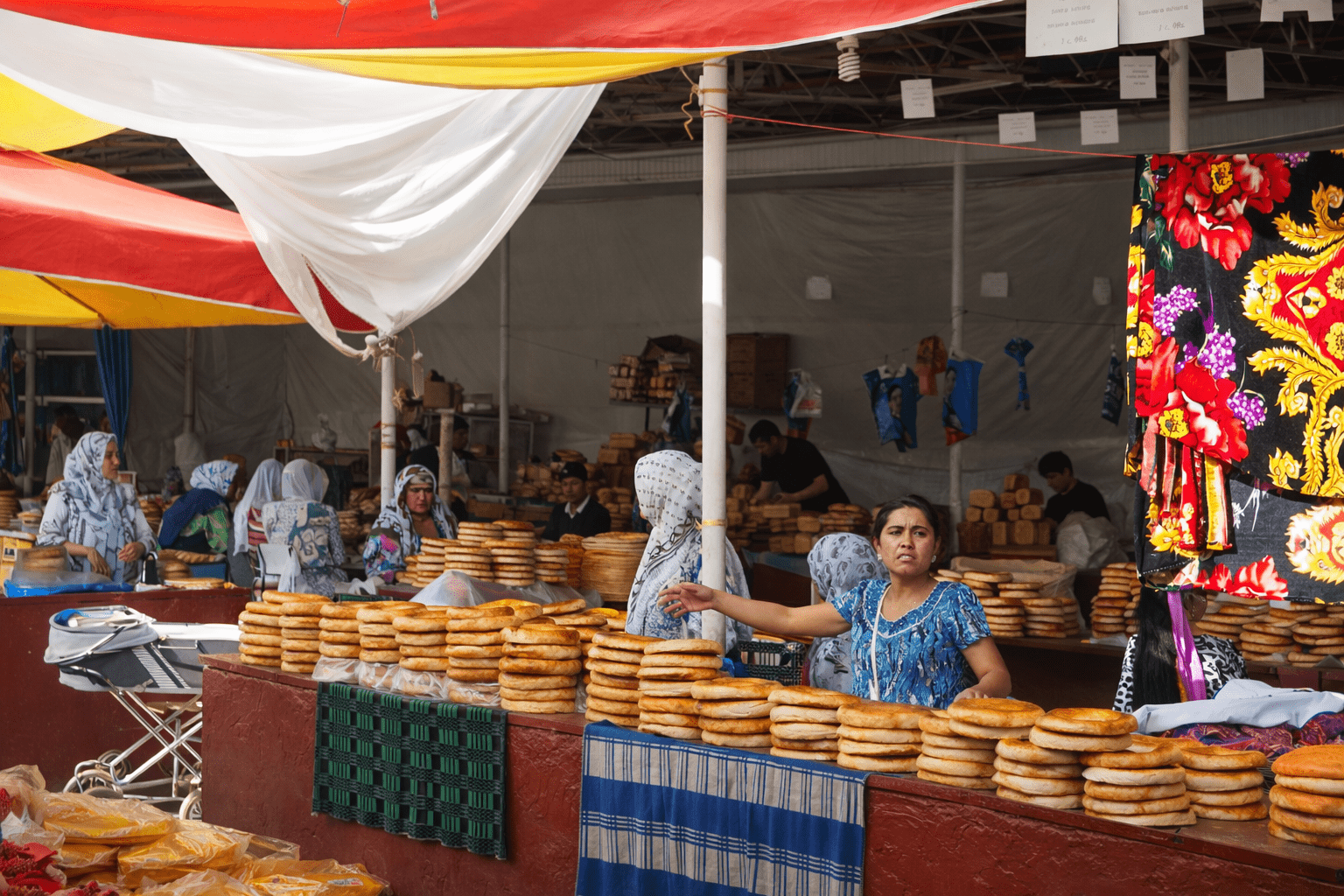
Non bread seller on the Shah Mansur Bazaar, Dushanbe; image: TCA, Stephen M. Bland
So far, there is no clear evidence of widespread food shortages linked to the Iran conflict. Markets remain supplied, and governments have not announced emergency measures in this regard. The impact is gradual and cumulative rather than sudden.
Central Asia has faced similar pressures before. Disruptions to global grain and fertilizer markets in 2022 pushed up prices across the region, leading governments to introduce export controls, subsidies, and other measures to stabilize supply. Those tools remain available but come with fiscal and economic trade-offs. Governments may also turn again to export controls on staple goods, which can stabilize domestic markets but increase volatility across the region.
What is different now is the concentration of risk. Shipping disruptions in the Gulf, higher energy costs, tighter fertilizer markets, and reduced access to Iranian exports are all occurring at the same time. Taken in isolation, each factor alone is manageable, but together they increase the region’s exposure to external shocks.
The war around Iran is not cutting Central Asia off from food. It is making the system that delivers it more expensive, more complex, and more exposed to further shocks.


- Previous Earthquake in Indonesia damages buildings, triggers tsunami waves
- Next Iran war to leave millions without food, medicine
You may also like...




Random news





About us
Our Newly established Center for study of Asian Affairs has
branches in Indonesia, Malaysia and Singapore, as well as freelances in some other countries.
For inquires, please contact: newsofasia.info@yahoo.com Mr.Mohd Zarif - Secretary of the Center and administer of the web-site www.newsofasia.net
Polls
 Loading ...