

Asahi Simpun EDITORIAL: Japan must not follow path of rule by force set by Trump’s U.S.
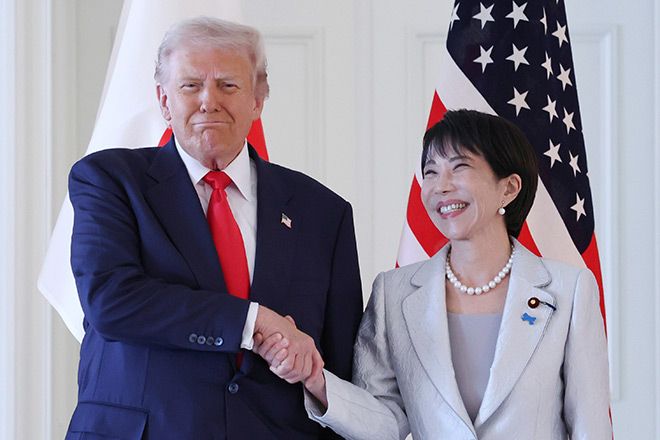 Prime Minister Sanae Takaichi meets with U.S. President Donald Trump in Tokyo on Oct. 28, 2025. (Asahi Shimbun file photo)
This year, U.S. President Donald Trump has strengthened his “America First” principle and rule by force through a military intervention into Venezuela and increasing pressure on European allies by raising tariffs as part of his plan to take over Greenland.
Such moves have further shaken the international order.
Even if the alliance with the United States is the linchpin of Japanese diplomacy, depending solely on it is tenuous.
The current Lower House election campaign must be a forum for discussions about the big picture that go beyond the ruling and opposition parties.
Some of the major topics that should be addressed are how to protect a stable international order based on the rule of law and how to secure Japan’s peace and safety.
At the party leaders’ debate held at the Japan National Press Club, Prime Minister Sanae Takaichi was asked why she did not criticize the detention of the Venezuelan president and the raw ambition of Trump to possess Greenland.
She said she considered the U.S. defense strategy to be one of deterrence through force.
But the military action against Venezuela, which went against the basic principle of the U.N. Charter of respecting sovereignty, cannot be explained away simply as deterrence.
Takaichi likely is unable to say what needs to be said because she does not want to get on the wrong side of Trump.
In the election campaign, many of the parties either state that the Japan-U.S. alliance is the linchpin or call for deepening the relationship.
But if there is the possibility that the U.S. stance of backing away from the role of protector of the international order is not just a temporary one but could extend beyond Trump, the present time may be when Japan’s safety can no longer be secured only through the alliance with the United States.
The biggest risk will be that Japan loses an option by believing that the alliance will never falter and failing to prepare for such an occurrence.
Takaichi has long called for strengthening Japan’s comprehensive power covering diplomacy, defense, economics, technology, information and human resources.
But, in fact, drastic reform of defense capabilities has progressed ahead of the other sectors.
Diplomacy has not functioned sufficiently as seen by the worsening of ties with China.
It is a far cry from a balanced approach.
Diversification of diplomacy is an urgent matter to heighten Japan’s autonomy.
The key will be cooperation with middle power nations, such as South Korea, Australia, European nations and Canada, which share universal values, including the rule of law.
It will also be important to improve ties with the Global South group of newly emerging and developing nations, such as India and ASEAN members.
Japan must also make an aggressive effort to cover the vacuum created in the multilateral cooperative framework and humanitarian support with the United States leaving international organizations and treaties.
While supplementing the functions fulfilled by Washington until now, persistent efforts should be made to persuade it to return to the international order.
Such moves will by no means be moving away from the United States.
Japan can fulfill such a role if it is considered a trusted member of the international community so the xenophobic trend spreading domestically must be clearly rejected.
Japan now stands at a crucial juncture of whether it can continue to be a peace-loving nation in a world where rule by force is becoming more prominent.
–The Asahi Shimbun, Feb. 3

- Previous Turkey: Erdoğan warns against US-Iran war
- Next U.S. to create a critical minerals trading bloc with its allies to counter China
You may also like...




Random news







About us
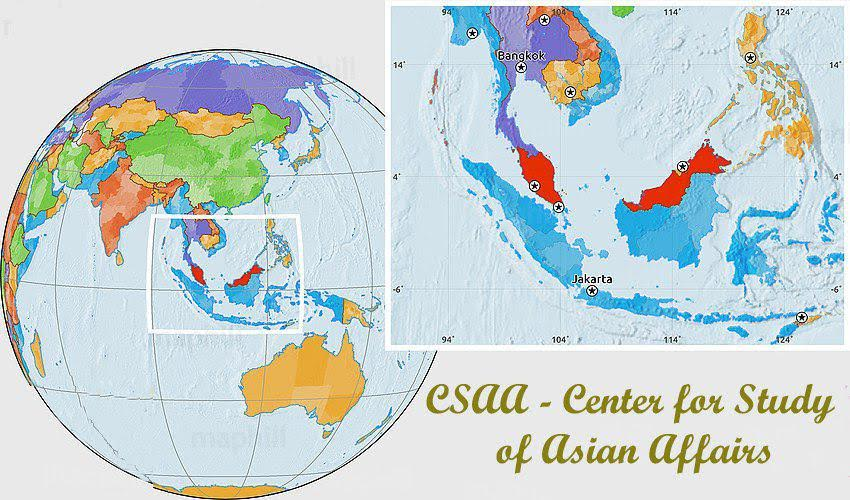
Our Newly established Center for study of Asian Affairs has
branches in Indonesia, Malaysia and Singapore, as well as freelances in some other countries.
For inquires, please contact: newsofasia.info@yahoo.com Mr.Mohd Zarif - Secretary of the Center and administer of the web-site www.newsofasia.net
Polls
 Loading ...