

Indian Media: China’s cover-up amid Nepal floods? Posts by Tibet locals deleted, rescue images promoted

Videos posted by Tibetan locals on Chinese social media platforms showing the flash floods are reportedly being removed by President Xi Jinping’s regime. The censorship by the Chinese Communist Party has raised concerns that restricted access to information could hinder transparency and rescue efforts.
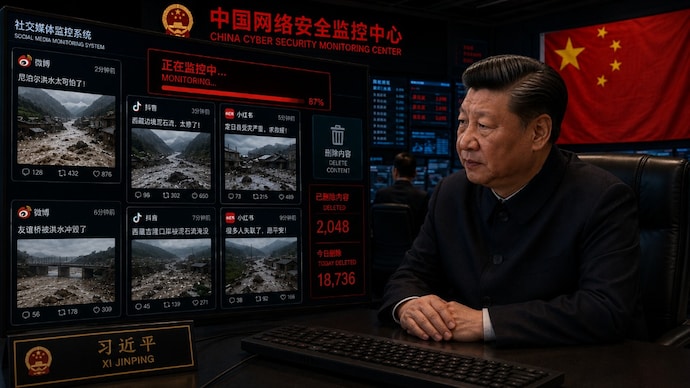

The floodwaters tore through villages, roads and border infrastructure. But on the Chinese side of the Nepal-Tibet frontier, another kind of disappearance appears to have followed. Videos posted by Tibet locals showing the scale of the devastation were reportedly removed from Chinese social media by the President Xi Jinping-led regime, leaving behind a tightly curated stream of official rescue footage.
That contrast has put China’s handling of the disaster under scrutiny. While journalists in Nepal have been collecting eyewitness accounts and images from the ground and the Nepalese government is also being transparent about the ongoing developments, information emerging from China’s side of the border has largely come through state-controlled media.
According to a report in The New York Times (NYT) newspaper published on August 27, videos showing the mudslide engulfing the Gyirong border crossing had been censored on Chinese social media platforms.
The development comes even as the sheer scale of the dsamage from the Himalayan disaster shocks the world. A high-altitude glacier collapse caused flash floods in the Lhende Khola river in the Nepal-Tibet border region on August 26. The fallen ice and debris resulted in a violent wall of water, mud, and rock rushing downstream into the Bhote Koshi and Trishuli river basins of Nepal.
News agency Reuters on Saturday (August 29) reported in the evening that the death toll had risen to 675 in Nepal, with more than 2,400 people still missing, while the Chinese state-sponsored news agencies had reported that only five deaths in China’s Tibet Autonomous Region (TAR).
VIDEOS OF LOCAL TIBETANS DISAPPEAR, MOUTHPIECE NARRATIVES REMAIN
Among the footage that briefly circulated online was a video showing a massive mudslide engulfing the Gyirong Port of occupied Tibet, a key China-Nepal crossing. The footage was reportedly shared on Chinese social media platforms before disappearing.
According to the NYT report, the Gyirang Port video was taken down on Thursday (August 27). More than 500 people were missing in Gyirong, an occupied region of Tibet, with three confirmed deaths in the county of about 2,000 people. The authorities have provided no details about which villages and settlements in the mostly rural area have been affected, the NYT report added.
The information vacuum is striking because the disaster has devastated both sides of the border. Chinese authorities have acknowledged that 558 people were missing in Gyirong as of Thursday morning. Three deaths had been confirmed at that point.
Meanwhile, at least 320 Indians remain missing, and around 400 others are stranded on the Chinese side following devastating flash floods along the Nepal-Tibet border, and India is ready to extend all possible help to Kathmandu in its rescue efforts, the Ministry of External Affairs (MEA) said on Friday.
Instead of a stream of independently sourced images from residents, Chinese state media has prominently highlighted rescue operations. Xinhua reported that hundreds of rescuers had been dispatched, including military and emergency personnel, while helicopters and other equipment were sent to the affected area.
The People’s Daily, the official newspaper of the Chinese Communist Party (CCP), also led its coverage with Xi Jinping’s instructions to make all-out efforts to rescue victims.
CHINA USED MASS CENSORSHIP EVEN DURING COVID
Intel expert and geopolitical analyst Aadil Brar, in a post on X, said videos from the Chinese side showing the disaster at Gyirong Port had circulated briefly before being removed. He contrasted this with footage from Nepal, which has continued to circulate widely.
“China is deleting citizen videos of the Nepal-Tibet flash flood, and the ones being taken down are from its own side of the border,” Brar posted on X on Friday.
Strategic affairs expert Brahma Chellaney also alleged on X that China was censoring information about the disaster. While warning that tightly controlled messaging could create an information vacuum at a time when accurate information is crucial for rescue operations, Challaney highlighted the Covid-19 pandemic episode.
“As it did during the Wuhan-originating Covid-19 outbreak, China is censoring information about the Nepal–Tibet flood disaster, raising serious concerns for humanitarian response, the safety of stranded or missing people, and public accountability,” the strategic affairs expert posted on X.
Tenzing Lamsang, editor of The Bhutanese, similarly questioned the gap between the scale of destruction reported from the area and China’s relatively low initial death toll, while pointing to the disappearance of disaster videos from Chinese social media in his post on X.
CHINA’S CONTENT CENSORSHIP A THREAT TO RESCUE OPS?
The issues of deleting and gatekeeping are not merely about what Chinese citizens can see online. In a disaster involving hundreds of missing people, the availability of independent information can have direct humanitarian consequences.
Ryan Fioresi, executive director of the International Campaign for Tibet, said the situation in the region told the NYT that “only the Chinese government [Chinese] controls the information flow”. He argued that if residents fear punishment for posting information, or if their posts are removed, potentially useful details about where people are trapped or where damage is the most severe may fail to reach families, rescuers and the wider public.
The International Campaign for Tibet separately called for greater transparency and unhindered humanitarian access following the disaster, saying it was closely monitoring the situation in Gyirong and Nepal.
Such restrictions are especially consequential in China-occupied Tibet, where independent access for foreign journalists is highly restricted and information about events in the region is closely controlled.
XI-LED REGIME’S SWIFT RESPONSE IN CONTROLLING NARRATIVES
There is an important distinction at the same time between China’s information-control practices and the cause of the flash flood itself.
There is currently no established evidence that Chinese infrastructure directly caused the disaster. Chinese authorities have instead said that the catastrophe originated on the Nepali side of the border.
The Chinese Embassy in Nepal rejected claims that a geological-disaster dam on the Chinese side had collapsed and caused the destruction downstream. In a statement reported by the CPC mouthpiece, the Global Times, the embassy described both that claim and an allegation that China failed to issue an early warning as “fake news”.
Chinese Ambassador to Nepal Zhang Maoming likewise said, during an interview with Nepal’s state-run NTV World, that preliminary information indicated an earthquake on the Nepali side had triggered an ice avalanche followed by mudslides. The Chinese embassy said Beijing was working with Nepal on rescue and relief efforts.
This does not, however, give Beijing a clean chit on every question surrounding the disaster. The immediate trigger might have been a natural event on the Nepali side, and there is no basis at present to attribute the flash flood directly to Chinese infrastructure construction.
But the catastrophe also highlights the risks inherent in building and expanding infrastructure in extremely fragile, high-altitude Himalayan terrain.
HOW CHINA FUELS PRO-XI REGIME, CPC NARRATIVE
Beijing’s response has increasingly focused on rescue, relief and rebutting allegations.
The Global Times reported the embassy’s rejection of claims surrounding the disaster, while Chinese state media highlighted the mobilisation of the People’s Liberation Army (PLA), emergency workers, helicopters, engineering teams and other rescue personnel.
Chinese news agency Xinhua said a direct group from the PLA’s Western Theatre Command had been dispatched to coordinate rescue operations in Gyirong.
As Nepal continues to piece together the human toll through eyewitness accounts, local reporting and footage from the ground, the Chinese side of the border presents a much narrower picture — one dominated by official casualty figures, rescue operations and statements from Beijing. The CPC machinery seems to be removing all videos shared by Tibet locals and dumping propaganda clips in favour of the Xi Jinping regime.
And that is where the concern over censorship goes beyond politics. When hundreds remain missing in a disaster zone, the disappearance of independent information can itself become part of the tragedy.

You may also like...



Random news





About us
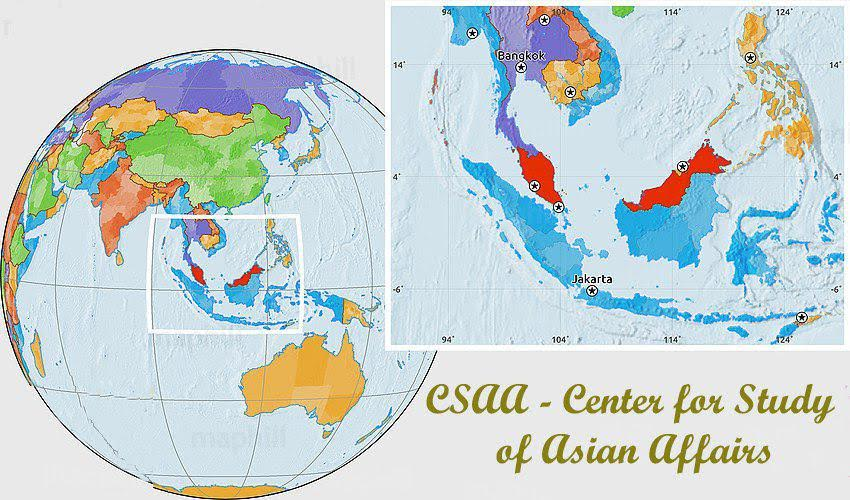
Our Newly established Center for study of Asian Affairs has
branches in Indonesia, Malaysia and Singapore, as well as freelances in some other countries.
For inquires, please contact: newsofasia.info@yahoo.com Mr.Mohd Zarif - Secretary of the Center and administer of the web-site www.newsofasia.net
Polls
 Loading ...