

India concerned over new security bloc: Will Pak-Saudi-Turkey keep Bangladesh at the door?
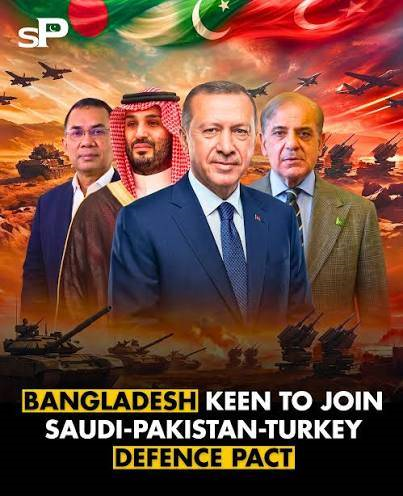
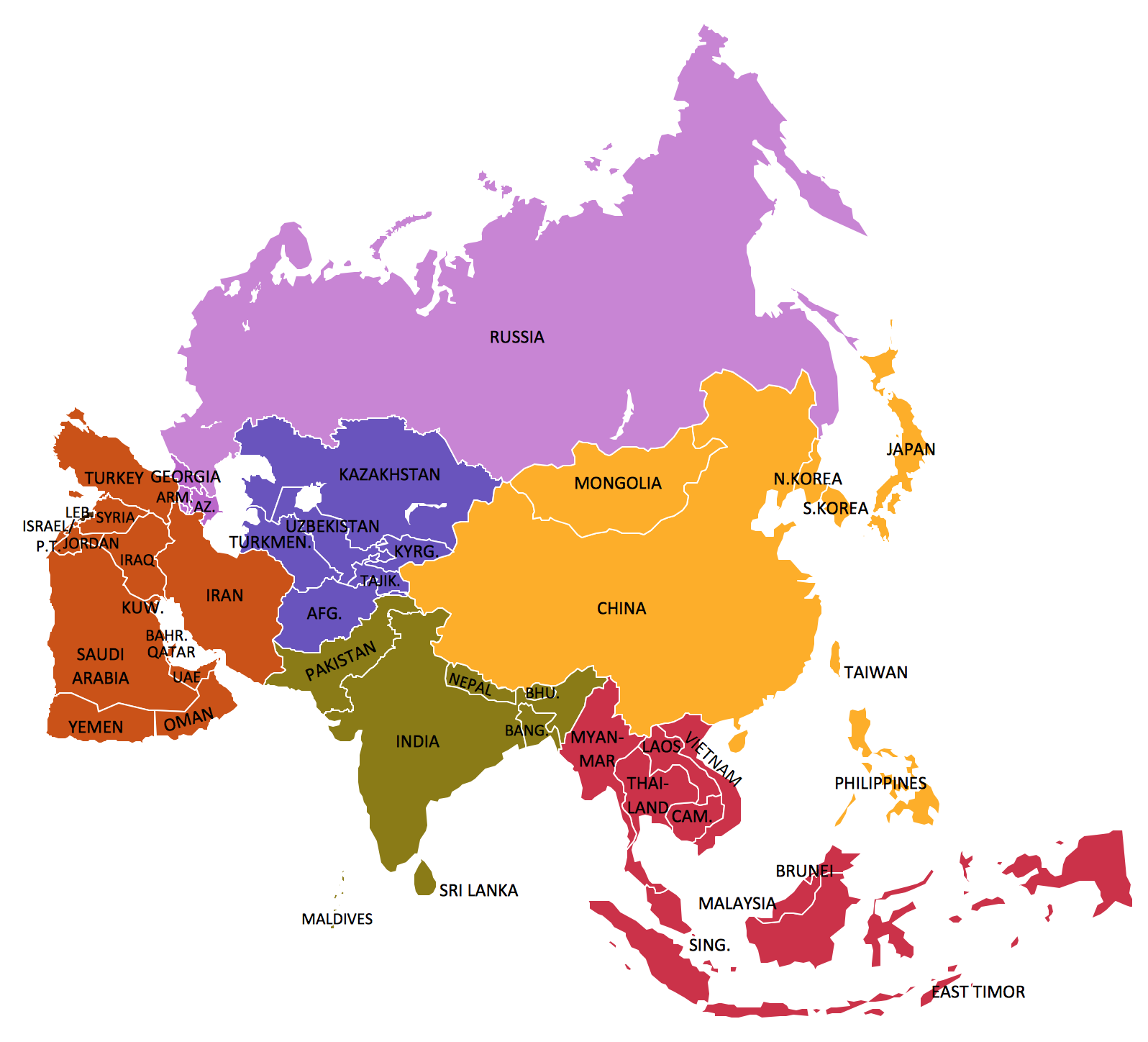
Pakistan, Saudi Arabia and Turkey are holding the first meeting of the Mecca Pact committee in Istanbul. Among the key issues will be a discussion on a possible expansion of the defence arrangement. Bangladesh has expressed willingness to join the pact, which could extend the ‘Islamic Nato’ to India’s eastern flank. But will preference be given to Egypt?
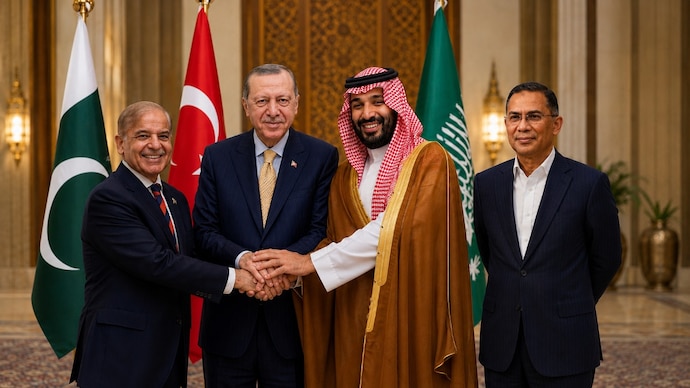
And the agenda of the meeting in Turkey’s capital is revealing. Defence capabilities, military interoperability, joint production, intelligence cooperation, terrorism, regional security and the creation of a permanent secretariat are all expected to figure prominently in the first meeting of the mechanism established under the Mecca Joint Defence Agreement.
When the pact was signed on August 7, the question of whether the Mecca Alliance would remain a three-country arrangement or eventually open its doors to other Muslim-dominated countries — such as Egypt, and potentially Bangladesh — was widely discussed. The joint defence agreements provisions also have room for expansion.
Now, BBC Urdu, citing Turkish Foreign Ministry sources, revealed that the meeting in Istanbul will also have discussions on the possibility and the need for the joining of new countries.
But more than Bangladesh, the current country at the centre of the debate is Egypt.
Cairo is already part of the Regional-4 (R-4) grouping alongside Turkey, Pakistan and Saudi Arabia. The four-country mechanism has been focused on regional security and emerged in March amid diplomatic efforts surrounding the US-Iran tensions.
According to Karachi-based Dawn newspaper, Pakistan’s Deputy PM and Foreign Minister Ishaq Dar was also expected to attend a likely R-4 meeting during his current Turkey visit.
Egypt, a strategic partner of India’s, possible entry into the Mecca Alliance, therefore has a degree of strategic logic for Mecca Alliance countries. And Turkish Foreign Minister Hakan Fidan has openly indicated that he would like to see Egypt join.
The first meeting of the Strategic Political and Defence Committee is being held in Istanbul, following the signing of the Mecca Joint Defence Agreement by Turkish President Recep Tayyip Erdogan, Pakistani PM Shehbaz Sharif and Saudi Crown Prince and PM Mohammed bin Salman.
WHERE DOES BANGLADESH FIT IN FOR MECCA ALLIANCE?
For now, Bangladesh is not part of the Mecca Pact’s formal structure, and there is no indication from the agenda that Dhaka’s membership is imminent. But the question of expansion makes the alliance worth watching from Bangladesh’s perspective.
If the Mecca Pact develops into a wider Muslim-majority security framework rather than remaining a tightly defined trilateral defence arrangement, countries beyond the original three could eventually become relevant.
Bangladesh, however, could represent a different proposition as a major South Asian Muslim-majority country on the eastern flank of India with longstanding relations with Saudi Arabia and Turkey and its own strategic interest in regional security.
But the Istanbul meeting appears focused first on making the three-member framework work.
The founders need to decide how their militaries will cooperate, how joint defence production could function, how intelligence and logistics can be coordinated, how the collective-defence commitment would operate and how the alliance will be institutionally managed.
Only after those foundations are laid will the question of expansion become more consequential.
WHO IS ATTENDING THE FIRST MECCA PACT MEETING?
The meeting scheduled in Turkey brings together the political and military leadership of all three founding countries of the Mecca Alliance.
Turkey is represented by Foreign Minister Hakan Fidan, Defence Minister Yaar Guler and Chief of General Staff General Seluk Bayraktaroglu.
Pakistan’s delegation includes Chief of Defence Forces, Field Marshal Syed Asim Munir, Deputy Prime Minister and Foreign Minister Ishaq Dar and Defence Minister Khawaja Muhammad Asif.
According to the Karachi-based Dawn, Pakistan’s Inter-Services Public Relations, the military’s media wing, separately confirmed that Field Marshal Asim Munir was in Turkey on an “official visit”.
The Turkish Foreign Ministry and state media also confirmed the meeting, saying it would bring together ministers and officials from the three countries.
DEFENCE COOPERATION AT THE HEART OF MECCA PACT MEET
The first meeting is expected to move the Mecca Pact beyond political symbolism and towards practical military cooperation.
According to news agency AFP, participants in the meeting are planning to discuss boosting defence capabilities, improving interoperability among their armed forces and expanding cooperation in the defence industry.
Reuters reported that “international security issues” will be on the agenda, with discussions expected to focus on enhanced defence capabilities, greater interoperability and deeper defence-industrial cooperation, including joint production and development.
This could prove to be one of the most consequential elements of the alliance.
For the three countries, closer cooperation could therefore mean more than military exercises. It could potentially involve joint research, technology development, production, logistics, training and intelligence-sharing.
GAZA, IRAN WAR AND HOUTHIS IN THE RED SEA: ISSUES ON THE TABLE
The Istanbul meeting is taking place against a wider backdrop of instability across the Middle East.
According to BBC Urdu, the current global security situation is expected to be one of the most important subjects discussed by the three countries.
The absence of a permanent agreement between the United States and Iran, including unresolved questions surrounding maritime traffic through the Strait of Hormuz, and the possibility of renewed tensions are expected to feature prominently.
The security of shipping routes in the Red Sea amid attacks by Yemen’s Houthi movement is another expected concern.
Turkey and Pakistan are among the countries expected to play a constructive role in the Saudi-led efforts concerning Red Sea security, BBC Urdu reported citing Turkish Foreign Office sources.
The meeting is also expected to discuss Israel’s regional policies and difficulties surrounding implementation of the second phase of the Gaza peace agreement.
The most significant item on the Istanbul agenda is not a battlefield issue. It is institution-building.
According to Turkish state broadcaster TRT, the meeting is expected to outline the framework for a permanent secretariat and other mechanisms, while establishing a roadmap for the alliance’s next steps.
BBC Urdu reported that a permanent secretariat is expected to be established in Saudi Arabia. It would be responsible for implementing and monitoring decisions taken by the Strategic Political and Defence Committee.
The meeting could also discuss a constitution for the alliance, its future working methods, the frequency and duration of committee meetings, and the procedure for meetings between the leaders of the three countries.
The alliance is also expected to reiterate that its purpose is to strengthen security, peace and stability in the region and address disputes through a “cooperative security” framework rather than conflict, according to the Turkish state media.
For Bangladesh, therefore, the immediate takeaway from Istanbul might not be that the door to the Mecca Pact is opening. It is that the door is being designed.
And the first meeting of the Strategic Political and Defence Committee could offer the clearest indication yet of whether the Mecca Pact is destined to remain a trilateral arrangement or evolve into a broader regional security bloc in which countries such as Bangladesh may one day seek a place.

- Previous Xi is in Bishkek for SCO summit
- Next Malaysia Celebrates Independence Day!!! Military Parade Is a Marvel of the Celebration!
You may also like...
Random news


About us
Our Newly established Center for study of Asian Affairs has
branches in Indonesia, Malaysia and Singapore, as well as freelances in some other countries.
For inquires, please contact: newsofasia.info@yahoo.com Mr.Mohd Zarif - Secretary of the Center and administer of the web-site www.newsofasia.net
Polls
 Loading ...