

Malaysia’s RM510bil ($124.83 bil) 2027 Budget to draw quality investments

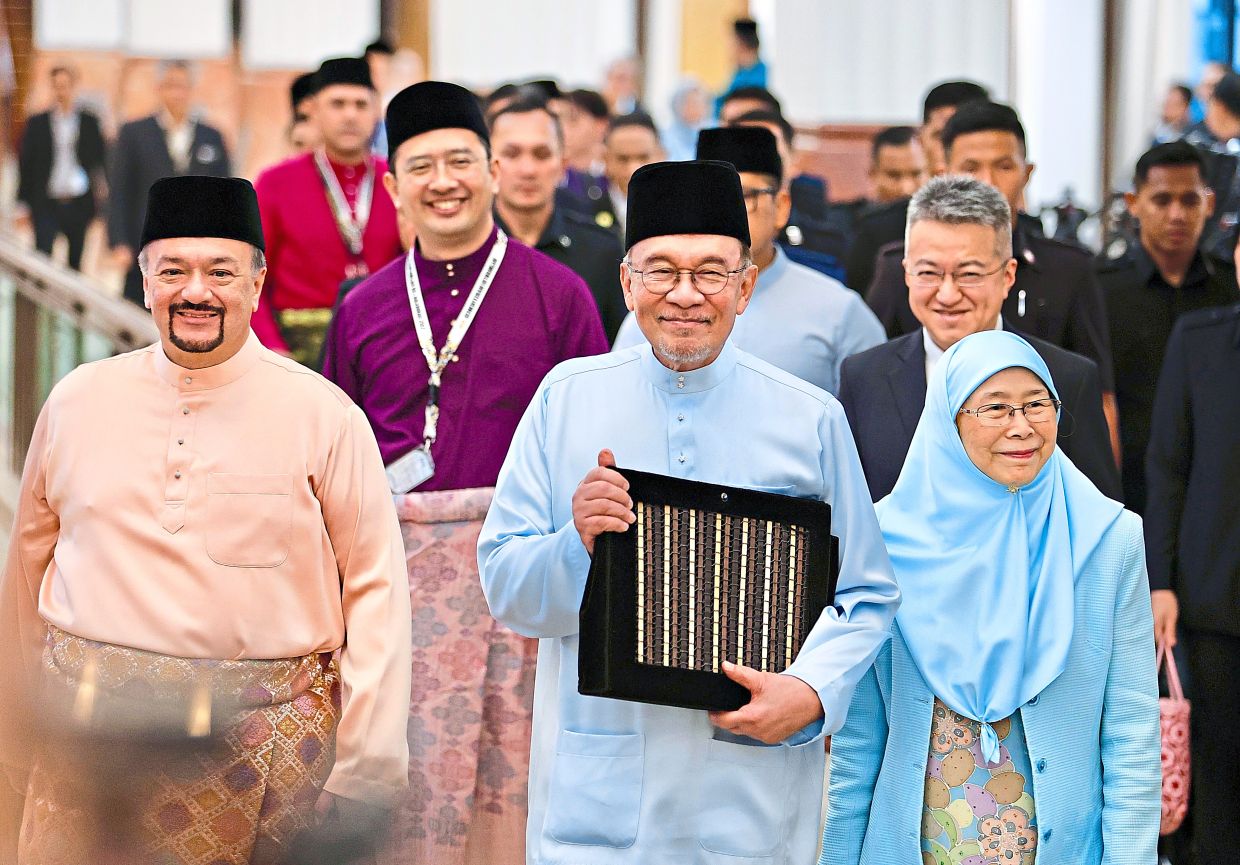
Malaysia’s RM510bil 2027 Budget to draw quality investments: Banking executives


KUALA LUMPUR: Malaysia’s RM510 billion 2027 Budget is expected to attract high-value investments, support business growth and boost household incomes, banking executives said.
CIMB Group chief executive officer Novan Amirudin said the country’s economic reform agenda sought to strengthen competitiveness, attract quality investments and foster innovation while ensuring growth translated into better opportunities and living standards.
He said fiscal responsibility and common prosperity must go hand in hand, with reforms focusing on industrial upgrading, infrastructure, energy transition, skills development and financial inclusion.
For the banking sector, these measures would create opportunities to mobilise capital towards priority sectors while supporting businesses and households.
“Banks become not only beneficiaries of reform, but active partners in advancing sustainable growth, economic resilience and common prosperity,” he said.
HIGH-VALUE INDUSTRIES TO DRIVE GROWTH
Developments in Penang and Kulim’s semiconductor and advanced manufacturing ecosystems, alongside Tanjung Malim’s emergence as a regional automotive hub, could help local companies integrate into sophisticated supply chains and move up the value chain.
The RM25 billion in domestic investments mobilised by government-linked investment companies under the GEAR-uP initiative would further support this direction.
Tan also welcomed enhancements to the Global Services Hub incentive, saying Malaysia was well positioned to attract more foreign direct investment amid disruptions to global supply chains.
Measures to improve small and medium enterprises’ competitiveness, including tax incentives, technology and
investments, and expanded financing, would help businesses scale up and explore overseas markets.The RM60 million allocation to the Malaysia External Trade Development Corporation and RM1 billion in financing from Bank Pembangunan Malaysia Bhd for export-oriented SMEs will support companies seeking opportunities abroad.
SKILLS & FISCAL DISCIPLINE REMAIN KEY
Mushahid Syed, interim chief executive officer, head of coverage and chief financial officer of Standard Chartered Malaysia, said the budget’s focus on investment, skills development and higher-value industries would reinforce Malaysia’s position as a regional trade hub.
He said the commitment to narrow the fiscal deficit to 3.3 per cent of gross domestic product in 2027, alongside federal revenue projected at RM380.8 billion, sent a positive signal to investors and financial markets.
“The continued thrust on NIMP 2030, National Energy Transition Roadmap, National Semiconductor Strategy, digital and AI, and supply chain diversification gives businesses confidence,” he said.
Mushahid said the RM8 billion allocation for technical and vocational education and training, three million training opportunities through HRD Corp and 30,000 targeted employment opportunities under Bakat Madani will help develop the workforce needed to sustain economic transformation.
He added that stronger workforce capabilities would be essential for Malaysia to attract quality investments and move up global value chains.
SMEs & GREEN INVESTMENT
Mushahid said SME support was important as businesses navigated geopolitical uncertainty and changing market conditions.
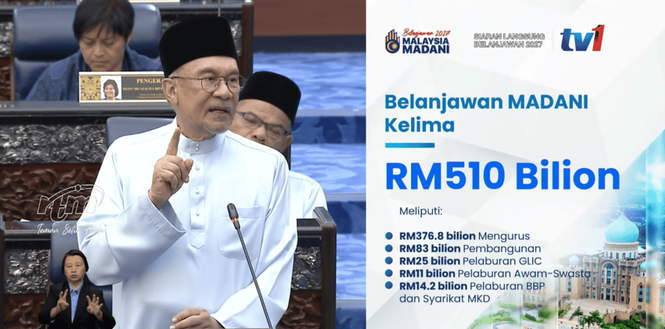
The RM32 billion in financing support through Syarikat Jaminan Pembiayaan Perniagaan Bhd and Credit Guarantee Corp Malaysia Bhd, alongside RM6.6 billion in microfinancing for 2027, would improve access to funding.
An additional RM5 billion financing facility for SMEs affected by the Middle East conflict would provide further support.
He also welcomed the extension of green tax incentives to 2030, saying investment allowances for eligible green technology projects, electric vehicle charging stations and green assets could encourage businesses to adopt lower-carbon operations.
Meanwhile, MBSB Bhd group chief executive officer Rafe Haneef said sustained investment in renewable energy infrastructure and greater access to green financing would be essential to support industrial growth.
“Sustained investment in renewable energy infrastructure will be essential to support the nation’s next phase of industrial growth.
“Greater collaboration across the financial ecosystem can help businesses, particularly SMEs, navigate the transition with greater confidence and accessibility,” he said.
Rafe said SMEs needed commercially viable financing solutions to adopt sustainable practices, improve productivity and remain competitive.
The challenge will be translating the budget’s allocations and incentives into sustained productivity gains, stronger private investment and higher household incomes while keeping public finances on a sustainable path.

You may also like...




Random news






About us
Our Newly established Center for study of Asian Affairs has
branches in Indonesia, Malaysia and Singapore, as well as freelances in some other countries.
For inquires, please contact: newsofasia.info@yahoo.com Mr.Mohd Zarif - Secretary of the Center and administer of the web-site www.newsofasia.net
Polls
 Loading ...