

Rubio’s visit to Samarkand: The United States Returns to Central Asia With Capital, Critical Minerals and Corridors
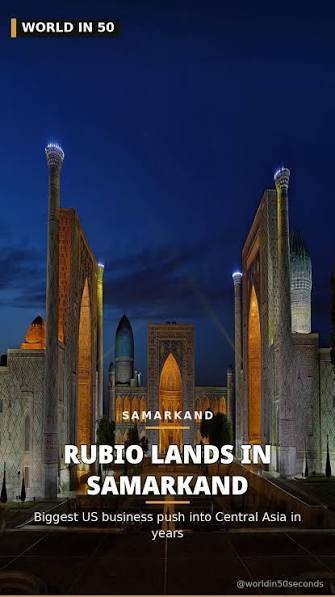
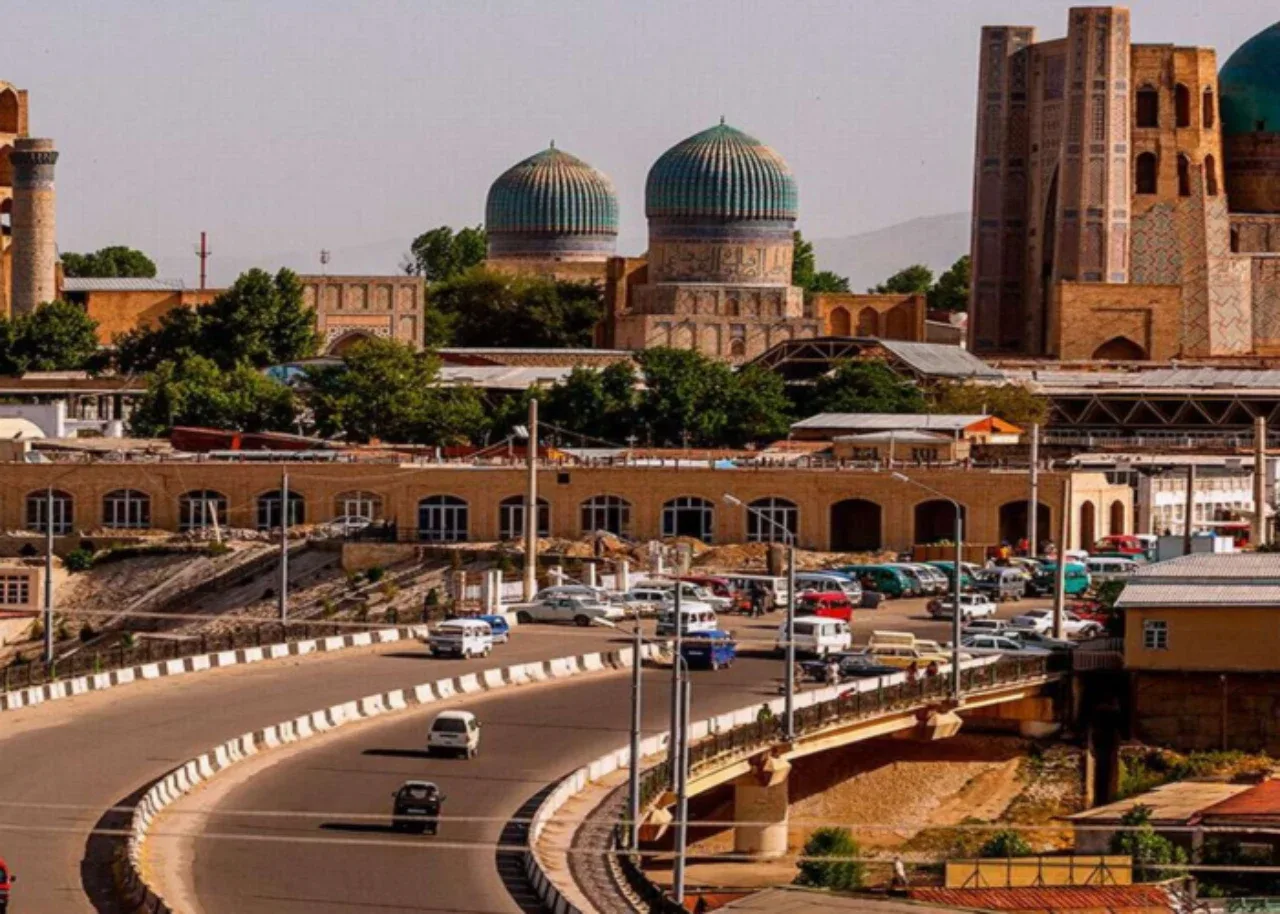
US Secretary of State Marco Rubio’s visit to Uzbekistan has become one of the most revealing diplomatic events in Central Asia in recent months. The very fact that the C5+1 meeting – bringing together the United States and all five Central Asian states – was held in Samarkand shows that Washington is beginning to view the region differently: not as a remote post-Soviet periphery, but as an independent geopolitical centre where the interests of Russia, China, Iran, Türkiye, Europe and the United States converge.
Yet it would be simplistic to portray Rubio’s visit as an attempt to push Russia or China out of the region. That is neither realistic nor, at least publicly, Washington’s stated objective. Russia retains deep historical, economic, migration and humanitarian ties with Central Asia. China remains the largest trade partner and investor for many countries in the region, while its infrastructure and financial presence continues to grow. The United States is offering a different model: not demanding a geopolitical choice, but expanding Central Asia’s room for manoeuvre through investment, technology, critical resources and new transport routes.
Central Asia as a Zone of Competition
Central Asia is increasingly shifting from an inner-Eurasian region into one of the world’s key arenas of strategic competition. The reason is not only its location between Russia, China, Iran and Afghanistan. The region is gaining importance because of its reserves of uranium, copper, rare earths and other critical minerals needed for modern energy systems, defence industries, semiconductors, electric vehicles and artificial intelligence.
Access to these resources has become one of the main drivers of US interest. Washington wants to diversify global supply chains and reduce excessive dependence on China in critical minerals and high-tech manufacturing. In this context, Central Asia is not merely viewed as an export market, but as a potential component of a new economic architecture linking the United States with partners in Europe, the South Caucasus and the Indo-Pacific.
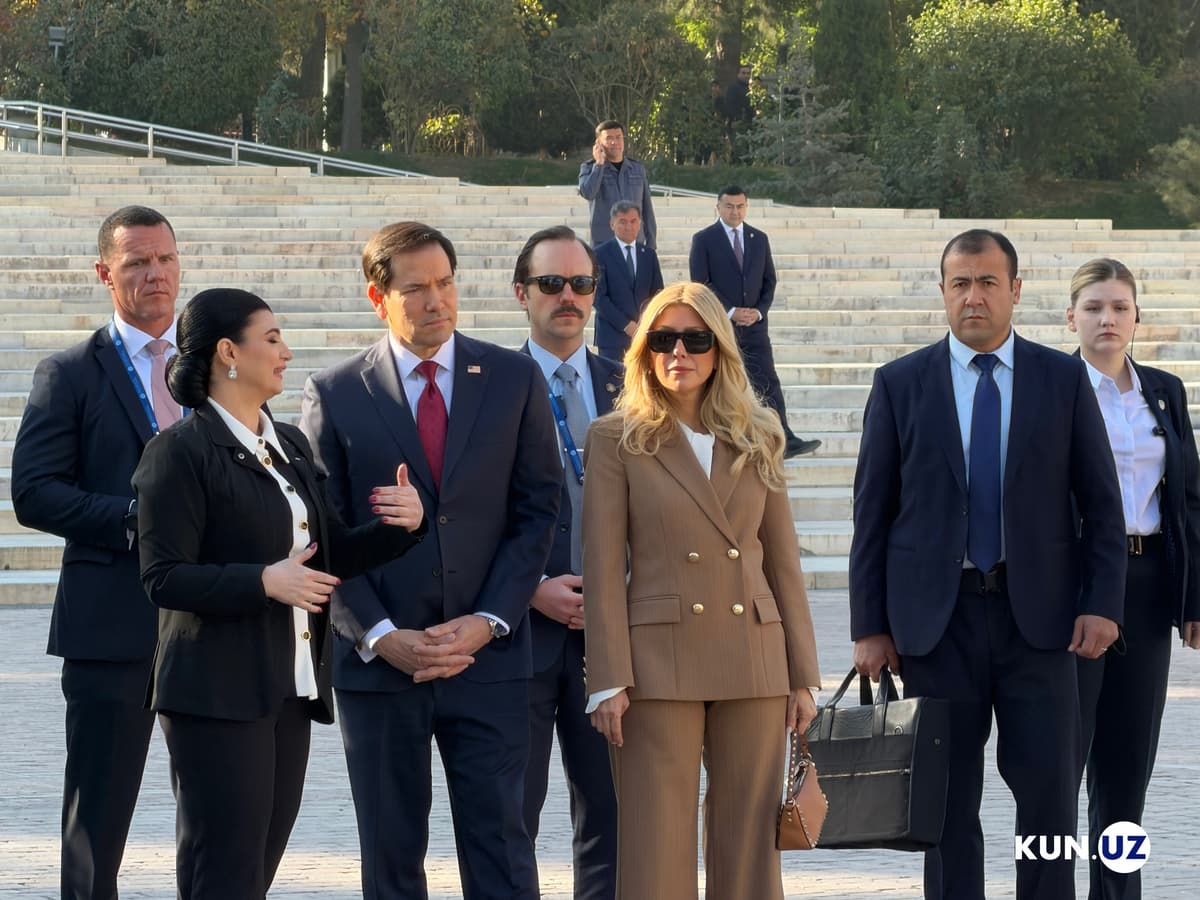
Rubio did not come to Samarkand only for diplomatic talks. He was accompanied by a major US business delegation of more than 200 company representatives. This detail is important. The emerging American strategy in the region is being built less around political rhetoric than around commercial presence, investment, technological solutions and access to strategic resources.
Uzbekistan as the Region’s Diplomatic Platform
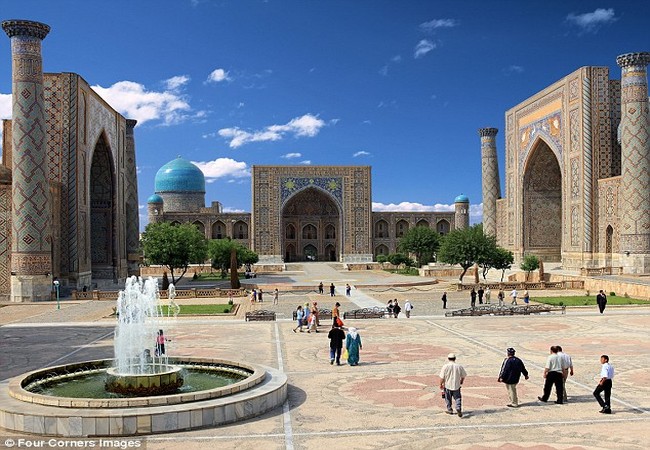
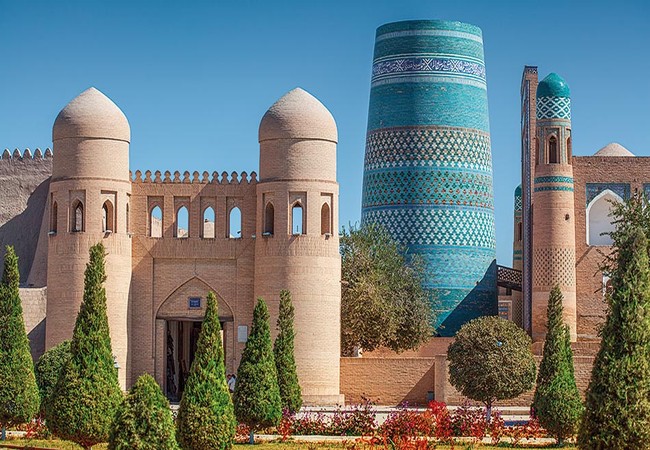
The choice of Samarkand was also symbolic. Historically, the city was one of the most important hubs of the Silk Road, connecting East and West. Today, Uzbekistan is seeking to reclaim a similar role – not merely as a cultural symbol, but as a diplomatic, transport and investment centre for Central Asia.
In recent years, Tashkent has significantly strengthened its regional activism. Uzbekistan seeks to maintain constructive relations simultaneously with Russia, China, the United States, the European Union, Türkiye and the Gulf states. This multi-vector policy does not mean the absence of priorities. It reflects an understanding that a country with a population of more than 37 million and a growing economy must maintain a wide network of partners rather than become dependent on one external centre of power.
Rubio’s visit reinforces Uzbekistan’s political standing. Samarkand is becoming a venue where not only Uzbekistan’s national issues are discussed, but also the future of the entire region. For Tashkent, this means greater diplomatic weight. For the other Central Asian states, it creates an opportunity to engage Washington on a regional rather than purely bilateral basis.
$12 Billion: An Important Signal, Not a Completed Result
One of the major outcomes of the visit was the announcement of 54 agreements in trade, investment and technology, with a stated value of around $12 billion. The arrangements cover a range of fields, from industrial cooperation and investment to technology and infrastructure.
But the figure should be assessed carefully. It does not mean that $12 billion has already entered Uzbekistan’s economy. It is a package of agreements, memoranda and prospective projects. Their implementation will depend on specific contracts, financing decisions, the investment climate and the ability of both sides to move quickly from political commitments to practical mechanisms.
Nevertheless, the scale of the announced package matters. It demonstrates that the United States wants to establish a stronger economic presence in Uzbekistan and show Central Asian states that US policy toward the region can be material, not merely declaratory.
For Uzbekistan, American investment matters not simply as a source of capital. It can bring technology, management standards, access to global markets and more sophisticated production chains. This is precisely what the country needs as it seeks to accelerate industrialisation, expand exports with higher added value and reduce dependence on raw-material exports.
Artemis Accords: Space as a Political Signal
Uzbekistan also joined the Artemis Accords, a US-led initiative that sets principles for international cooperation in the peaceful exploration of space. At first glance, this may appear secondary compared with trade and investment issues. But its political significance is broader.
Joining the Artemis Accords means that Tashkent seeks to integrate into a US-led technological and regulatory ecosystem. It does not mean breaking ties with other partners in the space sector, but it does signal Uzbekistan’s desire to participate in shaping future rules in satellite technology, Earth observation and space resource governance.
For the United States, it is also an instrument of soft power. Washington is offering partners not only investment, but participation in the rules that may shape the technological order of the future. In a world where competition over technology is increasingly central, such frameworks carry strategic weight.
The Middle Corridor and Azerbaijan’s Role
Rubio’s visit is particularly relevant to the development of Trans-Caspian connectivity. Washington is interested in routes that link Central Asia with European and global markets without excessive dependence on Russia or Iran. The key route is the Middle Corridor: through Kazakhstan, across the Caspian Sea, through Azerbaijan and Georgia, and onward to Türkiye and Europe.
Azerbaijan’s role here is central. A fully functioning Trans-Caspian route is impossible without Baku. The Port of Baku, rail infrastructure, the Alat Free Economic Zone and Azerbaijan’s links with Georgia and Türkiye make the country a natural bridge between Central Asia and Europe.
For Azerbaijan, growing US interest in Central Asia opens new opportunities. If Washington moves beyond political support for the Middle Corridor and contributes to financing, digitalisation, port modernisation and the removal of logistical bottlenecks, the entire route could gain additional momentum. In such a scenario, Baku could strengthen its position not merely as a transit point, but as a regional hub for trade, processing and investment.
At the same time, Central Asian states are not seeking to replace one route with another. They are interested in maximum diversification. Their connections with China, Russia, Iran, South Asia, the Caucasus and Europe all matter. The more routes and partners they have, the greater their economic resilience and political agency.

Not a Choice Between Great Powers, but a Policy of Balance
The central conclusion from Rubio’s visit is that Central Asia does not want to choose between the United States, Russia and China. The region is pursuing a policy of balance. Its states are using competition among major powers to attract capital, technology and infrastructure projects while trying to avoid excessive dependence on any single actor.
This is especially visible in Uzbekistan’s approach. Tashkent is expanding ties with Washington while preserving close economic, political and humanitarian links with Moscow. It is developing projects with China while strengthening cooperation with Europe, Türkiye, the Gulf states, South Korea, Japan and India. This policy enables Uzbekistan to act not as an object of outside competition, but as a state with its own interests and agency.
For the United States, this means that the success of its new strategy will not be measured by dramatic geopolitical statements, but by its ability to offer the region tangible benefits. American companies will have to compete with Chinese investment, Russian economic ties and the growing influence of Gulf states. Promises must be backed by financing, long-term projects and respect for the interests of Central Asian governments.
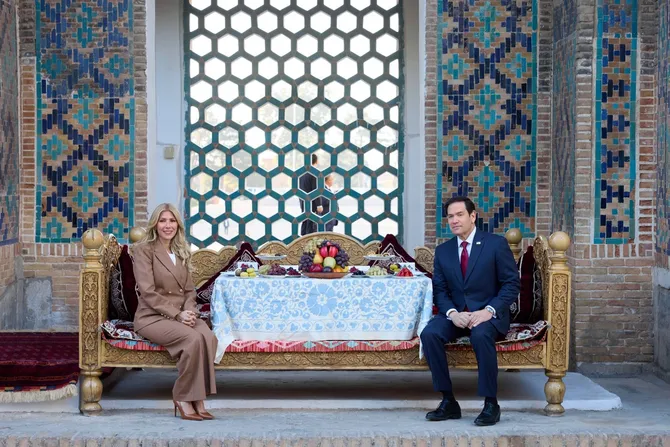 photo: Gazeta.uz
A New Phase of US Policy
Marco Rubio’s visit to Samarkand can be seen as the beginning of a new phase in US policy towards Central Asia. Washington is entering the region not primarily with demands for political alignment or with expectations that states will sever ties with Russia or China. Its focus is on critical minerals, trade, investment, advanced technologies and transport corridors.
But this creates the central test: can the United States turn announced agreements into real projects faster and more effectively than its competitors? Central Asia has already learned to welcome political attention from major powers. What it now expects are factories, technologies, investment, reliable infrastructure and access to global markets.
For Uzbekistan, Rubio’s visit was confirmation of its growing role in Central Asia. For the region as a whole, it offers an opportunity to expand its foreign policy and economic room for manoeuvre. And for Azerbaijan, it is a reminder that growing US interest in Central Asia inevitably increases the importance of the Caspian, the Trans-Caspian route and Baku itself on Eurasia’s new geo-economic map.

- Previous Kyrgyz citizens cancel Egypt tours due to strict new visa and financial entry rules
- Next India Today (and Israeli Media): With Pakistani Field Marshal Munir at negotiating table, Saudi Arabia offers $1 billion to Houthis for peace
You may also like...



Random news

About us
Our Newly established Center for study of Asian Affairs has
branches in Indonesia, Malaysia and Singapore, as well as freelances in some other countries.
For inquires, please contact: newsofasia.info@yahoo.com Mr.Mohd Zarif - Secretary of the Center and administer of the web-site www.newsofasia.net
Polls
 Loading ...