

SY-400 missiles – India Today: China shipped missile material to Bangladesh? Indonesia intercepts secret cargo


Indonesia’s navy seized 405 tonnes of sodium perchlorate, used as rocket and missile fuel, shipped from China to Bangladesh’s Mongla port. Experts suggest the quantity of the seized material is enough for around 100 missiles.
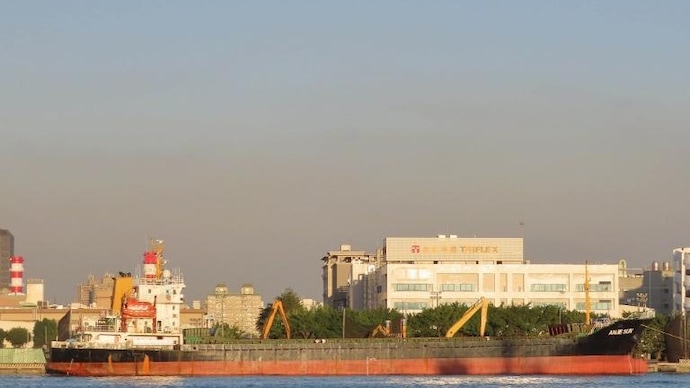
Indonesian naval authorities have seized a cargo vessel travelling from China to Bangladesh carrying 405 tonnes of sodium perchlorate, a
oxidising chemical used in rocket and missile propellants, along with millions of unregistered SIM cards. An Indonesian Navy commander said the seized quantity could potentially be used to manufacture up to 100 missiles, raising questions about the consignment’s intended use and who was supposed to receive it in Bangladesh.
The Indonesian navy disclosed the seizure on November 20 at a press briefing at the Navy Regional Command I in Belawan, according to videos put out by media outlets in Indonesia. The vessel was reportedly scheduled to arrive at Mongla Port on November 8.
According to Dhaka Tribune, Indonesian naval personnel became suspicious after noticing unusual movements by the vessel, which had made an unscheduled stop in Belawan waters, reportedly to refuel.
The report stated that the Indonesian Navy as having said that the vessel may have switched off its Automatic Identification System (AIS) during the voyage, an allegation that is being examined as part of the investigation.
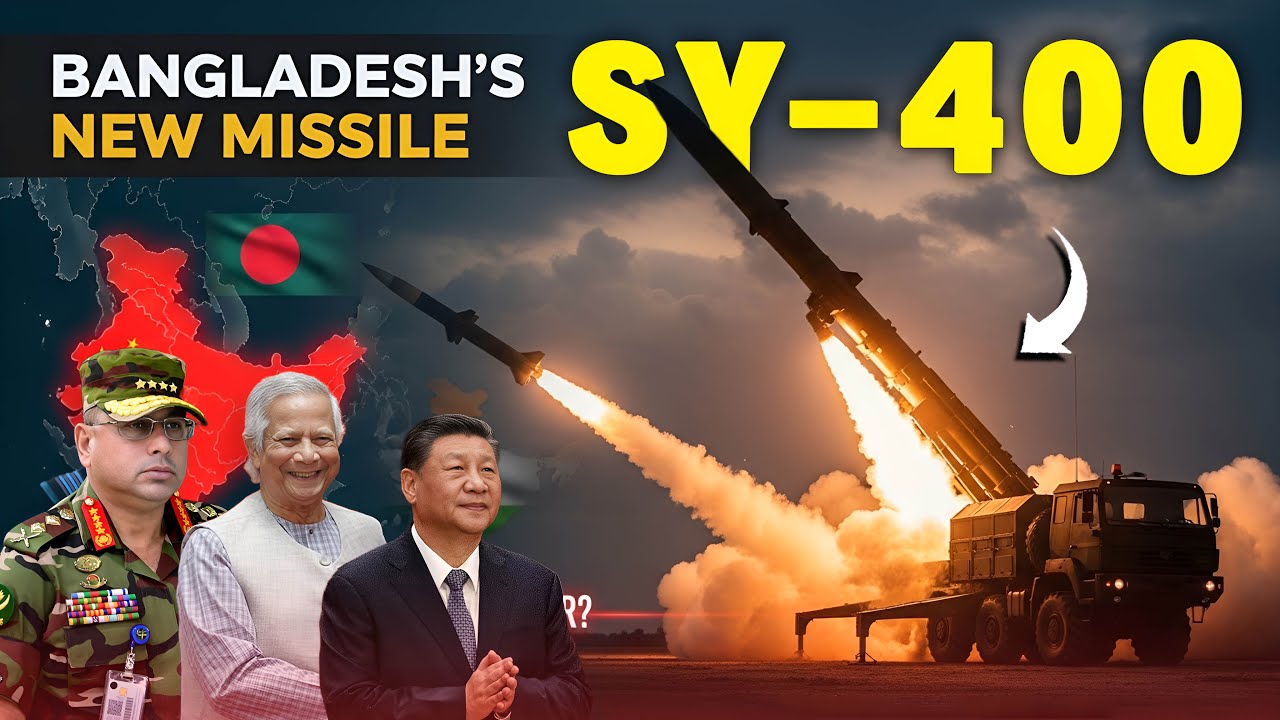
WHAT WAS FOUND ON THE BANGLADESH-BOUND SHIP FROM CHINA?
An inspection of the vessel’s 36 containers revealed that 15 of them were used to transport 405 tonnes of sodium perchlorate. Authorities also discovered 54 pallets containing millions of unregistered blank 4G LTE SIM cards, TBS reported.
Sodium perchlorate is a powerful oxidising agent used in
applications and in the manufacture of rocket and missile propellants. It is not itself an explosive or fuel but can support combustion.Rear Admiral Deny Septian, commander of Naval Regional Command I of the Indonesian Navy, described the chemical as a strategic material used in rocket and missile propellants. He reportedly said the seized quantity could potentially be used to manufacture up to 100 missiles, according to TBS.
BANGLADESH LACKS INFRA TO PRODUCE ROCKETS, MISSILES
While Bangladesh has a domestic military industry producing munitions and small arms, it lacks the infrastructure needed to produce rockets and missiles that use sodium perchlorate, raising questions as to why such a cargo was being transported to Bangladesh in the first place.
Indonesian authorities also found discrepancies in the vessel’s registration and shipping documents.
Dhaka Tribune reported that although the ship’s documents stated that its registration was valid until October 2027, its registration status was listed as suspended.
The Indonesian Navy is investigating the vessel’s crew, cargo documentation and the circumstances surrounding the shipment. Authorities have not yet disclosed the identities of the shipping company, cargo owners or intended recipients of the chemicals.
TBS also reported that the identity of the Bangladeshi importer was also not immediately known. The Import General Manifest, which records the importer and the types of goods carried by a vessel, could help establish ownership.
Dhaka Tribune reported that although the ship’s documents stated that its registration was valid until October 2027, its registration status was listed as suspended.
Indonesia’s SIB News Network also reported that Indonesian authorities found the vessel’s registration documentation to have expired on October 8, 2026, while its validation status was listed as suspended. The discrepancy is among the issues being examined by investigators.
MV Star Line was headed to Mongla Port, which is Bangladesh’s second-largest seaport after Chattogram, located in the country’s southwestern Bagerhat district, on the Pashur river near the Bay of Bengal.
India secured access to Mongla and Chattogram ports for moving goods to and from the Northeast under agreements signed in 2015 and 2018, reducing dependence on longer routes through Indian territory. India has also financed the Khulna-Mongla railway line to improve connectivity to the port.
China, meanwhile, has been expanding its economic footprint around the port. In June 2026, Bangladesh signed an agreement with Chinese state-owned China Civil Engineering Construction Corporation to develop an economic zone on 110 acres of land adjacent to Mongla. The site had originally been earmarked for an Indian-backed economic zone under a 2015 agreement, but the project was scrapped in 2025. China has also extended a loan of around $336 million for Mongla Port’s expansion and modernisation.

- Previous Kazakhstan: after not finishing Astana LRT for 15 years, Almaty SkyTrain started on bad footing
- Next Japan wants to pay less: Tokyo and Washington hold meeting on easing Okinawa base payments
You may also like...






Random news








About us
Our Newly established Center for study of Asian Affairs has
branches in Indonesia, Malaysia and Singapore, as well as freelances in some other countries.
For inquires, please contact: newsofasia.info@yahoo.com Mr.Mohd Zarif - Secretary of the Center and administer of the web-site www.newsofasia.net
Polls
 Loading ...