

Excessive Panic in New Delhi: What Trump’s China-Russia tilt means for India and Quad
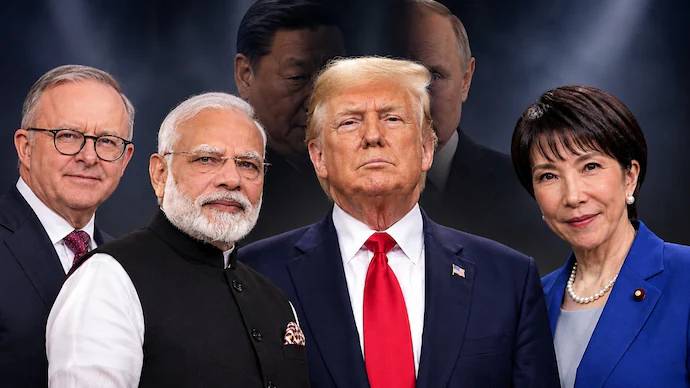

Just 55-minute meet.
A brief 55-minute Quad meeting in Manila comes at a time when US President Donald Trump is preparing for high-stakes engagements with China’s Xi Jinping and Russia’s Vladimir Putin, raising questions about Washington’s strategic priorities. With Trump recalibrating ties with China and Russia, how much room will India and the Quad have in his Indo-Pacific strategy?
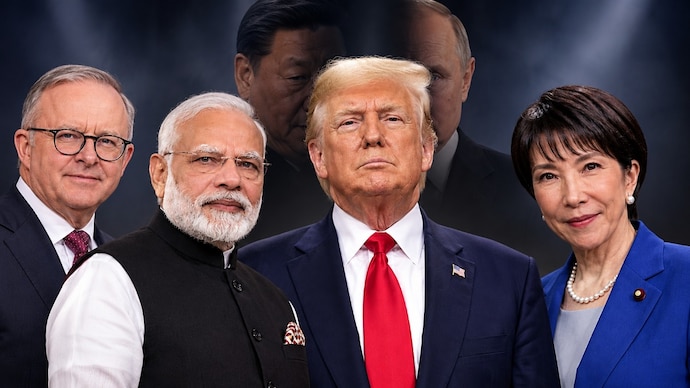
For a US-led grouping that was once projected as a counterweight to China’s growing influence in the Indo-Pacific, sparing just 55 minutes is hardly reassuring. That is all the leaders of India, the US, Japan and Australia are expected to get together in Manila for their first Quad meeting in two years. At a time when US President Donald Trump is preparing for high-stakes engagements with Chinese President Xi Jinping and Russian President Vladimir Putin, the brief meeting of Quad leaders raises one big question that does the Indo-Pacific grouping still matter to Washington, or has it become another casualty of Trump’s deal-oriented foreign policy?
Strategic affairs expert Brahma Chellaney said that the Quad is losing its strategic relevance as the Trump administration shifts its Indo-Pacific approach and moves towards a more accommodative policy towards China.
Amid Trump mainly focussing on relations with Xi and Putin, former US ambassador to Russia Michael McFaul, in a post on X, argued that Washington should place greater emphasis on strengthening ties with its democratic partners rather than focussing on a one-off meeting with the Chinese and Russian Presidents.
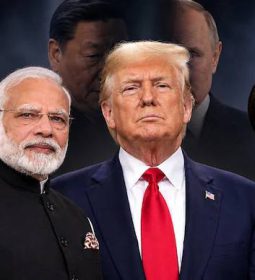
On the sidelines of the Manila engagements, Prime Minister Narendra Modi is also set to meet US President Donald Trump on Tuesday. This is their first interaction in five months since their June meeting at the G7 summit in France.
THE QUAD: FROM A STRATEGIC PARTNERSHIP TO A SCHEDULED ENGAGEMENT
The significance of the meeting in Quad Manila lies in what it represents for a grouping that has struggled to maintain political momentum under Trump.
The Quad, comprising India, the United States, Japan and Australia, was revived in 2017 during Trump’s first presidency amid growing concerns about China’s military and economic expansion. It was subsequently elevated to the leaders’ level under former US President Joe Biden, who made it a central pillar of his Indo-Pacific strategy.
Biden participated in six Quad leaders’ meetings, including two virtual engagements, and hosted the last in-person summit in the US’ Delaware in September 2024. India was expected to host the next meeting in 2025. But disagreements over trade, tariffs, immigration and the strain in India-US ties prevented that from happening.
This is particularly consequential because the Quad was never intended to be just another diplomatic forum. Its importance lies in bringing together four democracies with significant economic, technological and military capabilities to preserve a free and open Indo-Pacific. Although its members have repeatedly maintained that it is not directed against any particular country, China’s expanding footprint has been a central factor behind its formation and revival.
Beijing has consistently viewed the grouping with suspicion. Its concerns have grown as the Quad has expanded cooperation beyond infrastructure, vaccines, climate change and disaster response to maritime security, naval coordination and critical technologies.

For India, this evolution has particular significance. The aggressive manoeuvring of China’s military along the Line of Actual Control (LAC), its expanding presence in the Indian Ocean Region (IOR) and its growing influence across India’s strategic neighbourhood make the Indo-Pacific balance of power a direct national security concern.
TRUMP 2.0’S CHINA CALCULUS AND THE QUAD’S DILEMMA
The biggest uncertainty surrounding the Quad is not whether India, Japan and Australia see value in it. It is whether Washington continues to view the grouping as strategically important when its president is simultaneously pursuing accommodation with Beijing.
Strategic affairs expert Brahma Chellaney argues that the Quad is losing its strategic purpose as Washington’s Indo-Pacific policy changes and Trump’s China policy moves from “confrontation towards accommodation”.
In a post on X on Tuesday, Chellaney described the grouping as increasingly marginal to US strategy.
“The blunt truth is that the Quad is adrift and increasingly marginal to US strategy, as is evident from the White House’s National Security Strategy, in which the Quad receives just a single, passing mention, buried in a brief reference to India,” the strategic affairs expert wrote, adding “for a grouping once advertised as a cornerstone of the Indo-Pacific strategy, this near-expurgation speaks for itself.”
Former Foreign Secretary Kanwal Sibal has also drawn attention to the language used to describe the Quad engagement by the White House. What is striking is that the meeting is being referred to as a “multilateral meeting with Quad leaders” rather than explicitly being projected as a Quad summit.
The distinction might appear diplomatic, but it raises questions about how much political importance Washington wants to attach to the Quad gathering. The White House, however, has defended Trump’s record. The American political digital newspaper Politico quoted the White House Spokesperson Olivia Wales as saying “no administration has done more to advance Quad cooperation than the Trump administration.”
There is also a strategic argument for holding the meeting now in Manilan in The Philippines, a non-Quad member.
Former US ambassador to Russia Michael McFaul, in a post on X, argued that Washington should be celebrating its engagement with democratic partners rather than placing disproportionate emphasis on a one-off meeting with two autocratic leaders: Xi and Putin.
“The Quad matters more to American national interests than a one-off trilateral meeting with Xi and Putin,” McFaul wrote on X.
Trump’s relationship with China is clearly transactional, with trade, investment and economic concessions. But for the US, its Indo-Pacific partners and China’s military and strategic ambitions cannot be separated from the region’s economic future.
For New Delhi, the stakes are more complicated than simply keeping Washington engaged. India needs the Quad as a platform to balance China’s influence without becoming part of a formal military alliance or surrendering its strategic autonomy.
That distinction has always been central to India’s approach. Unlike Japan and Australia, which are US treaty allies, India has maintained its independent foreign policy and resisted turning the Quad into an Asian version of Nato. New Delhi’s participation is driven by its own security and economic interests, and not merely by Washington’s China strategy.
Trump’s treatment and tensions with other Quad members have also motivated them to strengthen cooperation outside the Quad. India and Japan held joint military exercises in September, including the first deployment of Japanese fighter jets in Indian airspace since World War 2. Japan and Australia have deepened defence cooperation, while Australia, Japan and Indonesia have also begun expanding military coordination.
US-based Politico quoted retired Rear Admiral Mark Montgomery, former director of operations at US Pacific Command, as saying that the Quad represents an opportunity to collectively confront the Chinese Communist Party, but that opportunity is being missed.
Montgomery added that Trump’s treatment of the three partners had prevented progress in bringing India into more direct participation in confronting Chinese aggression beyond the Indian Ocean Region (IOR).
WHAT THE MODI-TRUMP MEETING CAN ACHIEVE
The Manila engagement of the Quad leaders also comes at an important moment in India-US relations. Prime Minister Narendra Modi and Trump are meeting for the first time in five months, since their interaction on the sidelines of the G7 summit in Evian, France, in June.
Their bilateral discussions are expected to cover trade, tariffs, market access and an interim bilateral trade deal. These discussions matter because the condition of the India-US relationship will inevitably influence the effectiveness of the Quad. A grouping cannot function as a credible strategic partnership if its most consequential member is simultaneously imposing economic pressure on another.
The Quad’s immediate agenda also offers opportunities to demonstrate practical cooperation. Maritime security, critical-mineral supply chains, export controls and artificial intelligence are expected to feature in the discussions, according to Reuters. Securing commercial shipping lanes is particularly important amid regional instability and the vulnerability of global energy supplies.
The meeting could therefore produce tangible outcomes even if it does not resolve the larger political questions surrounding the grouping.
But the larger question is whether Trump sees the Quad as a long-term strategic investment or simply as a useful diplomatic signal before negotiating with Beijing. The 55-minute meeting might be enough for a photograph, a joint statement and a few deliverables. But rebuilding confidence among the member nations with increasingly different calculations will take considerably longer. And that is the real test of the Quad in the age of Trump.

- Previous Gorno-Badakhshan Faces a Population Exodus
- Next Large US data centers produce as much emissions as Denmark or as annual Indonesian palm plantation fires
You may also like...




Random news





About us
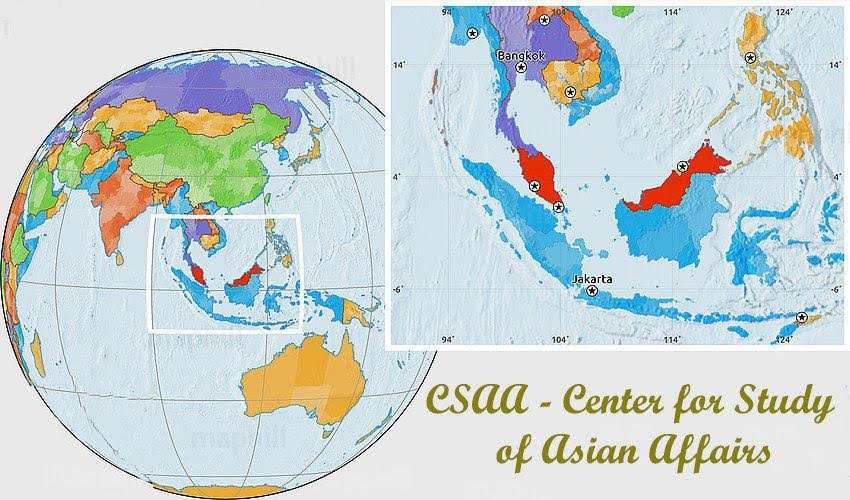
Our Newly established Center for study of Asian Affairs has
branches in Indonesia, Malaysia and Singapore, as well as freelances in some other countries.
For inquires, please contact: newsofasia.info@yahoo.com Mr.Mohd Zarif - Secretary of the Center and administer of the web-site www.newsofasia.net
Polls
 Loading ...