

Cubans struggle, but not surrender: Havana to generate electricity from sugar waste

By Macarena Hermpsilla

“What they are proposing is nothing more than a pipe dream because Cuba’s sugar industry no longer exists. It could become one of the main drivers of Cuba’s energy sector in the future, but unfortunately, 95% of the country’s sugar mills are currently not operating,” Piñón said.
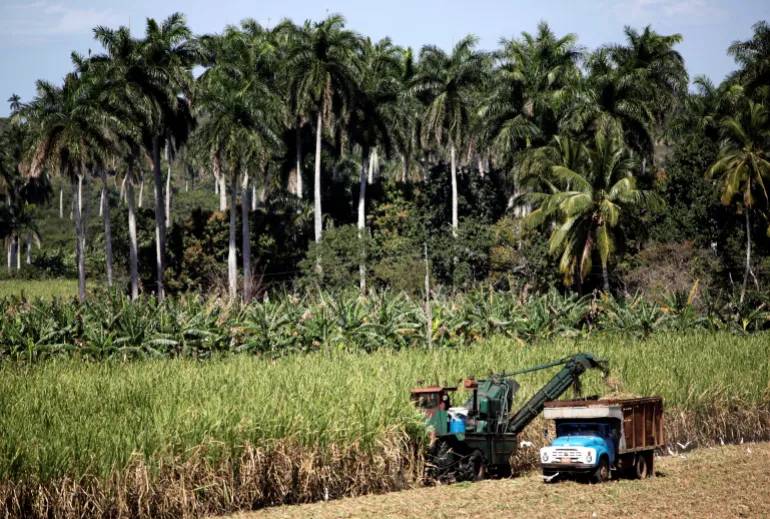
The Cuban government announced last week that it intends to restore sugar mills and prioritize electricity generation using biomass, while also producing ethanol and other sugarcane byproducts.
During a meeting with executives of the state-run sugar company Azcuba and producers, Díaz-Canel said the industry’s performance should be measured by the electricity it generates, the byproducts it produces and its ability to meet financial obligations, according to the Cuban presidency.
In a post on X, the presidency said the sugar industry was undergoing a transformation rather than being abandoned.
“Conditions are difficult, but not impossible. The blockade is not an excuse. It is an obstacle that must be overcome with intelligence, creativity and determination. The time is now, not tomorrow, not when conditions are better, but today, with the resources we have and the capabilities we must demonstrate,” Díaz-Canel said, referring to the U.S. trade embargo.
“Producing sugar, producing energy, creating value means defending the process of socialist construction in such difficult times. And to do that, we are counting on the workers and leaders of this sector,” the president said, according to the presidency.
The proposal comes after Cuba recorded its worst sugar harvest in more than a century. Production during the 2024-25 harvest is estimated to have fallen below 150,000 metric tons, based on partial official figures.
The decline reflects the deterioration of an industry that produced about 8 million metric tons annually in the late 1980s.
Piñón estimated that approximately 95% of Cuba’s sugar mills are not operating because of technical problems and insufficient raw materials.
He said that bagasse — the fibrous residue left after sugarcane is crushed — can be burned to produce steam and generate electricity. However, sugarcane shortages limit that possibility.
Authorities could instead turn to forestry waste, particularly marabou, an invasive woody shrub that has spread across abandoned farmland.
Piñón said that alternative would not solve Cuba’s energy crisis in the short term.
Biomass availability remains one of the main technical challenges. An analysis published by Columbia University’s Cuba Capacity Building Project found that sugar mill closures and declining cultivation have reduced the supply of bagasse available for electricity generation.
The study said restoring that capacity would require increased sugarcane production and improvements in agricultural technology, machinery and irrigation systems.
Piñón cited the biomass power plant at the Ciro Redondo sugar mill, built with Chinese participation about three years ago with a generating capacity of 60 megawatts. The facility has faced technical problems and limitations in its biomass supply.
A report published in March by the Cuba Study Group also documented technical difficulties that have restricted the plant’s operations.
Piñón said restoring the industry’s energy-generating capacity would require investment in both sugarcane plantations and the modernization of sugar mills.
He estimated that fully recapitalizing the sector could take three to five years, provided the necessary financing is secured.
He also identified legal uncertainty as an obstacle to attracting foreign capital, particularly from Brazilian companies experienced in producing ethanol and electricity from sugarcane.
“How are they going to invest in Cuba if there is no legal certainty over land ownership?” he asked.
Piñón said investors need guarantees that regulations will remain stable and their investments will be protected over the long term.
Despite his reservations about the immediate proposal, the expert said Cuba’s sugar industry could eventually become an important energy source, as it has in Brazil, where sugarcane is used to produce both ethanol and electricity.

- Previous China’s Next Technological Adnanes: 10-ton electric commercial aircraft makes maiden manned flight
- Next Over 1k per day: Spain face African immigrant invasion again and EU too
You may also like...






Random news












About us

Our Newly established Center for study of Asian Affairs has
branches in Indonesia, Malaysia and Singapore, as well as freelances in some other countries.
For inquires, please contact: newsofasia.info@yahoo.com Mr.Mohd Zarif - Secretary of the Center and administer of the web-site www.newsofasia.net
Polls
 Loading ...