

Bluffs on both sides! Iran, US talks hit impasse as Tehran puts up Hormuz ‘toll booth’
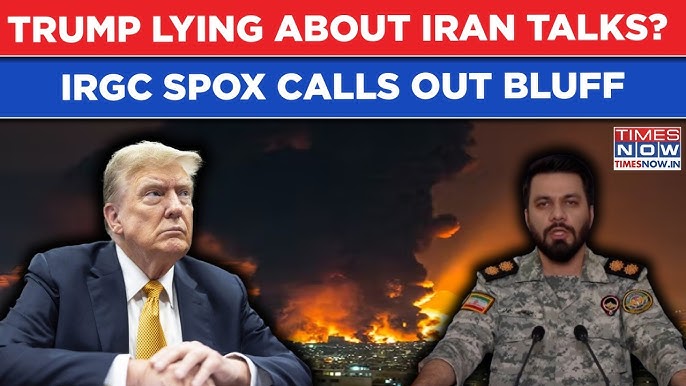


Iran and the U.S. hardened their positions Thursday, with both sides signaling no breakthrough in talks as Washington moved thousands of additional troops toward the region and Tehran tightened control over the strategic Strait of Hormuz, raising the risk of further escalation in the Middle East war.
While heavy strikes were reported in Iran’s capital and other cities, sirens over Israel warned of barrages of incoming Iranian missiles and Gulf nations worked to intercept fire.
In a war that appears defined by who can take the most pain, the U.S. has offered shifting but ambitious objectives, including ensuring Iran’s missile and nuclear programs are no longer a threat and ending Tehran’s support for armed groups in the region. Washington at one point also pushed for the overthrow of Iran’s theocracy.
While the U.S.-Israeli campaign has hit Iran’s military and government hard, killing top leaders and striking scores of targets, Iran continues to fire missiles and there is no sign of an uprising against the government.

For Iran’s leadership, by contrast, merely outlasting the onslaught could be seen as victory. It may be hoping to get the U.S. to back down because it is successfully roiling the world economy with its stranglehold on the Strait of Hormuz – raising prices at the pump for drivers, prices in the grocery store for families and costs for businesses the world over. A Gulf Arab bloc said Thursday that Iran is exacting tolls to ensure the safe passage of ships.
The U.S. and Iran have both produced a list of demands, and now appear at an impasse. Short of a negotiated solution, the U.S. would need a dramatic escalation to end Iran’s attacks and restore the free flow of oil through the strait.
Trump vowed to strike Iran’s power plants if it doesn’t fully reopen the strait – and his new deadline for that looms this weekend, when the war will also mark a month.
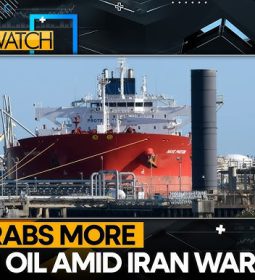
With its stranglehold on traffic through the Strait of Hormuz, which leads from the Persian Gulf toward the open ocean, Iran has been blocking ships it perceives as linked to the U.S. and Israeli war effort, but letting through a trickle of others.
Jasem Mohamed al-Budaiwi, of the Gulf Cooperation Council, a bloc of six Gulf Arab nations, said Iran was charging for safe passage through the strait.
The Fars and Tasnim news agencies, both close to Iran’s paramilitary Revolutionary Guard, quoted lawmaker Mohammadreza Rezaei Kouchi as saying that parliament was working to formalize that process.
“We provide its security, and it is natural that ships and oil tankers should pay such fees,” he was quoted as saying.
Lloyd’s List Intelligence called it a “de facto ‘toll booth’ regime.”
“While not all ships are paying a direct toll, at least two vessels have and the payment is settled in yuan,” Lloyd’s List said, referring to China’s currency.
Iran’s grip on the strait and relentless attacks on Gulf regional energy infrastructure have sent oil prices skyrocketing and concerns of a global energy crisis surging. Brent crude, the international standard, traded at $104 Thursday, up more than 40% from Feb. 28, when the war started.
“To make it crystal clear, this war is a catastrophe for world’s economies,” German Defense Minister Boris Pistorius told reporters during a visit to Australia.
In an apparent effort to break the impasse on the strait, Israel said it killed Commodore Alireza Tangsiri, the head of the Iranian Revolutionary Guard’s navy.
Israeli Defense Minister Israel Katz said that Tangsiri was responsible for the bombing operations that have blocked ships from crossing the waterway. Iran did not immediately acknowledge the killing.
Using Pakistan as an intermediary, Washington has delivered to Iran a 15-point cease-fire proposal, which includes the reopening of the Strait of Hormuz.
A day after saying a deal was near, Trump posted on social media Thursday that Tehran needs to “get serious soon” on negotiating to end the war “before it is too late, because once that happens there is NO TURNING BACK, and it won’t be pretty!” He did not elaborate, but said Iran should be negotiating because “they have been militarily obliterated, with zero chance of a comeback.”
Iran’s Foreign Minister Abbas Araghchi said in an interview on state TV that his government has not engaged in talks to end the war, “and we do not plan on any negotiations.”
Araghchi said the U.S. had tried to send messages to Iran through other nations, “but that is not a conversation nor a negotiation.”
Press TV, the English-language broadcaster on Iranian state television, said Iran has its own five-point proposal, which includes “sovereignty over the Strait of Hormuz.”
Meanwhile, a group of ships, including the USS Tripoli, drew closer to the Mideast with some 2,500 Marines. Also, at least 1,000 paratroopers from the 82nd Airborne – trained to land in hostile territory to secure key territory and airfields – have also been ordered to the region.
Israel said it carried out a wave of attacks early Thursday targeting Iranian infrastructure and air defenses were heard in Tehran. Heavy strikes were also reported around Isfahan, home to a major Iranian air base and other military sites, as well as one of the nuclear sites bombed by the U.S. during the 12-day war in June.
Sirens sounded very early Thursday morning in parts of Tel Aviv and cities in central Israel and later explosions were heard in west Jerusalem.
In the United Arab Emirates, two people were reported killed by falling shrapnel from a missile interception over Abu Dhabi. Saudi Arabia’s Defense Ministry said it intercepted multiple drones over its oil-rich Eastern Province, and Bahrain reported extinguishing a blaze in a neighborhood that is home to the Bahrain International Airport.
Since the war began, more than 1,500 people have been killed in Iran, its Health Ministry says. Seventeen people have been killed in Israel, while three Israeli soldiers have also been killed in Lebanon. At least 13 American troops have been killed. More than a dozen civilians in the occupied West Bank and Gulf Arab states have also died.
Authorities said nearly 1,100 people have died in Lebanon, where Israel has targeted the Iran-backed Hezbollah militant group, which has fired into Israel. In Iraq, where Iranian-supported militant groups have entered the conflict, 80 members of the security forces have been killed.

- Previous 6.9 mln. in 2025: Turkey emerges as alternative as Russian tourists cancel Gulf trips
- Next India Today: Trump claims Iran proposed making him Supreme Leader: I said, ‘No, thank you’
You may also like...



Random news



About us
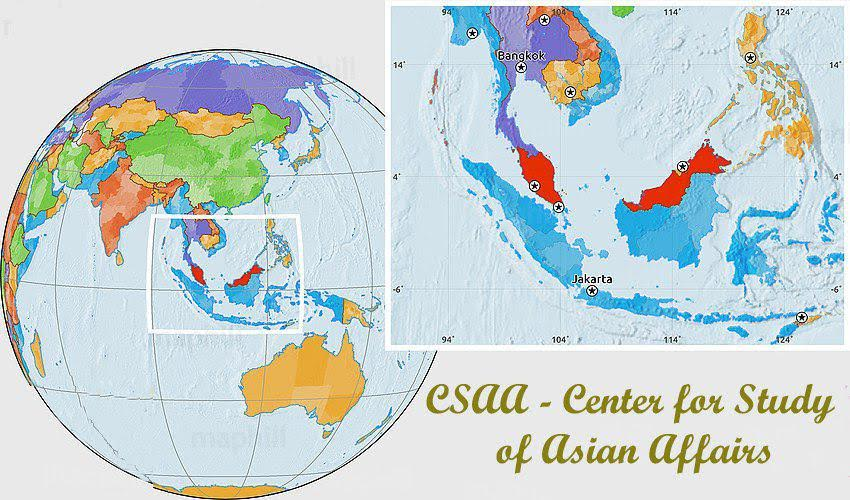
Our Newly established Center for study of Asian Affairs has
branches in Indonesia, Malaysia and Singapore, as well as freelances in some other countries.
For inquires, please contact: newsofasia.info@yahoo.com Mr.Mohd Zarif - Secretary of the Center and administer of the web-site www.newsofasia.net
Polls
 Loading ...