

India claims: 5 professors and 2 PhD scholars built a cheap homemade Indian chips
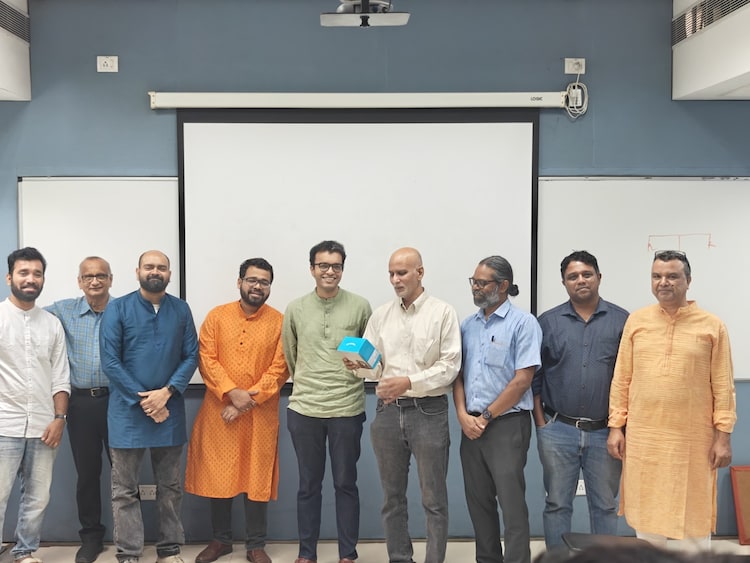
Five professors and two PhD scholars spent 15 years developing Gallium Nitride technology long before semiconductors became India’s biggest technology mission. Their research became AGNIT Semiconductors, India’s first vertically integrated GaN startup, now helping reduce dependence on imported strategic chips while taking Indian innovation to the global stage.

five professors and two PhD scholars spent 15 years building a technology that hardly anyone in India was talking about.
They began at a time when the country had little semiconductor infrastructure, almost no ecosystem for advanced chip research and no certainty that their work would ever leave the laboratory. Yet they kept going, convinced that India would one day need a technology the rest of the world was only beginning to recognise.

By the time semiconductors became one of India’s biggest national priorities, they had already built one of the country’s most significant breakthroughs.
Fifteen years is longer than many startups survive. During that time, governments changed, India’s semiconductor ambitions accelerated and global demand for advanced chips soared. Through it all, the researchers kept working on the same problem.
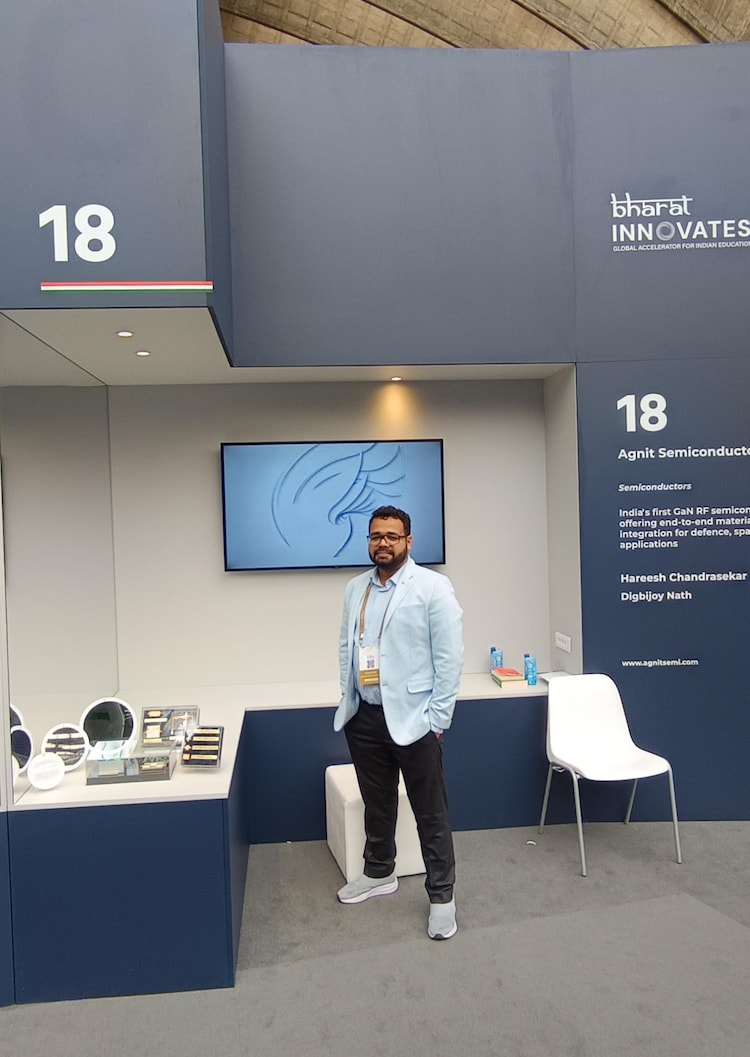
Their effort eventually became AGNIT Semiconductors, India’s first vertically integrated Gallium Nitride (GaN) semiconductor startup.
Incubated at the Indian Institute of Science (IISc), Bengaluru, and backed by the Ministry of Electronics and Information Technology (MeitY), the company now develops strategic semiconductor technologies for India’s defence sector while expanding into telecommunications, consumer electronics and electric mobility.
The journey began with a team of five professors and two PhD scholars — (Late) Dr Muralidharan Rangarajan, Hareesh Chandrasekar, Madhusudan Atre, Digbijoy Nath, Srinivasan Raghavan, Mayank Shrivastava and Shankar Kumar Selvaraja, whose research laid the foundations for what would become AGNIT.
Today, semiconductor announcements dominate India’s technology agenda. New fabrication plants, billion-dollar investments and global chipmakers entering the country have become regular headlines.
The pandemic-era chip shortage, followed by rising geopolitical tensions and export controls, exposed how vulnerable countries were when critical technologies depended on foreign suppliers.

As Chandrasekar puts it, “critical technology access itself is being overtly used as a sovereign tool of statecraft.” India is now investing billions through the India Semiconductor Mission to change that.
Long before the country made semiconductors a national priority, this team at IISc had already placed its bet on one of the world’s most strategically important chip technologies: Gallium Nitride.
WHY GALLIUM NITRIDE IS DIFFERENT
Most electronic devices today run on silicon chips.
Gallium Nitride belongs to a newer family of semiconductors designed for situations where ordinary silicon reaches its limits.
“Gallium Nitride is a wide bandgap semiconductor material that has the capacity to handle high power applications and operates at higher frequencies and perform more efficiently than traditional silicon,” explains Digbijoy Nath, CTO and co-founder of AGNIT Semiconductors and Associate Professor at IISc.
That makes GaN indispensable for radar systems, satellite communication, electronic warfare, aerospace and next generation wireless technologies where performance and reliability are non-negotiable.
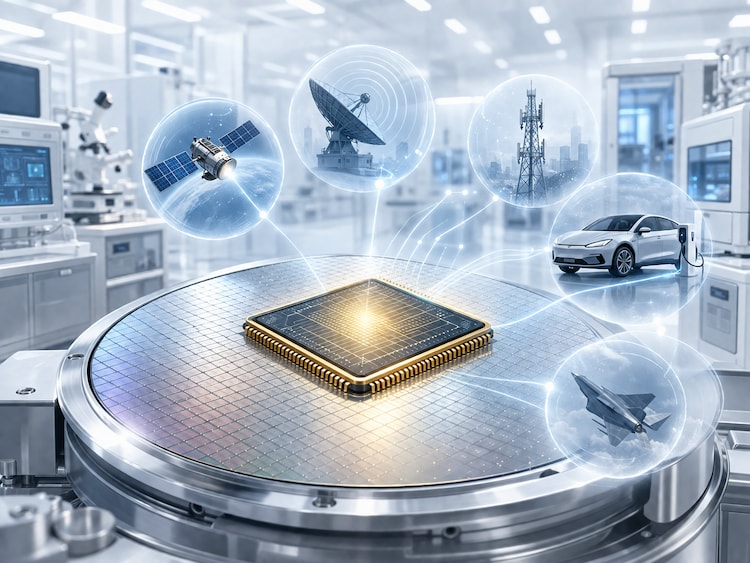
More importantly, only a handful of countries possess strong capabilities in this technology.
“For India, GaN is not just a technology advancement, it is a strategic necessity. By developing indigenous GaN technology and manufacturing capabilities in India, we can reduce import reliance, strengthen national security, protect sensitive defence infrastructure, and build valuable semiconductor intellectual property that generates long-term economic and technological value,” he explains.
THE DECISION THAT STARTED IT ALL
When the team first began discussing GaN inside IISc in the mid-2000s, building advanced semiconductors in India seemed almost unrealistic. There was little infrastructure, limited funding and almost no ecosystem for high-end chip manufacturing.
According to Madhusudan Atre, Co-founder and Director (Strategy) at AGNIT, the team knew India could not simply replicate the world’s biggest silicon foundries.
Instead, they searched for an area where India could build unique intellectual property while remaining commercially viable.
“There was therefore a need to identify an optimal intersection between differentiated IP, capex and opex requirements, R&D expenses, human resources, availability of infrastructure, India’s strategic and commercial needs, and the technological expertise available in the country,” he says.
The answer was clear.
“Compound semiconductor manufacturing emerged as one such sweet spot.”
At the time, Gallium Nitride was beginning to emerge globally as one of the most promising semiconductor technologies.
Research at IISc steadily built expertise, patents and confidence that India could develop this capability itself instead of importing it.
BUILDING CHIPS IS NOTHING LIKE BUILDING SOFTWARE
After spending more than a decade solving scientific problems, the team faced an entirely different challenge: turning research into a business.
“The toughest moment came from the reality of building a deep-tech semiconductor startup in India when the infrastructure is still developing,” says Hareesh Chandrasekar, Co-founder and CEO of AGNIT.
Unlike software startups that can rapidly update products, semiconductor companies often get only one chance.
“Unlike software, where products can be improved quickly, a single design mistake in semiconductors can cost millions of dollars and months of work. Even when the science works in the lab, ensuring the technology performs reliably in real-world conditions is an entirely different challenge,” he says.

The team’s belief never wavered.
Support through the Defence Ministry’s iDEX programme helped AGNIT build its first commercial GaN prototype, but Chandrasekar believes India still needs stronger support for deep-tech companies during the difficult period between successful research and commercial success.
“There is still a need for greater scale and what we call ‘viability gap funding’. There also needs to be a leap of faith from first customers to convert a successful pilot into volume orders and revenue for the startup,” he says.
WHEN A LAB BECAME A COMPANY
By the late 2010s, the researchers realised they had something much bigger than an academic project.
“We could see this technology begin to commercialise across the world, starting with more strategic use-cases,” Chandrasekar says.
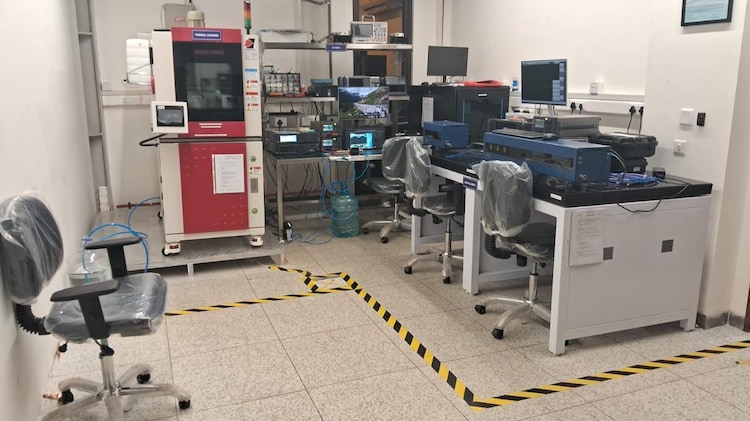
Years of research had given the team expertise across the entire value chain, from semiconductor materials and fabrication to devices, packaging and complete systems.
That experience convinced the founders they had more than a promising laboratory project.
“Commercialising compound semiconductor technology is not only about developing the best material or best process or best packaging, but about mastering the entire product development cycle,” Chandrasekar says.
Just as importantly, discussions with defence customers revealed how dependent India remained on imported GaN components.
Those conversations led to AGNIT’s launch in 2019.
The timing coincided with India’s growing semiconductor ambitions, the Make in India push and a changing geopolitical landscape where access to advanced technology increasingly became a strategic issue.
In December 2023, AGNIT signed a contract with the Defence Ministry to design and develop advanced GaN semiconductors for next-generation wireless transmitters used in radars and electronic warfare systems.
In October 2024, the company raised $3.5 million in seed funding led by 3one4 Capital and Zephyr Peacock to scale manufacturing and expand into commercial sectors such as consumer electronics and electric mobility.
Its work has since earned the IESA Semiconductor Startup Award 2025, the NASSCOM DeepTech Emerge 50 Award and recognition among DPIIT and Startup India’s Top 100 DeepTech Startups.
WHY THIS MOMENT MATTERS FOR INDIA
For Chandrasekar, the biggest achievement is not simply commercial success.
“The semiconductor technology fundamentally gives countries the optionality of developing defence systems against a 10-year self-defined roadmap and innovations as opposed to making do with components available off the shelf but fundamentally built for someone else’s roadmaps,” he explains.
Seeing university research become technology used by the country carries a deeper meaning.
“It is really fulfilling to see research that began in a university laboratory translating into a startup that is creating real-time impact for the country,” he says.
Professionally, it validates years of research and perseverance.
“Personally, it is a proud reminder that world-class, indigenous technology can be developed in India and deployed where it matters most,” Chandrasekar says.
WHAT INDIA’S CHIP MISSION CAN LEARN
India’s semiconductor ambitions are no longer limited to attracting global manufacturers.
The bigger challenge is creating technologies that originate here.
“When we started, semiconductors were not yet a national priority,” recalls Srinivasan Raghavan, Professor at IISc and Co-founder of AGNIT.
Funding, specialised infrastructure, manufacturing partners and supply chains were all scarce. Many startups had to build these capabilities almost from scratch while convincing investors there was a market waiting.
Madhusudan Atre believes the next decade will demand much more than factories.
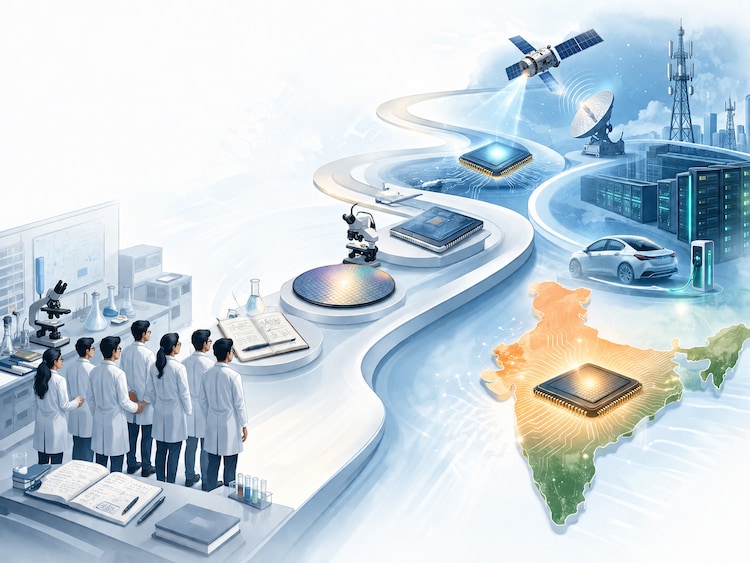
Semiconductors are among the world’s most interdisciplinary industries, bringing together physics, chemistry, materials science, electronics, manufacturing, logistics, finance and management. They also require patience because the journey from laboratory research to commercially useful products often spans many years.
“Technology development and IP come from big corporations, as well as from startups, and enabling entrepreneurs for the long road from lab-to-product needs sustained support,” Atre says.
His final lesson may be the most important.
“It is important to not just think of technology development, but also of where the technology leads to systems and products of relevance to India’s needs,” he says.
India’s semiconductor future will certainly be built inside massive fabrication plants.
But if AGNIT’s story shows anything, it is that it also begins with researchers willing to spend years solving problems long before the rest of the country realises how important those solutions will become.

- Previous Kazakhstan wants to fine by $5 Billion the Kashagan project of pollution
- Next Malaysia: Maybank signs deal to boost ASEAN currency capital markets
You may also like...







Random news














About us

Our Newly established Center for study of Asian Affairs has
branches in Indonesia, Malaysia and Singapore, as well as freelances in some other countries.
For inquires, please contact: newsofasia.info@yahoo.com Mr.Mohd Zarif - Secretary of the Center and administer of the web-site www.newsofasia.net
Polls
 Loading ...