

Is there ground for Japan to re-start diplomatic ties with China and Russia
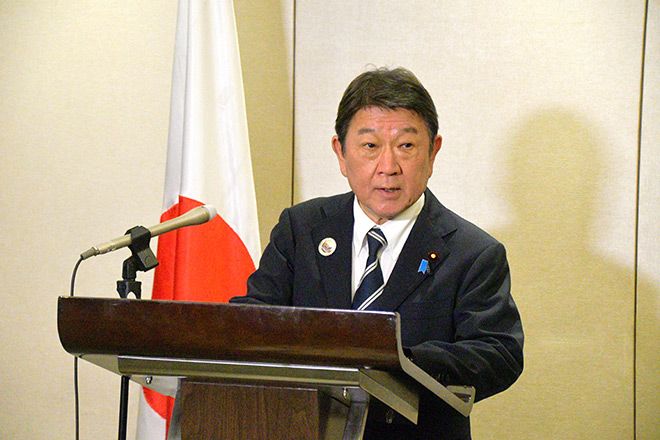 Foreign Minister Toshimitsu Motegi speaks to reporters in Manila on July 23. (Ryohei Miyawaki)
MANILA—In the first thawing of deeply frozen diplomatic ties, Foreign Minister Toshimitsu Motegi briefly spoke with his Chinese and Russian counterparts on the sidelines of an ASEAN summit here, although Beijing denied the exchange occurred.
The conversation with Chinese Foreign Minister Wang Yi on July 22 marked the first between the two nations’ top diplomats since Japan-China relations soured in November 2025.
Tensions were triggered by Prime Minister Sanae Takaichi’s parliamentary remarks regarding a potential Taiwan contingency, and China has since expanded export restrictions to Japan on dual-use products, including rare earths.
Motegi on July 23 told reporters he spoke with Wang for a short time at the venue around noon on the previous day, describing it not as a formal meeting, but as an “opportunity for contact as they passed each other” between sessions.

He said they exchanged views on bilateral relations but did not disclose details.
“Japan and China bear a great responsibility for the peace of the region,” Motegi said, stressing the importance of the encounter. “It is extremely important to continue dialogue going forward.”
However, Beijing offered a starkly different account.
Chinese Foreign Ministry spokesperson Lin Jian told a news conference on July 23, “There were no plans for a meeting between Foreign Minister Wang Yi and the Japanese side in Manila,” refusing to acknowledge the contact.
Wang’s actions at the summit appeared to reinforce Beijing’s obstinacy.
The Chinese foreign minister was absent from a dinner party on July 21 that Motegi attended.
Wang also skipped the ASEAN Plus Three (Japan, China, South Korea) foreign ministers’ meeting on July 23—a session he typically attends—and was reportedly meeting with another foreign minister at the time, suggesting he may have pointedly avoided his Japanese counterpart.
‘OLD ACQUAINTANCE’ RENEWED
The exchange with Wang was not Motegi’s only significant sideline encounter.

He also revealed on July 23 that he had briefly spoken with Russian Foreign Minister Sergey Lavrov during the July 21 dinner, in what is believed to be the first contact between the two nations’ foreign ministers since Russia began its invasion of Ukraine in February 2022.
Dialogue had been severed after Japan joined the United States and Europe in imposing financial and other sanctions on Russia, which, in turn, designated Japan an “unfriendly country.”
Motegi described Lavrov as an “old acquaintance”—the two had last met in person in September 2021—and said they “spoke about bilateral relations and the regional situation.”
“While Japan-Russia relations are in a difficult situation, Russia is a neighboring country,” Motegi said. “It is important to appropriately manage the bilateral relationship, including intergovernmental communication, as well as cultural and people-to-people exchanges.”
REBUILDING BENEATH THE SANCTIONS
Motegi’s comments reflect a broader, cautious effort by Tokyo to rebuild some channels with Moscow even as it continues to support Ukraine.
In late May, officials including Masayoshi Arai, the economy ministry’s director-general for the Trade Policy Bureau, visited Moscow to discuss the “protection of assets” for Japanese companies.
The visit aimed to address pressing issues—such as natural gas imports from Sakhalin, visa-free travel to the disputed Northern Territories, and fishery negotiations—while looking ahead to a post-invasion landscape.
On a softer level, Japan’s Foreign Ministry is also moving to resume a suspended short-term dispatch program for university students to Russia, starting in August.
Despite these overtures, a senior Foreign Ministry official stressed that Japan’s fundamental policy remains unchanged.

“Our stance on sanctions against Russia and support for Ukraine will not change,” the official said.
Analysts urged caution.
“Dialogue at the working level should be maintained” to address issues such as the Northern Territories and fishing rights, said Keio University professor Yoko Hirose.
But she warned that even brief contacts carry risks.
“Even a brief contact should not be allowed to be used for Russian propaganda,” Hirose said, adding that Japan must consider the “reputational risk of how a rapprochement with Russia will be viewed by the international community.”
(This article was compiled from reports by Ryohei Miyawaki, Yuta Ogi, Takashi Ogawa, and correspondent Yohei Kobayakawa.)

- Previous Last of Mohegans fell: Japanese Red Army shooter Okamoto dies in Lebanon
- Next Oil reserves are depleting: Iran war energy shock hits the U.S. economy
You may also like...



Random news


About us
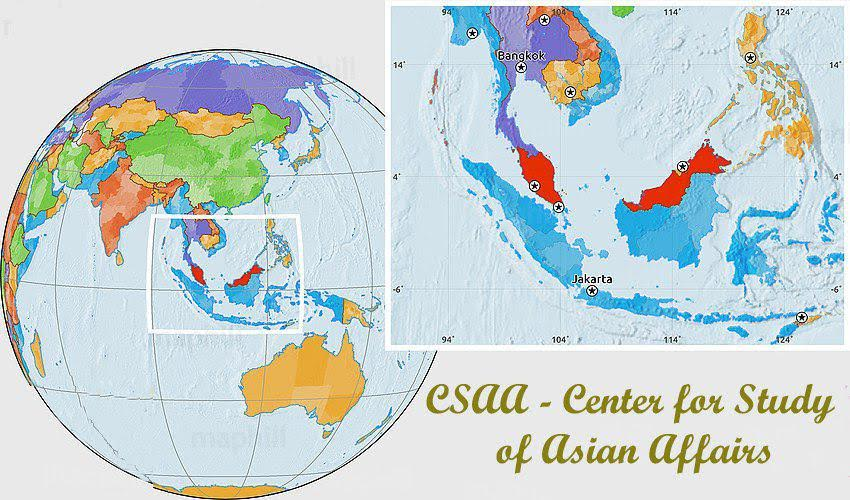
Our Newly established Center for study of Asian Affairs has
branches in Indonesia, Malaysia and Singapore, as well as freelances in some other countries.
For inquires, please contact: newsofasia.info@yahoo.com Mr.Mohd Zarif - Secretary of the Center and administer of the web-site www.newsofasia.net
Polls
 Loading ...