

Malaysia: Efforts to Build Asia’s fastest data center
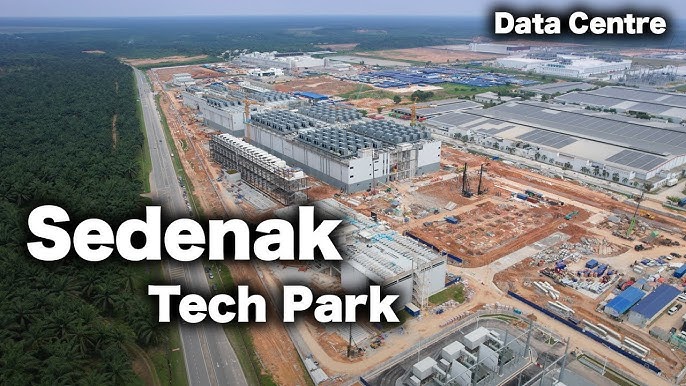
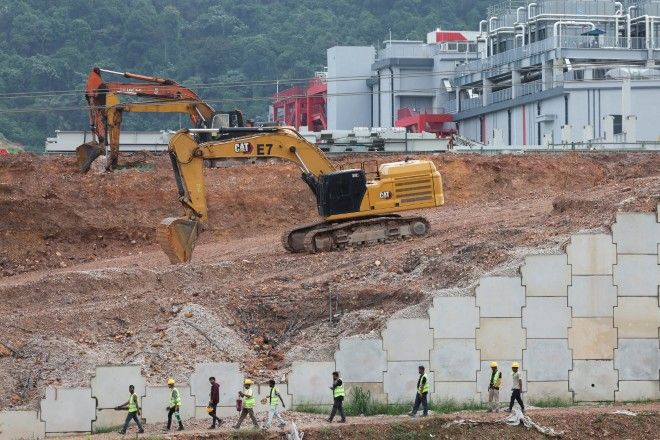 Workers head to a data centre construction site in Johor state, which has become Southeast Asia’s fastest-growing data centre hub, at Gelang Patah, Malaysia May 8, 2026. (REUTERS)
HONG KONG/JOHOR, Malaysia–After leapfrogging Singapore to become the region’s fastest-growing data center hub, Malaysia is facing intensifying scrutiny as the resources debate that has complicated the industry’s growth spreads to emerging Asia.
Protests over a data center complex in Johor state’s southern tip — the epicenter of the boom — were the first of their kind in the country. In Selangor, the richest and most populous state, debate about the burden on communities has become politicized.
“Two years ago, it was just about building capacity,” said Cheam Tat Inn, managing director at the Malaysian arm of U.S. data center operator Equinix.
“The conversation today is more like, How will you use power? Are you looking at renewables? They want to see how you’re going to grow sustainably and responsibly.”
It’s a notable shift for a country — and a region — that has courted hyperscalers hard in a race to secure AI infrastructure investment, offering lower land costs and affordable power.
It puts emerging Asia roughly where developed-market data center hotspots such as Ireland, the Netherlands and Singapore were several years ago, when the industry’s breakneck growth began to stir concerns about competition for water and electricity with homes and farms.
Even so, global hyperscalers — in tandem with data center developers and operators — are pushing forward with massive investments aimed at powering AI services requiring increasingly large amounts of computing capacity, but with a sharpened focus on sustainability to help secure a “social license” from local communities. Governments are also tightening standards to retain public support.

In Johor, China’s ZDATA told Reuters its data center operates solely on treated wastewater, and it is finalizing a renewable energy deal with state utility Tenaga Nasional to ease strain on the electricity grid. Japan’s NTT said its data center will employ a closed-circuit cooling system to limit water use. Bain Capital-backed Bridge Data Centers said solar energy accounts for more than half of the power supply at its operations in the state.
“Data centers have high abstract support because we’re all using more and more data and we all want high speed,” said Chris Howard, an executive director at consultancy JLL. “But this contrasts very sharply with acceptance of data centers in local communities due to the perception of increased energy prices and water usage — or even just ugly buildings.”
JLL estimates that rising objections from residents were among factors — also including grid connections and infrastructure equipment — that contributed to delays of at least three months for 57% of projects globally last year.
RENEWABLE ENERGY, LOCAL CONTENT
New projects in Johor must show how they will source electricity, with renewable energy increasingly a prerequisite for approval. Late last year, the state announced a blanket ban on two categories of extremely water-intensive data centers, requiring as much as 50 million liters daily, the capacity of 20 Olympic swimming pools.
Selangor isn’t banning any proposals outright but is vetting them to meet global standards on energy and water efficiency, the state’s executive councillor for investment, trade and mobility, Ng Sze Han, told Reuters. A centerpiece of its approach is requiring 30% local content in areas such as integrated circuit design and cooling systems.
“These are highly capital-intensive projects, but historically they have delivered limited spillover to the local economy,” Ng said.
In April, the opposition Socialist Party singled out a 1.75 billion ringgit ($428 million) hyperscale project in the state for criticism, saying it prioritized corporations over communities.
With Malaysia tightening scrutiny, investment may start flowing to other countries in the region, said Savills analyst Nicholas Tuan.
“We’re already seeing more activity and inbound requests for markets like Thailand, where there are larger scale campuses being built in the south,” he said.
At the same time, Johor in particular retains its appeal as “amongst the most stable” in terms of infrastructure, government support and availability of resources, he added.
SINGAPORE SPILLOVER
Johor was the overwhelming, $35 billion beneficiary of Singapore’s 2019-2022 moratorium on new data centers, after its own decade-long build-out strained land, water and electricity supply. Investment poured in from the likes of Amazon and Microsoft, as well as Chinese firms Tencent and Alibaba. Even with stricter vetting since 2024, the state’s planned data center capacity — including projects both in the pipeline and under construction — will mean an eightfold surge from current levels to 7,000 megawatts, according to JLL.
A 50-megawatt data center can consume as much water as 2,200 households per day, and as much electricity as 22,000, according to Malaysia’s central bank.
Resistance to the build-out reached a watershed in February, when residents of southern Johor’s Iskandar Puteri protested construction of ZDATA’s data center complex.
Many vented worries about the potential strain on water supplies, with some complaining of a drop in water pressure even before the 300-megawatt facility came online. ZDATA told Reuters its compound was not the source of the water issues.
But not all the concerns were over competition for resources.
Complaints about dust from the construction site spurred the land developer, Tropicana Firstwide, to set up two free car washes for residents.
But another common objection is harder to address.
“I chose to buy a house here because of the greenery and the hills behind the property,” said another Iskandar Puteri resident. “Now the land has been levelled for the data centers.”

- Previous Next Round: The US to tax of 10% to 12.5% on imports from 60 states accounting for 99% of imports
- Next With the weal hand and “no cards”, South Korea flip-flops on its policy toward North Korea
You may also like...






Random news






About us
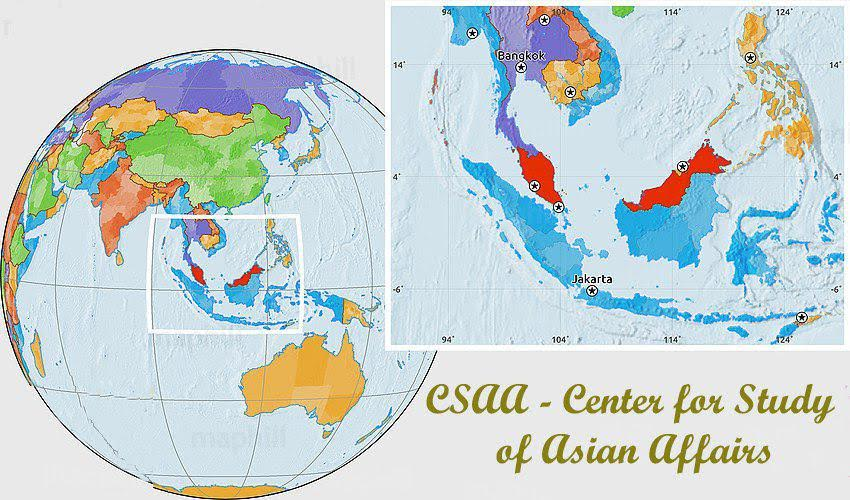
Our Newly established Center for study of Asian Affairs has
branches in Indonesia, Malaysia and Singapore, as well as freelances in some other countries.
For inquires, please contact: newsofasia.info@yahoo.com Mr.Mohd Zarif - Secretary of the Center and administer of the web-site www.newsofasia.net
Polls
 Loading ...