

US spy satellites made India abort nuclear test in 1995. But, “Buddha smiled again in 1998”
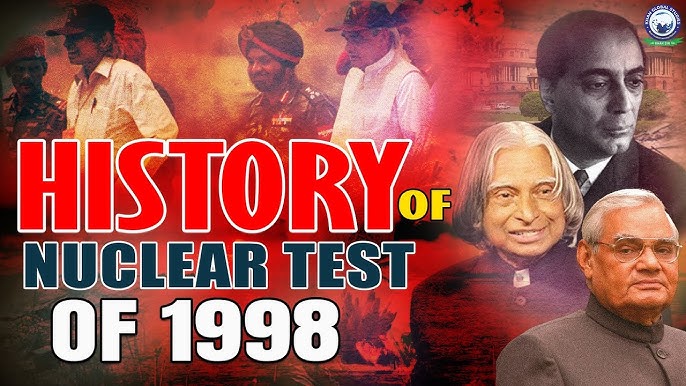
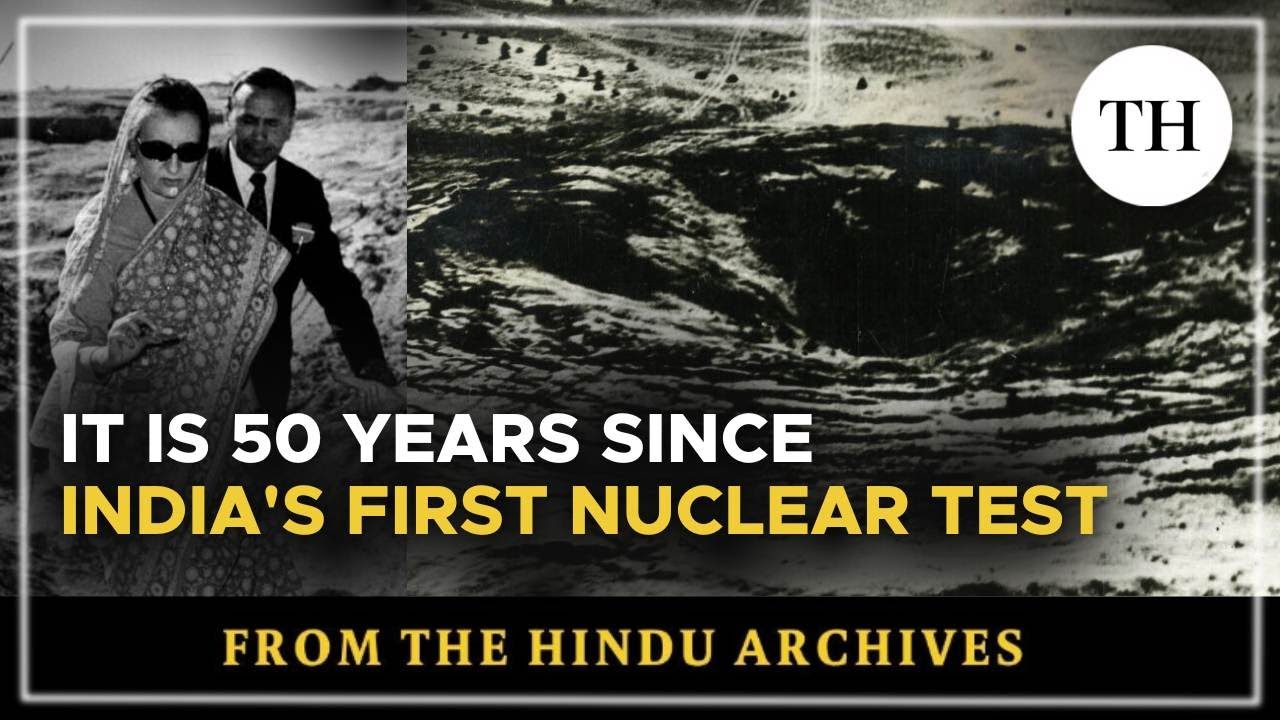
Two decades after the Pokhran-I nuclear test in 1974, India was ready to test again in 1995. But American spy satellites spotted unusual activity at Pokhran before it could. This is why PM PV Narasimha Rao withheld the final clearance, and the move helped pave the way for the successful Pokhran-II tests three years later.
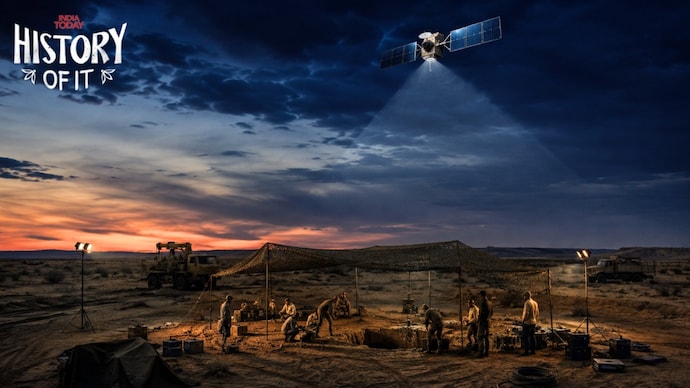
By the winter of 1995, India was on the brink of conducting its second nuclear test, nearly two decades after the Pokhran-I test in 1974. Scientists and armymen had prepared the same Pokhran test range in Rajasthan, and the shafts were ready. PM PV Narasimha Rao had allowed preparations for a possible nuclear test to move forward. But, then, hundreds of kilometres above the Earth, American spy satellites detected unusual activity in the Thar Desert. Within days, Washington confronted New Delhi with what it knew. India had to abort. The nuclear test that was expected to follow Pokhran-I in 1995, didn’t take place.
India had first entered the nuclear club in May 1974 with the Pokhran-I explosion, which was a “peaceful nuclear explosion”. The next tests, however, came only in May 1998 under Prime Minister Atal Bihari Vajpayee. That 24-year gap is often explained through a combination of politics, sanctions and changing governments. But experts on India’s nuclear programme agree that a crucial reason was the failed attempt of late 1995, when preparations were detected by the United States before the devices could be tested.
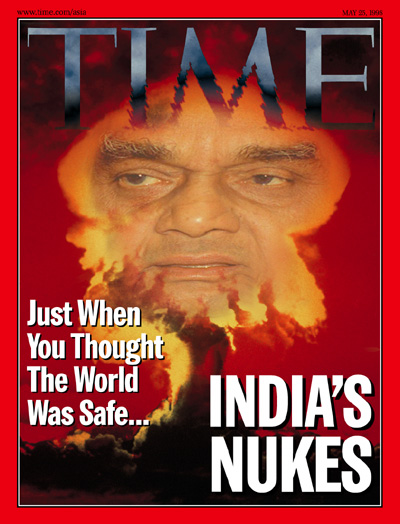
The episode of India’s 1995 bid to carry out nuclear tests and have the weapons, is of renewed relevance today.
Security circles in the Middle East and the West are debating whether Saudi Arabia should eventually gain access to nuclear weapons following the deal between Riyadh and Washington DC. In effect, Saudi Arabia would get access to US civilian nuclear technology to build a domestic nuclear power programme, including reactors, fuel-cycle expertise and American companies such as Westinghouse, according to a Reuters report.
Three decades ago, similar concerns over nuclear proliferation prompted Washington to monitor the atomic programme of India. Back then, the two countries viewed each other with considerable suspicion.
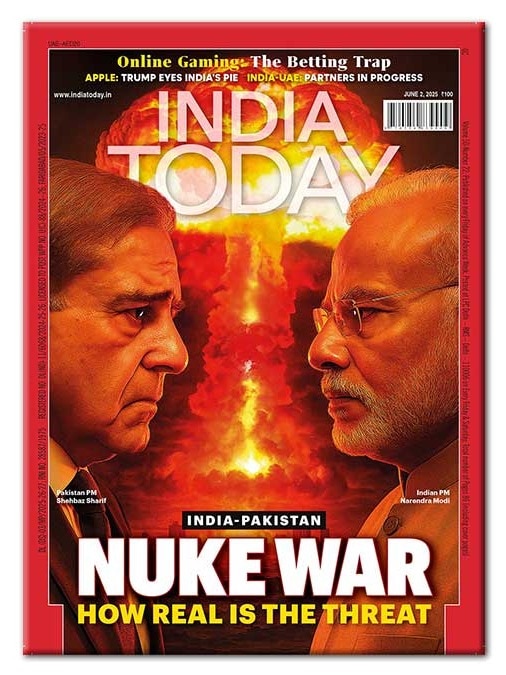
In the 1990s, American reconnaissance satellites photographed India’s preparations for another test at Rajashtan’s Pokhran, which triggered diplomatic intervention and altered the course of India’s nuclear programme.
POKHRAN-I, POKHRAN-II AND THE 24-YEAR GAP
India’s first nuclear explosion took place in May 1974, at Pokhran in Rajasthan. Codenamed “Smiling Buddha”, the test demonstrated that India had mastered the technology needed to build a nuclear explosive device. The government insisted it was a peaceful nuclear explosion rather than a weapons programme, but much of the world viewed it differently.
Sanctions were imposed on India. It attracted tighter restrictions on the export of sensitive nuclear technology to India and contributed to the creation of the Nuclear Suppliers Group (NSG), which sought (and still seeks) to limit nuclear commerce with countries outside the Nuclear Non-Proliferation Treaty (NPT).

By the mid-1990s, however, several factors were changing. Pakistan’s nuclear capability (powered by theft of technology) had advanced considerably, China already possessed a mature arsenal, and negotiations around the then-proposed Comprehensive Nuclear-Test-Ban Treaty (CTBT) threatened to close the window for countries that had not yet completed weapons testing.
That’s when PM PV Narasimha Rao concluded that India might not have another opportunity to validate India’s nuclear weapons capability.
HOW INDIA’S SECRET NUKE PREP AT POKHRAN WAS SPOTTED FROM SPACE
According to India Today journalist, Raj Chengappa’s book, Weapons of Peace, preparations for a nuclear test quietly accelerated in late 1995.
Scientists from the Bhabha Atomic Research Centre (BARC) and Defence Research and Development Organisation (DRDO) (including APJ Abdul Kalam) worked under strict secrecy. Shafts that had earlier been prepared at Pokhran were readied again.
By the mid-1990s, advances in satellite technology enabled strategic sites to be detected from space.
The US possessed advanced electro-optical reconnaissance satellites capable of repeatedly photographing areas of strategic interest. Pokhran had long been under observation because it was the site of the 1974 Smiling Buddha test.
US SATELLITE IMAGES REACHED HIGHEST LEVELS IN DELHI
Chengappa wrote that after the CIA alerted the US Embassy about a possible Indian nuclear test, then US Ambassador Frank Wisner warned senior PMO and Ministry of External Affairs officials that such a move would damage Indo-US ties, trigger economic sanctions, deter investment and likely provoke Pakistan into testing as well.
“The very sharp US ambassador to India, Frank Wisner, had just returned to Delhi after a visit back home to Washington DC — and he came armed with photographs of the preparation underway in Pokhran. Cabling work had been going on — under the garb of fencing. India held that what was going on was routine maintenance work,” wrote Neerja Chowdhury in her book, How Prime Ministers Decide.
Chowdhury, in her book, noted that Wisner showed the satellite photographs to senior Indian officials, including then Cabinet Secretary Naresh Chandra. According to her, Indian officials examined details such as the date and timing on the images to estimate the satellites’ revisit schedule, which later helped Indian scientists better understand how American surveillance operated.
Chengappa added that PM Rao, who had already decided against testing, responded angrily, telling his officials to “Tell his President that I always keep my word”. He noted that despite speculation, PM Rao “never cleared the tests” and the bomb team “never transported the devices to Pokharan” during that period.
HOW FAILED 1995 ATTEMPT HELPED INDIA SUCCEED IN 1998
For PM Narasimha Rao, the timing could hardly have been worse. India had emerged only a few years earlier from its 1991 balance-of-payments crisis. Economic reforms were attracting foreign investment, relations with Western powers were improving, and New Delhi was seeking greater integration with the global economy. A nuclear test risked sanctions at precisely the moment India was rebuilding its economy.
Neerja Chowdhury, in How Prime Ministers Decide, described Rao as a leader who constantly balanced strategic imperatives with political and economic realities. The decision over nuclear testing reflected precisely such competing pressures.
While calling the 1995 decision of PM Rao a retreat would be misleading, the failed attempt, more importantly, became an invaluable lesson.
“The photographs carried on the edges the date and timing of the satellite when it had gone over Pokhran. The two sets of satellite photos indicated the time taken by the American satellite to return to Pokhran. This information was passed onto the scientists. The scientists did their calculations. It was based on the movement of the earth and movement of the satellite. They worked out the time that the satellite would require to come back for its next round. This, they figured out, would be the time they would have to complete the work on the ground,” Neerja Chowdhury wrote in How Prime Ministers Decide.
These operational lessons would prove to be decisive three years later, in 1998, when PM Atal Bihari Vajpayee authorised the tests under Operation Shakti.
On May 11 and May 13, 1998, India conducted five nuclear tests, formally declaring itself a nuclear weapon state. The success surprised intelligence agencies around the world, including the CIA, which later faced criticism for failing to anticipate the explosions.
To wrap the story up, history usually records and remembers the spectacular moments. Like the mushroom cloud over Pokhran in 1974 and the five underground nuclear explosions in 1998. But, the winter of 1995 also deserves and so occupies a quiet place in that history, whose significance is just as profound for India’s nuclear ambition. That winter, India learnt how the world’s most powerful intelligence system worked, watched it, and how to outsmart it.

- Previous Does Ukrainian Clown Cares! US Rep. (R, MI) Huizenga Warns Kyiv – Strikes on CPC “Will Not Be Tolerated”
- Next Israeli minister Amichai Chikli : we should prepare for possible war with Turkey
You may also like...




Random news






About us
Our Newly established Center for study of Asian Affairs has
branches in Indonesia, Malaysia and Singapore, as well as freelances in some other countries.
For inquires, please contact: newsofasia.info@yahoo.com Mr.Mohd Zarif - Secretary of the Center and administer of the web-site www.newsofasia.net
Polls
 Loading ...