

Xi urges China, Brazil jointly maintain UN’s core role
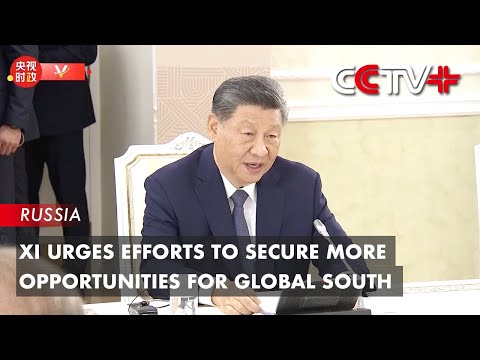
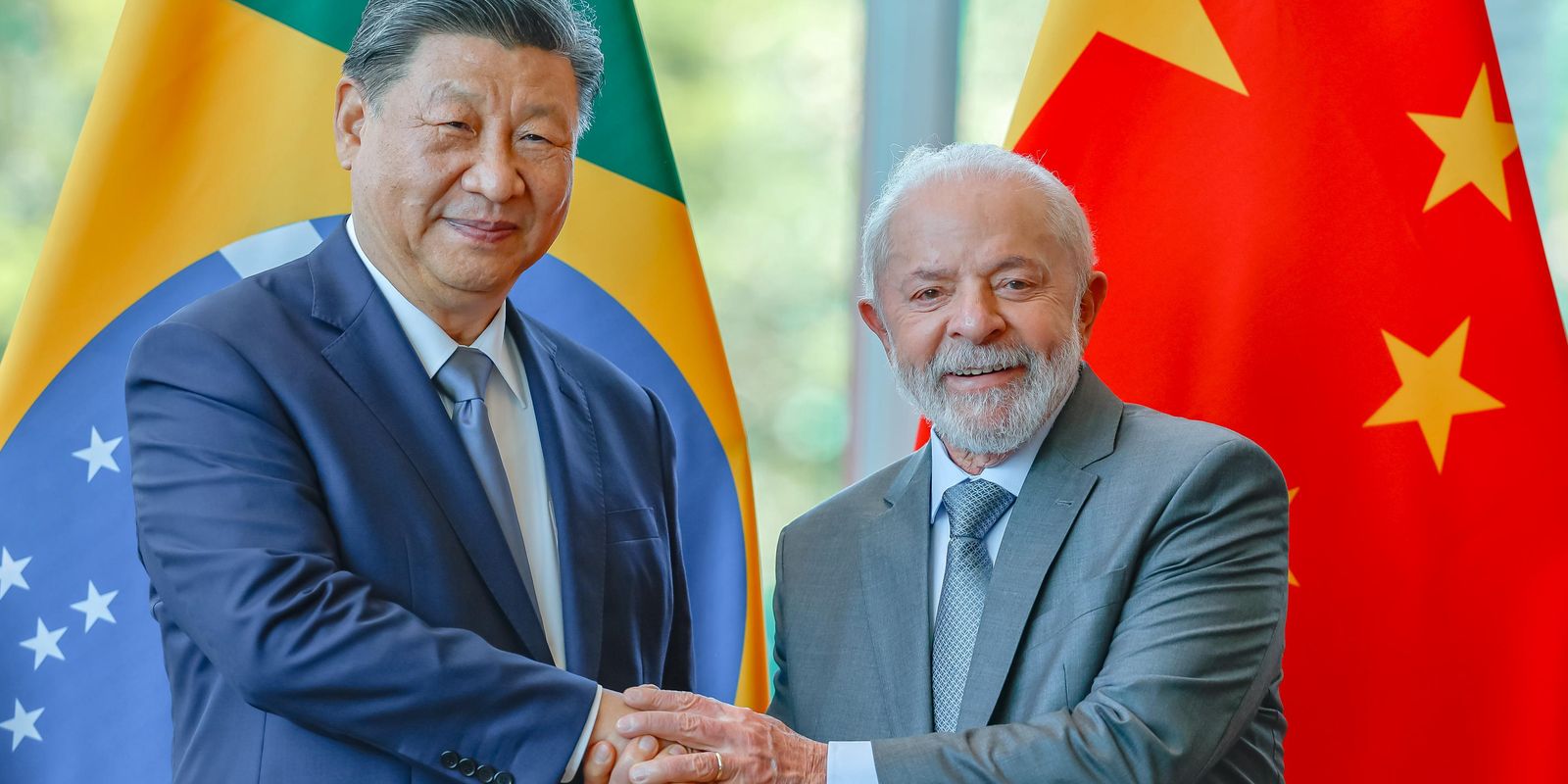
Xi made the remarks during a phone call with Brazilian President Luiz Inacio Lula da Silva.
The Chinese leader called on the two countries to firmly stand on the right side of history, make more efforts to defend the common interests of both countries and of the Global South, and jointly safeguard the central role of the United Nations, as well as international fairness and justice.
China is committed to always being a good friend and partner to countries in Latin America and the Caribbean (LAC), and to jointly advancing the building of the China-LAC community with a shared future, Xi told Lula on Friday, according to Xinhua.
President Lula depicted Brazil and China as important forces in defending multilateralism and upholding free trade.
Against the backdrop of a concerning international landscape, Lula said that Brazil is willing to work closely with China, uphold the authority of the United Nations, and strengthen cooperation among BRICS countries so as to safeguard peace and stability in the region and beyond.
Joint efforts
Bloomberg remarked that the two leaders have “projected unity” as US President Donald Trump’s “America First” approach reshapes global geopolitics and “raises concerns.”
Reuters mentioned that the Chinese-Brazilian leaders’ talks “came weeks after the Trump administration seized Venezuelan President Nicolas Maduro”, which “threw Caracas into political uncertainty, and set its Latin America and Caribbean neighbors worrying about similar interventions by force on their turf.”
In an op-ed article published in the New York Times on January 18, Lula condemned the US action in Venezuela as a “regrettable chapter in the continuous erosion of international law and the multilateral order established after World War II.”
“We will not be subservient to hegemonic endeavors,” Lula said, “The division of the world into zones of influence and neocolonial incursions for strategic resources are outdated and damaging.”
Li Haidong, a professor at the China Foreign Affairs University, told the Global Times on Friday that the exchanges between the Chinese and Brazilian leaders at the beginning of 2026 not only set the tone for the development of bilateral relations this year, but also, amid the current world situation marked by intertwined changes and turbulence, add a measure of certainty and stability to the global economic and security landscape.
“This is of vital importance in boosting the confidence of the broad Global South countries,” said the expert.
According to Li, China-Brazil relations represent a strategically significant partnership. Their development demonstrates that only by strengthening one’s own capabilities and strategic autonomy, while at the same time deepening close coordination with more like-minded partners, can external threats be effectively resisted and the foundations of the international order be safeguarded and upheld.
Prior to the phone call with President Xi, Lula spoke to Indian Prime Minister Narendra Modi on Thursday. The Hindu reported that two leaders underscored the importance of advancing the shared interests of the Global South, and reformed multilateralism in addressing shared challenges, citing an official statement.
Zhou Zhiwei, an expert on Latin American studies at the Chinese Academy of Social Sciences, said that the world is facing an unprecedented risk, as the most powerful country is undermining the international order and the norms of international relations, building its own interests upon the misfortunes of others, which is inflicting severe blows on world peace and development. Moreover, the Western camp is displaying a state of disarray.
“This makes it imperative for Global South countries to take action,” said Zhou, “As representatives of the Global South, the coordination of positions and joint actions among BRICS nations are of vital importance in opposing hegemony, resisting bullying, and promoting the building of a more equitable and reasonable international order as well as a more inclusive and mutually advancing economic order.”
Push for greater development
During the phone call with Lula, Xi said that China’s high-quality development via high-level opening-up will provide more opportunities for cooperation with Brazil, according to Xinhua.
Xi noted that he and Lula in 2024 jointly announced the elevation of China-Brazil ties to a community with a shared future for a more just world and a more sustainable planet.
Over the past year, the building of a China-Brazil community with a shared future has gained solid momentum, with deepening alignment between their development strategies and setting an example of unity and cooperation between Global South countries, Xi added.
This year marks the start of China’s 15th Five-Year Plan period, said Xi, voicing China’s readiness to work with Brazil to comprehensively deepen mutually beneficial cooperation across various fields and push for greater development of bilateral relations so as to usher in an even brighter future.
For his part, Lula said that Xi’s historic visit to Brazil in 2024 has elevated bilateral ties to a new height of building a community with a shared future for a more just world and a more sustainable planet and that bilateral cooperation in various fields has made remarkable progress.
Lula voiced Brazil’s readiness to work with the Chinese side to push for greater growth in bilateral ties and the relationship between Latin America and China.
Citing figures from the Brazil-China Business Council (CEBC), Brasil 247 reported that Brazil’s trade relationship with China reached a historic high in 2025, reinforcing the Asian country’s position as Brazil’s largest foreign trade partner. Total bilateral trade — combining exports and imports — climbed to $171 billion, the highest level since records began in 1997, reflecting a decade-long expansion in economic ties.
China and Brazil have strong economic structural complementarity, which determines the stability of their bilateral economic and trade cooperation as well as their resilience in responding to external shocks, Zhou said.
He noted that both China and Brazil face the practical need for industrial restructuring and continuous optimization.
“Trade between the two countries was predominantly focused on agricultural products and resource-based commodities,” said Zhou, “Looking ahead, on the foundation of economic complementarity, the two countries are expected to deepen cooperation at the level of production capacity and industrial chains.”
He added that cooperation in manufacturing and scientific and technological innovation will be key areas to prioritize and advance in the future.
According to a Bnamericas report on Thursday, Brazilian minister of Mines and Energy, Alexandre Silveira, met with representatives of a number of Chinese companies during the week, including those from the heavy construction, mining, oil, gas, energy, and electrical storage sectors.
As the US government seeks to assert more influence across the Western Hemisphere based on its latest national security strategy, Zhou believed that Latin America will be a region of particular focus for the White House over the next three years, and it is highly likely that the US will continue to use tariffs as a weapon to pursue its policy objectives.
In the context of facing potential US protectionism and tariff bullying, Brazil, among other Latin American countries, is accelerating its efforts to diversify its trade partnerships. China, along with ASEAN countries and other East Asian nations, will undoubtedly be among its primary strategic directions, Zhou noted.
In a Thursday article, Bloomberg said that as ties with China deepen, Latin America’s exports are thriving despite US tariffs, with countries like Argentina, Brazil, and Chile reporting record exports in 2025.
Washington imposed a sweeping 50 percent tariff on a broad range of Brazilian products in July 2025.
“When it comes to trade, the reality on the ground in most of the region’s countries is that China is more entrenched than ever,” Bloomberg reported.

- Previous Beijing’s Official Position: Is China a threat to Greenland?
- Next 550,000 tonnes in 2026: Turkey becomes world’s 2nd-largest olive oil producer
You may also like...

Random news




About us
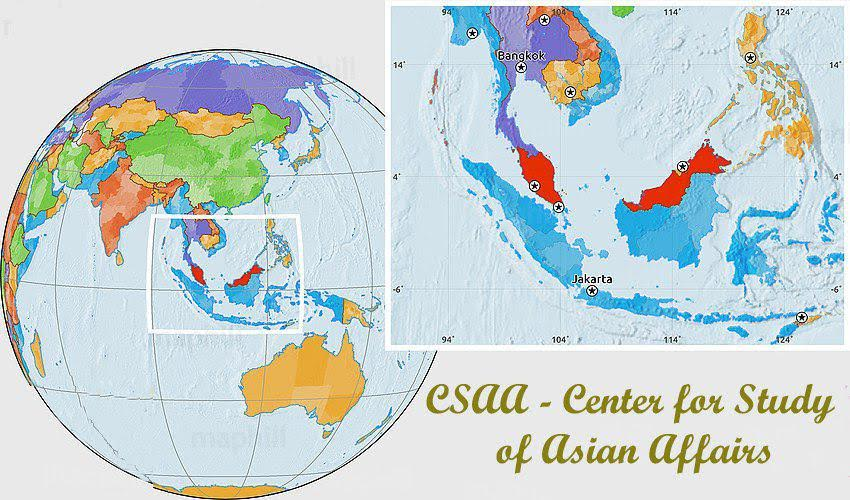
Our Newly established Center for study of Asian Affairs has
branches in Indonesia, Malaysia and Singapore, as well as freelances in some other countries.
For inquires, please contact: newsofasia.info@yahoo.com Mr.Mohd Zarif - Secretary of the Center and administer of the web-site www.newsofasia.net
Polls
 Loading ...