

To avoid dependence from China: After Pacific Ocean’s depth, now Japan to dig Africa for rare earth

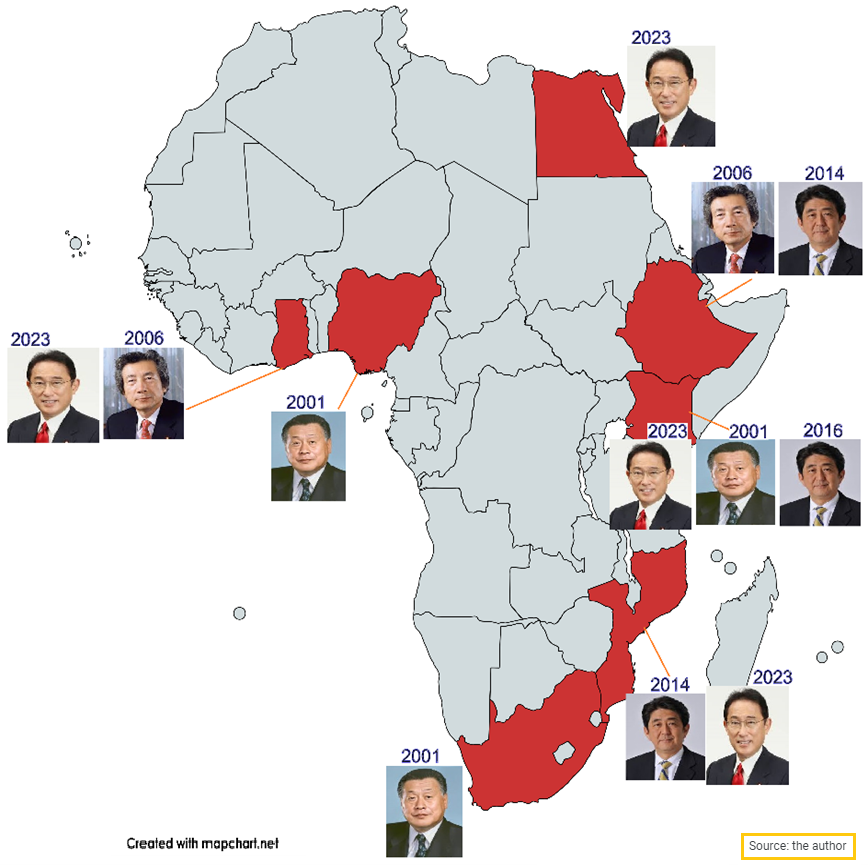
Japan is moving forward with plans to develop mines for rare earths in Africa as China tightens its export controls on the critical minerals, government sources said.
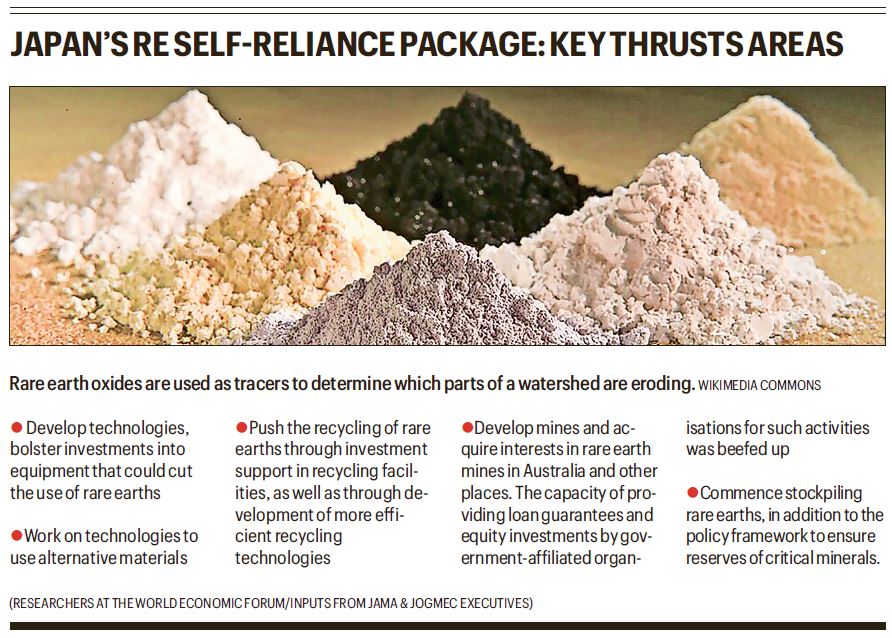
The Japan Organization for Metals and Energy Security (JOGMEC) has confirmed sufficient reserves of dysprosium and terbium in Namibia in southern Africa in a survey conducted since around 2020.
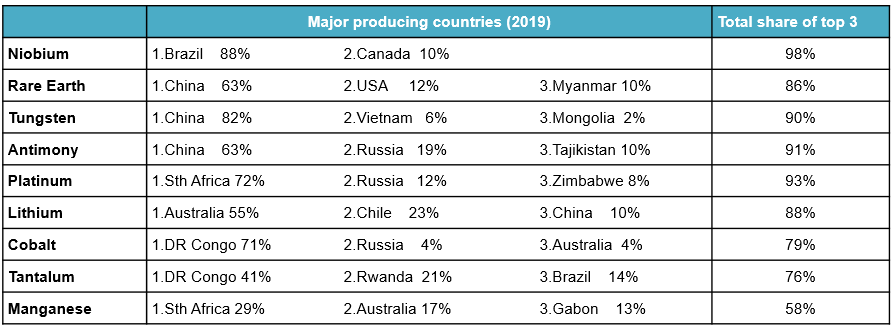
The two elements, which retain magnetic properties even at high temperatures, are considered particularly scarce even among the rare earths.

They are used in materials for high‑performance electric vehicle motors, among other applications.
While China dominates their global production, the Japanese government aims to eliminate dependence on the country by the end of 2028.
If projects in Africa get on track, Japan is expected to secure enough supply to meet domestic demand when combined with output by Australian and French companies in which JOGMEC and other entities have invested, the sources said.
Dysprosium and terbium are included on China’s export control list for dual-use products with both military and civilian applications.
They are believed to be among the items subject to export restrictions against Japan that China has imposed to protest Prime Minister Sanae Takaichi’s Diet remarks on a contingency involving Taiwan.
Japan plans to develop multiple mines in Africa. A bidding process is already under way to select companies that will undertake mine development.
The construction of refining facilities to remove impurities after ore extraction is also being considered, the sources said.

However, the processes of mining and refining rare earths generate hazardous substances, including radioactive waste.
There remain many challenges to ensuring a stable supply, such as the cost burden of environmental protection measures.
Rare earths are indispensable to a wide range of industries, from automobiles to consumer electronics. The government has long sought to diversify their sources of supply.

- Previous Japan to install Yonaguni missiles near Taiwan
- Next 600 ‘hina’ dolls on display on the stone steps of Akizuki Castle
You may also like...



Random news





About us
Our Newly established Center for study of Asian Affairs has
branches in Indonesia, Malaysia and Singapore, as well as freelances in some other countries.
For inquires, please contact: newsofasia.info@yahoo.com Mr.Mohd Zarif - Secretary of the Center and administer of the web-site www.newsofasia.net
Polls
 Loading ...