

Berdimuhamedov’s Viist to Beijing: Turkmens to increase gas export to China
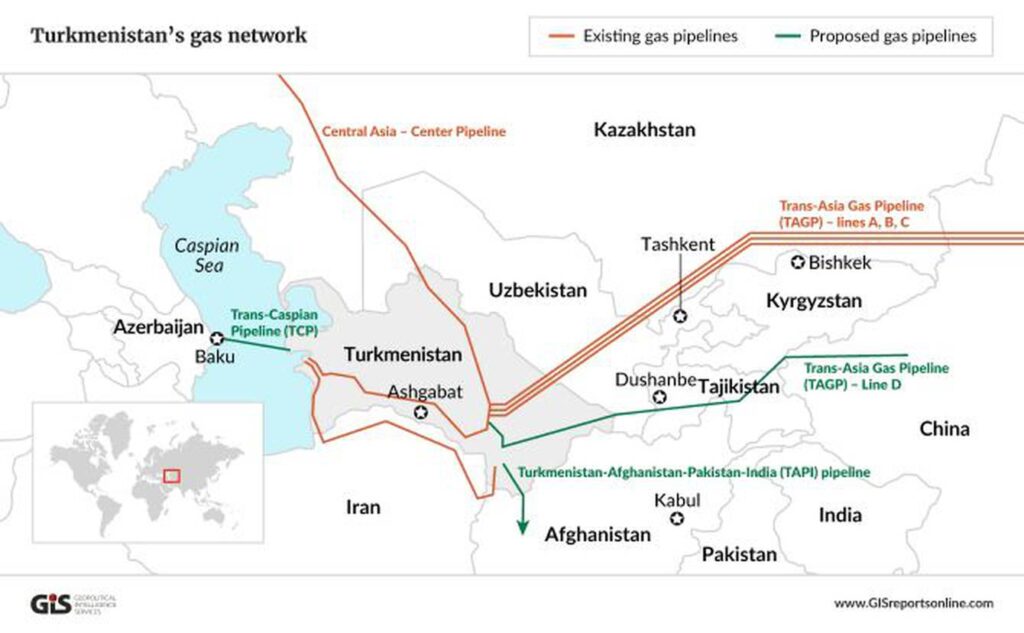
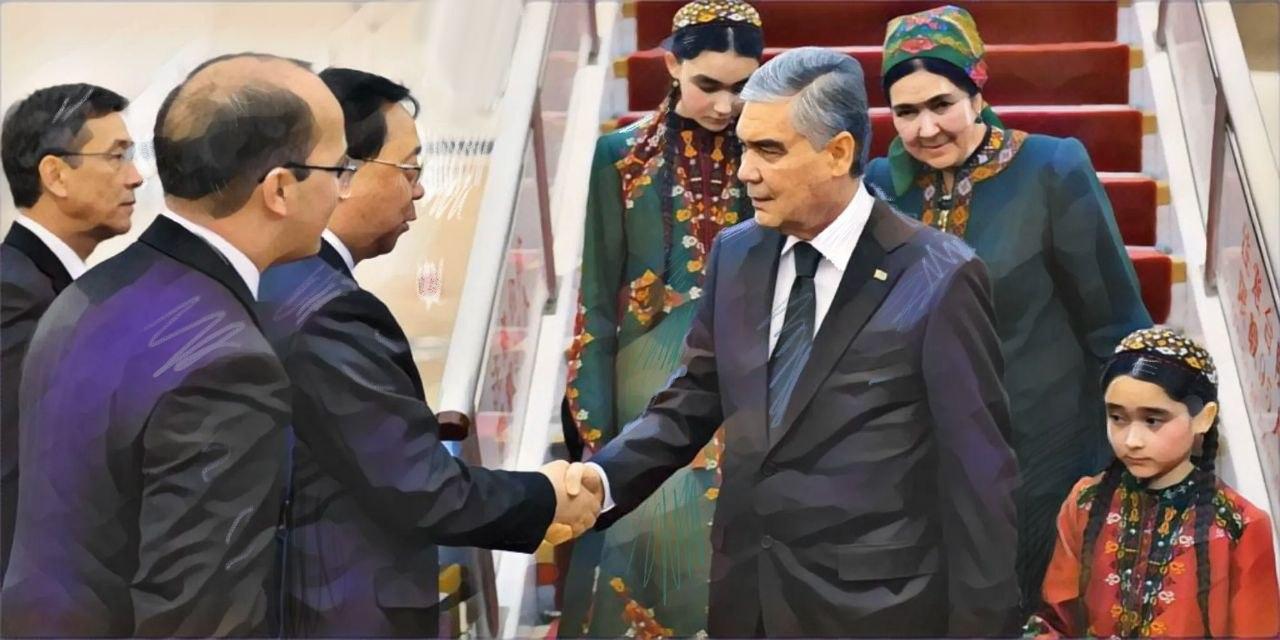
Image: TCA, Aleksandr Potolitsyn
The visit by Turkmenistan’s Gurbanguly Berdimuhamedov, Chairman of the Halk Maslahaty, to Beijing on March 17–19 did more than routinely reaffirm Turkmenistan’s ties with China. It opened onto a wider issue in Central Asian energy, not simply about continuing the cooperation between Ashgabat and Beijing, but about how the renewal of that cooperation would affect the Central Asia–wide gas production and transmission system that increasingly intersects with China’s wider infrastructural and industrial presence in the region.
No dramatic announcement of any new export route highlighted that wider significance, which emerged from a narrower sequence of policy initiatives that carried broader implications. Xi Jinping used the visit to restate the importance of cooperation in natural gas while widening the agenda to include connectivity, clean energy, artificial intelligence, and the digital economy. Within days of the meeting, Turkmenistan moved ahead on a new phase of development at Galkynysh with CNPC. These events signal a further deepening Chinese role in the upstream and systemic organization of Central Asian energy.
What Beijing Actually Signaled
Beijing’s own language about the matter was direct. In the official Xinhua account of Xi’s March 18 meeting with Berdimuhamedov, China called for the two sides to “expand the scale of cooperation in the natural gas sector” and to raise trade and investment levels. Such language confirms that gas remains at the center of the relationship even as the bilateral agenda widens. For all the parallel discussions of digitalization, transport links, and non-resource cooperation, the political weight of Sino-Turkmen ties still rests primarily on energy.
The Chinese side, however, did not treat gas as a self-contained file. Gas remains the primary, but it is increasingly embedded within a wider pattern of regional engagement comprising energy, transport, and adjacent economic sectors. The same Beijing readout on the meeting with Berdimuhamedov placed connectivity, artificial intelligence, the digital economy, and clean energy alongside natural gas under a broader heading of expanded cooperation. This framing removes gas from its status as a stand-alone commodity and places it within a larger operational perspective.
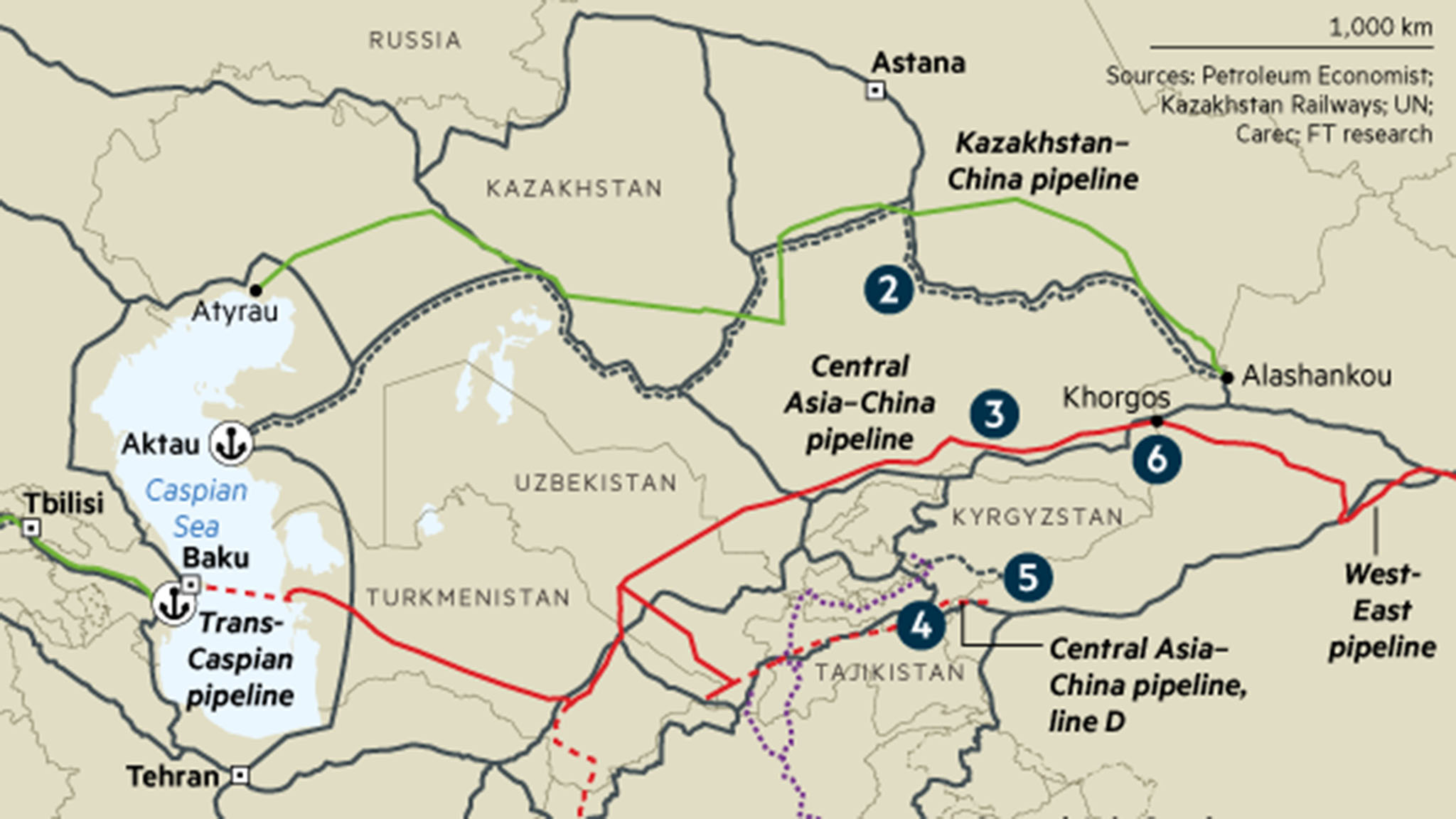
Neither the main Chinese readout nor the public official Turkmen framing of the visit highlighted Line D of the Central Asia–China gas pipeline system. Line D has long stood as the clearest indicator of a future expansion of Turkmen gas exports through Tajikistan and Kyrgyzstan into China. Had the visit produced a concrete breakthrough on that front, the official language would have been the obvious place to signal it. The practical movement after the trip lay elsewhere.
Why It Matters Beyond Turkmenistan
The focus lay at Galkynysh. In the immediate wake of the visit, President Serdar Berdimuhamedov authorized Turkmengaz to conclude a turnkey contract with CNPC Amudarya Petroleum Company Ltd. for Phase 4 of the Galkynysh gas field. The official Turkmen account linked the decision to meetings held during Gurbanguly Berdimuhamedov’s visit to China and specified facilities capable of processing 10 billion cubic meters of marketable gas per year. TCA reported the same move as a new phase of CNPC-backed field development. So far as energy is concerned, the operative result of the visit was not a new pipeline announcement but new upstream capacity.
Yet the move has a wider Central Asian significance, because Uzbekistan and Kazakhstan are part of the existing China-bound gas architecture. CNPC’s own description of Line C identifies supply not only from Turkmenistan, but also from Uzbekistan and Kazakhstan. Any serious increase in Turkmen upstream capacity is therefore more than a bilateral supply matter between Ashgabat and Beijing. It bears on a system in which other Central Asian states are also contracted participants.
The significance of Uzbekistan and Kazakhstan becomes sharper when recent supply realities are taken into account. TCA reported in December that both countries have struggled to meet their own export commitments to China, while Russian gas has been used domestically to ease the resulting pressure on internal balances. Kazakhstan’s gas exports to China were estimated at about 5 bcm in 2025, still only half of its nominal 10 bcm annual commitment. In this context, additional Turkmen upstream capacity holds the potential to rearrange the pipeline system where Uzbekistan and Kazakhstan are already under strain, and thus the regional gas order.
What It Reveals About China’s Regional Role
The broader setting reinforces that reading. Around the time of Berdimuhamedov’s visit, Chinese firms were also advancing logistics projects in Uzbekistan and Kazakhstan, including a major multimodal hub near Tashkent and an agro-logistics center in Kazakhstan. These initiatives did not follow from the visit itself, but they show China expanding its regional role at the same time in gas, transport, and industrial logistics. That wider activity gives the bilateral energy relationship with Turkmenistan a broader regional meaning.
Kazakhstan’s search for outside capital in critical minerals and clean energy belongs to the same pattern. Together, these developments show that Turkmen gas ties with China no longer stand apart from other regional dynamics. They are becoming part of a wider structure in which energy links, transport corridors, and industrial investment increasingly develop alongside one another.
Kyrgyzstan and Tajikistan occupy a different place in this picture from Kazakhstan and Uzbekistan. Their importance lies less in the present than in a possible future tied to Line D. Caution remains necessary here. Construction on Line D has been suspended for years, and Tajikistan’s energy minister said in February 2024 that pricing disagreements among the participating states were still blocking progress. As of Berdimuhamedov’s March 2026 visit to Beijing, there was still no official Chinese or Turkmen indication that this had changed. Kyrgyzstan and Tajikistan, therefore, remain relevant to the future shape of the system, but not to any immediate operational consequence of the visit.
From Bilateral Gas Ties to a Regional System
The takeaway from this constellation of events is that the visit signaled a renewed Chinese commitment to gas-sector cooperation with Turkmenistan, with knock-on effects for the rest of Central Asia, even if it did not signify a restart of Line D. The almost immediate move to advance Galkynysh further, likely for reinforcement of China’s access to Turkmen supply, by itself makes the visit regionally significant, given how the China-bound gas system links Turkmenistan to other Central Asian producers and participants through the existing regional gas system.
The implications differ for each country in the region. Turkmenistan remains the anchor supplier to China. Uzbekistan and Kazakhstan are already embedded in the functioning export architecture and have struggled to meet their own commitments within it. Kyrgyzstan and Tajikistan come into play only if the suspended Line D construction is revived. The larger point is that China’s role in Central Asia is becoming more tightly connected across several domains.
Gas remains the base layer for inter-industrial cooperation, but logistics, infrastructure, clean energy, and digital-economic cooperation increasingly accompany it. Berdimuhamedov’s Beijing visit has brought this pattern more clearly into view. It is not merely a bilateral diplomatic episode, but a marker of how Central Asian energy is being organized within a broader regional framework shaped in growing measure by China.


- Previous Trump threatens to ‘blow up’ all desalination plants in Iran: Tehran says to do the same with Gulf state’s ones
- Next It Started: China-Kyrgyzstan-Uzbekistan Railway Enters Active Construction Phase
You may also like...




Random news


About us
Our Newly established Center for study of Asian Affairs has
branches in Indonesia, Malaysia and Singapore, as well as freelances in some other countries.
For inquires, please contact: newsofasia.info@yahoo.com Mr.Mohd Zarif - Secretary of the Center and administer of the web-site www.newsofasia.net
Polls
 Loading ...