

I have a passport, why don’t I still feel sufficiently Indian?

Perhaps that is the paradox of citizenship in current India: the more documents one gathers to prove belonging, the farther one drifts from the feeling of truly belonging.
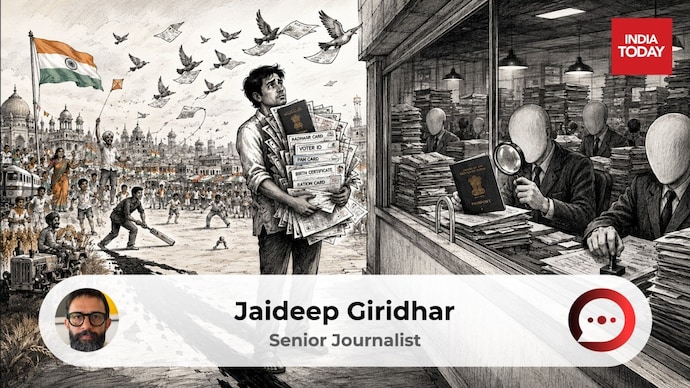
in his excellently-argued piece on citizenship, which appeared on this website, BV Rao posits that the contours of a birthright Indian, as drawn by the state, are pencilled with the graphite of metrics contained within a sheaf of documents: passports, voter IDs, Aadhaar cards. He contends that, despite being in possession of each one of these records for a good part of his life, the notion of citizenship is just that, an inchoate idea that may be marvelled at as legal nuance, but cannot be held in one hand, with the other planted on his chest.
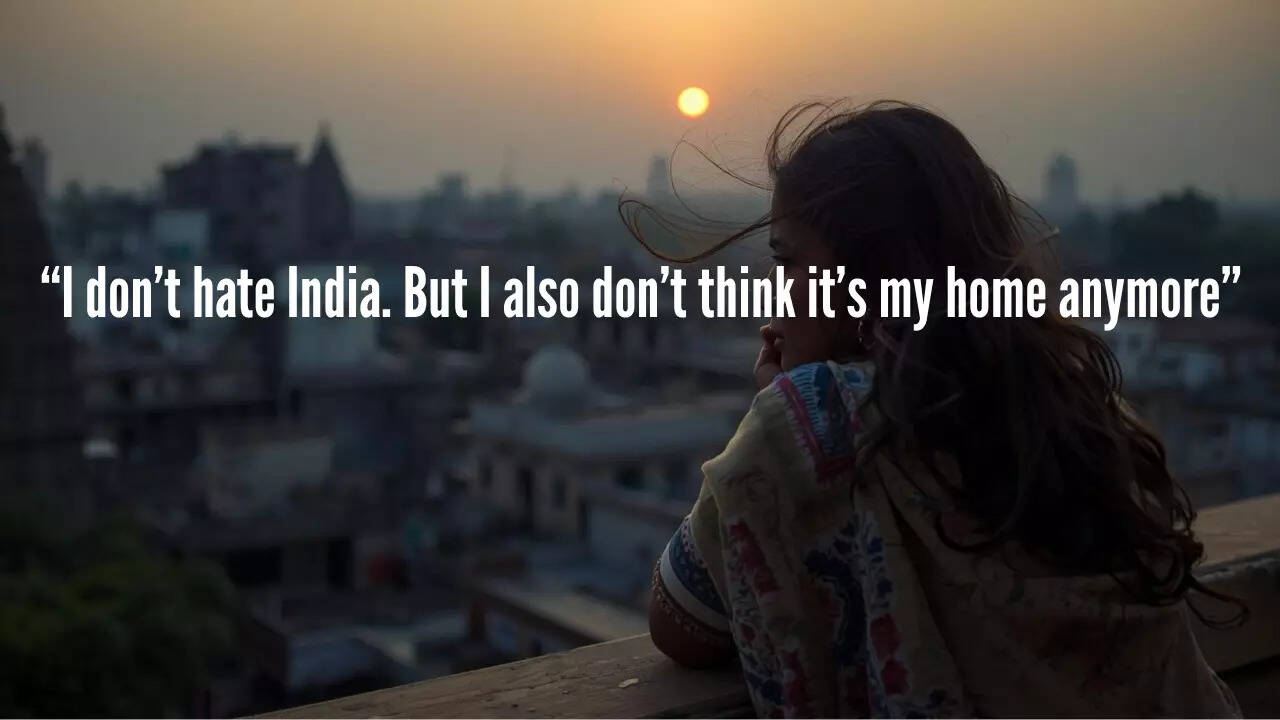
His premise is that the hunt for Indian citizenship with a quiver-full of documents approximates chasing the horizon. This argument offers a suitable platform from which to launch an enquiry into aspects of citizenship that might not be contained within state-issued credentials. It is not so much an analysis of what may or may not pass muster as documentary evidence of citizenship, but the questions that shape the philosophical notion of nationhood.
These are the questions I have:
What does citizenship mean if I stripped away constitutional protections and documentary evidence? As a thought experiment, if I were told that I had none of the papers listed in Rao’s piece, and all else being equal, would I still think of myself as a citizen of India?
Conversely, if I did buy into the idea that records drawn up by the state and the possession of such certification defined me as Indian, would I hark back to these documents each time I considered the idea of citizenship? Does my conception of nationhood exist outside the borders of paperwork?
What tethers me to this country?
Do I think of citizenship as a noun or a verb?
What do I owe this collective that I think of as nation? Does this idea of me being a part of a “we” mean there is a “they”, and how do I look at “them” in this context?
And finally, is my idea of being Indian a settled concept?
The answers, I suspect, may be found in two bodies of knowledge: the constitution and the manner in which it was framed, and my own experience of having lived in this country for 51 years.
I’ll start with a story.
I began my career as a journalist in 1997, covering the crime beat for the Asian Age in Bangalore. A few years into the job, my editor asked me to switch to writing about defence research and aviation. One of my main areas of concern was the Light Combat Aircraft, which was in its last stages of development at the Aeronautical Development Agency-Hindustan Aeronautics Limited facilities in the city. The LCA, now designated Tejas, first took flight from the HAL airport, as a technology demonstrator, on January 4, 2001. I didn’t have the credentials necessary to stand among the airmen, scientists and journalists gathered along the tarmac as they watched the aircraft take off. Instead, I knew the roads of Bangalore well: there was one that skirted the western wall of the airport, directly beneath the flight path of the LCA. I positioned myself on the hood of a car an hour before it taxied onto the runway. Wg Cdr Rajiv Kotiyal pointed the fighter’s nose into the winter sky and its delta wing obscured my line of vision for a brief second, during which I felt elated, proud, a sense of kinship and, perhaps vaguely, Indian.
)
By now, as an adult with a job, I had more than half the documents Rao lists in his piece, folded into a file back home. But I didn’t have to think of them to feel what I was feeling. It was an un-tethering from paperwork and the meshing with the idea of jus soli as an abstraction. This was an expressionist manifestation of nationhood, not a figurative one.
This segues into the examination of citizenship as a verb rather than a noun. What do I have to do to feel Indian? Again, going back to Rao’s piece can be instructive. I have paid my taxes, cast my vote, abided by the law, given over my biometrics. I have done all the things the state requires by way of documentary proof.
What more should I do? Is there more I can do? The answer lies in lived experience, as described previously, and in the document to which I refer further back in this essay: the Constitution. But to extract anything germane to my argument, it’s essential that we go outside of the confines of Articles 5 to 11 or the Citizenship Act passed five years after the Constitution became a reality. It’s necessary to look at changes the 42nd Amendment wrought on this document in 1976, by way of the 11 fundamental duties described in Article 51A.
And this is where we step out from under the umbrella of clear, measurable actions into the fog of questions (and insufficient answers) that Rao’s piece hints at. Unfortunately, the only succour we can find in 51A is that the questions are finite, their meaning, and consequently, the solutions that might issue, are not so. The last two of the questions I asked in this essay provide the scaffolding for how this may be understood, and this must be done with two frames of reference in mind: the state and the individual. Let’s take three of the duties described in 51A: “To cherish and follow the noble ideals that inspired the national struggle for freedom”, “To value and preserve the rich heritage of the country’s composite culture” and “To develop the scientific temper, humanism, and the spirit of inquiry and reform.”

The actions prescribed here, which transform the noun into a verb, present a fundamental problem, a friction that I had stowed away behind all the baggage I have accumulated as a journalist running newsrooms. It is the notion that what I believe are the duties that qualify me as a citizen of this country might not be consonant with what the state or even a large section of the collective to which I belong holds as justifiable actions. That the ideals I consider noble, my understanding of a composite culture and definition of inquiry and reform, aren’t, in fact, entirely shared either by the state which deigns to anoint me with citizenship or the chunk of society that grants the state this power.
This is not to say I don’t have at least some semblance of an answer. I do; it stems from the variance in the state’s, society’s, and my definition of “we”. And it is, unfortunately (and inevitably), one tempered by a journalist’s cynicism. It is contained within the inverse ratio between my idea of citizenship and the quantity of documentary evidence I have gathered to prove it: the more paperwork I have the less sufficiently Indian I feel.

- Previous Central Asia’s New Corridors Are More Than a Transit Race
- Next Erdoğan: “From the Conquest of Istanbul to the Conquest of Hearts”
You may also like...






Random news








About us
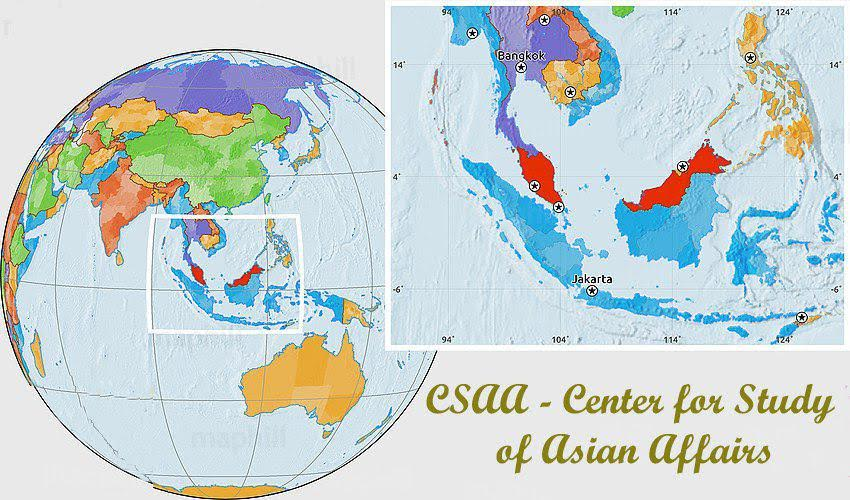
Our Newly established Center for study of Asian Affairs has
branches in Indonesia, Malaysia and Singapore, as well as freelances in some other countries.
For inquires, please contact: newsofasia.info@yahoo.com Mr.Mohd Zarif - Secretary of the Center and administer of the web-site www.newsofasia.net
Polls
 Loading ...