

Asahi Shimbun: China property crisis weighs on consumers, local governments
By YURIKO SUZUKI/ Correspondent
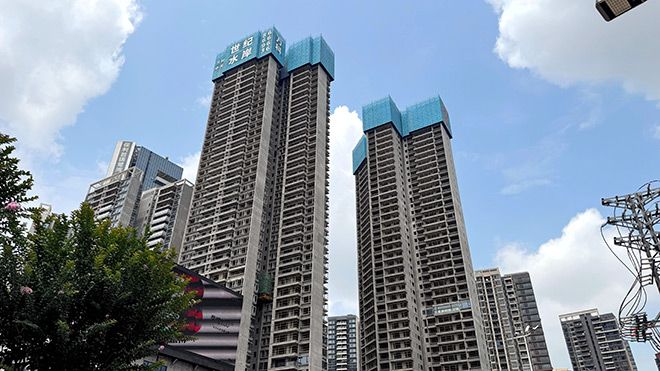 Apartment complexes built by China Vanke and other companies on sale in Dongguan, Guangdong province, in 2024 (Asahi Shimbun file photo)
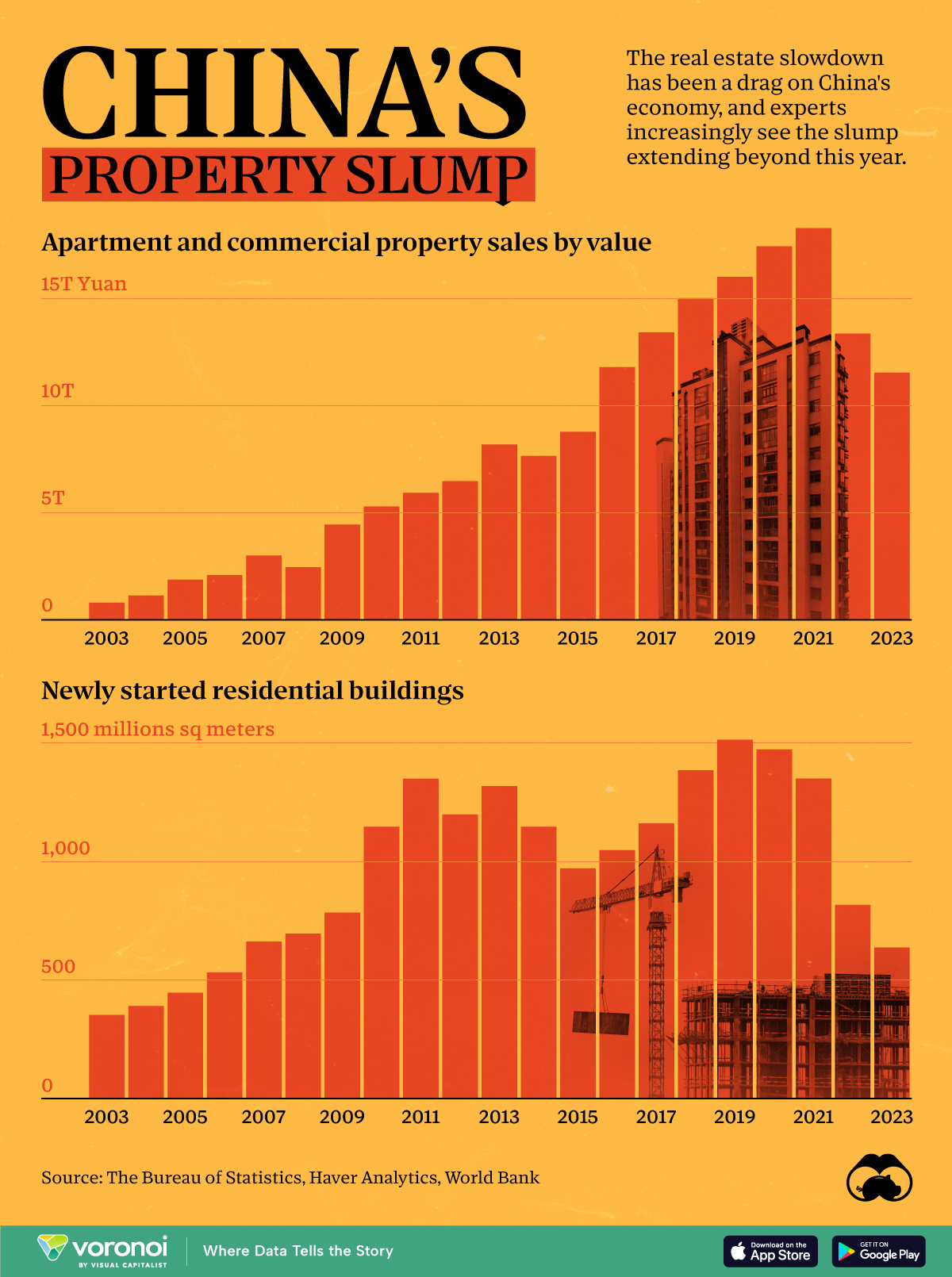
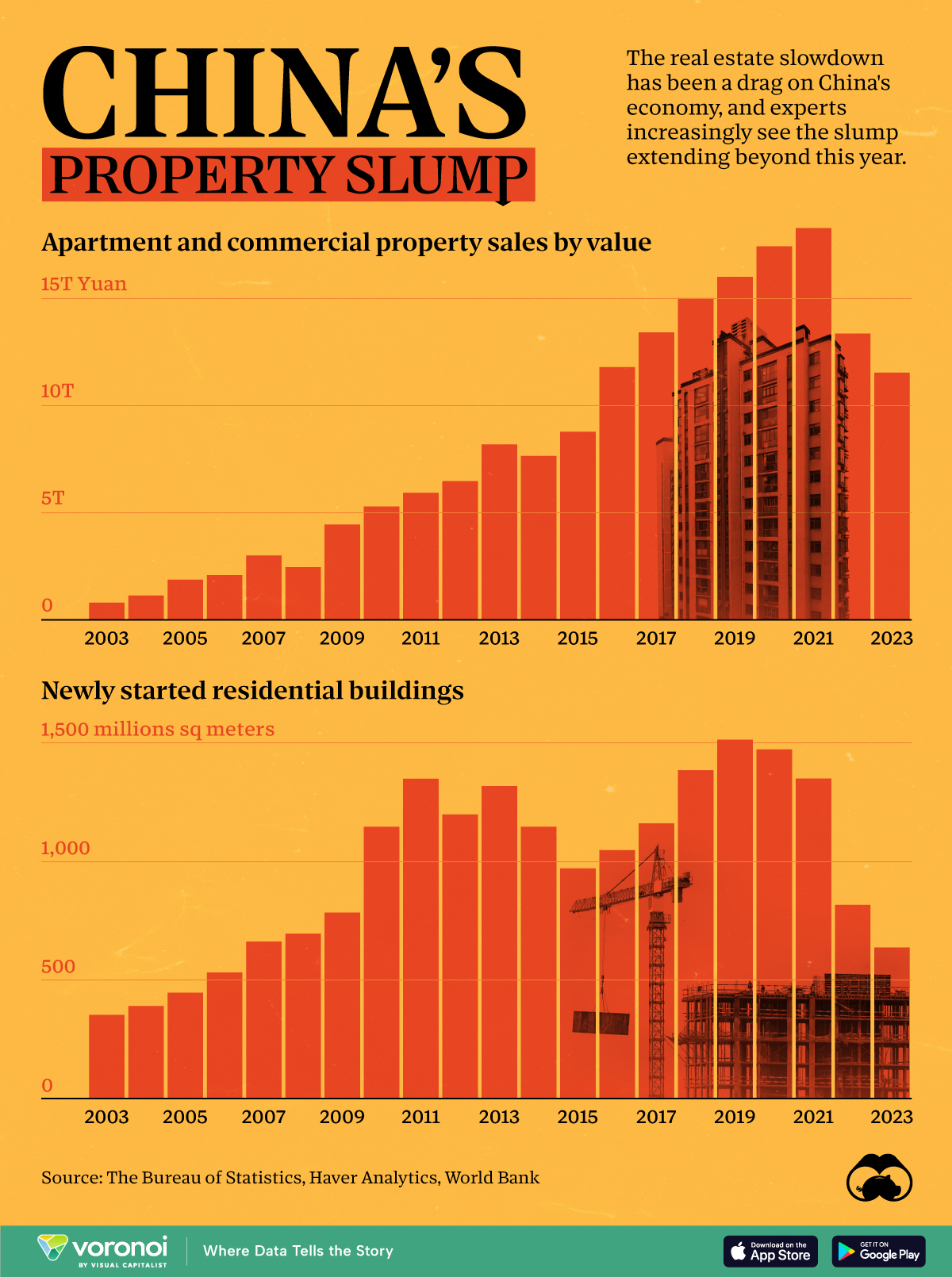
BEIJING—China’s roughly five-year property slump has squeezed local government finances and depressed consumption, acting as a drag on the nation’s broader economy.
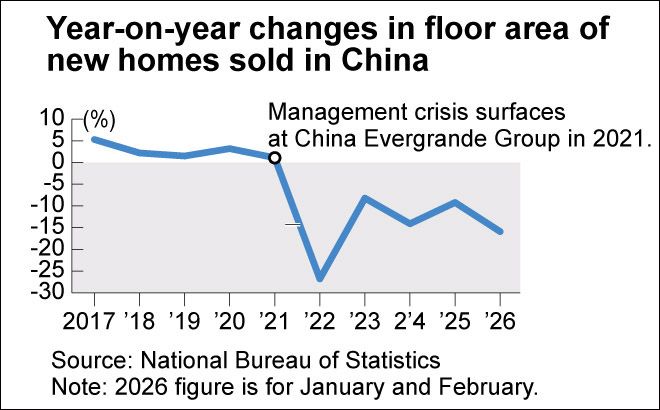
The floor area of newly built homes sold in January and February fell 15.9 percent from the same period last year, according to the National Bureau of Statistics.
Steep year-on-year declines continued for four consecutive years starting in 2022, a year after management crisis came to light at real estate giant China Evergrande Group.
The decline has widened since the start of this year from the 9.2-percent drop for all of 2025.
In 2023, Country Garden, the industry leader at the time, fell into default.
Even China Vanke, long regarded as a model performer, was found to be facing a cash crunch at the end of last year, underscoring the industry’s persistent woes.
Housing inventories are piling up.
Naoto Saito at the Daiwa Institute of Research estimates that total unsold floor space reached 4.5 billion square meters by December, including potential stock from projects still under construction.
The amount is more than six times the annual sales volume for last year.
Government countermeasures have had limited impact.
The government has promoted purchases of unsold housing stock by local governments and reduced mortgage interest rates.
However, it has remained cautious about pursuing fundamental corporate restructuring or industry consolidation through court-led liquidations and other processes.
The authorities are wary of the risk of triggering social unrest with layoffs, debt write-offs and other measures that would involve significant pain.
Local governments and other entities sometimes provide liquidity support to keep struggling businesses, or so-called zombie companies, afloat.
Saito said consumers cannot tell which developers are safe to buy from, and that is further chilling demand.
Local governments have long relied heavily on revenue from selling land-use rights to real estate companies as land is state-owned.
Still, revenue from land-use rights sales during the first two months of this year dropped 25.2 percent from a year earlier, according to the finance ministry.
It represents a 70-percent plunge from the January-February period of 2021, when such receipts peaked.
The property slump has also prolonged weak consumer demand.
In China, housing accounts for 60 to 80 percent of household assets, a significantly higher share than in advanced economies.
Consumers are tightening their purse strings as the collapse of housing prices, something long believed to only rise, has eroded household wealth.
Total retail sales, a key gauge of consumption, slowed to 3.7 percent in 2025 from the annual growth of 8 percent or more before the novel coronavirus pandemic.
Growth remained sluggish at 2.8 percent during the first two months of this year.
An article published in January in Qiushi, the theoretical journal of the Communist Party of China, called for rolling out sufficient policy measures in one go, rather than piecemeal, to shorten the adjustment period of the property market as much as possible.
However, there was no mention of sweeping concrete measures during the National People’s Congress, or parliament, held in March, leaving a recovery in the real estate market out of sight.

- Previous US-Iran talks in Islamabad failed. Explained in 5 points
- Next Iran war: Japan struggles to halt fears over war-related price hikes, shortages
You may also like...





Random news











About us
Our Newly established Center for study of Asian Affairs has
branches in Indonesia, Malaysia and Singapore, as well as freelances in some other countries.
For inquires, please contact: newsofasia.info@yahoo.com Mr.Mohd Zarif - Secretary of the Center and administer of the web-site www.newsofasia.net
Polls
 Loading ...