

60% world caviar comes from China: China’s farmed caviar eases pressure on wild sturgeon

Data shows that 60% of the world’s caviar comes from China, with Quzhou in Zhejiang Province and Ya’an in Sichuan Province, the hometown of giant pandas, being the major production areas.
60% of the world’s caviar comes from China
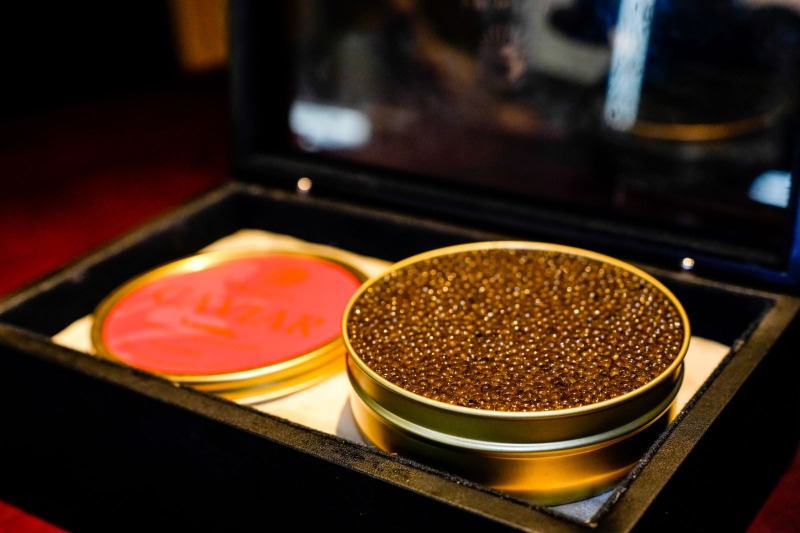
Why has China become the main production area for caviar? Let’s start with the high price of caviar.
In the past, the raw materials for caviar mainly came from wild sturgeon near the Caspian Sea. Subsequently, when wild sturgeon fishing was banned, the opportunity arose for the sturgeon farming industry.
However, sturgeon are very sensitive to their living environment and water quality, thus the standards for artificial farming are very stringent.
In addition, the cultivation cycle of sturgeon that can produce eggs is as long as 8 to 15 years, which keeps caviar prices high.
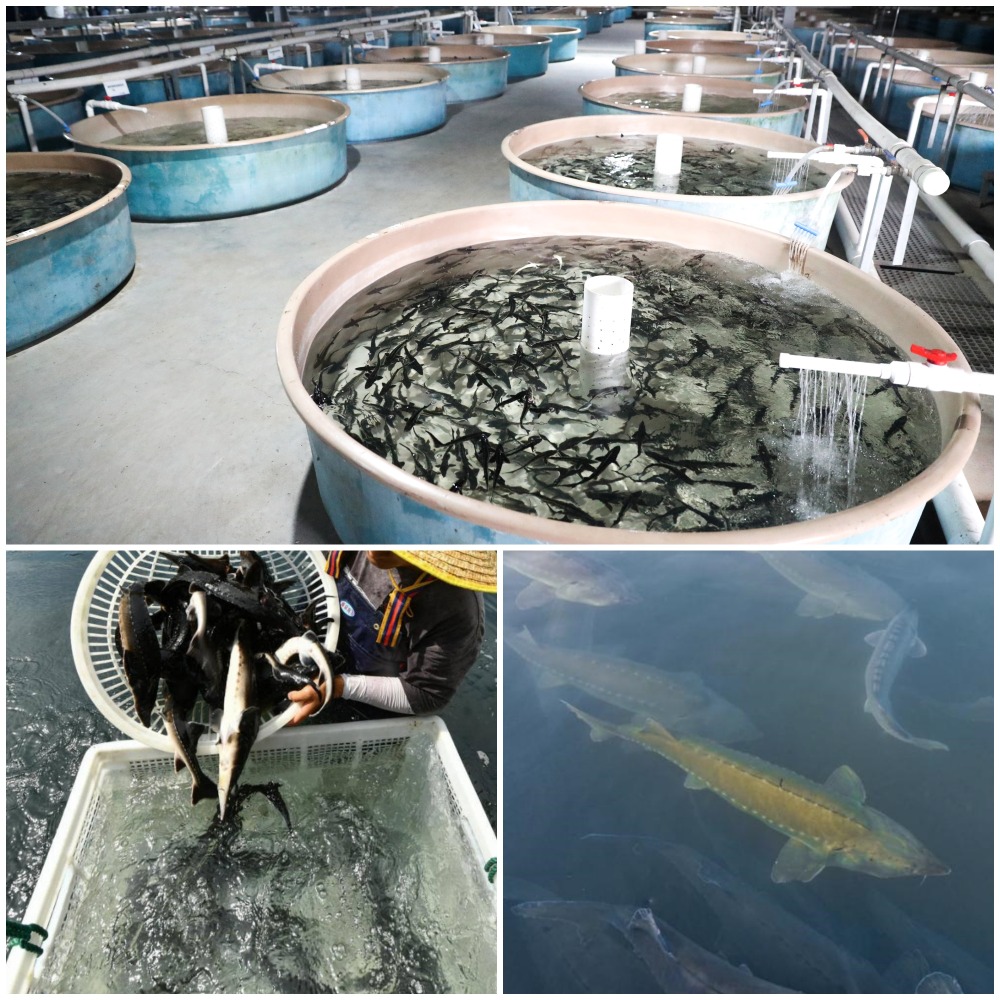
With the development of sturgeon farming technology, China has now become the world’s largest producer and exporter of caviar, with Zhejiang Province and Sichuan Province being the main production areas.
Currently, the annual global production of caviar is more than 600 tonnes, while the annual output of caviar in Quzhou (衢州), Zhejiang Province, exceeds 200 tonnes, accounting for one-third of the global. It’s also the largest caviar production area in the country.
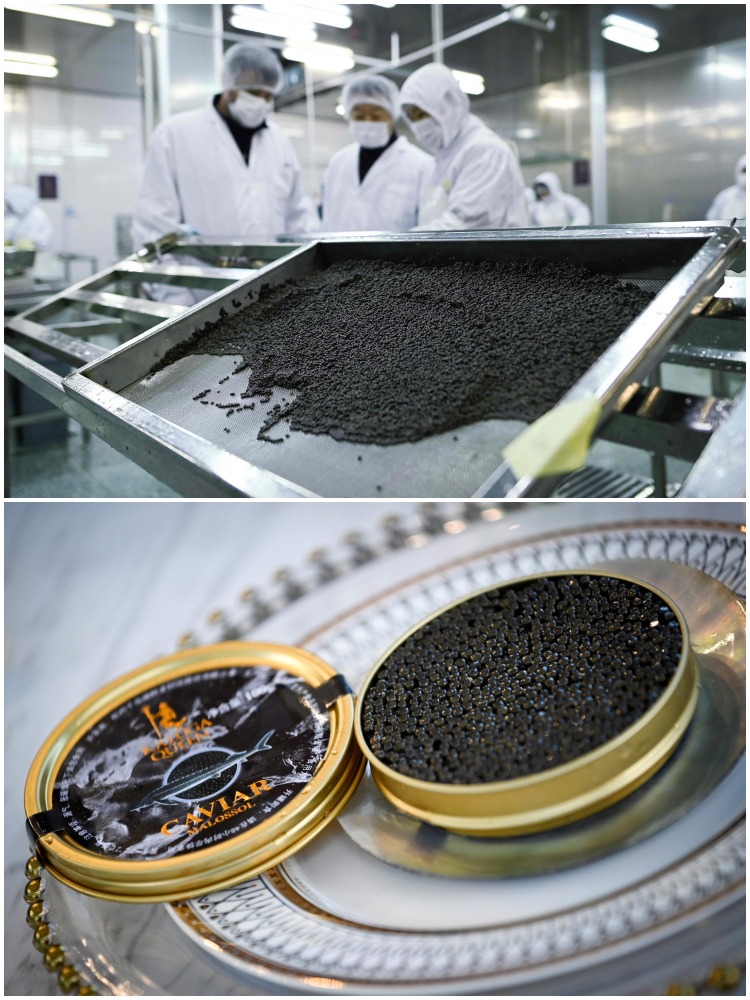
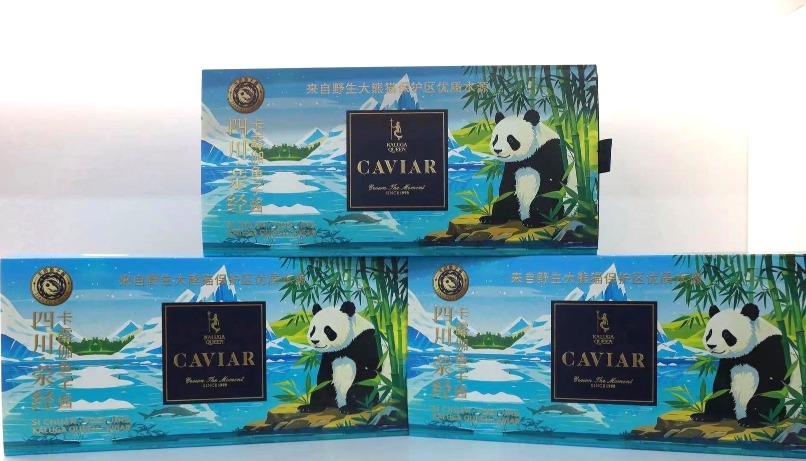
Ranking 2nd globally is Ya’an (雅安) in Sichuan Province, the hometown of giant pandas, with an annual caviar production of about 110 tonnes.
Unlike Zhejiang Province, which is located on the eastern coast of China, Ya’an is located in a mountainous area. How can it produce high-quality caviar?
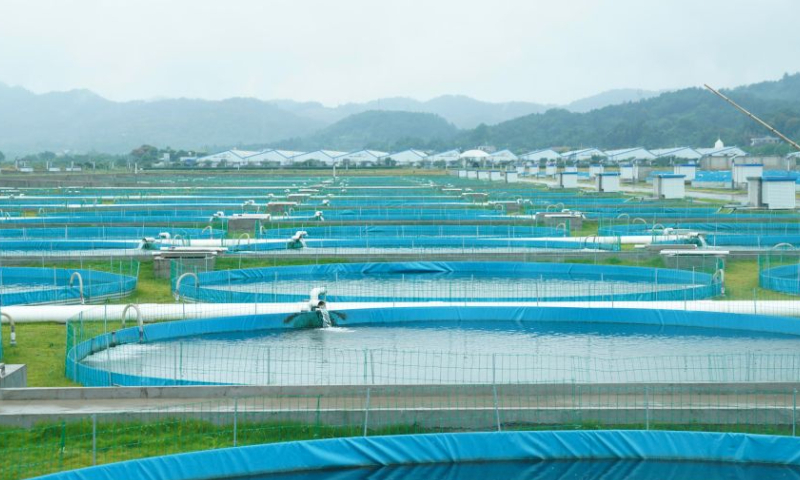
This photo taken on Sept. 17, 2026 shows outdoor recirculating aquaculture ponds at China Qingjiang (Yidu) Sturgeon Valley in Yidu City, central China’s Hubei Province. (Xinhua/Lu Jinbo)
China’s booming sturgeon-farming and caviar industry is providing the global market with a legal and sustainable alternative to wild caviar, helping curb demand for illegally harvested roe and ease pressure on vulnerable sturgeon populations.
This transformation is visible in Yidu, a city along the Yangtze River in central China’s Hubei Province, where large breeding facilities and man-made ponds scattered among villages are home to more than 1 million farm-raised sturgeon.
The local waterways were once crowded with fishing nets and cages, polluting the water and threatening native fish populations.
In 2016, China intensified efforts to protect the ecosystem of the Yangtze, the country’s longest river. Five years later, a comprehensive 10-year fishing ban took effect, along with the Yangtze River Protection Law.
As part of the efforts, Yidu and other areas along the river removed all fishing nets and cages from the water. But that wasn’t the end of the industry — it was the push to reinvent it.
In 2018, China Qingjiang (Yidu) Sturgeon Valley was established, marking the world’s first indoor, industrial-scale sturgeon breeding facility. The idea was simple: take the sturgeon out of the river and raise them on land.
The payoff went both ways. River water quality recovered, and rare species began to return. On land, sturgeon farming became larger, more centralized and increasingly technology-driven, helping boost caviar production.
Industry data shows that China accounts for around 60 percent of global caviar production. Yidu alone was shipping more than 10,000 tins a day to over 20 countries, according to Ji Jianyi, general manager of Qingjiang Sturgeon Valley Special Fishery Co., Ltd.
Scientists have made major advances in captive sturgeon breeding.
Sturgeon Valley now holds more than 40 patents, including a fully automated digital breeding system set to come online soon, making it one of the few unmanned, intelligent sturgeon farms in the world.
These innovations have brought a once-extravagant luxury within reach. A decade ago, a kilogram of caviar sold for as much as 160,000 yuan (about 23,700 U.S. dollars).
Today, China’s large-scale production has made caviar affordable enough for consumers to pick up a tin at the supermarket for less than 200 yuan.
“The rise of China’s caviar industry isn’t just an economic story — it’s an ecological one, too. Overfishing worldwide once pushed many sturgeon species to the brink of extinction. China’s booming aquaculture industry has helped ease pressure on wild sturgeon populations,” Ji said.
“What we’re selling isn’t just caviar. We’re cutting demand for illegally harvested wild roe,” he noted, adding that the company’s production and trade strictly comply with the requirements of the Convention on International Trade in Endangered Species of Wild Fauna and Flora.
Sturgeon aquaculture has also reshaped the local economy and helped revitalize the countryside.
Liu Zhongxing used to be a fisherman, hauling in whatever the weather allowed. Now he manages the breeding base at Sturgeon Valley.
“We used to live off the weather, and fishing was never steady,” Liu said. “Now we farm with technology, and our income keeps getting better.”
Villagers haven’t stopped at raising fish. They’ve woven the industry into tourism and culture too, building businesses around farm tours, science education experiences, dining and lodging — adding new income streams along the way.

- Previous China “for 1024th time” condemns US support for Philippine provocations near disputed islands
- Next With diesel above 6$ per gallon national average in US, Trump signs Russia, Iran sanctions bill into law
You may also like...





Random news








About us
Our Newly established Center for study of Asian Affairs has
branches in Indonesia, Malaysia and Singapore, as well as freelances in some other countries.
For inquires, please contact: newsofasia.info@yahoo.com Mr.Mohd Zarif - Secretary of the Center and administer of the web-site www.newsofasia.net
Polls
 Loading ...