

Having re-aligent itself with Central Asian kins, Baku does not need any longer Turkish big brother from Ankara
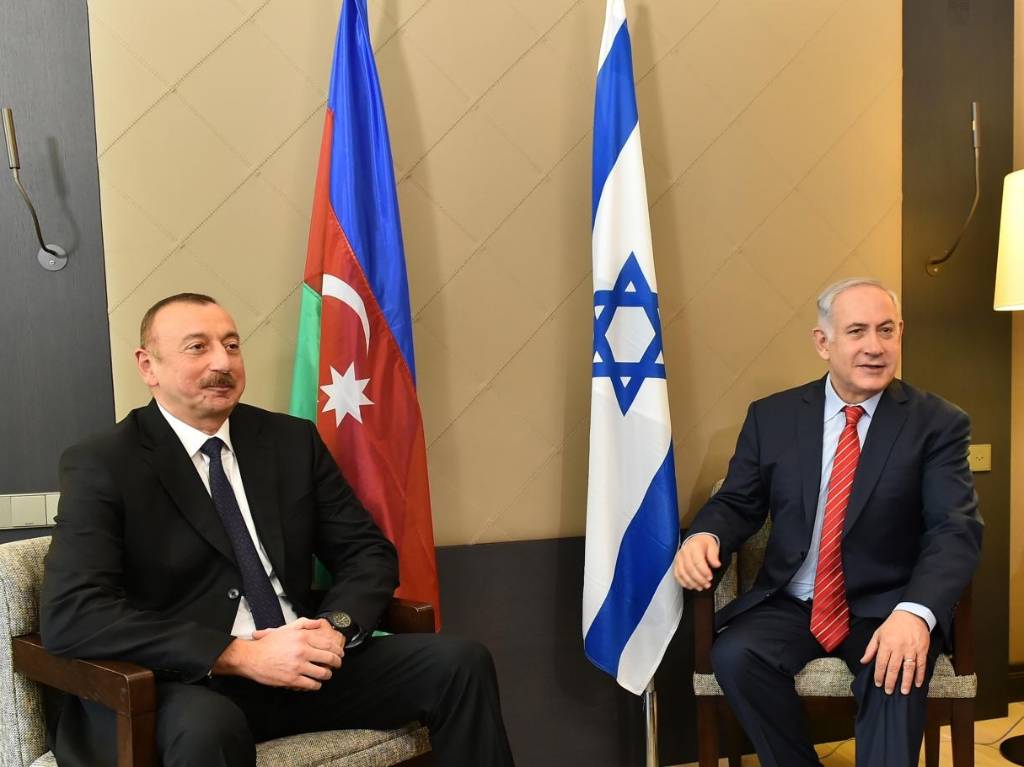

Baku draws a line under ‘one nation, two states’
Aliyev’s warning against foreign influence lands amid a dispute with Turkish political circles over religion, Karabakh, and Azerbaijan’s ties with Israel.
By Ehsan Movahedian
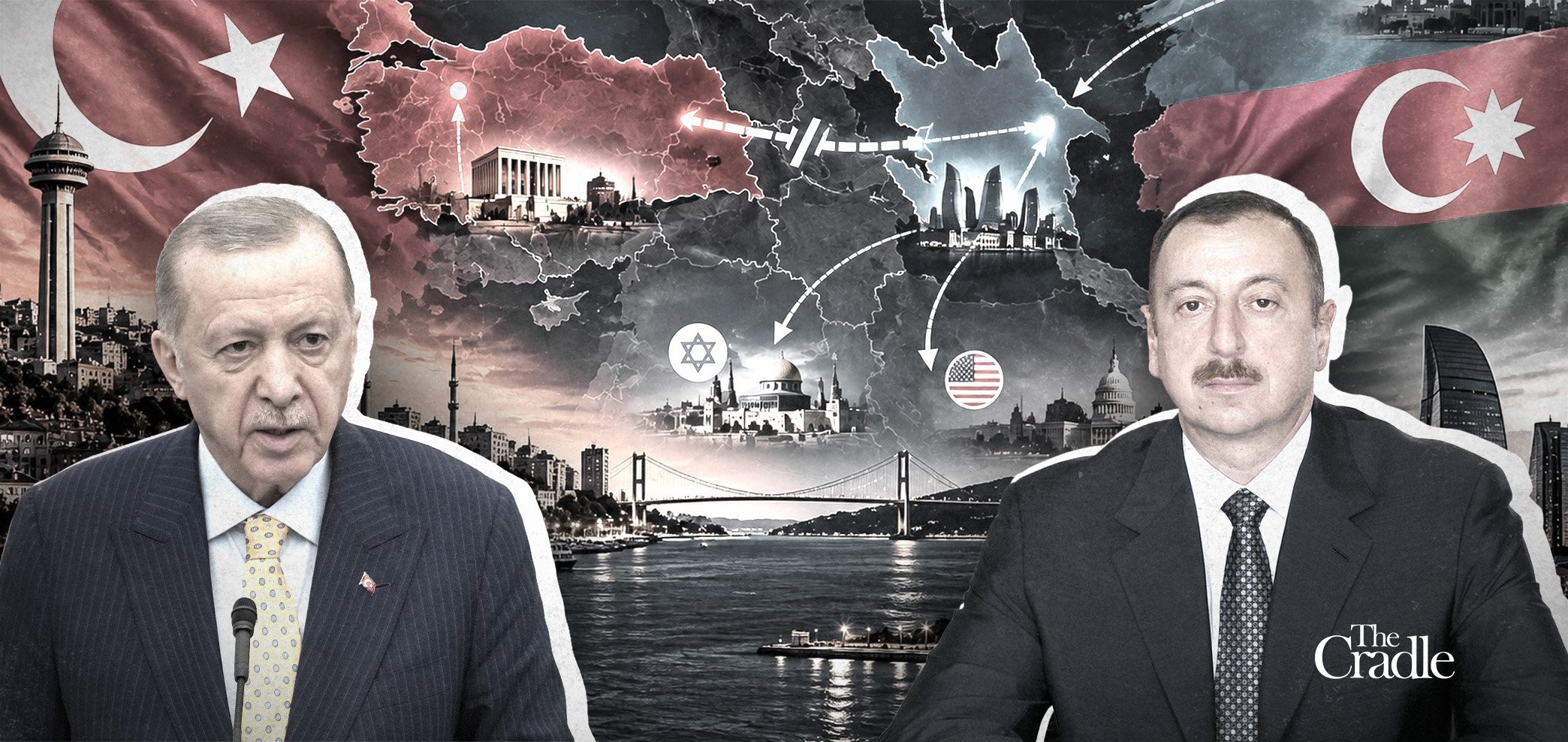 Photo Credit: The Cradle
At the eighth congress of the New Azerbaijan Party in Baku on 2 October, President Ilham Aliyev gave an unusually direct account of what he called Azerbaijan’s “ideological security.” It was as important as physical security, he said, because ideological threats could cross borders through the internet, cyberattacks, and artificial intelligence (AI).
He called for education and patriotism to defend the country’s political space, while insisting that Azerbaijan needed no foreign “help or patronage.” He added that other states should not interfere in its affairs or tell it how to live.
The remarks came from the president and chairman of the ruling party at a congress setting out its political course. Aliyev placed control of Azerbaijan’s ideological sphere beside military power, economic independence, and sovereign decision-making.
He did not name Turkiye as the source of any threat. Yet his words came amid criticism in Turkish political and media circles of Azerbaijan’s domestic policies, especially its treatment of hijab-wearing students. On 26 September, Azerbaijan’s Media and Broadcasting Council accused unnamed circles of a campaign against the country in Turkish media and on social platforms.
That confrontation lends a sharper edge to the formula “one nation, two states.” Political proximity has never eliminated differences in national interests. As Ankara and Baku have grown closer, the question of who defines their common identity – and what influence it permits – has become harder to avoid.
Analysts who spoke to The Cradle see Aliyev’s speech as an attempt to renegotiate the relationship, rather than break it. Azerbaijan has no apparent intention of giving up its military, economic, and cultural partnership with Turkiye. Baku does, however, want to make clear that kinship grants Ankara no authority over Azerbaijani domestic politics.

A warning heard in Ankara
Hazel Yalin, a researcher of Turkish–Russian relations, interprets the speech as directed in significant part at President Recep Tayyip Erdogan’s government. Turkish analyst Aydin Sezer also hears an indirect diplomatic message. Aliyev spoke to several audiences, Sezer says, including the west, Armenia, Russia, and Iran, but Ankara may have been among its principal recipients.
The immediate context is the dispute over religion in Azerbaijan’s schools. A September amendment to the state-school dress rules bars additional items deemed inconsistent with secular education. The decision does not mention the hijab by name, but reports that girls have been turned away from classes for wearing headscarves have drawn objections from Turkish critics.
Ankara has not publicly taken up the issue with Baku. Sezer reads Aliyev’s injunction that other countries mind their own affairs as a warning against turning the language of brotherhood into a right to supervise Azerbaijan.
The alliance itself acknowledges this boundary. The 2021 Shusha Declaration celebrates “one nation, two states” and formalizes extensive cooperation, but it also commits Ankara and Baku to sovereignty and noninterference in each other’s internal affairs. The current dispute has brought those two parts of the declaration into contact.
If Turkish political actors claim a voice in Azerbaijani religious and educational policy on the grounds of shared nationhood, Baku’s claim to ideological sovereignty narrows. If those questions belong to Azerbaijan alone, the slogan remains an expression of cultural affinity and political solidarity, without granting either capital a mandate over the other.
Poll
Who owns the Karabakh victory?
Yalin says pro-Erdogan news channels and social media accounts have accused Baku of pressuring Muslims over religious practice and organization. Some have also portrayed Azerbaijan’s victory in the Second Karabakh War as something it owed to Turkiye, calling Aliyev’s secular policies ungrateful and demanding respect for Turkish religious sensitivities.
“This argument has also been advanced on the basis of the slogan ‘two states, one nation’: if Turks and Azerbaijanis are members of the same nation, then, according to this line of reasoning, the Azerbaijani government should also take the voice of that nation into account.”
Aliyev’s account at the congress pushed in the opposite direction. He repeatedly said that Azerbaijan had acted on its own, paid for its weapons, and prevailed without an outside patron. This was his political account of the war; it should not be read as a finding that Turkish support played no role.
Indeed, the Shusha Declaration explicitly records Baku’s appreciation for Turkiye’s moral and political support. The dispute concerns who gets to claim political credit for the outcome, and what that credit might entitle them to demand afterward.
The implication is significant: an external actor – even a friendly one – cannot easily be allowed to become the political author of Azerbaijan’s success.
Jafar Haghpanah, a lecturer at the University of Tehran, argues that Baku no longer wants to be treated as Turkiye’s subordinate partner. Yalin identifies three elements in Aliyev’s position.
The first is concern over ideological pressure: in Yalin’s reading, the 1995 coup attempt against Aliyev’s father, Heydar Aliyev, left a lasting warning about the potential consequences of political activity connected to Turkiye.
The second is resistance to Turkish nationalist depictions of Azerbaijan as a “little brother.” The third is Aliyev’s growing confidence that Azerbaijan can exercise its own political influence across the region. Allegations concerning Turkish figures in the 1995 episode should not be conflated with responsibility on the part of today’s Turkish government.
Yalin cites Sinan Ogan’s endorsement of Erdogan in the second round of Turkiye’s 2023 presidential election as an illustration of how Azerbaijani influence could become a question in Turkish politics. Ogan was asked whether Aliyev had influenced his decision and explicitly denied it, saying Aliyev had not called him. The allegation cannot establish that Baku directed his choice. Its circulation nevertheless shows how quickly the question of influence runs both ways.
The reach of ideological security
Aliyev’s warning went beyond the dispute over school uniforms. His answer was to strengthen education and patriotism, and with them the state’s hold over how its history and victories are understood.
Turkiye has unusually strong means of reaching that public: television, social media, universities, religious networks, popular culture, businesses, and the institutions of the wider Turkic world. Those connections have helped sustain the alliance. They can also make Baku uneasy when Turkish political arguments begin to shape expectations about Azerbaijan’s domestic order.
Israel’s place between the allies
Azerbaijan’s relationship with Israel adds another strain. Ankara has condemned Israel’s war on Gaza, while Baku has maintained close security and energy ties with Tel Aviv. Israeli weapons have formed an important part of Azerbaijan’s arsenal, and Azerbaijani crude has continued to reach Israel through Turkiye’s Ceyhan Port despite Ankara’s stated trade restrictions. The Cradle has reported on the arms and oil relationship and the continued oil flows.
Caucasus analyst Ahmad Kazemi does not consider the differences between Ankara and Baku deep enough to threaten their alliance. He nevertheless believes Aliyev’s confidence rests partly on Israeli support.
In Kazemi’s assessment, “If Baku were forced to choose between Ankara and Tel Aviv, it would choose Israel.” He also argues that Baku knew its representative’s presence during Israeli Prime Minister Benjamin Netanyahu’s September UN address would displease Turkiye. An Anadolu Agency review found that Turkiye joined the protest against the speech while Azerbaijan remained represented.
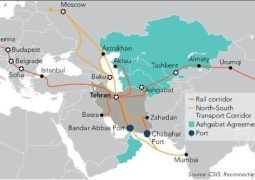
Kazemi sees another consequence for the Caucasus. He argues that shared Turkish and Iranian concern about Israel’s position in Azerbaijan could bring Ankara and Tehran closer on some issues, including regional transport corridors. Such convergence would have to contend with Turkiye’s extensive defense and strategic cooperation with Baku.
Haghpanah offers a stronger interpretation of the congress speech:
“Aliyev intended his speech to signal to Turkiye that Azerbaijan is Israel’s principal ally and that Ankara should adjust its tone toward Tel Aviv and avoid taking a harsh stance against it. He predicts that Turkiye and Israel will clash over energy resources in the Mediterranean Sea, as well as their geoeconomic and geopolitical interests.”
Yalin similarly reads Aliyev’s references to Azerbaijan’s oil production and sales as a response to criticism of its trade with Israel. Those remarks alone cannot settle Baku’s intentions. Meanwhile, Dariush Safarnejad, a senior Caucasus expert, points to the oil-for-arms relationship but expects Israeli influence in Azerbaijan to ease somewhat if Baku’s direct cooperation with Washington grows after the Armenia peace initiative. He also points to discussion of closer NATO ties.
Baku’s other partners
Aliyev used the congress to describe China and the US as the world’s two superpowers and to emphasize Azerbaijan’s strategic partnerships with both. Baku’s effort to build ties across competing centers of power gives it alternatives to dependence on any single partner, whether Turkish, Russian, Chinese, or western.
His comments on Armenia and Russia fit that account. Yalin draws attention to Aliyev’s claim that Armenia recognized Azerbaijan’s territorial integrity in October 2022, with the consequent acknowledgment of Azerbaijani sovereignty over Karabakh.
Aliyev presented the restoration of Azerbaijani control as an achievement secured in the face of pressure from major powers. Yalin sees this as part of Baku’s attempt to reposition itself after the war.
Azerbaijan and Armenia initialed a draft peace agreement in Washington in August 2025, though a final treaty has yet to be signed. Safarnejad argues that closer ties with Washington could give Baku more room to deal directly with the US and, over time, reduce its reliance on Israel.
Brotherhood without a senior partner
None of the five analysts suggests that a break between Ankara and Baku is imminent. Safarnejad stresses the depth of their interdependence: military cooperation, energy infrastructure, transport corridors, investment, defense industries, and cultural institutions all give the alliance a substantial foundation.
The OTS reinforces those ties. Turkish and Azerbaijani officials were still discussing deeper defense and security cooperation in September.
Azerbaijan still wants Turkiye at its side on security, trade, and regional diplomacy. Aliyev is drawing the line at Ankara’s influence over Baku’s religious policy, ties with Israel, and wider foreign relations. For him, “one nation, two states” gives Azerbaijan the final say over its own affairs.
How far Baku can press that claim will depend partly on Turkiye’s domestic politics after Erdogan, the durability of Azerbaijan’s relationship with Israel, and its ability to manage Washington, Moscow, Beijing and Tehran without losing Ankara’s support.
For Iran, a Baku more confident in its independence but more reliant on Israel would hardly be reassuring. The alliance may endure; the argument over who sets its limits is already underway.

- Previous Houties hit King Khalid Airport in Riyadh and an Aramco refinery in Rabigh
- Next Organization of Turkic States to cooperate in space
You may also like...
Random news
About us
Our Newly established Center for study of Asian Affairs has
branches in Indonesia, Malaysia and Singapore, as well as freelances in some other countries.
For inquires, please contact: newsofasia.info@yahoo.com Mr.Mohd Zarif - Secretary of the Center and administer of the web-site www.newsofasia.net
Polls
 Loading ...