

War against Iran and Houties is biggest risk to Mideast economies
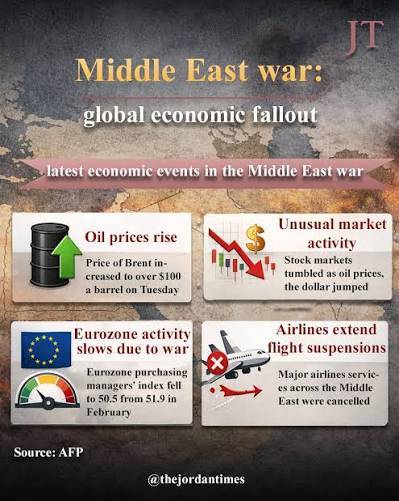


Prolonged conflict in the Middle East and ongoing disruptions to energy output, shipping routes, or critical infrastructure present the biggest risk to economies in the region and Central Asia, according to the International Monetary Fund (IMF) on Thursday.
Jihad Azour, the IMF’s director for the Middle East and Central Asia, told reporters the war was imposing a highly uneven economic shock to the broader region, with directly affected states under severe pressure.
“The outlook depends critically on how quickly energy production and trade normalize, and on countries’ ability to preserve macroeconomic stability,” Azour said at a news conference during the annual meetings of the IMF and World Bank in Bangkok.
The IMF will release a fuller outlook for the region on Oct. 22.

Pre-war surpluses, alternative routes, demand adjustments and substantial inventory drawdowns had helped contain the impact of the energy shock caused by the U.S.-Israeli-led attacks on Iran and Tehran’s subsequent closure of the Strait of Hormuz.
“These buffers bought time, but they are finite. Inventories are lower, spare capacity is tighter, and renewed disruption could generate much larger price adjustments,” he said.
The global lender is forecasting a deep contraction of 1.3% in the Middle East, North Africa and Pakistan region after growth of 3.3% in 2025, followed by a strong but uneven rebound in 2027, when growth is expected to hit 6.6%, Azour said, noting substantial differences across the region.
The forecast assumes a resumption of normal trade and shipping in the first quarter of 2027, with exports gradually normalizing by mid-year and oil prices staying higher.
Azour said the forecast was predicated on a quick resumption of production, noting that Qatar, for instance, had been able to accelerate its recovery despite suffering massive destruction of its natural gas capacity.
But he said the shock would have a scarring impact on various sectors, with damage to infrastructure requiring additional spending, and the risks were tilted to the downside.
Oil-exporting countries directly affected by the war would see a significant contraction in 2026 and a sharp rebound in growth in 2027 as energy production normalizes, but output was expected to remain below pre-war medium-term projections.
The economies of oil-importing countries in the region had been resilient and were expected to remain so, he said.

The Caucasus and Central Asia region had weathered the shock relatively well and inflation was expected to continue declining from elevated levels. The IMF is projecting growth to slow to 5.2% in 2026 and then 5% in 2027, from growth of 6.2% in 2025.
Azour said policymakers should prioritize price stability, focus on rebuilding fiscal buffers and expand their capacity to withstand future shocks.

- Previous Construction of China-Kyrgyzstan-Uzbekistan Railway goes ahead of schedule
- Next Annual verbal Chinese ritual: “128th warning” of Beijing over Yasukuni Shrine pilgrimage by Japanese Government officials
You may also like...


Random news




About us
Our Newly established Center for study of Asian Affairs has
branches in Indonesia, Malaysia and Singapore, as well as freelances in some other countries.
For inquires, please contact: newsofasia.info@yahoo.com Mr.Mohd Zarif - Secretary of the Center and administer of the web-site www.newsofasia.net
Polls
 Loading ...